



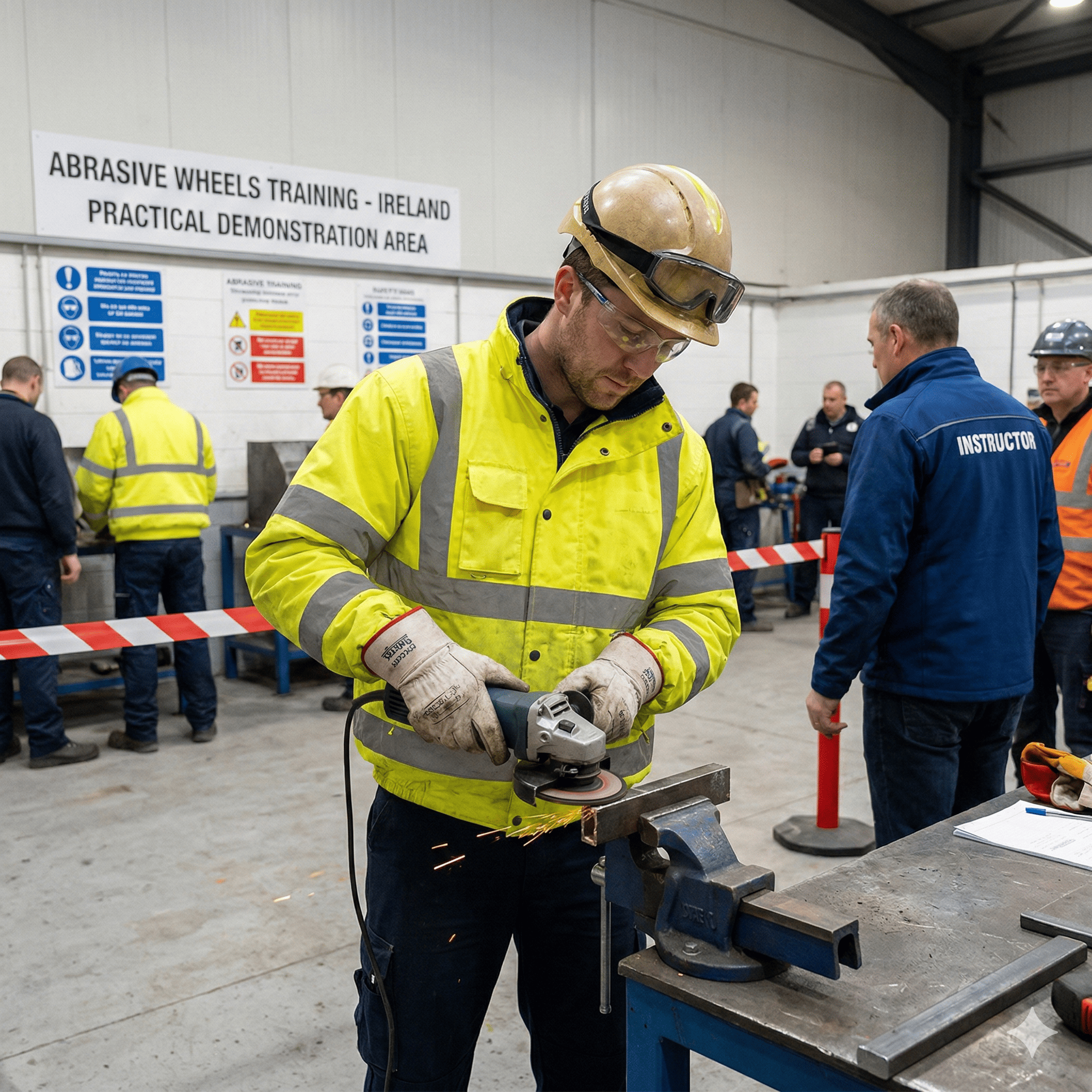
Abrasive wheels are used daily on construction sites across Ireland for cutting steel, concrete, tiles, pipes, and other materials. Because these tools operate at extremely high speeds, proper Abrasive Wheels Ireland training is essential for construction workers to stay safe and compliant.
If you work in construction, here’s everything you need to know about Abrasive Wheels Ireland certification, legal requirements, and how proper safety training Ireland protects you on site.
Why Abrasive Wheels Training Is Critical on Construction Sites
Construction environments are high-risk workplaces. Add powerful tools like angle grinders and cut-off saws, and the risk increases significantly.
Common site hazards include:
-
Wheel shattering or bursting
-
Flying debris and sparks
-
Contact injuries
-
Fire risks
-
Dust inhalation
-
Noise exposure
The Health and Safety Authority (HSA) requires employers to ensure workers using abrasive wheels are trained and competent.
Who Needs Abrasive Wheels Ireland Certification in Construction?
You likely need Abrasive Wheels Ireland certification if you:
✔ Use an angle grinder
✔ Change or mount abrasive wheels
✔ Operate cut-off saws
✔ Supervise workers using grinding equipment
✔ Carry out metal fabrication on site
✔ Perform concrete or masonry cutting
Even experienced tradespeople must complete recognised safety training Ireland to meet compliance standards.
What the Training Covers
A compliant Abrasive Wheels Ireland course for construction workers includes:
🔹 Types of Abrasive Wheels
-
Cutting discs
-
Grinding wheels
-
Diamond blades
-
Masonry and metal discs
🔹 Speed Ratings and Markings
Understanding maximum RPM and matching wheels correctly to machinery is critical to preventing bursts.
🔹 Safe Mounting Procedures
Incorrect mounting is one of the leading causes of wheel failure. Training covers:
-
Correct flanges
-
Proper tightening
-
Avoiding overtightening
-
Pre-use inspection
🔹 PPE Requirements
Construction workers must wear:
-
Eye protection or face shields
-
Hearing protection
-
Gloves
-
Protective clothing
-
Respiratory protection (when required)
🔹 Site-Specific Risk Controls
Training also highlights:
-
Safe positioning
-
Controlling sparks
-
Working near flammable materials
-
Dust suppression methods
Legal Responsibilities for Construction Employers
Under Irish workplace safety legislation, employers must:
✔ Provide adequate Abrasive Wheels Ireland training
✔ Ensure workers are competent before using equipment
✔ Carry out risk assessments
✔ Maintain tools and guards
✔ Keep records of training and certification
Failure to comply can result in inspections, penalties, or site shutdowns.
Online vs On-Site Training for Construction Workers
Many construction workers now complete Abrasive Wheels Ireland online courses because they:
-
Can be completed in a few hours
-
Provide same-day abrasive wheels certificates
-
Offer flexibility for busy schedules
-
Reduce downtime on projects
As long as the course is structured, assessed, and provides certification, it supports compliance.
How Long Is the Certificate Valid?
While Irish law does not always specify an exact expiry period, many employers require refresher training every 3–5 years or sooner if:
-
Equipment changes
-
Workplace incidents occur
-
There is a significant break in tool usage
Regular refresher Abrasive Wheels Ireland training helps maintain competence.
Benefits of Proper Training for Construction Workers
Completing your Abrasive Wheels Ireland certification provides:
✔ Safer working practices
✔ Reduced risk of serious injury
✔ Compliance with Irish safety standards
✔ Improved employability
✔ Faster site access approval
✔ Confidence when operating equipment
It’s not just about meeting legal requirements — it’s about protecting yourself and your colleagues.
Final Thoughts
Abrasive wheels are powerful tools that demand respect and proper handling. For construction workers across Ireland, completing recognised Abrasive Wheels Ireland training is a legal and professional necessity.
Holding a valid abrasive wheels certificate demonstrates competence, improves site safety, and ensures compliance with Irish workplace regulations.
Investing in proper safety training Ireland protects lives, reduces accidents, and supports a safer construction industry nationwide.