



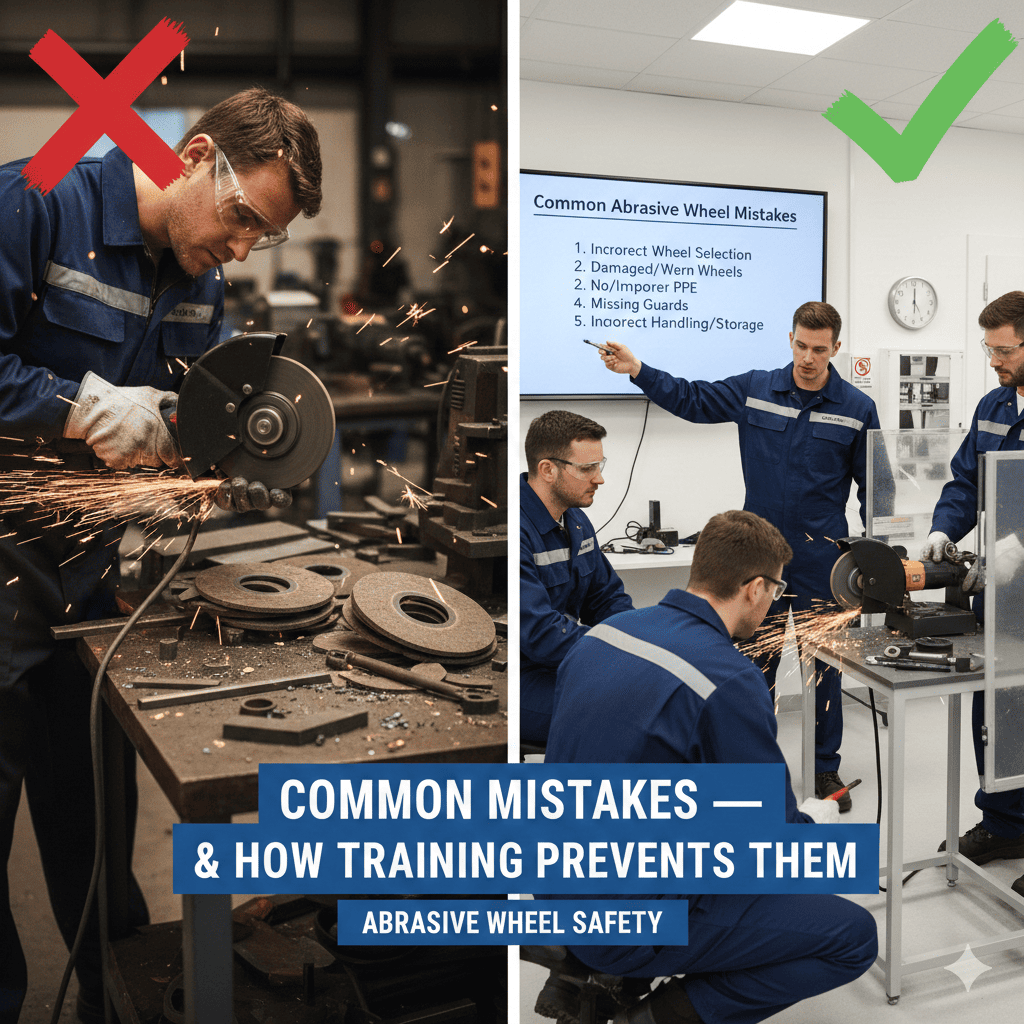
Abrasive wheels are essential tools across construction, engineering, manufacturing, and maintenance industries in Ireland. However, improper use remains one of the leading causes of serious workplace injuries. Many incidents happen not because of faulty equipment — but because of avoidable human error.
Completing a professional Abrasive Wheels training course helps workers understand the risks, avoid common mistakes, and stay compliant with safety standards set by the Health and Safety Authority (HSA).
Here are the most common mistakes — and how proper training prevents them.
1️⃣ Incorrect Wheel Selection
The Mistake:
Using the wrong wheel for the material or machine. Not all abrasive wheels are designed for the same tasks. Choosing the wrong type can lead to wheel failure, poor cutting performance, or dangerous breakage.
How Training Prevents It:
Training teaches workers how to:
-
Identify different wheel types
-
Understand abrasive materials and bonding
-
Match the correct wheel to the application
-
Read manufacturer markings
This reduces the risk of accidents and improves efficiency.
2️⃣ Failing to Inspect the Wheel Before Use
The Mistake:
Skipping pre-use checks for cracks, damage, moisture, or expiry dates. Damaged wheels can shatter at high speeds.
How Training Prevents It:
A proper course covers:
-
The “ring test” for checking integrity
-
Visual inspection procedures
-
Safe storage guidelines
-
Recognising signs of damage
Routine inspections become second nature after training.
3️⃣ Improper Mounting and Fitting
The Mistake:
Over-tightening flanges, using incorrect mounting hardware, or failing to align the wheel correctly. Incorrect fitting is a major cause of wheel breakage.
How Training Prevents It:
Participants learn:
-
Correct mounting procedures
-
The importance of blotters and flanges
-
Torque guidance
-
Step-by-step safe fitting methods
This significantly reduces catastrophic failure risks.
4️⃣ Ignoring Speed Ratings
The Mistake:
Using a wheel on a machine that exceeds its maximum RPM rating. This can cause the wheel to explode.
How Training Prevents It:
Training ensures workers understand:
-
Speed markings
-
Machine compatibility
-
The dangers of overspeeding
-
Why modifying guards is illegal and dangerous
Awareness of speed ratings is critical for compliance and safety.
5️⃣ Removing or Misusing Safety Guards
The Mistake:
Taking off safety guards for convenience or better access. Guards are there to protect users from debris and wheel fragments.
How Training Prevents It:
Courses reinforce:
-
Legal requirements around machine guarding
-
Real-world accident case studies
-
Employer and employee responsibilities
Workers understand that safety guards are not optional.
6️⃣ Inadequate Use of PPE
The Mistake:
Not wearing proper eye protection, gloves, hearing protection, or face shields.
How Training Prevents It:
Training clearly outlines:
-
Required Personal Protective Equipment (PPE)
-
When additional protection is necessary
-
The risks of non-compliance
Proper PPE dramatically reduces injury severity.
7️⃣ Lack of Formal Training
The Biggest Mistake:
Allowing workers to use abrasive wheels without structured instruction.
Under Irish safety legislation, employers must ensure employees are competent. The Health and Safety Authority requires adequate training and supervision for hazardous equipment use.
Formal abrasive wheels training provides:
-
Legal compliance
-
Documented certification
-
Reduced liability
-
Increased worker confidence
Why Training Is an Investment — Not a Cost
Many workplace accidents involving abrasive wheels are preventable. The most effective way to reduce risk is through proper education and certification.
Training helps:
✔ Reduce accidents
✔ Improve productivity
✔ Ensure legal compliance
✔ Protect company reputation
✔ Lower insurance and claim risks
Whether delivered onsite or online, structured abrasive wheels training ensures workers understand both the practical and legal aspects of safe operation.
Final Thoughts
Common mistakes with abrasive wheels can lead to serious injury, downtime, and legal consequences. The solution is simple: proper, certified training.
By investing in professional abrasive wheels instruction, employers create a safer work environment and protect both their workforce and their business.