



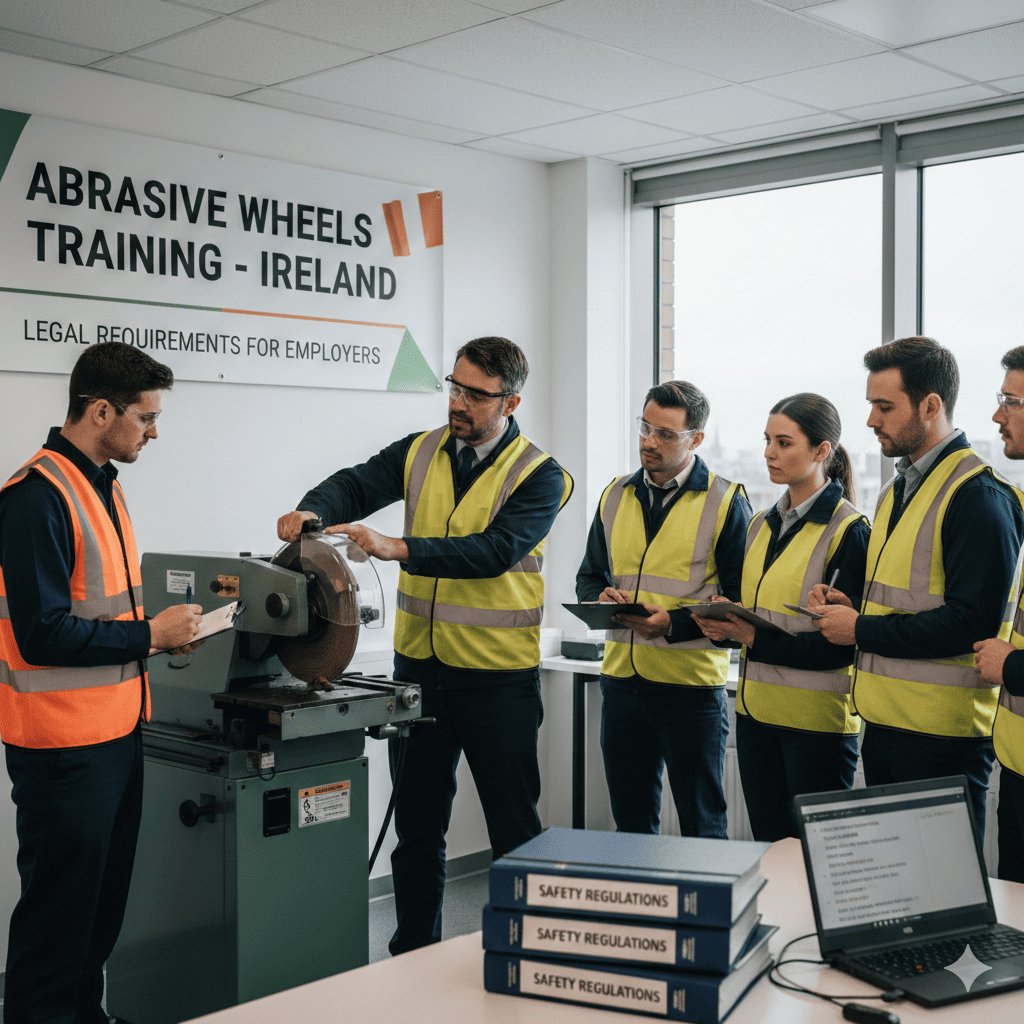
Ensuring workplace safety isn’t just good practice — it’s the law. For employers across Ireland, understanding the legal requirements for abrasive wheels training is essential to protect employees, stay compliant, and avoid costly penalties. This guide breaks down what you must know about abrasive wheels training in Ireland, why it matters, and how to ensure your workforce is properly certified.
📌 Why Abrasive Wheels Safety Matters
Abrasive wheels are widely used in industries like construction, metal fabrication, engineering, and maintenance. When used incorrectly, these tools can cause serious injuries, including:
-
Cuts and lacerations
-
Eye injuries from flying debris
-
Hand-arm vibration syndrome (HAVS)
-
Wheel breakage incidents
-
Burns from sparks
The Health and Safety Authority (HSA) in Ireland considers improper use and lack of training among the top causes of equipment-related accidents — and has stringent regulations to prevent them.
📜 Irish Health & Safety Regulations Employers Must Follow
Under Irish law, employers have a legal duty to protect the health, safety, and welfare of their employees “so far as is reasonably practicable.” This includes:
✅ Providing Adequate Training
Employers must ensure employees who use abrasive wheels:
-
Are competent to operate them safely
-
Understand hazards and legal requirements
-
Know correct mounting, inspection, and operating procedures
This training must be relevant, up-to-date, and documented.
✅ Ensuring Competence
Training should ensure that workers can:
-
Select the right wheel for the job
-
Check wheels for damage before use
-
Fit and secure wheels correctly
-
Understand speed limits and markings
-
Safely operate machines and use appropriate PPE
✅ Maintaining Records
Employers must keep records of:
-
Who has been trained
-
When training was completed
-
What certification was awarded
This documentation is crucial during inspections or in the event of an incident.
✅ Choosing Appropriate Training Providers
Training can be delivered in-person or via accredited online courses — provided the course meets safety standards and gives learners the skills needed for safe operation.
Many employers choose an Abrasive Wheels Course Online Ireland that offers full competency training and certification upon completion.
📄 Compliance: What It Looks Like in Practice
Here’s how employers can stay compliant with abrasive wheels regulations in Ireland:
🔹 Conduct a Risk Assessment
Identify where abrasive wheels are used, what hazards exist, and who is at risk.
🔹 Provide Relevant Training
Ensure training covers:
-
Types of abrasive wheels and their intended use
-
Legal responsibilities of users and employers
-
Practical competence in mounting and operation
🔹 Issue Certification
After successful completion of training, employees should receive documented certification showing they are competent.
🔹 Review and Update Training
Regular refresher courses help ensure competence doesn’t lapse — especially when procedures change or new staff join.
⚖️ Penalties for Non-Compliance
Failing to provide adequate training and supervision can lead to:
-
HSA enforcement actions
-
Fines or prosecution
-
Increased insurance premiums
-
Workplace injury claims
Investing in proper abrasive wheel training upfront protects both your people and your business.
🤝 Benefits of Proper Abrasive Wheels Training
Providing compliant training helps employers:
✔ Reduce accidents and injuries
✔ Improve productivity
✔ Demonstrate legal compliance
✔ Boost worker confidence and morale
✔ Lower insurance and liability risk
Whether you choose classroom training or an Abrasive Wheels Course Online Ireland, what matters most is that your team is competent, certified, and safe.
📌 Final Takeaway
Employers in Ireland are legally responsible for ensuring workers using abrasive wheels are trained and competent. By selecting the right course, keeping accurate training records, and regularly reviewing competence, you build a safer workplace and stay on the right side of the law.