



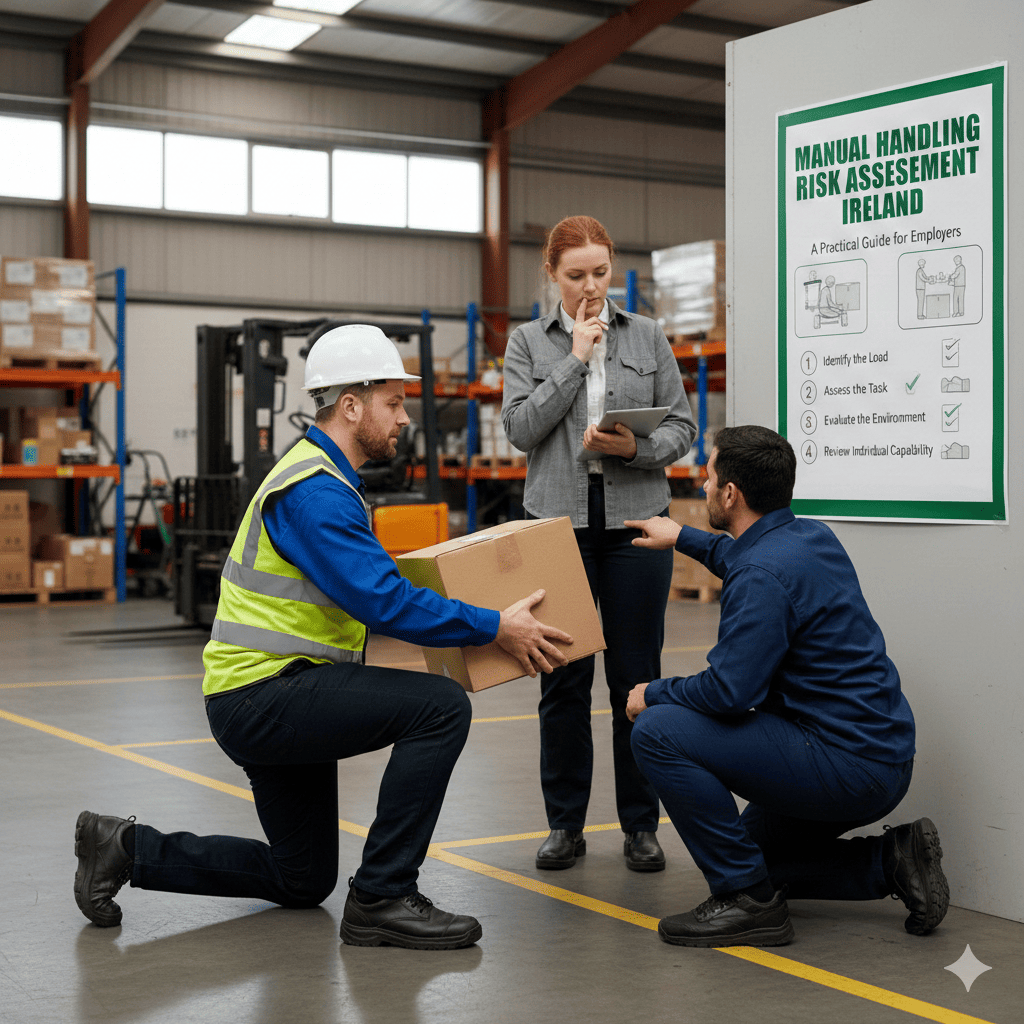
Manual handling tasks are part of daily operations in construction, healthcare, retail, warehousing, and manufacturing across Ireland. However, poor lifting practices remain one of the main causes of workplace injuries in Ireland, particularly back and musculoskeletal injuries.
Conducting a proper Manual Handling Risk Assessment Ireland is not just good practice — it is a legal requirement and a vital part of workplace accident prevention Ireland.
Legal Requirements for Employers in Ireland
Under the Safety, Health and Welfare at Work Act 2005, employers have clear employer responsibilities Ireland to:
-
Identify workplace hazards
-
Assess risks
-
Implement control measures
-
Provide Employee safety training Ireland
-
Maintain workplace safety documentation Ireland
The Health and Safety Authority (HSA) is responsible for enforcing these laws and may inspect businesses to ensure Safety compliance Ireland.
Failure to carry out proper risk assessments can result in fines, legal action, and increased insurance claims Ireland workplace cases.
What Is a Manual Handling Risk Assessment?
A Manual handling risk assessment Ireland identifies tasks that involve lifting, carrying, pushing, or pulling loads and evaluates the risk of injury associated with those tasks.
It focuses on:
-
The task
-
The load
-
The working environment
-
The individual employee
This structured approach supports Workplace injury prevention Ireland and reduces long-term health issues.
Step-by-Step Guide for Employers
1️⃣ Identify Manual Handling Tasks
Review daily operations and highlight activities that require physical effort. Pay special attention to repetitive tasks and those performed during night shift safety Ireland hours where fatigue risks workplace Ireland may increase injury likelihood.
2️⃣ Assess the Risk Factors
Consider:
The Load
-
Is it heavy, bulky, unstable, or difficult to grip?
The Task
-
Does it involve twisting, bending, or reaching?
The Environment
-
Is there poor lighting, uneven flooring, or restricted space?
The Individual
-
Is the worker trained and physically capable?
-
Are young workers safety Ireland considerations addressed?
3️⃣ Implement Control Measures
If risks are identified, employers should:
-
Introduce mechanical aids
-
Redesign tasks
-
Reduce load weight
-
Adjust workflow processes
-
Provide Manual Handling Training Ireland
Completing a Manual Handling Course Ireland ensures employees understand correct lifting techniques and safe work practices.
4️⃣ Document Everything
Maintaining accurate workplace safety documentation Ireland is essential for Irish workplace compliance. Records should include:
-
Risk assessment findings
-
Actions taken
-
Training records
-
Review dates
This documentation is crucial during inspections by the Health and Safety Authority.
The Role of Manual Handling Certification Ireland
While risk assessments identify hazards, Irish Manual Handling Certification ensures employees know how to manage those risks safely.
Many businesses now use Manual Handling Training Online Ireland to ensure consistent training across departments, particularly useful for expanding Irish businesses safety management.
Benefits of a Proper Risk Assessment
A structured Manual handling risk assessment Ireland helps businesses:
-
Reduce workplace injuries in Ireland
-
Lower absenteeism
-
Minimise insurance claims Ireland workplace costs
-
Improve overall Workplace safety Ireland
-
Strengthen Safety compliance Ireland
It also demonstrates proactive employer responsibilities Ireland under Irish health and safety legislation.
Final Thoughts
A Manual Handling Risk Assessment Ireland is a critical component of effective workplace accident prevention Ireland. Combined with proper Employee safety training Ireland and ongoing monitoring, it creates a safer, more productive work environment.