



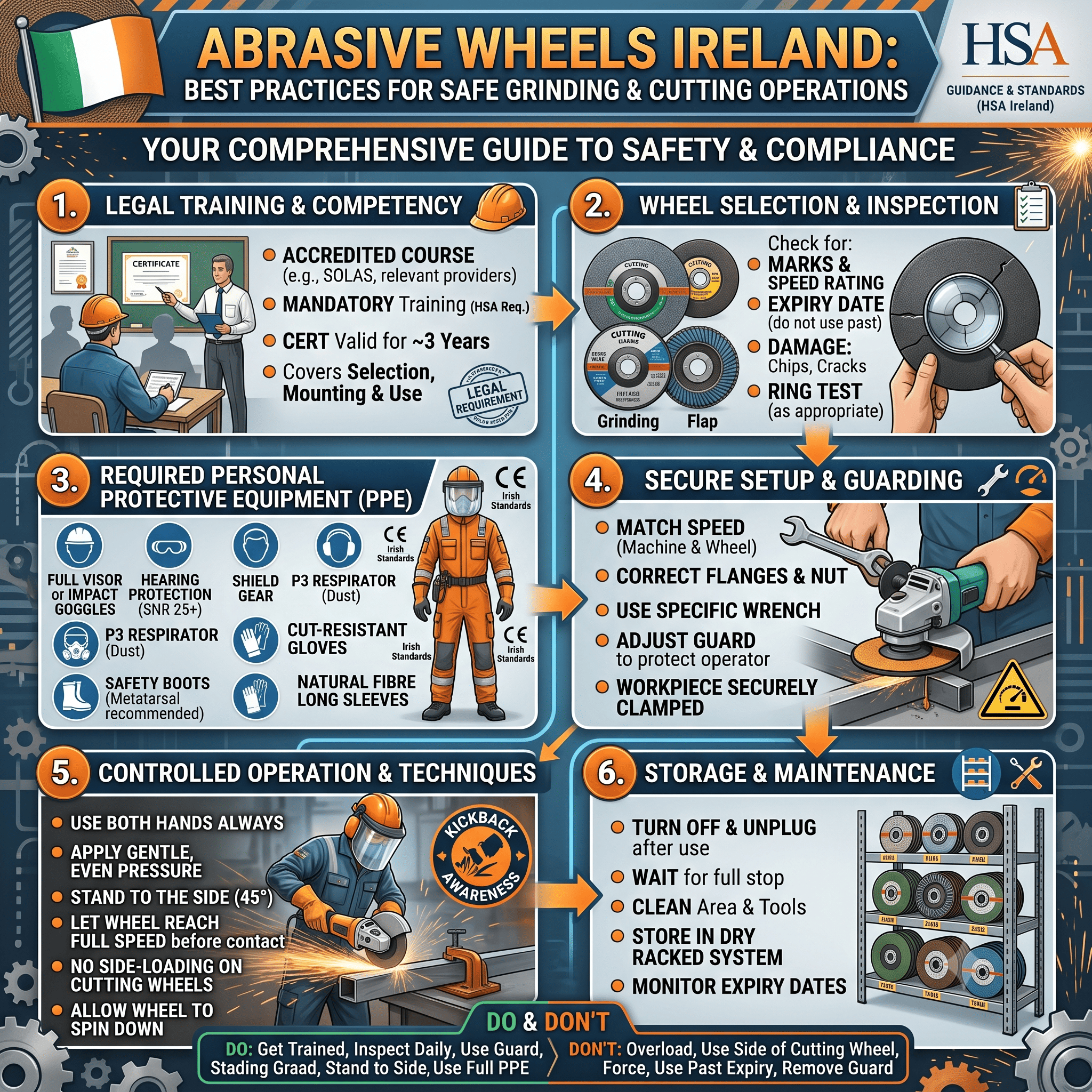
Abrasive wheels are essential tools in workplaces across Ireland, helping employees cut, grind, sharpen, polish, and finish a wide range of materials. From construction sites and engineering workshops to manufacturing plants and maintenance facilities, these tools play a vital role in improving productivity and achieving precise results. However, because abrasive wheels operate at extremely high speeds, they must always be used with care and according to safe working procedures.
Most accidents involving abrasive wheels are preventable. They often result from damaged equipment, incorrect wheel selection, poor operating techniques, or inadequate training. By following recognised best practices, employers and employees can significantly reduce workplace risks while improving efficiency and maintaining high safety standards.
This guide explores the best practices for safe grinding and cutting operations and explains why Abrasive Wheels Ireland training is an essential investment for workplaces across the country.
Understanding Abrasive Wheels
An abrasive wheel is a wheel or disc made from abrasive particles bonded together to perform grinding, cutting, sharpening, polishing, or finishing tasks. Different wheels are designed for specific materials and applications, making correct selection an important part of workplace safety.
Common abrasive wheel equipment includes:
- Angle grinders
- Bench grinders
- Pedestal grinders
- Cut-off saws
- Chop saws
- Surface grinders
- Portable grinding machines
Each machine and wheel combination is designed to operate within specific limits. Using the correct equipment helps improve performance while reducing unnecessary risks.
Why Safe Grinding and Cutting Matter
Grinding and cutting operations expose workers to several hazards that require careful management.
Common risks include:
- Wheel breakage
- Flying fragments
- Eye injuries
- Hand injuries
- Burns from sparks
- Fire hazards
- Dust inhalation
- Hearing damage
- Equipment damage
Following recognised safety procedures significantly reduces these risks while helping employees work confidently and efficiently.
Best Practice 1: Complete Proper Training
The foundation of safe abrasive wheel use is education.
Completing Abrasive Wheels Training Ireland helps workers understand:
- How abrasive wheels operate
- How to identify hazards
- Safe inspection procedures
- Correct mounting techniques
- Safe operating methods
- Proper use of PPE
- Safe storage practices
Training develops competence and encourages workers to make safe decisions before beginning any grinding or cutting task.
Best Practice 2: Choose the Correct Wheel
Not every abrasive wheel is suitable for every job.
Workers should always select a wheel based on:
- Material being worked on
- Machine compatibility
- Required cutting or grinding task
- Maximum operating speed
- Manufacturer recommendations
Using the wrong wheel can reduce efficiency and significantly increase the risk of wheel failure.
Best Practice 3: Inspect Wheels Before Every Use
Every abrasive wheel should be carefully inspected before installation.
Check for:
- Cracks
- Chips
- Uneven wear
- Moisture damage
- Manufacturing defects
- Damage caused during storage
Any damaged wheel should be removed from service immediately.
Regular inspections take only a few moments but can prevent serious workplace incidents.
Best Practice 4: Mount Wheels Correctly
Incorrect mounting is one of the leading causes of abrasive wheel failures.
Workers should:
- Inspect flanges
- Follow manufacturer instructions
- Tighten wheels correctly
- Ensure proper wheel balancing
- Confirm machine compatibility
Proper mounting reduces vibration, improves performance, and increases safety.
Best Practice 5: Understand Speed Ratings
Every abrasive wheel has a maximum operating speed specified by the manufacturer.
Workers should always:
- Read wheel markings
- Match wheel ratings to machine speeds
- Check spindle speed
- Avoid overspeed operation
Operating beyond the recommended speed greatly increases the likelihood of catastrophic wheel failure.
Best Practice 6: Wear Appropriate PPE
Personal protective equipment provides an important layer of protection during grinding and cutting operations.
Common PPE includes:
- Safety glasses
- Face shields
- Hearing protection
- Safety footwear
- Protective gloves where appropriate
- Respiratory protection
- Protective clothing
PPE should always be worn alongside safe operating practices rather than replacing them.
Best Practice 7: Maintain Correct Working Position
Safe body positioning improves both control and stability.
Workers should:
- Stand securely
- Maintain balanced footing
- Keep a safe distance from the wheel
- Avoid awkward positions
- Maintain full control throughout operation
Proper positioning reduces fatigue and improves equipment handling.
Best Practice 8: Keep Machine Guards in Place
Machine guards are designed to protect operators from flying fragments and accidental contact with rotating wheels.
Workers should never:
- Remove guards unnecessarily
- Operate equipment with damaged guards
- Modify guarding systems
Guards should always be checked before starting work.
Best Practice 9: Apply the Correct Pressure
Many accidents occur because operators force abrasive wheels beyond their intended use.
Workers should:
- Allow the wheel to do the work
- Avoid excessive pressure
- Maintain smooth movements
- Prevent twisting cutting discs
Applying excessive force increases wear while creating unnecessary hazards.
Best Practice 10: Store Wheels Properly
Correct storage helps preserve wheel strength and reliability.
Abrasive wheels should be:
- Stored in dry conditions
- Protected from impacts
- Kept away from excessive moisture
- Stored at suitable temperatures
- Organised safely
- Handled carefully during transport
Poor storage can weaken wheels long before they are used.
The Importance of Hazard Awareness
Hazard awareness is one of the most valuable skills workers gain through an Abrasive Wheels Course Ireland.
Employees learn how to recognise:
- Damaged equipment
- Incorrect wheel selection
- Missing guards
- Unsafe operating speeds
- Unsafe working environments
- Equipment defects
Recognising hazards before work begins helps prevent accidents.
Why Online Training Is a Practical Solution
Many organisations now choose an Online Abrasive Wheels Course Ireland because it allows employees to complete training at their own pace.
Benefits include:
- Flexible learning schedules
- Study from home or work
- Reduced travel
- Consistent learning materials
- Easy access for remote teams
- Convenient refresher training
Online learning enables businesses to maintain safety standards while minimising disruption to operations.
Benefits for Employers
Providing Abrasive Wheels Certification Ireland offers many advantages for organisations.
These include:
- Improved workplace safety
- Better employee competence
- Reduced accident risks
- Improved equipment care
- Increased productivity
- Reduced downtime
- Consistent operating procedures
- Stronger workplace safety culture
Well-trained employees are more likely to follow safe working practices and identify hazards before incidents occur.
Benefits for Employees
Completing an Abrasive Wheels Certificate Ireland provides long-term professional value.
Workers gain:
- Greater confidence
- Better practical knowledge
- Improved hazard awareness
- Enhanced employability
- Increased workplace competence
- Stronger commitment to safety
These skills remain valuable across multiple industries throughout a worker's career.
Supporting a Positive Safety Culture
Safe workplaces are built through continuous improvement rather than one-time training.
Employers should encourage workers to:
- Carry out routine equipment inspections
- Report damaged wheels immediately
- Wear PPE consistently
- Follow manufacturer instructions
- Attend refresher training
- Review workplace procedures
- Participate in safety discussions
When safety becomes part of everyday operations, employees naturally develop safer working habits.
Continuous Learning Improves Safety
Workplace technology, machinery, and safety procedures continue to evolve. Regular refresher training helps workers maintain competence and remain informed about current best practices.
Continuous learning helps employees:
- Reinforce safe habits
- Improve confidence
- Reduce complacency
- Stay informed about new guidance
- Maintain consistent workplace standards
Investing in ongoing education supports both personal development and organisational success.
Conclusion
Following best practices during grinding and cutting operations is essential for creating safer workplaces across Ireland. Proper wheel selection, regular inspections, correct mounting, safe operating techniques, appropriate PPE, and careful storage all contribute to reducing workplace risks while improving productivity.
Completing Abrasive Wheels Training Ireland gives workers the knowledge they need to apply these best practices confidently every day. Whether through classroom instruction or an Online Abrasive Wheels Course Ireland, earning an Abrasive Wheels Certification Ireland and an Abrasive Wheels Certificate Ireland demonstrates a commitment to professional development, workplace competence, and responsible equipment use.
By combining high-quality training with consistent safe working practices, employers and employees can work together to reduce accidents, improve operational efficiency, and ensure abrasive wheels are used safely in every workplace across Ireland.