



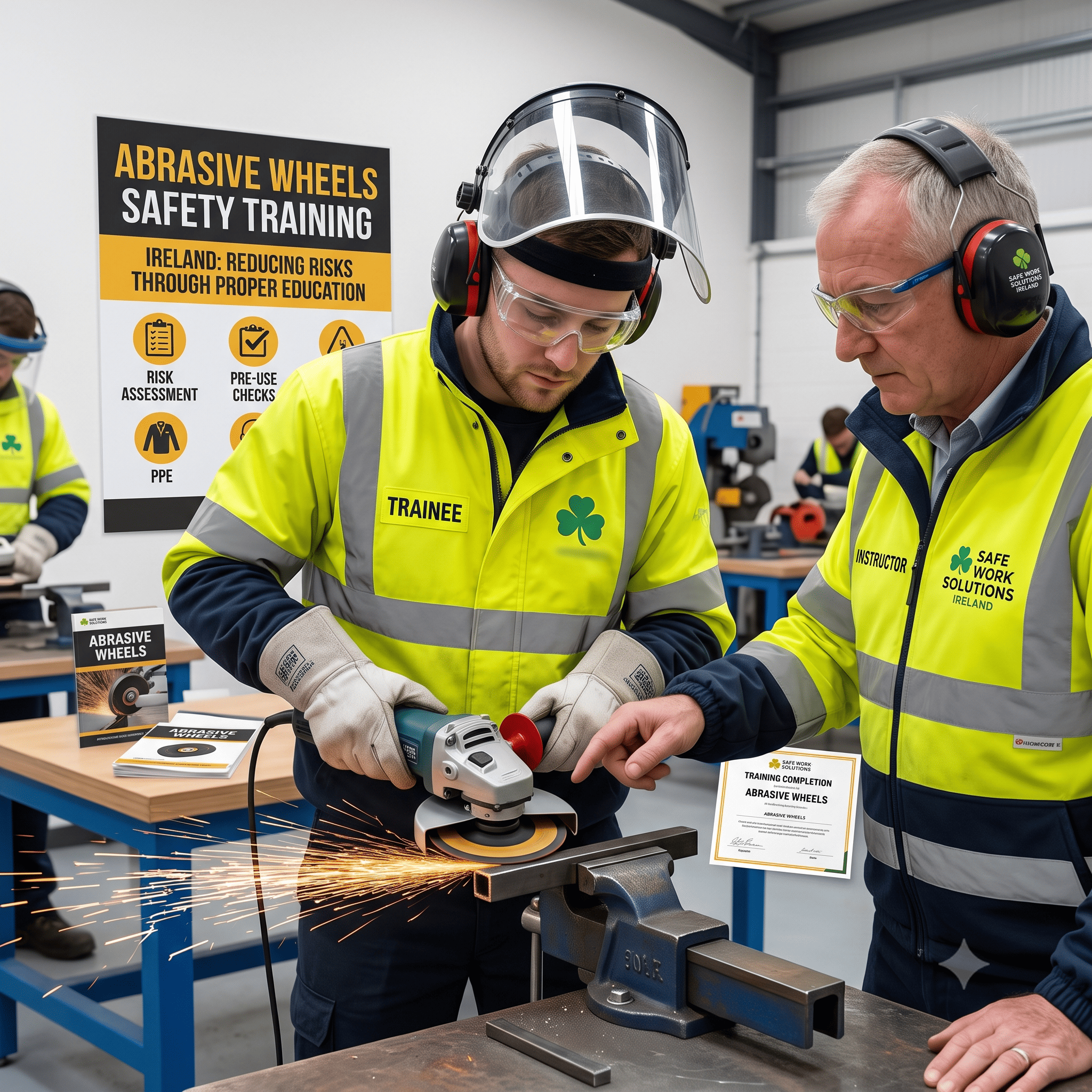
Abrasive wheels are an essential part of daily operations in many workplaces across Ireland. They are used to cut, grind, sharpen, polish, and finish materials in industries such as construction, manufacturing, engineering, maintenance, automotive repair, and metal fabrication. While these tools increase efficiency and precision, they also present significant safety risks if they are not used correctly.
Many workplace accidents involving abrasive wheels occur because of poor operating practices, damaged equipment, incorrect wheel selection, or a lack of proper training. This is why Abrasive Wheels Safety Training Ireland is so important. Proper education equips workers with the knowledge and confidence to identify hazards, use equipment responsibly, and contribute to a safer working environment.
Whether you are an employer responsible for protecting your workforce or an employee looking to improve your skills, investing in safety training is one of the most effective ways to reduce workplace risks and improve operational standards.
Why Abrasive Wheel Safety Matters
Abrasive wheels rotate at extremely high speeds, allowing them to remove material quickly and efficiently. However, if a wheel fails during operation or is used incorrectly, the consequences can be severe.
Common hazards include:
- Wheel breakage
- Flying fragments
- Eye injuries
- Hand injuries
- Cuts and lacerations
- Burns from sparks
- Fire hazards
- Dust inhalation
- Noise exposure
- Damage to machinery
Most of these hazards can be significantly reduced through proper Abrasive Wheels Safety Training Ireland, regular equipment inspections, and consistent safe working practices.
What Is Abrasive Wheels Safety Training?
Abrasive Wheels Safety Training Ireland is designed to provide workers with the knowledge needed to safely operate equipment fitted with abrasive wheels. Rather than simply teaching employees how to use machinery, the training explains why specific safety procedures are necessary and how following them helps prevent workplace incidents.
Training commonly covers:
- Types of abrasive wheels
- Hazard identification
- Wheel selection
- Equipment inspection
- Safe mounting procedures
- Safe operating techniques
- Personal protective equipment (PPE)
- Safe storage and handling
- Workplace responsibilities
The goal is to develop competent workers who understand both the equipment they use and the importance of following recognised safety procedures.
Why Proper Education Reduces Risks
Education plays a crucial role in accident prevention. Workers who understand how abrasive wheels function are more likely to recognise unsafe situations before they become serious incidents.
Proper training helps employees:
- Identify hazards early
- Inspect wheels correctly
- Select suitable equipment
- Use machinery safely
- Follow manufacturer guidance
- Wear appropriate PPE
- Report damaged equipment promptly
When safety knowledge becomes part of everyday work, the overall risk of workplace accidents decreases significantly.
Industries That Benefit from Safety Training
Abrasive wheel equipment is used across a wide variety of industries throughout Ireland.
These include:
- Construction
- Engineering
- Manufacturing
- Metal fabrication
- Automotive repair
- Agriculture
- Warehousing
- Utilities
- Shipbuilding
- Facilities management
- Maintenance services
Workers in these industries regularly perform cutting and grinding tasks that require safe operating practices.
Who Should Complete Abrasive Wheels Training?
An Abrasive Wheels Course Ireland is suitable for anyone who uses abrasive wheel equipment during their work.
Typical job roles include:
- Construction workers
- Welders
- Fabricators
- Engineers
- Mechanics
- Machine operators
- Maintenance technicians
- Apprentices
- Supervisors
- Contractors
Even experienced workers benefit from refresher training to reinforce safe habits and remain informed about current best practices.
Understanding Different Types of Abrasive Wheels
One of the first topics covered during training is the variety of wheels available for different applications.
Common examples include:
- Grinding wheels
- Cutting discs
- Diamond blades
- Cup wheels
- Flap discs
- Wire wheels
Each type is designed for specific materials and operating conditions. Choosing the correct wheel is essential for both safety and performance.
Hazard Identification
Recognising hazards before beginning work is one of the most important skills workers develop during Abrasive Wheels Training Ireland.
Training helps employees identify:
- Cracked wheels
- Chipped wheels
- Incorrect wheel selection
- Missing machine guards
- Unsafe operating speeds
- Poor working positions
- Equipment defects
By identifying these hazards early, workers can take corrective action before starting the job.
Equipment Inspection
Every abrasive wheel should be carefully inspected before use.
Training explains how to check for:
- Visible cracks
- Chips
- Excessive wear
- Moisture damage
- Manufacturing defects
- Storage damage
Workers learn that damaged wheels should never be installed or operated.
Safe Wheel Mounting
Incorrect wheel mounting remains one of the most common causes of abrasive wheel failures.
Training covers:
- Flange inspection
- Correct tightening methods
- Wheel balancing
- Machine compatibility
- Following manufacturer recommendations
Proper installation reduces vibration and helps ensure safe operation.
Safe Operating Procedures
Safe operation requires workers to follow established procedures every time equipment is used.
Training teaches participants how to:
- Position themselves correctly
- Maintain secure footing
- Allow wheels to reach operating speed
- Apply appropriate pressure
- Avoid twisting cutting discs
- Keep guards in place
- Maintain full control during operation
Developing these habits significantly reduces accident risks.
Understanding Maximum Speed Ratings
Every abrasive wheel has a maximum operating speed specified by the manufacturer.
Training explains how to:
- Read wheel markings
- Match wheel ratings to machinery
- Check spindle speeds
- Prevent overspeed operation
Exceeding recommended speeds greatly increases the likelihood of wheel failure.
Personal Protective Equipment (PPE)
PPE provides an additional layer of protection when working with abrasive wheels.
Common protective equipment includes:
- Safety glasses
- Face shields
- Hearing protection
- Protective footwear
- Gloves where appropriate
- Respiratory protection
- Protective clothing
Workers also learn that PPE supports safe working practices but should never replace them.
Safe Storage and Handling
Correct storage helps preserve the strength and condition of abrasive wheels before use.
Training explains how to:
- Store wheels in dry locations
- Protect them from impacts
- Avoid moisture exposure
- Prevent temperature extremes
- Transport wheels carefully
- Organise storage safely
Proper storage reduces unnecessary damage and extends wheel life.
Benefits of Online Safety Training
Many businesses now choose an Online Abrasive Wheels Course Ireland because it offers flexible learning opportunities.
Online training allows workers to:
- Study from home or work
- Learn at their own pace
- Access lessons on multiple devices
- Complete training around work schedules
- Reduce travel time
- Revisit learning materials whenever needed
This flexibility helps organisations train employees efficiently while maintaining productivity.
Benefits for Employers
Investing in Abrasive Wheels Safety Training Ireland offers numerous organisational advantages.
These include:
- Improved workplace safety
- Better employee competence
- Reduced accident risks
- Greater consistency
- Improved equipment care
- Increased productivity
- Reduced downtime
- Stronger workplace safety culture
A well-trained workforce is more likely to follow safe procedures and contribute to a positive working environment.
Benefits for Employees
Completing Abrasive Wheels Certification Ireland provides lasting professional value.
Employees benefit from:
- Increased confidence
- Improved practical knowledge
- Better hazard awareness
- Enhanced employability
- Stronger commitment to safety
- Greater understanding of workplace responsibilities
These skills remain valuable throughout a worker's career across many industries.
Creating a Strong Safety Culture
Training is most effective when it is supported by a workplace culture that values safety every day.
Employers should encourage workers to:
- Carry out routine equipment inspections
- Replace damaged wheels immediately
- Report hazards promptly
- Follow manufacturer guidance
- Wear appropriate PPE
- Participate in refresher training
- Review workplace risk assessments regularly
When safety becomes part of everyday operations, employees are more likely to make responsible decisions that protect themselves and their colleagues.
Why Continuous Learning Is Important
Safety knowledge should be reinforced throughout a worker's career. Equipment, technology, and workplace practices continue to evolve, making ongoing learning increasingly valuable.
Regular refresher training helps employees:
- Maintain competence
- Reinforce safe habits
- Stay informed about current best practices
- Improve confidence
- Reduce complacency
Continuous professional development supports long-term workplace safety and operational excellence.
Conclusion
Abrasive Wheels Safety Training Ireland is one of the most effective ways to reduce workplace risks while improving employee competence and confidence. Through proper education, workers learn how to identify hazards, inspect equipment, select the correct abrasive wheels, wear appropriate PPE, and follow safe operating procedures every day.
Completing an Abrasive Wheels Course Ireland, whether through classroom instruction or an Online Abrasive Wheels Course Ireland, provides valuable knowledge that supports safer workplaces across construction, manufacturing, engineering, maintenance, and many other industries. Earning an Abrasive Wheels Certification Ireland and an Abrasive Wheels Certificate Ireland demonstrates a commitment to responsible working practices and continuous professional development.
By investing in high-quality training and reinforcing safe behaviours every day, employers and employees across Ireland can work together to reduce accidents, improve productivity, and create workplaces where abrasive wheels are used safely, confidently, and responsibly.