



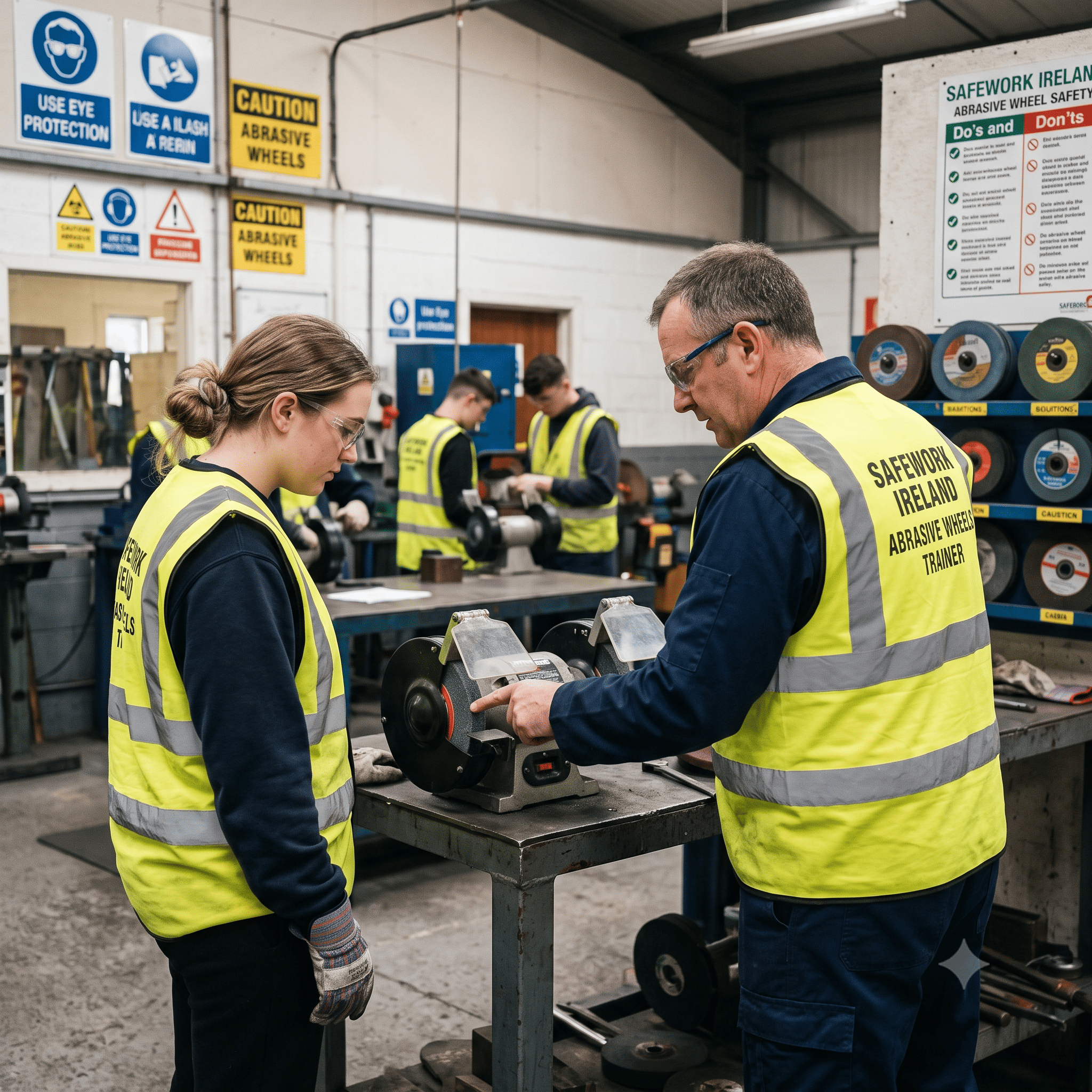
Workplace safety is built on knowledge, preparation, and consistent safe working practices. Across Ireland, abrasive wheels are used daily in industries such as construction, engineering, manufacturing, metal fabrication, automotive repair, agriculture, and maintenance. These tools make cutting, grinding, sharpening, and finishing materials faster and more efficient, but they also present significant risks if they are used incorrectly.
Many workplace injuries involving abrasive wheels are preventable. In most cases, accidents occur because equipment is damaged, the wrong wheel is selected, machinery is operated incorrectly, or workers have not received adequate training. This is why Abrasive Wheels Training Ireland plays such an important role in protecting employees and promoting safer workplaces.
Proper training provides workers with the knowledge to identify hazards, inspect equipment, follow safe operating procedures, and use abrasive wheels responsibly. By developing these skills, employers can reduce workplace risks while improving productivity and employee confidence.
Why Abrasive Wheels Require Proper Training
Abrasive wheels rotate at extremely high speeds, making them highly effective tools for demanding tasks. However, their speed also means that even a small mistake can lead to serious injuries or equipment damage.
Without proper training, workers may:
- Use the wrong wheel for the task
- Fail to inspect equipment
- Mount wheels incorrectly
- Operate machinery above safe speed limits
- Ignore damaged equipment
- Wear inadequate personal protective equipment (PPE)
- Use unsafe working techniques
Proper Abrasive Wheels Training Ireland helps workers avoid these mistakes by teaching safe practices before accidents occur.
Common Workplace Hazards
Understanding potential hazards is the first step toward preventing injuries.
Common risks associated with abrasive wheel equipment include:
- Wheel breakage
- Flying fragments
- Eye injuries
- Hand injuries
- Cuts and lacerations
- Burns caused by sparks
- Dust inhalation
- Hearing damage
- Fire hazards
- Damage to machinery
Most of these hazards can be significantly reduced through proper training and careful equipment use.
What Is Abrasive Wheels Training?
An Abrasive Wheels Course Ireland provides workers with the knowledge required to safely use grinding and cutting equipment.
Rather than focusing only on operating machinery, the course explains:
- Why hazards occur
- How accidents can be prevented
- How to inspect equipment
- Safe mounting procedures
- Safe operating techniques
- Correct PPE selection
- Safe storage and handling
The aim is to develop confident workers who understand both the equipment they use and their responsibilities for maintaining workplace safety.
Who Should Complete the Training?
Anyone who uses abrasive wheel equipment as part of their work should complete training.
Industries that commonly require this knowledge include:
- Construction
- Manufacturing
- Engineering
- Metal fabrication
- Automotive repair
- Agriculture
- Warehousing
- Utilities
- Shipbuilding
- Facilities management
- Maintenance services
Typical job roles include:
- Welders
- Fabricators
- Construction workers
- Engineers
- Mechanics
- Machine operators
- Maintenance technicians
- Apprentices
- Supervisors
- Contractors
Both new employees and experienced professionals benefit from regular refresher training.
Understanding Different Abrasive Wheels
Abrasive wheels are manufactured for specific purposes. Using the correct wheel is one of the simplest ways to improve workplace safety.
Workers learn about:
- Grinding wheels
- Cutting discs
- Diamond blades
- Cup wheels
- Flap discs
- Wire wheels
Each wheel is designed for particular materials and operating conditions.
Selecting the wrong wheel increases wear, reduces efficiency, and raises the risk of failure.
Hazard Awareness
One of the most valuable aspects of Abrasive Wheels Training Ireland is learning how to recognise hazards before work begins.
Training teaches workers to identify:
- Damaged wheels
- Incorrect wheel selection
- Unsafe operating speeds
- Missing machine guards
- Poor mounting
- Equipment defects
- Unsafe work environments
Recognising these issues early allows workers to take corrective action before beginning a task.
Equipment Inspection
Every abrasive wheel should be inspected before installation.
Training explains how to check for:
- Cracks
- Chips
- Uneven wear
- Moisture damage
- Storage damage
- Manufacturing defects
Workers are taught that damaged wheels should never be used, regardless of how small the defect appears.
Routine inspections take only a few minutes but play a significant role in preventing workplace injuries.
Safe Wheel Mounting
Incorrect mounting remains one of the leading causes of abrasive wheel failures.
Workers learn how to:
- Inspect flanges
- Tighten wheels correctly
- Ensure proper balancing
- Check machine compatibility
- Follow manufacturer guidance
Correct installation improves both safety and equipment performance.
Safe Operating Procedures
Even correctly mounted wheels must be used safely.
Training covers essential operating techniques such as:
- Maintaining correct body position
- Standing on stable ground
- Allowing wheels to reach full operating speed
- Applying appropriate pressure
- Avoiding twisting cutting discs
- Keeping guards in place
- Maintaining control throughout operation
Following these procedures helps reduce unnecessary strain on both equipment and operators.
Understanding Maximum Speed Ratings
Every abrasive wheel has a maximum operating speed established by the manufacturer.
Workers learn how to:
- Read wheel markings
- Match wheel ratings to machine speeds
- Check spindle speed
- Avoid overspeed operation
Exceeding recommended speed limits significantly increases the risk of wheel failure.
Personal Protective Equipment (PPE)
PPE provides an additional layer of protection during grinding and cutting operations.
Training explains the correct use of:
- Safety glasses
- Face shields
- Hearing protection
- Safety footwear
- Gloves where appropriate
- Respiratory protection
- Protective clothing
Workers also learn that PPE should always be combined with safe operating procedures rather than replacing them.
Safe Storage and Handling
Correct storage protects abrasive wheels before they are used.
Training explains how to:
- Store wheels in dry conditions
- Prevent impact damage
- Avoid moisture exposure
- Protect against temperature extremes
- Handle wheels carefully
- Organise storage safely
Proper storage helps maintain wheel strength and reliability.
Benefits of Online Training
Many organisations now choose an Online Abrasive Wheels Course Ireland because it provides flexible access to essential safety education.
Online learning allows workers to:
- Study from home or work
- Learn at their own pace
- Access training on multiple devices
- Complete lessons around work schedules
- Reduce travel costs
- Review learning materials whenever necessary
This flexibility makes online learning an ideal solution for modern workplaces.
Benefits for Employers
Providing Abrasive Wheels Certification Ireland offers numerous organisational advantages.
These include:
- Improved workplace safety
- Better employee competence
- Reduced accident risks
- Lower equipment damage
- Increased productivity
- Consistent working practices
- Reduced downtime
- Stronger safety culture
Well-trained employees make better decisions, reducing both injuries and operational disruptions.
Benefits for Employees
Completing an Abrasive Wheels Certificate Ireland provides valuable long-term career benefits.
Workers gain:
- Greater confidence
- Improved practical skills
- Better hazard awareness
- Increased employability
- Stronger commitment to workplace safety
- Enhanced professional development
These skills remain relevant across many industries throughout an individual's career.
Creating a Safer Workplace
Training alone is not enough. Employers should support learning by encouraging safe working practices every day.
Good workplace habits include:
- Inspecting equipment before use
- Wearing suitable PPE
- Reporting damaged wheels immediately
- Following manufacturer recommendations
- Maintaining machinery regularly
- Participating in refresher training
- Reviewing workplace risk assessments
When these behaviours become routine, they contribute to a positive and proactive safety culture.
The Importance of Continuous Learning
Safety standards, machinery, and workplace practices continue to evolve. Ongoing training ensures employees remain competent and confident throughout their careers.
Refresher training helps workers:
- Reinforce existing knowledge
- Stay informed about current best practices
- Improve confidence
- Reduce complacency
- Maintain consistent safety standards
Continuous learning benefits both employees and employers by supporting long-term workplace safety.
Conclusion
Abrasive Wheels Training Ireland is one of the most effective ways to prevent workplace injuries through safe equipment use. By providing workers with the knowledge to identify hazards, inspect equipment, mount wheels correctly, use appropriate PPE, and follow safe operating procedures, organisations can significantly reduce the risk of accidents while improving overall workplace performance.
Whether completed through classroom instruction or an Online Abrasive Wheels Course Ireland, earning an Abrasive Wheels Certification Ireland and an Abrasive Wheels Certificate Ireland demonstrates a commitment to professional development and responsible equipment use. Employers benefit from improved productivity and a stronger safety culture, while employees gain valuable skills that support long-term career success.
Investing in high-quality training is an investment in people. By making safety education a priority, businesses across Ireland can create safer workplaces where workers have the competence, confidence, and knowledge to use abrasive wheel equipment safely every day.