



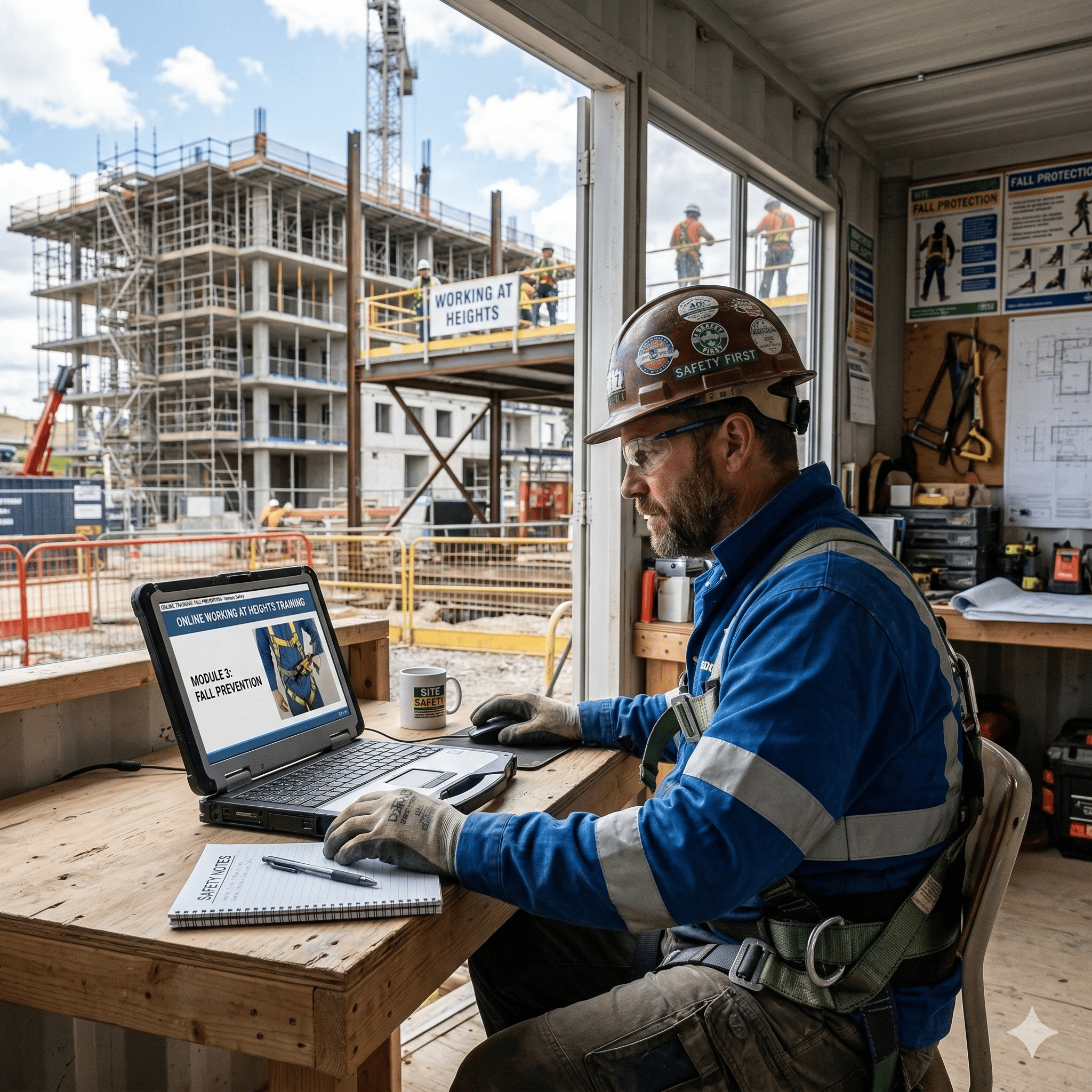
Falls from height are one of the leading causes of workplace injuries and fatalities in Ireland, particularly in construction, maintenance, and industrial sectors. To combat these risks, many organizations are turning to working at heights training, including working at heights online training, to ensure their employees are competent, compliant, and confident in performing elevated tasks safely.
This case study explores how an Irish company implemented online training to enhance workplace safety, the challenges faced, and the measurable outcomes. It also highlights the benefits of obtaining a working at heights certificate through online courses and integrating health and safety courses online into the broader safety strategy.
Background: The Workplace Safety Challenge
ABC Construction (pseudonym used for confidentiality) is a mid-sized construction company operating across Ireland. Like many construction firms, the company faced:
-
A high proportion of employees working at heights daily
-
Incidents of near-misses and minor falls
-
Inconsistent safety practices across sites
-
Difficulties scheduling in-person training for remote teams
Prior to 2022, ABC Construction relied solely on in-person working at heights training. While effective, it posed logistical challenges, including travel time, high costs, and scheduling conflicts. Employees in rural locations often missed refresher courses, creating gaps in compliance.
The Decision to Adopt Online Training
To address these challenges, ABC Construction decided to implement working at heights online training for all employees. The goals were to:
-
Increase accessibility to training across multiple sites
-
Standardize safety knowledge and practices
-
Reduce costs and administrative burden
-
Ensure employees maintained valid working at heights certificates
-
Improve overall workplace safety metrics
The company partnered with an accredited Irish online training provider offering interactive modules, assessments, and digital certification.
Implementation Process
The rollout of working at heights online training involved several steps:
1. Employee Enrollment
Employees were provided login credentials for the online platform. Prior certifications were verified, and employees approaching expiration were prioritized.
2. Interactive Learning Modules
The course covered essential topics, including:
-
Hazard identification at elevated work areas
-
Correct use of personal protective equipment (PPE)
-
Ladder, scaffold, and elevated platform safety
-
Emergency procedures and fall rescue
Interactive quizzes and scenario-based exercises reinforced knowledge retention.
3. Practical Assessment
For employees performing high-risk tasks, on-site practical assessments were conducted to ensure competence. This hybrid approach ensured that theoretical knowledge from online modules translated into safe work practices.
4. Certification and Record-Keeping
Upon successful completion, employees received a digital working at heights certificate, valid for the required period. HR maintained a central record of all certifications to track compliance across the organization.
Challenges and Solutions
While online training was highly effective, ABC Construction encountered some initial challenges:
Challenge 1: Technology Accessibility
Some employees lacked familiarity with digital platforms.
Solution: The company offered brief orientation sessions and technical support to ensure smooth access.
Challenge 2: Engagement and Completion Rates
Online learning requires self-motivation, and a few employees delayed completing modules.
Solution: Supervisors monitored progress, sent reminders, and incorporated completion into performance reviews.
Challenge 3: Integrating Practical Assessments
Certain high-risk tasks required hands-on demonstration of skills.
Solution: On-site practical sessions were scheduled for a small group while the rest completed theory online, blending flexibility with compliance.
Measurable Outcomes
Within six months of implementing working at heights online training, ABC Construction reported significant improvements:
-
Increased Certification Rates
All employees requiring certification successfully completed the online modules, with digital working at heights certificates issued immediately. -
Reduced Workplace Incidents
Reported falls and near-misses decreased by 35%, highlighting improved hazard awareness and correct PPE usage. -
Cost Savings
By reducing travel, instructor fees, and in-person venue costs, the company saved approximately 25% on training expenses. -
Improved Accessibility
Remote employees completed courses without disruption, ensuring compliance across all locations. -
Enhanced Safety Culture
Employees reported greater confidence in performing elevated tasks, and supervisors observed consistent adherence to safety protocols.
Key Benefits of Online Working at Heights Training
ABC Construction’s case demonstrates several key advantages:
-
Flexibility: Employees could complete modules at convenient times without affecting project schedules.
-
Standardized Training: All employees received the same high-quality instruction, reducing variations in safety knowledge.
-
Immediate Compliance: Digital working at heights certificates provided verifiable proof of competence for audits and inspections.
-
Integration with Broader Safety Programs: Online training complemented other health and safety courses online, such as manual handling, fire safety, and first aid, creating a comprehensive safety culture.
Lessons Learned
The case study highlights several important lessons for organizations considering online safety training:
-
Hybrid Approach Works Best: Combining online theory with practical on-site assessments ensures complete competency.
-
Tracking and Follow-Up Are Critical: Monitoring progress and sending reminders improves completion rates.
-
Ongoing Refresher Training: Certificates have expiration dates, and regular renewal ensures employees remain up-to-date.
-
Support and Guidance: Providing technical support and clear instructions ensures all employees can access online courses effectively.
-
Safety Culture Integration: Online training should be part of a larger workplace safety strategy, including policies, audits, and continuous improvement.
Conclusion
ABC Construction’s experience demonstrates that working at heights online training can significantly improve workplace safety in Ireland. By making training accessible, flexible, and interactive, employees gained the knowledge and skills needed to reduce accidents and maintain compliance.
Obtaining and maintaining a working at heights certificate ensures employees are competent, employers meet legal obligations, and the overall workplace culture prioritizes safety. Combining online theoretical learning with practical assessments allows organizations to balance convenience with effective skill application.
As Irish businesses continue to prioritize safety, online training represents a powerful tool to:
-
Reduce workplace accidents and near-misses
-
Ensure compliance with health and safety regulations
-
Lower training costs
-
Standardize knowledge across multiple sites
-
Foster a proactive safety culture
For companies looking to enhance workplace safety, this case study demonstrates that investing in working at heights online training is not only convenient but also measurable in terms of improved outcomes, compliance, and employee confidence.