



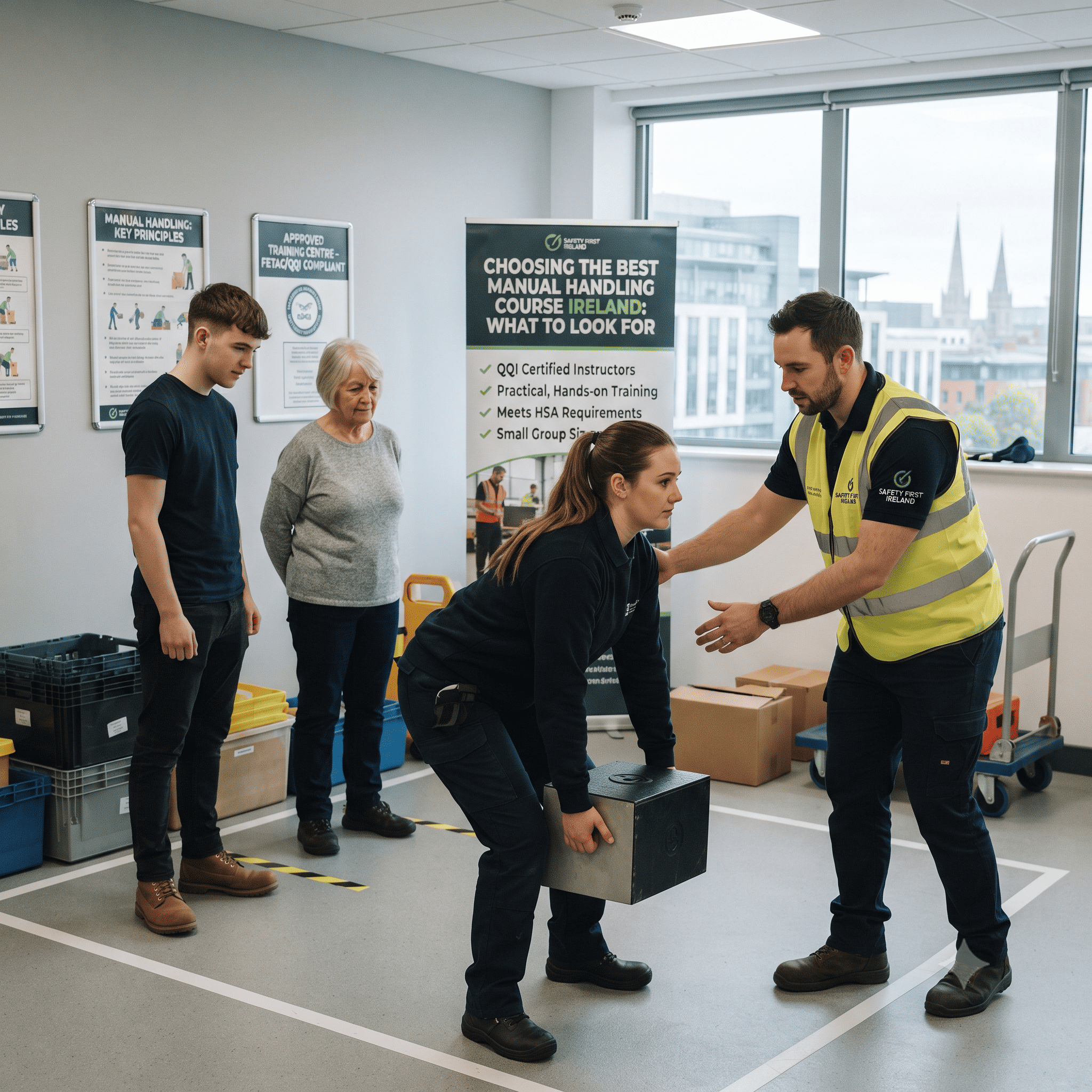
Manual handling is a fundamental part of many jobs across Ireland. From healthcare professionals moving patients to warehouse staff handling stock, retail employees restocking shelves, construction workers lifting materials, and office staff moving equipment, safe manual handling is essential for reducing workplace injuries and creating healthier working environments.
With the growing popularity of online learning, there are now many providers offering Manual Handling Training Ireland. While having plenty of options is beneficial, it can also make choosing the right course more difficult. The cheapest course is not always the best, and the most expensive course does not automatically provide the highest quality learning experience.
A well-designed Manual Handling Course Ireland should do more than provide a certificate. It should help learners understand manual handling principles, recognise workplace hazards, apply safe lifting techniques, and confidently use this knowledge in real working environments. After successful completion, participants receive a Manual Handling Certificate Ireland, demonstrating that they have completed recognised workplace safety training.
This guide explains the most important factors to consider when choosing a manual handling course and how selecting the right provider benefits both employees and employers.
Why Choosing the Right Course Matters
Manual handling training is designed to reduce workplace injuries and improve employee safety.
A high-quality course helps participants:
- Learn safe lifting techniques.
- Understand workplace hazards.
- Assess manual handling risks.
- Develop safer working habits.
- Protect long-term health.
Choosing the right course means gaining practical knowledge that can be applied every day, rather than simply completing a training requirement.
Look for Comprehensive Course Content
A quality Manual Handling Course Ireland should cover all the essential topics needed for safe manual handling.
The course should include:
- Manual handling principles
- Safe lifting techniques
- Risk assessment
- Hazard awareness
- Correct body mechanics
- Safe use of mechanical aids
- Workplace responsibilities
- Practical examples
Comprehensive training gives learners a complete understanding of safe manual handling rather than focusing only on basic lifting techniques.
Ensure the Course Is Relevant to Irish Workplaces
When selecting a training provider, choose a course that is designed for workplaces in Ireland.
The content should reflect common Irish working environments, including industries such as:
- Healthcare
- Construction
- Warehousing
- Manufacturing
- Retail
- Hospitality
- Logistics
- Education
- Office environments
Relevant examples make it easier for learners to apply the information to their own roles.
Flexible Online Learning
One of the biggest advantages of modern training is flexibility.
Many people balance work, family, and other commitments, making it difficult to attend classroom sessions.
A good online Manual Handling Training Ireland programme allows learners to:
- Study at their own pace.
- Learn from any location.
- Access training at any time.
- Continue learning across multiple devices.
- Fit training around work schedules.
Flexibility makes it easier to complete the course without disrupting daily responsibilities.
Easy-to-Understand Lessons
Manual handling training should be straightforward and practical.
The best courses present information clearly using:
- Simple explanations
- Step-by-step guidance
- Real workplace scenarios
- Visual demonstrations
- Logical course structure
Clear instruction helps learners understand and remember important safety concepts.
Practical Demonstrations
Although online learning is convenient, practical examples remain essential.
High-quality courses often include demonstrations showing:
- Correct lifting techniques
- Safe carrying methods
- Proper posture
- Team lifting
- Safe use of mechanical aids
Seeing these techniques in action helps learners apply them correctly in the workplace.
Mobile-Friendly Learning
Modern learners often use different devices throughout the day.
A quality course should work smoothly on:
- Desktop computers
- Laptops
- Tablets
- Smartphones
This flexibility allows participants to continue learning wherever they are.
Self-Paced Progress
Everyone learns differently.
Some participants complete training quickly, while others prefer to review lessons carefully.
A self-paced Manual Handling Course Ireland allows learners to:
- Pause training.
- Repeat lessons.
- Review difficult topics.
- Learn without unnecessary pressure.
Self-paced learning often improves understanding and confidence.
Clear Assessment Process
An effective course should include an assessment that confirms learners understand the material.
Assessments help reinforce:
- Safe lifting techniques
- Risk assessment
- Hazard awareness
- Manual handling principles
- Workplace safety responsibilities
A well-designed assessment ensures participants can apply what they have learned.
Fast Certificate Delivery
After successfully completing the course, learners should receive their Manual Handling Certificate Ireland promptly.
Quick certification benefits:
- Job applicants
- New employees
- Existing staff renewing certification
- Employers maintaining training records
Efficient certificate delivery helps avoid unnecessary delays.
Responsive Customer Support
Reliable training providers offer support when learners need assistance.
Good customer service may include help with:
- Course access
- Technical issues
- Certificate questions
- Login problems
- General enquiries
Responsive support improves the overall learning experience.
Positive Learning Experience
The best courses are engaging rather than overwhelming.
Participants should finish training feeling:
- More confident
- Better informed
- Prepared for workplace manual handling
- Motivated to apply safer working practices
An enjoyable learning experience improves knowledge retention.
Benefits for Employees
Choosing a high-quality Manual Handling Training Ireland programme provides numerous benefits.
These include:
- Greater workplace confidence
- Improved lifting techniques
- Better hazard awareness
- Reduced injury risk
- Enhanced employability
- Professional development
- Long-term health protection
Employees gain practical skills that support them throughout their careers.
Benefits for Employers
Employers also benefit when staff complete quality training.
Advantages include:
- Fewer workplace injuries
- Reduced absenteeism
- Improved productivity
- Better compliance with health and safety responsibilities
- Lower compensation costs
- Stronger workplace safety culture
- Consistent training across teams
Well-trained employees contribute to safer and more efficient workplaces.
Questions to Ask Before Choosing a Course
Before enrolling, consider asking:
- Is the course easy to complete online?
- Can I learn at my own pace?
- Does the course include practical demonstrations?
- Is it suitable for my industry?
- Will I receive a recognised certificate after successful completion?
- Can I access the course on my phone or tablet?
- Is customer support available if needed?
Answering these questions helps ensure you choose the right training provider.
Why Online Training Continues to Grow
More organisations across Ireland now choose online learning because it offers flexibility without compromising quality.
Online training allows employees to:
- Complete courses around work schedules.
- Learn from home or the workplace.
- Avoid travel time.
- Access training quickly.
- Receive certification efficiently.
These advantages make online learning a practical solution for businesses of all sizes.
Investing in Workplace Safety
Choosing the right Manual Handling Course Ireland is ultimately an investment in workplace safety.
Effective training helps employees:
- Recognise hazards before lifting.
- Assess risks.
- Apply correct lifting techniques.
- Protect their health.
- Support colleagues.
- Contribute to a positive safety culture.
The benefits extend far beyond earning a certificate.
Creating Long-Term Safe Working Habits
The most valuable manual handling courses encourage lasting behavioural change.
Employees who receive quality training are more likely to:
- Plan manual handling tasks carefully.
- Use mechanical aids whenever appropriate.
- Ask for assistance with heavy or awkward loads.
- Follow safe lifting procedures consistently.
- Report workplace hazards.
- Continue applying safe techniques long after completing the course.
These habits help create healthier workplaces where safety becomes part of everyday operations rather than an occasional reminder.
Conclusion
Choosing the best Manual Handling Course Ireland is about far more than finding the quickest or least expensive option. A high-quality course should provide practical knowledge, clear instruction, flexible learning, and real-world examples that help employees perform manual handling tasks safely and confidently.
A professional Manual Handling Training Ireland programme equips learners with essential skills such as safe lifting techniques, hazard awareness, risk assessment, and the correct use of mechanical aids. Completing a recognised Manual Handling Certificate Ireland demonstrates a commitment to workplace safety, professional development, and responsible working practices.
For employers, investing in quality manual handling training helps reduce workplace injuries, lower absenteeism, improve productivity, and strengthen compliance with health and safety responsibilities. For employees, it provides valuable knowledge that supports long-term wellbeing and career development. By carefully selecting the right training provider, individuals and organisations across Ireland can build safer workplaces and promote a culture where safe manual handling is part of everyday working life.