



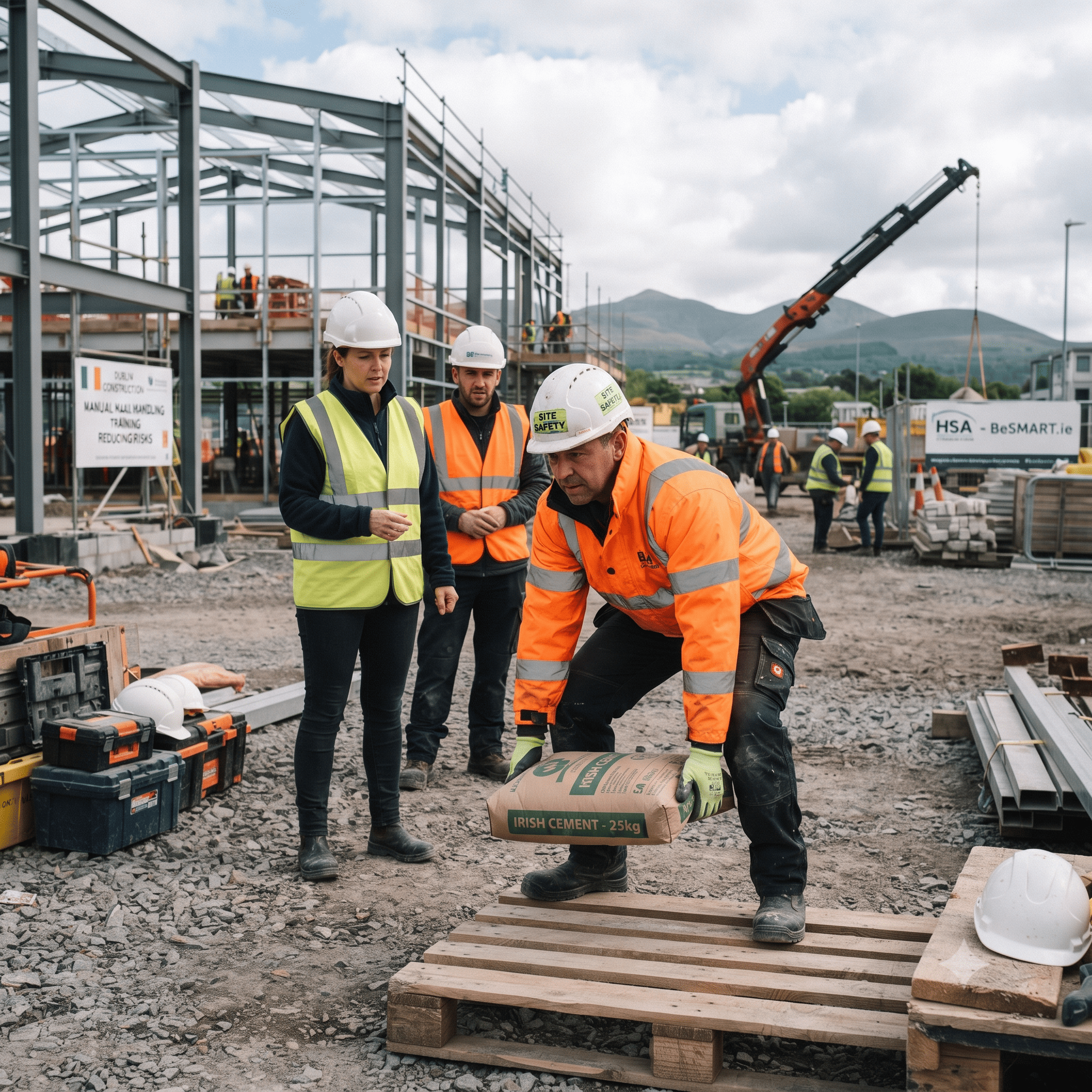
Construction is one of the most physically demanding industries in Ireland. Every day, construction workers lift heavy materials, carry tools, transport equipment, move supplies, and perform repetitive manual handling tasks in constantly changing environments. While these activities are essential to completing projects, they also expose workers to a high risk of injury if they are not carried out safely.
Back injuries, muscle strains, shoulder problems, and other musculoskeletal disorders remain some of the most common workplace injuries on construction sites. Many of these injuries occur because of poor lifting techniques, inadequate planning, or failing to recognise hazards before beginning a task.
A professional Manual Handling Training Ireland programme helps construction workers understand how to perform manual handling tasks safely while reducing physical strain. Through a recognised Manual Handling Course Ireland, employees learn safe lifting techniques, risk assessment, hazard awareness, and the correct use of mechanical aids. Completing a Manual Handling Certificate Ireland demonstrates that workers have received appropriate training and are committed to maintaining high safety standards on site.
This guide explores how manual handling training reduces injury risks on construction sites and why it should be an essential part of every construction company's health and safety programme.
Why Manual Handling Is Critical in Construction
Construction work involves far more than operating machinery or assembling structures. Throughout every stage of a project, workers regularly perform manual handling tasks.
Typical examples include:
- Carrying bricks and blocks
- Moving timber
- Lifting bags of cement
- Transporting power tools
- Handling scaffolding components
- Moving pipes and cables
- Loading and unloading deliveries
- Carrying plasterboard sheets
- Positioning building materials
Many of these tasks involve awkward shapes, uneven loads, or challenging site conditions, making safe manual handling especially important.
Common Manual Handling Injuries on Construction Sites
Construction workers frequently experience injuries caused by repeated physical strain or poor lifting techniques.
Common injuries include:
- Lower back pain
- Muscle strains
- Shoulder injuries
- Neck pain
- Knee injuries
- Wrist strains
- Hernias
- Long-term musculoskeletal disorders
These injuries often develop gradually through repeated unsafe lifting rather than one major accident.
Proper training significantly reduces these risks.
Why Construction Sites Present Additional Risks
Unlike controlled indoor environments, construction sites constantly change.
Workers may encounter:
- Uneven ground
- Mud and loose gravel
- Wet surfaces
- Limited working space
- Poor weather conditions
- Slopes and uneven levels
- Moving vehicles
- Temporary structures
These factors make proper planning even more important before carrying out manual handling tasks.
Understanding Safe Manual Handling
A professional Manual Handling Course Ireland teaches workers that safe lifting begins before touching the load.
Employees learn to assess:
- The weight of the load
- Its size and shape
- Stability
- The route to be taken
- Potential obstacles
- Whether lifting aids are available
- Whether assistance is required
Taking just a few moments to plan can prevent many construction site injuries.
Using Correct Lifting Techniques
Correct lifting techniques form the foundation of safe manual handling.
Workers are taught to:
- Stand with a stable base.
- Keep their feet shoulder-width apart.
- Bend their knees rather than their back.
- Maintain a neutral spine.
- Hold materials close to the body.
- Lift smoothly using the legs.
- Avoid twisting while carrying.
Applying these techniques consistently helps reduce strain on the muscles and joints.
Planning Before Every Lift
Construction workers often move large quantities of materials throughout the day.
Before lifting, employees should consider:
- Where the load is going.
- The safest route.
- Ground conditions.
- Weather conditions.
- Available assistance.
- Safe storage locations.
Good planning improves both safety and efficiency.
Recognising Site Hazards
Construction sites contain numerous hazards that can affect manual handling.
Examples include:
- Loose debris
- Slippery surfaces
- Uneven ground
- Poor lighting
- Narrow walkways
- Excavations
- Trailing cables
- Restricted access
Recognising these hazards before lifting helps prevent trips, slips, and falls while carrying loads.
Avoiding Overloading
Construction workers sometimes attempt to carry more than they safely should in order to save time.
This often results in:
- Poor posture
- Reduced visibility
- Fatigue
- Loss of balance
- Back injuries
Employees should always understand their physical limits and never hesitate to request assistance.
Working safely is always more efficient than recovering from an injury.
Using Mechanical Aids
Modern construction sites provide equipment designed to reduce manual lifting.
Examples include:
- Forklifts
- Pallet trucks
- Wheelbarrows
- Material hoists
- Cranes
- Mechanical lifting devices
- Trolleys
A quality Manual Handling Training Ireland programme teaches workers when these aids should be used and why they improve safety.
Using lifting equipment wherever practical reduces physical strain and increases productivity.
Team Lifting Heavy Loads
Certain construction materials cannot be safely moved by one person.
Examples include:
- Steel beams
- Large timber sections
- Glass panels
- Plasterboard sheets
- Heavy machinery components
When carrying out team lifts, workers should:
- Agree on the lifting plan.
- Nominate one person to coordinate.
- Lift simultaneously.
- Communicate throughout the movement.
- Move at the same pace.
Good teamwork prevents confusion and reduces injury risks.
Reducing Fatigue on Site
Construction work is physically demanding.
Fatigue affects:
- Concentration
- Balance
- Reaction times
- Posture
- Decision-making
Employees should:
- Take scheduled breaks.
- Stay hydrated.
- Alternate demanding tasks where possible.
- Use lifting equipment.
- Follow proper lifting techniques consistently.
Managing fatigue is an important part of injury prevention.
Good Housekeeping Improves Safety
A tidy construction site supports safer manual handling.
Workers should help maintain:
- Clear walkways
- Organised storage areas
- Safe access routes
- Proper waste disposal
- Good lighting where possible
Removing unnecessary obstacles reduces many avoidable accidents.
Supporting Legal Compliance
Construction employers have legal responsibilities to protect workers from manual handling risks.
Providing recognised Manual Handling Training Ireland helps organisations:
- Reduce workplace hazards.
- Improve employee competence.
- Support health and safety compliance.
- Demonstrate commitment to employee wellbeing.
Training records and a Manual Handling Certificate Ireland also provide evidence that workers have received appropriate instruction.
Benefits for Construction Employers
Investing in manual handling training provides significant business benefits.
These include:
- Fewer workplace injuries
- Reduced absenteeism
- Higher productivity
- Improved employee confidence
- Better teamwork
- Lower compensation costs
- Stronger safety culture
- Improved project efficiency
Healthy workers contribute to safer and more successful construction projects.
Online Manual Handling Training for Construction Workers
Many construction companies now choose online training because it offers flexibility for busy teams.
Advantages include:
- Learn from any location.
- Complete training around work schedules.
- Reduce travel time.
- Consistent training across multiple sites.
- Easy induction for new employees.
- Fast certification upon successful completion.
Online learning allows employers to train staff efficiently while minimising disruption to ongoing projects.
Why Every Construction Worker Should Hold a Manual Handling Certificate
A recognised Manual Handling Certificate Ireland confirms that a worker understands:
- Safe lifting techniques
- Risk assessment
- Hazard awareness
- Correct body mechanics
- Safe manual handling procedures
Many construction employers request certification before workers begin physically demanding roles.
Certification also demonstrates professionalism and a commitment to workplace safety.
Creating a Safer Construction Site
Manual handling training is most effective when combined with a strong safety culture.
Construction companies should encourage workers to:
- Report hazards immediately.
- Plan every lift.
- Use mechanical aids whenever available.
- Communicate during team lifts.
- Follow safe procedures consistently.
- Avoid unnecessary risks.
These behaviours contribute to a safer and more productive workplace for everyone on site.
Conclusion
Manual handling is an unavoidable part of construction work, but injuries caused by poor lifting techniques and unsafe working practices are largely preventable. Construction sites present unique challenges, including uneven ground, changing environments, heavy materials, and demanding physical tasks. These risks make proper manual handling training essential for every worker.
A professional Manual Handling Training Ireland programme equips construction employees with the practical skills needed to assess risks, lift safely, use mechanical aids correctly, and recognise hazards before accidents occur. Through a comprehensive Manual Handling Course Ireland, workers develop the confidence and knowledge required to protect themselves and their colleagues on site.
Earning a recognised Manual Handling Certificate Ireland demonstrates a commitment to workplace safety, legal compliance, and professional standards. For construction companies across Ireland, investing in manual handling training is more than meeting health and safety obligations—it is an investment in healthier employees, fewer workplace injuries, improved productivity, and safer construction sites for everyone.