



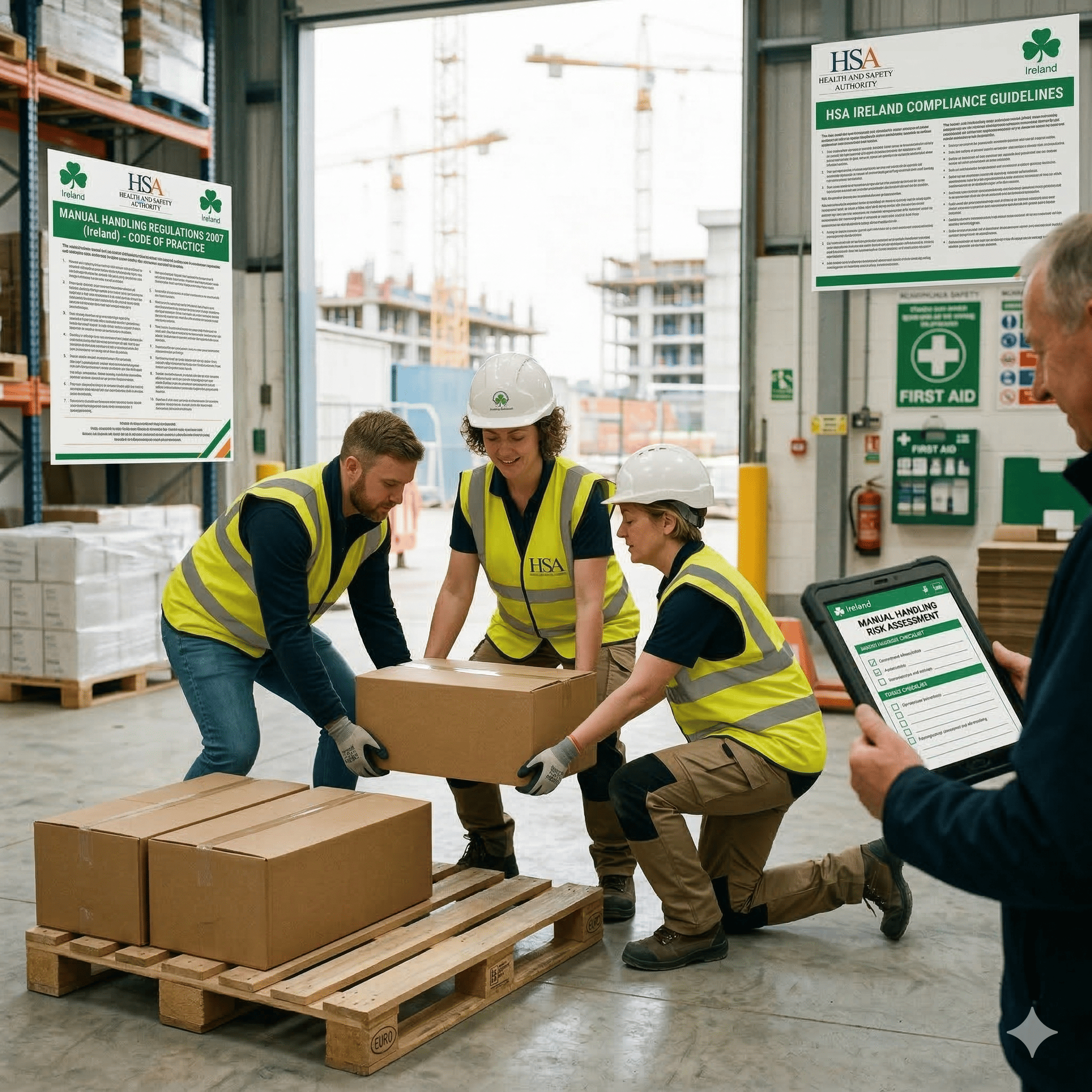
Workplace safety is a critical concern for businesses across Ireland, especially in industries where employees handle heavy loads or perform physically demanding tasks. Manual handling compliance Ireland ensures that organizations meet legal and safety requirements while protecting employees from injuries caused by improper lifting, carrying, pushing, or moving of objects.
Completing manual handling training Ireland and obtaining manual handling certification Ireland is a key step for businesses and workers to adhere to these regulations. Understanding the fundamentals of compliance, the responsibilities of employers, and the role of training is essential for maintaining a safe and efficient workplace.
This guide covers everything you need to know about manual handling compliance in Ireland.
What Is Manual Handling Compliance?
Manual handling compliance refers to the adherence to workplace safety regulations and best practices that govern how employees handle physical loads. These regulations are designed to minimize the risk of injury and ensure that all workers are trained to handle objects safely.
Compliance covers:
-
Safe lifting, carrying, pushing, and pulling techniques
-
Risk assessment procedures
-
Use of mechanical aids or team lifting when necessary
-
Training and certification requirements for employees
-
Proper workplace setup to prevent hazards
Organizations that meet these standards demonstrate a commitment to employee safety and regulatory responsibility.
The Importance of Manual Handling Compliance
Adhering to manual handling compliance Ireland is important for several reasons:
1. Reduces Workplace Injuries
Manual handling injuries are among the most common causes of workplace accidents in Ireland. Compliance ensures that employees are trained to use correct techniques, reducing the risk of back strains, muscle injuries, and long-term musculoskeletal problems.
2. Promotes a Safe Work Environment
Compliance establishes clear safety standards, creating a culture where employees prioritize safe handling practices and are aware of potential hazards in their work environment.
3. Legal Responsibility
Employers have a legal duty to provide a safe working environment under Irish health and safety legislation. Failing to comply with manual handling regulations can result in fines, legal action, and reputational damage.
4. Enhances Productivity
Employees trained in safe manual handling are more confident and efficient in completing their tasks. Fewer injuries also mean reduced absenteeism, allowing workplaces to maintain smooth operations.
Who Is Responsible for Compliance?
Both employers and employees play a role in ensuring manual handling compliance Ireland:
Employer Responsibilities
-
Provide appropriate manual handling training Ireland for staff
-
Conduct risk assessments for tasks involving manual handling
-
Ensure employees have access to lifting aids and equipment
-
Monitor compliance with safety procedures
-
Maintain records of employee training and certification
Employee Responsibilities
-
Follow safe handling procedures learned in training
-
Use equipment or request assistance for heavy loads
-
Report potential hazards or unsafe practices
-
Participate in refresher training when required
Compliance is a shared responsibility, and effective communication between management and staff is essential for maintaining safety.
The Role of Manual Handling Training
A key element of manual handling compliance Ireland is providing employees with proper training. A manual handling course Ireland teaches workers how to lift, carry, push, and pull loads safely. Training covers:
-
Proper lifting techniques and posture
-
Assessing loads before handling
-
Avoiding hazardous movements such as twisting
-
Recognizing and managing workplace risks
-
Using mechanical aids and team lifting
Completing training leads to manual handling certification Ireland, which demonstrates that employees are equipped with the knowledge and skills to handle loads safely.
Online Training and Compliance
Modern workplaces increasingly use manual handling training online Ireland to reach remote or hybrid teams. Online training provides several compliance-related advantages:
-
Flexible learning schedules for employees
-
Consistent delivery of safety content across locations
-
Easy tracking of employee completion and certification
-
Cost-effective training with reduced travel and venue costs
Online courses help organizations maintain compliance while providing employees with the flexibility to complete training without disrupting work schedules.
Industries Where Compliance Is Crucial
Compliance is particularly important in industries where manual handling tasks are frequent and physically demanding:
-
Construction: Handling heavy tools, equipment, and building materials
-
Healthcare: Assisting patients and moving medical equipment safely
-
Warehousing and logistics: Moving stock, pallets, and packages
-
Retail: Managing deliveries, stocking shelves, and organizing products
-
Manufacturing: Operating machinery and lifting raw materials
In these industries, failure to comply with manual handling regulations can result in serious injuries and operational disruptions.
Benefits of Ensuring Manual Handling Compliance
Maintaining manual handling compliance Ireland provides numerous benefits for organizations and employees:
-
Reduced workplace injuries: Proper training and safe practices prevent accidents
-
Lower absenteeism: Healthy employees take fewer sick days due to injuries
-
Enhanced safety culture: Employees are more aware of hazards and best practices
-
Improved efficiency: Trained workers complete tasks safely and effectively
-
Legal protection: Compliance reduces the risk of penalties and legal issues
These benefits make compliance a smart investment for long-term workplace safety and productivity.
Steps to Achieve Compliance
Organizations can follow these steps to ensure manual handling compliance Ireland:
-
Conduct a workplace risk assessment
-
Identify tasks that require manual handling training
-
Provide employees with a manual handling course Ireland
-
Issue manual handling certification Ireland upon successful completion
-
Monitor adherence to safe handling practices
-
Schedule refresher training to maintain knowledge and skills
By following these steps, businesses can protect employees while maintaining a safe and legally compliant workplace.
Conclusion
Manual handling compliance Ireland is essential for protecting employees, meeting legal requirements, and maintaining efficient workplace operations. Proper training, risk assessment, and adherence to safe handling procedures are key to reducing injuries and promoting a culture of safety.
Providing manual handling training Ireland and ensuring employees receive manual handling certification Ireland are critical steps in achieving compliance. With modern options like manual handling training online Ireland, organizations can reach employees across multiple locations, maintain consistent safety standards, and foster a safer, more productive workforce.
Compliance is not just a legal obligation—it is an investment in employee wellbeing, organizational efficiency, and long-term workplace safety.