



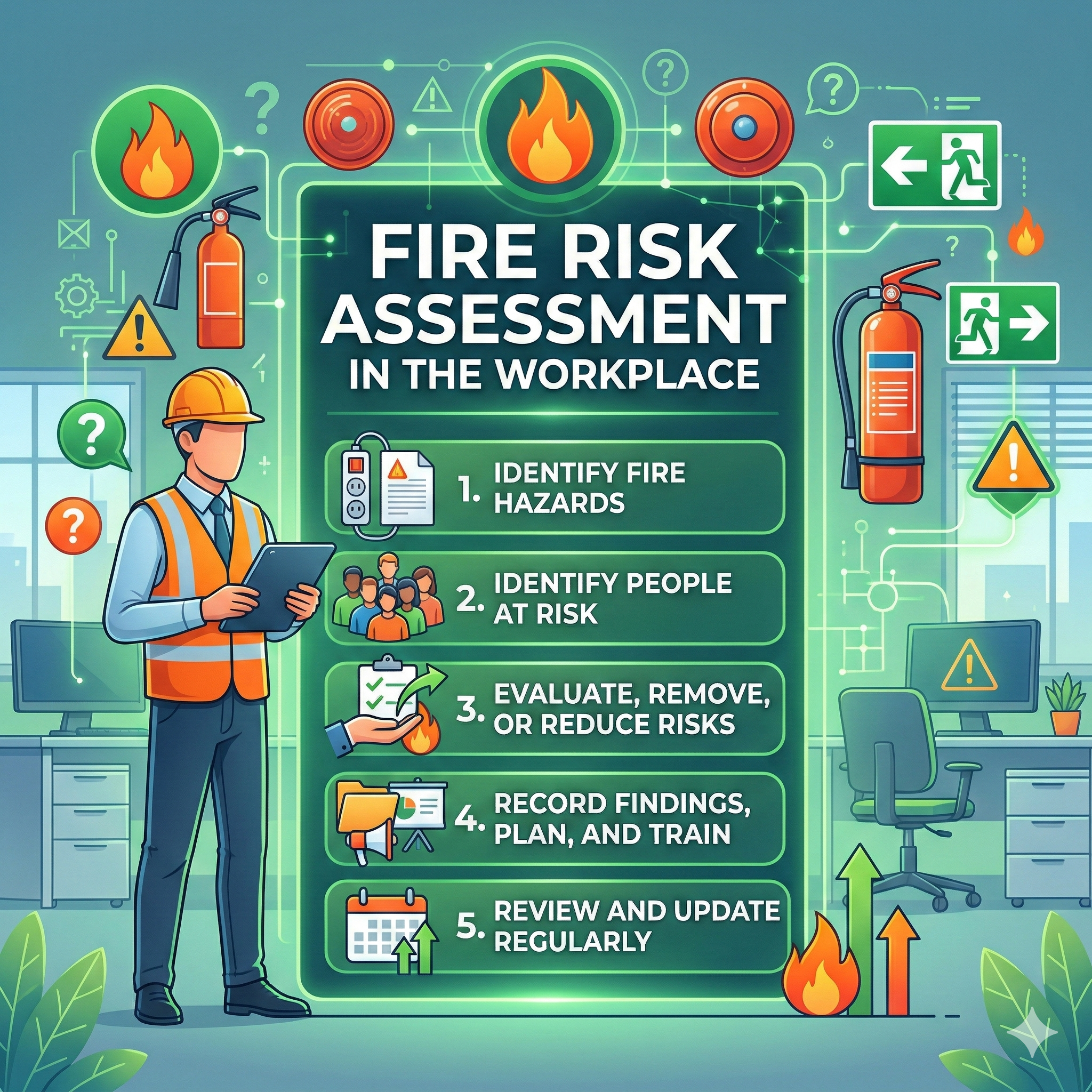
A Fire Risk Assessment in the Workplace is a legal requirement and a vital part of effective fire safety training in Ireland. It is the structured process of identifying fire hazards, evaluating risks, and implementing control measures to protect employees, visitors, and property.
Every employer in Ireland has a duty to ensure that fire risks are properly assessed and managed. Conducting a fire risk assessment is not just about compliance — it is about preventing incidents before they occur and strengthening overall workplace fire safety training in Ireland.
What Is a Fire Risk Assessment?
A fire risk assessment is a systematic review of a workplace to determine:
-
What could cause a fire (hazards)
-
Who could be harmed
-
How serious the risk is
-
What measures are in place to reduce the risk
-
What additional actions are required
Guidance and enforcement fall under the responsibility of the Health and Safety Authority (HSA), which requires employers to identify hazards and provide appropriate fire safety awareness training in Ireland.
Completing a recognised fire safety course in Ireland ensures managers and staff understand how this process works.
The Five Key Steps of a Fire Risk Assessment
1. Identify Fire Hazards
The first step is identifying potential ignition sources, fuels, and oxygen supplies — based on the Fire Triangle.
Common workplace fire hazards include:
-
Faulty or overloaded electrical systems
-
Portable heaters
-
Flammable liquids and chemicals
-
Paper, cardboard, and packaging
-
Waste accumulation
-
Hot works such as welding
Effective fire prevention training in Ireland helps employees recognise and control these risks.
2. Identify People at Risk
Employers must consider:
-
Employees
-
Visitors and contractors
-
People with disabilities
-
Lone workers
-
Night staff
Proper evacuation planning, covered in health and safety fire training in Ireland, ensures all individuals can exit safely during an emergency.
3. Evaluate and Reduce the Risks
Once hazards and vulnerable persons are identified, employers must evaluate:
-
The likelihood of a fire starting
-
The potential consequences
-
Whether current fire safety measures are sufficient
Risk reduction may involve:
-
Improving housekeeping
-
Installing fire detection and alarm systems
-
Providing fire extinguishers
-
Upgrading emergency lighting
-
Delivering structured fire safety training in Ireland
Appointing trained personnel through fire warden training in Ireland or fire marshal training in Ireland also strengthens emergency preparedness.
4. Record Findings and Implement Improvements
Irish legislation requires employers to document significant findings and actions taken. Records should include:
-
Identified hazards
-
Control measures in place
-
Required improvements
-
Training completed
-
Review dates
Maintaining documentation supports compliance and demonstrates commitment to fire safety certification in Ireland standards.
5. Review and Update Regularly
A fire risk assessment must be reviewed:
-
Annually
-
After workplace layout changes
-
When new equipment is installed
-
After incidents or near misses
-
When staff numbers change
Regular updates ensure ongoing compliance and align with best practices taught in online fire safety training in Ireland.
Why Fire Risk Assessments Are Essential
A properly conducted fire risk assessment helps organisations:
-
Prevent workplace fires
-
Protect lives
-
Minimise property damage
-
Avoid legal penalties
-
Maintain business continuity
Without a structured approach, even small hazards can escalate quickly. Integrating fire risk assessment principles into workplace fire safety training in Ireland ensures that prevention becomes part of everyday operations.
Conclusion
Fire Risk Assessment in the Workplace is a cornerstone of effective fire safety training in Ireland. By identifying hazards, evaluating risks, and implementing preventative measures, employers meet their legal responsibilities and create safer environments for everyone.
When supported by ongoing fire safety awareness training in Ireland, recognised fire safety certification in Ireland, and strong fire prevention training in Ireland, fire risk assessments become more than a compliance exercise — they become a proactive strategy for protecting people, property, and business continuity.