



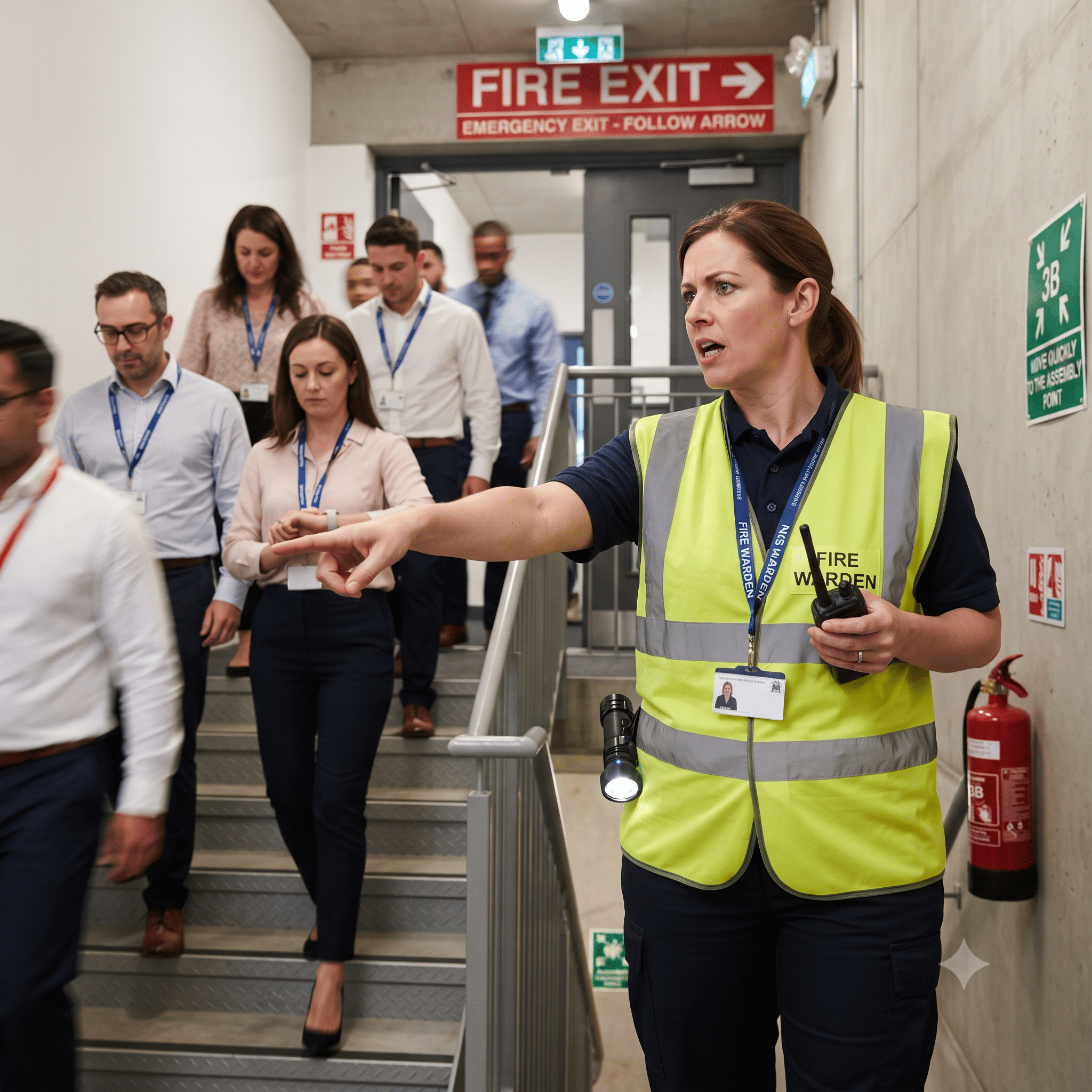
Every workplace in Ireland should be prepared for the possibility of a fire emergency. Although employers work hard to reduce fire risks through prevention measures, no workplace is completely immune to unexpected incidents. When a fire alarm sounds, employees need clear instructions, organised evacuation procedures, and trained individuals who can help ensure everyone leaves the building safely. This is where a trained fire warden plays a vital role.
Completing Fire Warden Training Ireland equips designated employees with the knowledge and confidence to respond effectively during emergencies. Their role is not to replace firefighters or put themselves at unnecessary risk, but to help coordinate a safe evacuation, support emergency procedures, and reduce confusion when every second matters.
In this guide, we'll explain the responsibilities of a fire warden during a workplace emergency, what happens before and after an evacuation, and why professional fire warden training is essential for businesses across Ireland.
What Is a Fire Warden?
A fire warden, sometimes referred to as a fire marshal, is an employee appointed to assist with workplace fire safety.
Fire wardens help maintain a safe working environment by:
- Promoting fire prevention.
- Identifying fire hazards.
- Supporting emergency planning.
- Assisting with evacuations.
- Encouraging employees to follow workplace fire safety procedures.
Although much of their work focuses on preventing fires before they happen, their responsibilities become particularly important during an emergency.
Why Fire Wardens Are Important During Emergencies
A fire emergency can quickly create stress and uncertainty. Employees may panic, visitors may be unfamiliar with escape routes, and valuable time can be lost if evacuation procedures are not followed.
A trained fire warden helps reduce these problems by providing clear guidance and supporting an organised evacuation.
Their presence helps:
- Improve communication.
- Reduce confusion.
- Encourage calm behaviour.
- Assist vulnerable individuals where appropriate.
- Help emergency services by providing useful information.
This organised approach contributes to a safer evacuation for everyone.
Responsibilities Before an Emergency
Good emergency responses begin long before an alarm sounds.
Fire wardens help prepare workplaces by:
- Identifying potential fire hazards.
- Reporting faulty fire safety equipment.
- Monitoring emergency exits.
- Supporting workplace fire drills.
- Encouraging good housekeeping.
- Promoting fire safety awareness.
These preventative actions reduce the likelihood of fire incidents occurring.
Responsibilities When a Fire Alarm Sounds
The moment a fire alarm activates, the fire warden's role becomes focused on helping people evacuate safely and efficiently.
Stay Calm
One of the first responsibilities is remaining calm.
Employees often look to trained personnel for guidance during emergencies. A calm and confident fire warden helps reduce panic and encourages others to respond appropriately.
Remaining composed also helps the fire warden make clear decisions while following workplace emergency procedures.
Encourage Immediate Evacuation
Fire wardens should encourage everyone to leave the building promptly using the designated escape routes.
They should remind employees to:
- Stop work immediately.
- Leave personal belongings behind.
- Avoid unnecessary delays.
- Follow evacuation procedures.
- Proceed directly to the assembly point.
Every second counts during a fire emergency, making prompt evacuation essential.
Guide Employees Towards Emergency Exits
One of the key responsibilities during an emergency is directing employees towards the safest available exits.
Fire wardens help by:
- Pointing out escape routes.
- Preventing congestion.
- Directing people away from hazardous areas.
- Encouraging orderly movement.
Their knowledge of the building layout allows evacuations to proceed more efficiently.
Assist Visitors
Visitors are often unfamiliar with the workplace and may not know where emergency exits or assembly points are located.
Fire wardens should:
- Guide visitors towards exits.
- Reassure them.
- Answer simple questions if time allows.
- Ensure they reach the assembly point safely.
Providing assistance helps reduce confusion during evacuations.
Check Designated Areas
Where workplace procedures require it and only if it is safe to do so, fire wardens may check designated areas to help ensure everyone has evacuated.
These checks may include:
- Meeting rooms.
- Kitchens.
- Toilets.
- Storage rooms.
- Offices.
Fire wardens should never place themselves in danger or enter smoke-filled or hazardous areas.
Personal safety always takes priority.
Help Maintain Order
During an evacuation, people may attempt to:
- Return for belongings.
- Use lifts.
- Re-enter the building.
- Ignore evacuation instructions.
Fire wardens help maintain order by reminding employees to follow emergency procedures and continue towards the assembly point.
Their calm guidance helps prevent unnecessary delays.
Direct People to the Assembly Point
Every workplace should have designated assembly points where employees gather after evacuating.
Fire wardens help ensure people:
- Proceed directly to the correct location.
- Remain together.
- Wait for further instructions.
- Avoid re-entering the building.
Assembly points also make it easier to account for everyone who has evacuated.
Report Missing Persons
If anyone is believed to remain inside the building, fire wardens should report this information to the emergency services as quickly as possible.
Important details may include:
- Last known location.
- Possible reason they remained inside.
- Any mobility concerns.
- Relevant workplace information.
This information can assist firefighters when planning their response.
Never Put Yourself at Risk
One of the most important lessons taught during Fire Warden Training Ireland is understanding personal safety.
Fire wardens are not firefighters.
They should never:
- Enter smoke-filled areas.
- Attempt dangerous rescues.
- Fight large fires.
- Ignore workplace emergency procedures.
Their primary responsibility is helping people evacuate safely while protecting themselves.
Responsibilities After Evacuation
The role of a fire warden continues even after everyone has left the building.
Typical responsibilities include:
- Remaining at the assembly point.
- Helping account for employees.
- Assisting visitors.
- Sharing relevant information with emergency services.
- Following instructions from firefighters.
No one should re-enter the building until emergency services declare it safe.
What Happens After the Incident?
Following an emergency, employers often review what happened to improve future procedures.
Fire wardens may assist by:
- Providing observations.
- Discussing evacuation performance.
- Identifying areas for improvement.
- Suggesting changes to emergency procedures.
These reviews help strengthen future emergency planning.
How Fire Warden Training Prepares You
A professional Fire Warden Training Ireland course provides learners with the skills required to respond confidently during emergencies.
Typical course topics include:
Fire Safety Principles
Learners understand:
- How fires start.
- Fire development.
- Common workplace hazards.
- Fire prevention strategies.
Emergency Procedures
Participants study:
- Alarm systems.
- Evacuation plans.
- Assembly points.
- Fire warden responsibilities.
- Communication during emergencies.
Fire Prevention
The course teaches practical methods for reducing workplace fire risks through:
- Good housekeeping.
- Safe storage.
- Electrical safety awareness.
- Routine workplace inspections.
Fire Extinguisher Awareness
Learners receive an introduction to different extinguisher types and when they may be appropriate to use, while always emphasising personal safety.
Why Online Fire Warden Training Is Popular
Many organisations choose Online Fire Warden Training Ireland because it offers flexibility without compromising learning quality.
Benefits include:
- Study at your own pace.
- Learn from anywhere.
- Immediate access after enrolment.
- Reduced travel costs.
- Minimal disruption to work.
- Convenient online certification.
Online learning allows businesses to train multiple employees efficiently while maintaining day-to-day operations.
Benefits for Irish Businesses
Employers who invest in Fire Warden Training Ireland benefit from:
- Better emergency preparedness.
- Improved fire prevention.
- Greater employee confidence.
- Stronger workplace safety culture.
- More organised evacuations.
- Reduced fire risks.
- Better overall business resilience.
Well-trained fire wardens contribute to a safer working environment every day.
Conclusion
During a workplace emergency, fire wardens play a vital role in protecting employees, visitors, and business operations. From encouraging calm behaviour and guiding evacuations to assisting visitors and communicating with emergency services, their responsibilities help ensure emergency procedures are carried out safely and effectively.
Completing Fire Warden Training Ireland gives designated employees the knowledge and confidence needed to respond appropriately when a fire occurs. It also helps employers strengthen workplace safety, improve emergency preparedness, and promote a culture of fire prevention.
Whether your organisation operates from a small office, a busy retail store, a warehouse, a construction site, or a healthcare facility, investing in professional fire warden training is an important step towards creating a safer workplace. With flexible online learning and recognised certification, becoming a trained fire warden is a practical way to help protect people and support effective emergency response throughout your organisation.