



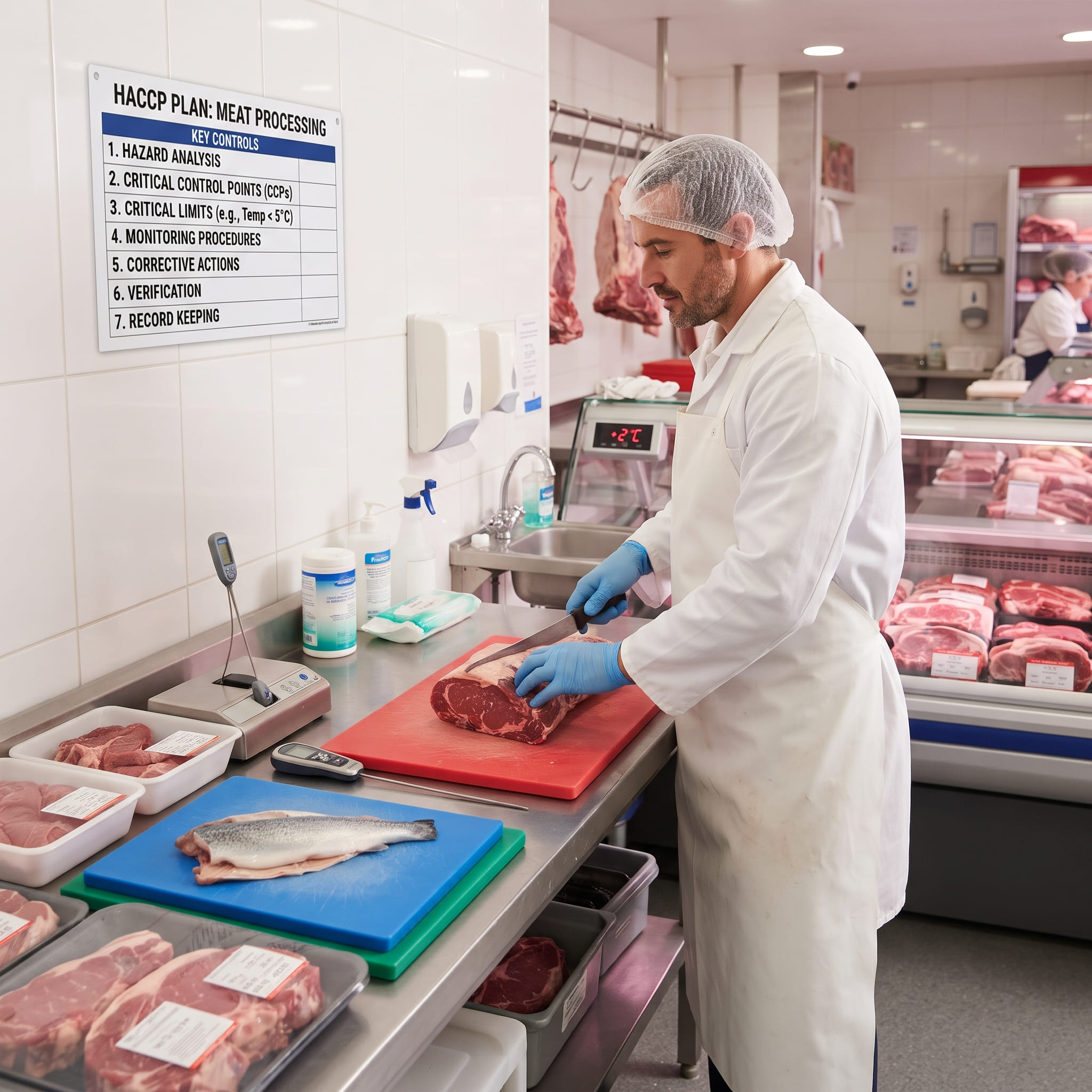
Butchers play an important role in the food supply chain by receiving, storing, cutting, preparing, packaging and selling meat products to customers. These activities require careful food safety management because raw meat can contain harmful microorganisms, while poor handling, unsuitable temperatures and inadequate cleaning can increase contamination risks.
Different meat products present different challenges. Poultry, minced meat, sausages, marinated products and ready-to-eat items may require specific handling procedures. Equipment such as knives, mincers, saws and cutting boards must also be maintained and cleaned properly to prevent contamination from spreading between products.
A Hazard Analysis and Critical Control Point (HACCP) system helps butchers identify potential hazards and establish appropriate controls throughout their operations. Suitable haccp training can help employees understand food hygiene responsibilities and apply safe practices consistently.
Understanding HACCP in a Butcher's Shop
HACCP is a systematic approach to identifying, assessing and controlling food safety hazards. In a butcher's shop, these hazards generally fall into three categories.
-
Biological hazards: Harmful microorganisms, including bacteria that may be present in raw meat or spread through contaminated hands, equipment and surfaces.
-
Chemical hazards: Cleaning chemical residues, unsuitable substances or undeclared allergens in processed meat products.
-
Physical hazards: Foreign objects such as bone fragments, metal pieces, packaging materials or damaged equipment components.
The risks depend on the products handled and the processes carried out. A business selling packaged cuts of meat may have different controls from one that minces meat, prepares sausages, marinates products or cooks ready-to-eat foods.
Each business should assess its own activities and develop food safety procedures that reflect the actual hazards involved. A suitable haccp food safety course can help staff understand basic food safety principles, but the business must also ensure that its procedures are appropriate for its products, premises and equipment.
Safe Receiving and Inspection of Meat
Food safety begins when meat arrives at the premises. Butchers should purchase products from suitable suppliers and check deliveries before accepting them into storage.
Staff should inspect packaging for damage, leaks, contamination and signs of poor handling. Meat should have acceptable characteristics and be transported under appropriate conditions. Where required by the business's procedures, delivery temperatures should be checked and recorded.
Products that arrive outside established acceptance criteria should be assessed before being accepted or used. If their safety cannot be established, they should not be placed into normal stock without an appropriate decision.
Delivery records and supplier information can help businesses trace products if a food safety concern arises. Traceability is particularly important when products need to be withdrawn or recalled.
Once accepted, meat should be moved promptly to the appropriate storage area. Leaving deliveries in an uncontrolled environment for extended periods can compromise temperature control and increase risk.
Temperature Control and Meat Storage
Temperature management is one of the most important food safety controls in a butcher's shop. Meat must be stored under suitable conditions to limit the growth of harmful microorganisms and preserve product quality.
Refrigerated and frozen products should be maintained at temperatures appropriate to their type, applicable requirements and the supplier's instructions. Businesses should establish monitoring procedures and ensure that refrigeration equipment operates correctly.
Raw meat should be stored in a way that prevents its juices from dripping onto other products. Where practical, different categories of meat should be separated, particularly when the products have different handling requirements. Ready-to-eat foods must be protected from raw meat and poultry.
Freezers should be checked to confirm that products remain appropriately frozen. Stock rotation and date checks help employees use ingredients within the relevant periods and identify products that should not be sold or processed.
Temperature records should be reviewed rather than simply completed. If a refrigerator fails or temperatures rise beyond established limits, staff should assess affected products and follow the business's corrective-action procedures.
Preventing Cross-Contamination During Cutting and Preparation
Cutting, trimming and preparing meat involve frequent contact between products, equipment and work surfaces. Without effective controls, microorganisms can spread from one item to another.
Knives, cutting boards, mincers, slicers and worktops should be cleaned and sanitised as appropriate between tasks. Cleaning procedures should account for equipment design and areas where meat residues can accumulate.
Raw poultry and other raw meat should be handled in ways that prevent contamination of ready-to-eat products. Separate equipment or clearly defined preparation arrangements may help reduce risk.
Employees should wash their hands thoroughly before handling food, after handling raw meat, after touching waste and whenever their hands may have become contaminated. Gloves, if used, must be changed when necessary and do not replace handwashing.
Staff should also avoid placing clean tools on contaminated surfaces or reusing containers without appropriate cleaning. Work areas should remain organised so that raw products, cleaned equipment and finished items are kept appropriately separate.
A haccp certification course may help employees develop their understanding of food hygiene hazards, but practical instruction is necessary to ensure they can apply the correct procedures when using equipment and handling meat.
Minced Meat, Sausages and Prepared Products
Mincing and processing meat can increase food safety risks because contamination on the surface of a cut may be distributed throughout the product. Minced meat therefore requires particularly careful handling and temperature control.
Mincers and other processing equipment should be assembled, used, dismantled and cleaned according to established procedures and manufacturer instructions. Meat should be kept under appropriate temperature conditions during preparation, and processing should be organised to avoid unnecessary delays.
Sausages, burgers, meatballs and marinated products should have clear ingredient information and be protected from cross-contamination. Where different recipes are produced using shared equipment, the business should consider allergen and ingredient cross-contact risks.
Products should be labelled and stored according to applicable requirements and the business's procedures. Staff must not assume that seasoning, marinating or other preparation steps make raw meat safe to eat.
Where a butcher prepares cooked or ready-to-eat products, these should be managed separately from raw meat to prevent contamination after cooking.
Cleaning, Sanitisation and Equipment Maintenance
Meat residues, fat and moisture can accumulate on surfaces and machinery. If cleaning is inadequate, these residues can contribute to contamination and create conditions that attract pests.
A documented cleaning schedule should identify what needs to be cleaned, how frequently cleaning must take place, which products should be used and who is responsible. Cleaning and sanitisation should be carried out using suitable methods and in accordance with product instructions.
Particular attention should be given to mincers, saws, slicers, weighing equipment, drains, cold rooms and other areas where residues may accumulate. Equipment should be dismantled for cleaning when required and safe to do so.
Cleaning chemicals must be stored away from food and used correctly to prevent chemical contamination. Equipment should also be inspected and maintained to reduce the risk of damaged components, loose parts or other physical hazards entering food.
Regular checks help identify cleaning problems before they become persistent. If an area or piece of equipment is not adequately clean, it should be cleaned again before being used for food handling.
Personal Hygiene and Pest Prevention
Employees can introduce contamination into a butcher's shop if personal hygiene practices are poor. Staff should wear clean protective clothing appropriate to their duties and follow handwashing procedures throughout the working day.
Cuts and wounds should be managed using suitable waterproof dressings, with additional protective measures where necessary. Employees should report illnesses or symptoms that may affect food safety and follow the business's illness-management procedures.
Waste should be removed regularly and placed in suitable containers. Waste storage areas should be maintained to prevent contamination and discourage pests.
Pest prevention should include routine inspections, good housekeeping, secure storage and prompt attention to signs of pest activity. Doors, windows and building structures should be maintained to help prevent pests from entering food storage and preparation areas.
Allergen Management and Food Information
Although fresh, unseasoned meat may contain few ingredients, processed products can contain allergens through seasonings, marinades, sauces, fillers and other additions.
Butchers should maintain accurate ingredient information for prepared products and review supplier specifications whenever ingredients change. Products containing allergens must be handled and labelled in accordance with applicable food information requirements.
Shared equipment can transfer allergen residues between products. Appropriate separation and cleaning procedures should therefore be used when preparing different recipes.
Employees should be able to answer customer questions using reliable information. They should not guess about ingredients or claim that a product is allergen-free unless this can be supported by the ingredients and preparation arrangements.
HACCP Records and Staff Training
Accurate records help a butcher's shop demonstrate that food safety controls are being implemented. Depending on the business, records may include delivery checks, refrigeration temperatures, cleaning schedules, equipment maintenance, supplier details, traceability information, staff training and corrective actions.
When a problem occurs, employees should document the issue, identify any affected products and record the action taken. Potentially unsafe meat should be assessed and managed according to established procedures rather than sold simply to avoid waste.
Staff training should reflect each employee's responsibilities. Workers who receive deliveries need to understand inspection procedures, while those using mincers or preparing processed products require appropriate equipment and hygiene instruction.
An online haccp course online can provide a convenient way to study food safety fundamentals. Before choosing a haccp certification programme, businesses should check the course content, its suitability for the intended roles and the evidence of completion provided. Training should support, rather than replace, workplace-specific instruction and the business's own food safety procedures.
Conclusion
Butchers must manage food safety throughout receiving, storage, cutting, processing, packaging and sale. Temperature control, prevention of cross-contamination, effective cleaning, allergen management and good personal hygiene are essential parts of safe meat handling.
A well-designed HACCP system helps businesses identify hazards, establish suitable controls, maintain useful records and respond when problems arise. Regular staff training and equipment maintenance further support consistent food safety practices.
By reviewing procedures regularly and making food safety part of everyday work, butcher shops can reduce preventable risks, protect customers and maintain confidence in the meat products they supply.