



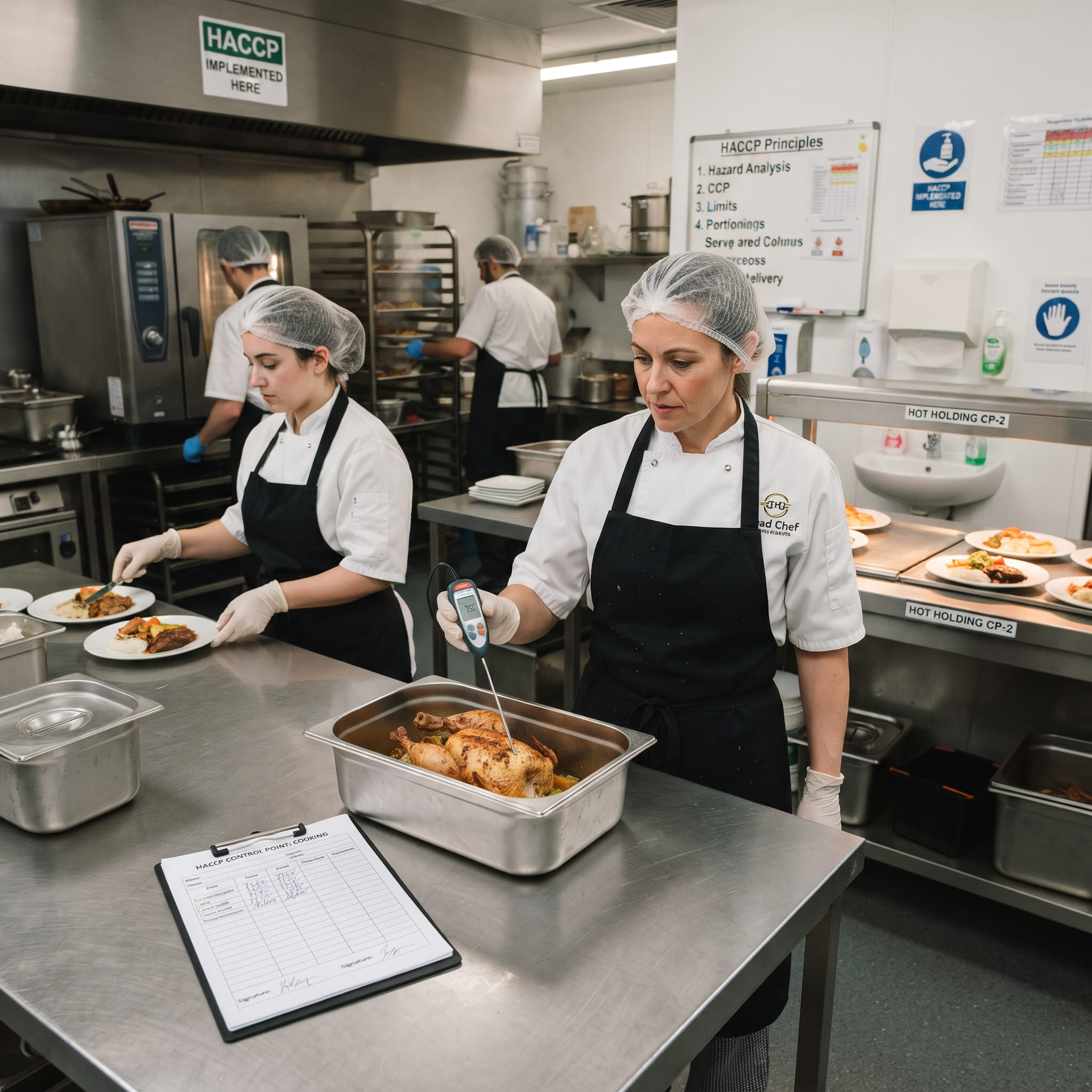
Catering businesses prepare and serve food in a variety of environments, including restaurants, hotels, workplaces, schools, weddings, private functions and outdoor events. Unlike some food businesses that prepare meals for immediate consumption on-site, caterers may need to transport food, prepare large quantities in advance or serve customers at temporary locations. These activities can create additional food safety challenges.
Food may pass through several stages before reaching the customer. If ingredients are stored incorrectly, cooking is inadequate, prepared food is contaminated or temperature controls fail during transportation, harmful microorganisms may survive or multiply.
A Hazard Analysis and Critical Control Point (HACCP) system helps catering businesses identify potential food safety hazards and establish appropriate controls throughout their operations. Suitable haccp training can also help employees understand their responsibilities and apply safe food handling procedures consistently.
Understanding HACCP in Catering Operations
HACCP is a systematic approach to identifying and controlling biological, chemical and physical hazards that could make food unsafe.
In catering, biological hazards may include harmful bacteria associated with raw meat, poultry, seafood, eggs and contaminated produce. Chemical hazards can include cleaning product residues or undeclared allergens, while physical hazards may involve glass fragments, packaging materials or pieces of damaged equipment.
A catering business should assess each stage of its food production process, from purchasing ingredients to delivering meals and serving customers. The hazards and controls will depend on the menu, preparation methods, equipment, transport arrangements and type of service.
For example, a business preparing hot meals for a corporate event may need to focus on cooking, hot holding and transportation. A caterer serving cold buffets may place greater emphasis on refrigeration, display times and preventing contamination from customers or service equipment.
A documented HACCP-based food safety management system should reflect the actual risks of the operation rather than rely on generic procedures that may not suit the business.
Safe Purchasing and Storage of Ingredients
Food safety begins with selecting reliable suppliers and checking deliveries. Catering staff should inspect incoming ingredients for damaged packaging, contamination, signs of spoilage and other problems that could affect food quality or safety.
Perishable foods should be delivered under appropriate temperature conditions. Where required, staff should check and record temperatures according to the business's procedures. Any delivery that does not meet established acceptance criteria should be assessed before it is accepted or used.
Ingredients must be stored according to their characteristics and the manufacturer's instructions. Refrigerated foods should be maintained at suitable temperatures, while frozen products should remain frozen as required.
Raw meat and poultry should be stored separately from ready-to-eat foods to reduce the risk of cross-contamination. Where practical, raw ingredients should be positioned below ready-to-eat foods in refrigeration units so that drips cannot contaminate other products.
Dry ingredients should be kept in clean, dry storage areas, protected from pests and moisture. Stock rotation, date checks and clear labelling help employees identify ingredients that are suitable for use.
Preventing Cross-Contamination During Preparation
Cross-contamination occurs when harmful microorganisms or other unwanted substances transfer from one food, surface, utensil or person to another. It is a significant concern in catering kitchens because employees may handle many different ingredients within a short period.
Raw meat, poultry and seafood should be handled in designated areas or using appropriate separation procedures. Cutting boards, knives, worktops and other equipment must be cleaned and sanitised as necessary between tasks.
Ready-to-eat foods, such as salads, sandwiches and cooked meats, require particular protection because they may not undergo further cooking before service.
Handwashing is essential before food preparation, after handling raw ingredients, after using the toilet, after handling waste and whenever hands may have become contaminated. Gloves do not replace proper hand hygiene and should be changed when necessary.
Employees should also keep food preparation areas organised. Separating raw and cooked food activities, using clean utensils and following clear preparation sequences can help reduce the likelihood of contamination.
A suitable haccp food safety course can support employees in understanding these principles, while practical workplace instruction ensures they know how to apply them in the catering environment.
Cooking and Temperature Control
Cooking is an important control for many biological hazards. However, the appropriate cooking process depends on the type of food, its size, preparation method and the equipment being used.
Catering businesses should establish suitable cooking procedures based on their food safety assessment and applicable requirements. Staff must follow the specified cooking times and temperatures, using a clean and suitable probe thermometer where temperature checks are required.
Large batches, thick cuts of meat and densely packed trays may heat unevenly. Employees should not assume that food is adequately cooked based only on its appearance or the oven setting.
Temperature probes should be cleaned and sanitised before and after use. If monitoring identifies that a food item has not met the required cooking criteria, staff should follow the established corrective-action procedure before the food is served.
Once cooking is complete, food must be protected from contamination. Clean utensils should be used to handle cooked products, and cooked food should not be placed on surfaces or in containers previously used for raw ingredients unless they have been properly cleaned and sanitised.
Cooling, Refrigeration and Hot Holding
Catering businesses frequently prepare food in advance. This can increase risk if cooked food is cooled too slowly, refrigerated incorrectly or left at unsuitable temperatures for extended periods.
Where food is intended to be cooled and stored for later use, the business should establish a suitable cooling procedure based on the food safety assessment and applicable guidance. Large containers of hot food may cool slowly, so smaller portions, shallow containers or suitable rapid-cooling equipment may be necessary.
Refrigerated foods should be stored at appropriate temperatures, and staff should monitor refrigeration equipment according to the business's procedures. Overloading refrigerators can restrict airflow and affect cooling performance.
Hot food intended for hot holding should be maintained at the required temperature under the applicable procedures. Cold foods should also remain within appropriate temperature limits, particularly when they contain ingredients that support microbial growth.
Time and temperature monitoring should be meaningful and consistent. If a temperature falls outside the established limits, staff should assess the affected food and take the corrective action specified in the food safety plan.
Managing Food Transportation and Off-Site Catering
Transportation is one of the main challenges for catering businesses that deliver meals or serve events away from their usual kitchen.
Food must be protected during loading, transport, unloading and service. Suitable insulated containers, refrigerated vehicles or hot-holding equipment may be required, depending on the food and the journey.
Catering teams should plan delivery routes, loading arrangements and service times to minimise unnecessary delays. Containers should be clean, food-safe and designed to maintain the required conditions for the products being transported.
Where temperature monitoring is necessary, staff should check food at appropriate stages and maintain records in accordance with established procedures. Food should not be left unattended in vehicles or exposed to unsuitable environmental conditions.
At event venues, catering staff should confirm that suitable facilities are available for refrigeration, handwashing, cleaning and safe food preparation. If the venue cannot support the required food safety controls, the catering arrangements may need to be changed.
Allergen Management and Customer Communication
Catering menus often include a wide range of ingredients, increasing the possibility of allergen cross-contact. Common allergens include cereals containing gluten, eggs, milk, peanuts, tree nuts, soya, sesame, fish, crustaceans, molluscs, mustard, celery, lupin and sulphur dioxide and sulphites above the applicable threshold.
Businesses should maintain accurate ingredient information and communicate allergen information in accordance with applicable legal requirements. Recipes and supplier specifications should be reviewed whenever ingredients or products change.
Separate utensils, suitable preparation arrangements and effective cleaning procedures can help reduce allergen cross-contact. Special meals should be clearly identified and protected from contact with other foods during storage, transport and service.
Employees should know where to find reliable allergen information and how to respond to customer questions. They should never guess whether a meal is safe for someone with an allergy. If the ingredients or preparation process cannot be verified, staff should explain the uncertainty rather than provide an unsupported assurance.
A haccp certification course may cover general food safety and allergen awareness, but catering businesses must also establish procedures that reflect their actual menus and service arrangements.
Cleaning, Personal Hygiene and Waste Management
Clean kitchens and service areas are essential for safe catering. Food residues, grease and moisture can encourage pest activity and create conditions that compromise hygiene.
A cleaning schedule should specify the areas and equipment to be cleaned, the frequency of cleaning, the products to be used and the people responsible. Cleaning chemicals must be stored separately from food and used according to the manufacturer's instructions.
Employees should wear clean work clothing, maintain appropriate personal hygiene and report illness or symptoms that may affect food safety. Handwashing facilities must be accessible and properly supplied.
Waste should be removed regularly and stored in suitable containers. Waste areas must be managed to prevent pests, unpleasant odours and contamination of food preparation or storage areas.
HACCP Documentation and Staff Training
Records help catering businesses demonstrate that their food safety controls are being implemented. Depending on the operation, relevant records may include delivery checks, refrigeration temperatures, cooking checks, cooling records, cleaning schedules, allergen information, equipment maintenance and corrective actions.
Documentation should be accurate, up to date and proportionate to the business's activities. When something goes wrong, staff should record the issue, identify any affected food and document the actions taken.
Employee training is equally important. Staff need to understand safe food handling, cross-contamination prevention, temperature control, allergen management and the importance of reporting problems promptly.
An online haccp course online can provide a convenient way to study food safety principles. Employers should check the course content and ensure that training is suitable for each employee's responsibilities, with additional practical instruction where necessary. Before selecting a haccp certification programme, businesses should verify what it covers and what evidence of completion it provides rather than assuming all courses offer the same scope or recognition.
Conclusion
Catering businesses must manage food safety at every stage, from purchasing and storage to preparation, cooking, cooling, transportation and service. Each stage can introduce hazards if procedures are inadequate or employees do not understand their responsibilities.
A well-designed HACCP system helps identify risks, establish appropriate controls, maintain useful records and respond effectively when problems arise. Combined with suitable staff training, good hygiene and reliable communication, these measures help catering businesses protect customers and maintain consistent food safety standards.
Regular reviews are essential as menus, equipment, suppliers and service arrangements change. By making food safety part of everyday operations, catering businesses can reduce preventable risks and deliver food with greater confidence.