



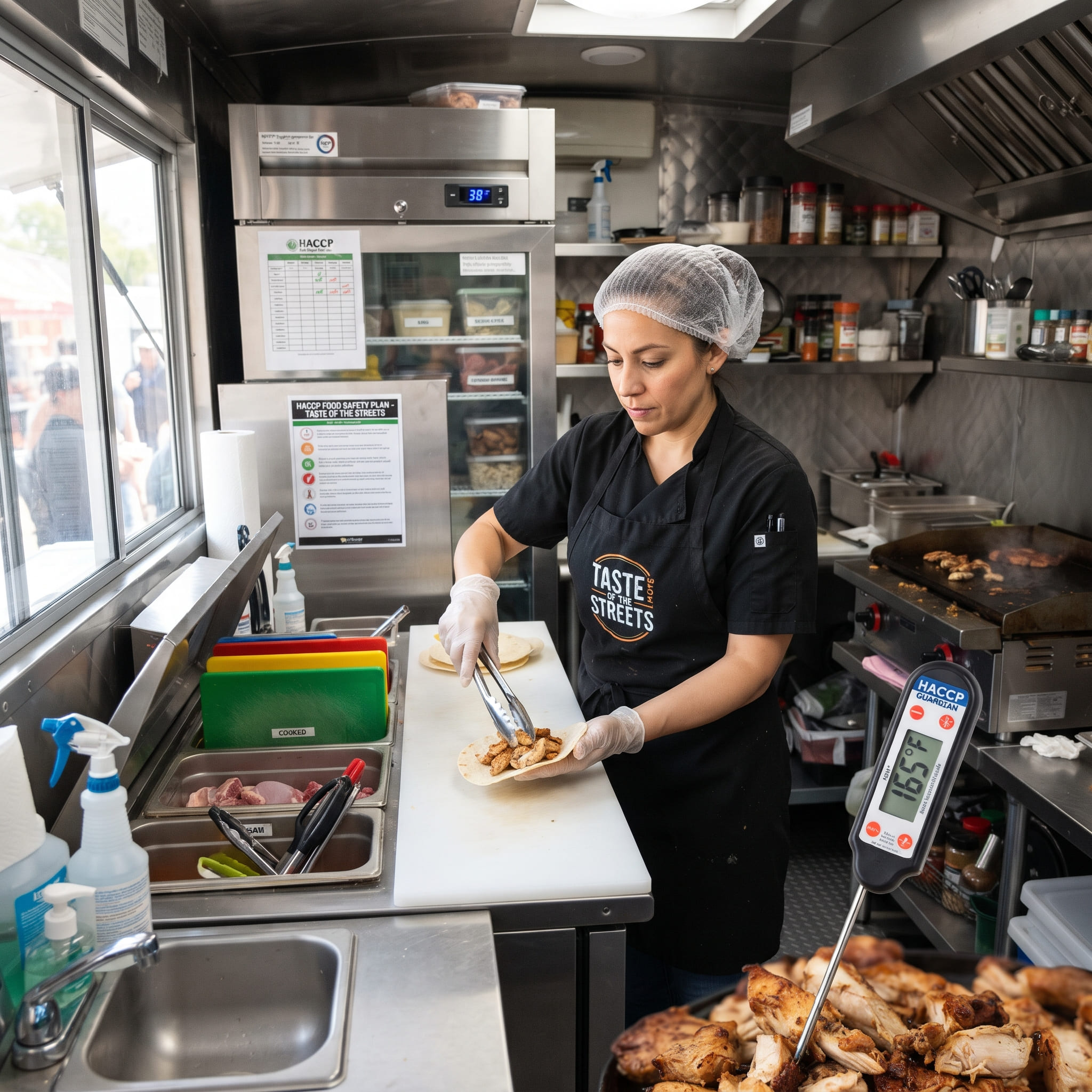
Food trucks and mobile catering businesses offer convenient food options at markets, festivals, sporting events, private functions, and busy public locations. However, preparing and serving food from a vehicle presents challenges that differ from those faced by traditional restaurants. Limited workspace, restricted refrigeration capacity, changing weather conditions, and access to water and waste facilities can all affect food safety.
A structured food safety management system helps mobile food operators identify hazards and establish suitable controls. Hazard Analysis and Critical Control Points (HACCP) provides a systematic approach to identifying, evaluating, and controlling food safety risks throughout food preparation and service.
Appropriate haccp training can help food handlers understand these risks and follow procedures designed to protect consumers. For food truck owners in Ireland, the key is to develop controls that reflect the menu, equipment, storage arrangements, and daily operating conditions of the business.
This guide explains the essential HACCP controls that mobile food businesses should consider when preparing, storing, and serving food safely.
1. Identify Food Safety Hazards Before Trading
The first step in applying HACCP principles is to identify hazards that could affect food safety. Food trucks may handle raw meat, poultry, seafood, dairy products, fresh vegetables, cooked foods, and ready-to-eat ingredients within a relatively small space.
Biological hazards include harmful microorganisms that can multiply under unsuitable conditions or transfer between foods. Chemical hazards may arise from cleaning products or other substances contaminating ingredients. Physical hazards include foreign objects such as fragments of packaging, glass, or damaged equipment.
Mobile businesses should assess each stage of their operation, including:
-
Purchasing and receiving ingredients.
-
Transporting food to the trading location.
-
Storing chilled, frozen, and dry products.
-
Preparing ingredients.
-
Cooking and reheating food.
-
Holding prepared food before service.
-
Serving customers and handling leftovers.
-
Cleaning equipment and managing waste.
For example, a food truck selling burgers needs controls for raw meat storage, separation of raw and ready-to-eat ingredients, cooking, equipment hygiene, and temperature monitoring.
A business selling pre-prepared sandwiches may have different risks, particularly around chilled storage and preventing contamination during assembly.
A suitable haccp food safety course can help operators understand how to recognise hazards and choose controls appropriate to their particular menu and processes.
2. Maintain Reliable Temperature Control
Temperature control is especially important in mobile catering because refrigeration and cooking equipment may be limited, frequently opened, or exposed to demanding operating conditions.
Food businesses should establish appropriate temperature requirements for the foods and processes they handle. These requirements should be based on applicable food safety guidance, product instructions, and the business's food safety procedures.
Important controls include:
-
Checking refrigeration equipment before service.
-
Monitoring and recording temperatures at appropriate intervals.
-
Keeping chilled foods under suitable temperature-controlled conditions.
-
Storing frozen foods according to their requirements.
-
Cooking food thoroughly using appropriate procedures.
-
Cooling food safely when preparation methods require it.
-
Reheating food safely where applicable.
-
Maintaining hot-held food under suitable conditions.
For example, a busy lunch service may involve frequent opening of refrigerator doors as staff retrieve ingredients. Operators should ensure that the equipment can maintain appropriate conditions throughout service and avoid loading it beyond its capacity.
A temperature reading outside the required range should trigger the business's corrective-action procedure. Staff may need to assess affected food, determine how long it has been exposed to unsuitable conditions, and decide what action is appropriate.
Simply returning food to a refrigerator does not automatically make it safe.
3. Prevent Cross-Contamination in Limited Spaces
Food trucks often have compact preparation areas, making separation between different activities particularly important. Raw ingredients, cooked food, utensils, packaging, and cleaning equipment must be managed carefully to prevent contamination.
Cross-contamination can occur through hands, chopping boards, knives, work surfaces, storage containers, and equipment.
Mobile food businesses should establish clear procedures for separating raw and ready-to-eat foods. Where practical, separate equipment should be used for different food types. When equipment is shared, appropriate cleaning and disinfection procedures must be followed between tasks.
Useful controls include:
-
Storing raw foods separately from ready-to-eat products.
-
Preventing raw meat juices from dripping onto other foods.
-
Cleaning and disinfecting food-contact surfaces as required.
-
Using clean utensils when handling cooked food.
-
Keeping packaging and serving materials protected.
-
Washing hands between activities that could transfer contamination.
-
Organising preparation tasks to reduce unnecessary movement between raw and cooked foods.
For example, an employee who handles raw chicken should not immediately assemble a ready-to-eat salad using the same uncleaned utensils or contaminated work surface.
Planning the workflow before service helps staff use limited space more effectively and reduces the likelihood of mistakes during busy periods.
4. Ensure Adequate Handwashing and Personal Hygiene
Food handlers can introduce contamination if they do not follow appropriate personal hygiene procedures. In a food truck, handwashing facilities must be suitable for the activities being carried out and available when needed.
Operators should ensure that staff have access to appropriate handwashing facilities, a reliable supply of water where required, soap, and hygienic hand-drying arrangements.
The vehicle should also have suitable arrangements for cleaning utensils, washing equipment, and disposing of wastewater in accordance with applicable requirements.
Handwashing is particularly important after handling raw ingredients, using the toilet, touching waste, cleaning surfaces, or performing any activity that could contaminate hands.
Food handlers should wear clean work clothing and follow procedures for covering cuts and wounds. They must also report relevant illnesses or symptoms in accordance with food safety procedures and avoid handling food when it could present a contamination risk.
A mobile business should not begin service if essential hygiene facilities are unavailable or unsuitable for safe operation.
5. Check Suppliers, Deliveries, and Food Transport
Food safety begins before ingredients reach the vehicle. Food truck operators should purchase ingredients from appropriate suppliers and establish procedures for checking deliveries.
When receiving goods, staff should examine packaging condition, product information, use-by dates where applicable, and evidence that temperature-controlled products have been transported appropriately.
Damaged packaging, signs of contamination, or unsuitable delivery conditions should be reported and assessed according to the business's acceptance procedures.
Transporting ingredients from a storage facility to a trading location also requires planning. Chilled and frozen foods should be transported using suitable equipment capable of maintaining the required conditions.
Operators should avoid leaving perishable ingredients in an unsuitable vehicle or exposed to warm weather while setting up the food truck.
A delivery checklist or receiving log can help staff record relevant checks and identify recurring supplier or transport problems.
These procedures are particularly important for businesses that move between multiple locations or prepare ingredients at a separate premises.
6. Manage Allergens Carefully
Allergen management is an essential part of food safety for mobile catering businesses. Food trucks frequently serve multiple menu items in a compact environment, increasing the importance of accurate ingredient information and contamination prevention.
Operators should know which regulated allergens are present in their products and ensure that customers receive accurate information in accordance with applicable food information requirements.
Practical controls include:
-
Keeping ingredient labels and supplier information available.
-
Maintaining accurate allergen information for each menu item.
-
Reviewing ingredient changes before introducing new products.
-
Cleaning utensils and work surfaces appropriately.
-
Preventing unintended allergen transfer between foods.
-
Training staff to answer customer questions accurately.
-
Establishing procedures for allergen-related customer requests.
For example, a food truck selling burgers, wraps, and salads should not assume that a meal is free from a particular allergen simply because the ingredient is not listed in the main recipe. Sauces, dressings, marinades, and supplier products may contain allergens.
Staff should never guess when answering allergen questions. If reliable information cannot be confirmed, they should explain the limitation rather than provide an unsupported assurance.
7. Identify Critical Control Points and Monitoring Procedures
A key part of HACCP is determining where control is essential to prevent, eliminate, or reduce a significant food safety hazard to an acceptable level.
These stages are known as Critical Control Points (CCPs). Not every food safety check is a CCP; some hazards are managed through prerequisite hygiene and operational procedures.
For a food truck, a CCP may be relevant to a particular cooking process, depending on the food, the hazard analysis, and the controls already in place.
The operator should establish suitable monitoring procedures, including what will be checked, how it will be measured, when checks will take place, and who is responsible.
Monitoring may involve temperature measurements, visual inspections, or other appropriate checks.
If monitoring shows that a critical limit has not been met, staff must follow a predetermined corrective-action procedure. This may include isolating affected food, assessing product safety, correcting equipment problems, and documenting the action taken.
A practical haccp certification course may introduce these concepts, but operators responsible for developing and maintaining the business's HACCP-based procedures need training appropriate to those responsibilities.
8. Keep Accurate Records and Review Procedures
Record keeping helps food truck operators demonstrate that food safety controls are being implemented and identify problems that require attention.
Depending on the business, records may include:
-
Refrigeration and other relevant temperature checks.
-
Cooking or other process monitoring records.
-
Delivery and receiving checks.
-
Cleaning schedules.
-
Equipment maintenance records.
-
Corrective actions.
-
Staff training records.
-
Relevant supplier and ingredient information.
Records should be accurate, completed at the appropriate time, and consistent with actual activities. Staff should not record checks that have not been carried out.
Food truck owners should also review their procedures when the menu changes, new equipment is introduced, trading locations create different operating conditions, or recurring problems are identified.
For example, introducing a new cooked-to-order menu may require a review of storage capacity, preparation workflow, cooking controls, and staff responsibilities.
Ongoing haccp training can help employees understand why procedures matter and how to follow them consistently.
9. Check Irish Food Safety Requirements
Mobile food businesses operating in Ireland must consider the food safety and hygiene requirements applicable to their activities. Operating from a vehicle does not remove the responsibility to prepare and serve food safely.
Before starting operations, food business operators should contact the relevant authority about registration requirements and any requirements specific to their food activities. Depending on the type of operation, the competent authority may be the HSE or another designated authority.
The Food Safety Authority of Ireland (FSAI) provides guidance on food hygiene, food safety management systems, and HACCP. Its official website, https://www.fsai.ie/, is a useful starting point for understanding these responsibilities.
Businesses should establish and maintain food safety procedures based on HACCP principles, appropriate to the nature and size of their operations. Staff must receive suitable instruction or training for their duties, and people responsible for HACCP-based procedures must receive adequate training in applying HACCP principles.
The level of training required depends on the responsibilities involved. An introductory course may help food handlers understand everyday risks, while operators responsible for managing a food safety system may require more detailed training.
Conclusion
Food trucks face distinctive food safety challenges because of limited space, changing locations, equipment constraints, and busy service periods. Effective HACCP-based controls help operators identify hazards and manage risks throughout food preparation, storage, cooking, and service.
Key priorities include maintaining appropriate temperatures, preventing cross-contamination, providing suitable hygiene facilities, checking deliveries, managing allergens, monitoring critical controls, and keeping accurate records.
Choosing appropriate haccp training can help food handlers understand their responsibilities and follow workplace procedures. However, training should be supported by suitable equipment, effective supervision, and a food safety management system tailored to the business.
By applying practical food safety controls and reviewing procedures regularly, mobile food businesses can reduce avoidable risks and support safer food preparation for their customers.