



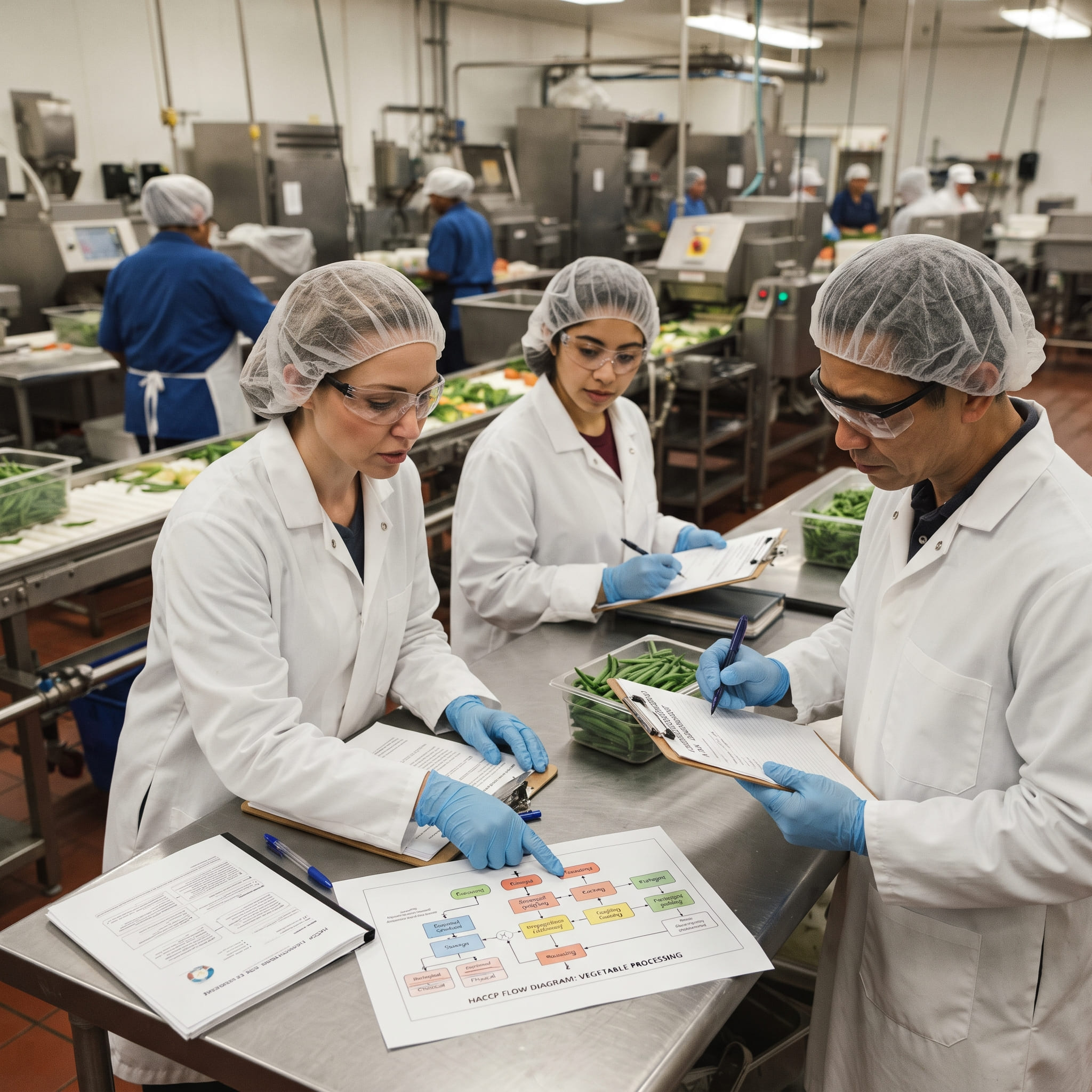
HACCP hazard analysis is one of the most important parts of a food safety management system. For food businesses in Ireland, understanding how hazards are identified and controlled is an essential part of effective food safety management.
Restaurants, cafés, hotels, catering companies, bakeries, supermarkets and food manufacturers can all face different food safety risks. This is why a HACCP system needs to be based on the actual activities and processes of the business.
For anyone completing HACCP training in Ireland, understanding hazard analysis is particularly important. It explains how a business moves from simply identifying potential problems to establishing appropriate controls.
This article explains what HACCP hazard analysis involves, the different types of food safety hazards, how businesses identify them and how hazard analysis connects with HACCP training, HACCP certification and HACCP courses in Ireland.
What Is HACCP Hazard Analysis?
HACCP stands for Hazard Analysis and Critical Control Points.
Hazard analysis is the first of the seven HACCP principles. It involves identifying potential hazards that could occur during the different stages of a food process and determining which hazards need to be controlled.
A food business may examine the complete process from:
- Receiving ingredients
- Storage
- Preparation
- Cooking
- Cooling
- Packaging
- Service
- Delivery
At each stage, the business asks:
What could go wrong?
It then considers the potential consequences and determines what measures can be used to prevent, eliminate or reduce the hazard to an acceptable level.
The Food Safety Authority of Ireland (FSAI) identifies hazard analysis as the first principle of HACCP and explains that food businesses need to identify hazards that require control.
This makes hazard analysis a fundamental subject in a HACCP course in Ireland.
Why Is HACCP Hazard Analysis Important?
A food business cannot effectively control a hazard if it has not first identified it.
Hazard analysis allows businesses to take a proactive approach to food safety.
Instead of waiting for a problem to occur, the business considers potential problems in advance and establishes controls.
For example, a restaurant preparing chicken dishes might identify potential hazards such as:
- Contamination of raw chicken
- Cross-contamination during preparation
- Inadequate cooking
- Incorrect refrigerated storage
Once these hazards have been identified, the business can determine which controls are required.
This is one reason why HACCP training is valuable for people working in the food industry.
The Main Types of Food Safety Hazards
When carrying out HACCP hazard analysis, food businesses need to consider different categories of hazards.
The main categories include:
- Biological hazards
- Chemical hazards
- Physical hazards
- Allergen hazards
Understanding these categories is an important part of HACCP food safety training.
Biological Hazards
Biological hazards include harmful microorganisms such as:
- Bacteria
- Viruses
- Parasites
- Fungi
These hazards can be associated with contaminated ingredients, poor hygiene, cross-contamination, inadequate cooking or inappropriate storage.
Temperature control can also be important because certain conditions can allow harmful microorganisms to multiply.
During hazard analysis, a business considers where biological hazards could occur and how they can be controlled.
Chemical Hazards
Chemical hazards involve substances that could contaminate food.
Examples can include:
- Cleaning chemicals
- Sanitising products
- Lubricants
- Chemicals used incorrectly
- Naturally occurring toxins
For example, cleaning products need to be stored and used appropriately so they do not come into contact with food.
A HACCP training course can help food handlers understand how chemical hazards can occur and why workplace procedures are necessary to prevent them.
Physical Hazards
Physical hazards involve foreign objects that could enter food.
Examples include:
- Glass
- Metal
- Plastic
- Stones
- Packaging materials
- Broken equipment components
Physical hazards can originate from ingredients, packaging, equipment or the working environment.
During HACCP hazard analysis, the business considers where these hazards could occur and what controls can reduce the risk.
Allergen Hazards
Allergen management is another important consideration for food businesses.
Certain ingredients can cause allergic reactions in susceptible consumers.
A business therefore needs appropriate controls for receiving, storing, preparing and serving food containing allergens.
Hazard analysis can consider risks such as:
- Incorrect ingredient information
- Allergen cross-contact
- Shared equipment
- Incorrect storage
- Poor communication between employees
Employees completing food safety and HACCP training should understand the allergen procedures relevant to their workplace.
Step 1: Understand the Food Business
Before carrying out hazard analysis, a business needs to understand its own operations.
This can include:
- Products
- Ingredients
- Suppliers
- Equipment
- Processes
- Premises
- Storage
- Employees
- Distribution methods
A small café may have a relatively straightforward process.
A food manufacturing facility may have a much more complicated production system.
The HACCP approach needs to reflect the actual business rather than simply copying a generic HACCP plan.
Step 2: Create a Process Flow
The next step is to understand how food moves through the business.
For example:
Delivery → Storage → Preparation → Cooking → Cooling → Storage → Service
A food manufacturing process could contain many more stages.
Creating a process flow helps the HACCP team identify where hazards could potentially occur.
It also provides a structure for examining each stage systematically.
Step 3: Examine Every Stage
The HACCP team should consider each stage of the process.
For example, during delivery, they may consider:
- Could food arrive contaminated?
- Is packaging damaged?
- Are appropriate storage conditions being maintained?
During storage:
- Could temperature create a risk?
- Could raw food contaminate ready-to-eat food?
- Could packaging become damaged?
During preparation:
- Could equipment cause contamination?
- Could allergens be transferred?
- Could poor hygiene contaminate food?
During cooking:
- Could a biological hazard remain uncontrolled?
These questions help the business identify potential hazards before determining the appropriate controls.
Step 4: Identify Potential Hazards
The HACCP team then identifies the hazards associated with each process step.
It is important to distinguish between a general operational problem and the actual food safety hazard.
For example:
Operational problem: A refrigerator is not working correctly.
Food safety hazard: Food may be kept at an unsuitable temperature, potentially allowing harmful microorganisms to multiply.
The purpose of hazard analysis is to understand the potential impact on food safety.
Step 5: Determine Which Hazards Require Control
Not every potential hazard will necessarily have the same level of significance.
The HACCP team needs to assess which hazards require control and determine appropriate control measures.
Factors that may be considered include:
- Likelihood of occurrence
- Severity
- Type of food
- Processing method
- Intended use
- Existing controls
The objective is to identify hazards that could have a significant effect on food safety and establish appropriate controls.
Step 6: Establish Control Measures
Once a hazard has been identified, the business determines how it can be controlled.
Depending on the hazard, controls may include:
- Temperature control
- Cooking
- Refrigeration
- Cleaning
- Personal hygiene
- Separation of raw and ready-to-eat food
- Allergen management
- Supplier controls
- Equipment maintenance
The appropriate control depends on the specific food process.
This is why HACCP systems should be tailored to individual food businesses.
Step 7: Identify Critical Control Points
Hazard analysis leads to the second HACCP principle: determining Critical Control Points, commonly known as CCPs.
A CCP is a step where control is essential to prevent, eliminate or reduce a food safety hazard to an acceptable level.
Not every food safety control is necessarily a CCP.
For example, depending on the process, cooking may be identified as a CCP because it can be an important control for certain biological hazards.
People undertaking HACCP Level 2 training may study Critical Control Points in greater detail because they may have additional responsibilities for monitoring or managing HACCP procedures.
HACCP Hazard Analysis Example
Imagine an Irish café preparing cooked chicken sandwiches.
The process could be:
Delivery → Refrigerated Storage → Preparation → Cooking → Cooling → Assembly → Refrigerated Storage → Service
The HACCP team could identify potential hazards as follows:
| Process Stage | Potential Hazard | Possible Control |
|---|---|---|
| Delivery | Contaminated ingredients | Supplier and delivery checks |
| Storage | Temperature-related risk | Appropriate refrigeration |
| Preparation | Cross-contamination | Hygiene and separation |
| Cooking | Survival of harmful microorganisms | Controlled cooking process |
| Cooling | Microbial growth | Appropriate cooling procedure |
| Assembly | Cross-contamination | Hygiene and clean equipment |
| Final Storage | Temperature-related risk | Refrigerated storage |
This is a simplified example.
The actual HACCP system must be developed around the specific products, processes and hazards of the food business.
Monitoring the Controls
Identifying hazards is only the beginning.
Once controls have been established, the business needs to determine how they will be monitored.
For example, where temperature control is important, a business may establish procedures defining:
- What needs to be measured
- How it should be measured
- When it should be checked
- Who performs the check
- How the result is recorded
- What happens if the required limit is not achieved
Monitoring provides information about whether the control remains effective.
This is why monitoring is an important subject in HACCP certification courses.
What Happens When a Control Fails?
A HACCP system should also establish appropriate corrective actions.
For example, a problem may occur if:
- A required temperature is not achieved
- Equipment stops working
- A food safety procedure is missed
- Monitoring identifies an unacceptable result
Employees should know how to respond according to the business's HACCP procedures.
Depending on the situation, corrective action could involve reporting the problem, correcting the process, assessing affected food or taking another specified action.
The correct response depends on the specific hazard and food process.
Verification and Reviewing the HACCP System
A HACCP system should not remain unchanged forever.
Food businesses can introduce:
- New products
- New ingredients
- New equipment
- New suppliers
- New recipes
- New processes
These changes can introduce new hazards or change existing risks.
For this reason, HACCP systems need appropriate verification and review.
Verification helps determine whether the controls are working effectively.
This is particularly relevant for managers and employees responsible for maintaining a HACCP system.
HACCP Training and Hazard Analysis
Understanding hazard analysis is an important part of HACCP training in Ireland.
Depending on the course level, learners may study:
- Food safety hazards
- Hazard analysis
- Critical Control Points
- Critical limits
- Monitoring
- Corrective actions
- Verification
- Record keeping
A basic HACCP Level 1 course may introduce food handlers to the principles and help them understand the procedures they need to follow.
More detailed HACCP Level 2 training may be suitable for people with greater responsibilities.
People responsible for developing and maintaining HACCP-based procedures require appropriate training in applying HACCP principles.
HACCP Certificate and Certification
Completing a HACCP certificate course can provide evidence that a learner has completed specified training.
However, a certificate alone does not mean that someone is responsible for managing a food business's HACCP system.
When choosing a HACCP certification course in Ireland, consider:
- Course content
- Level
- Intended audience
- Assessment
- Certificate
- Training provider
- Employer requirements
If you are specifically looking for HACCP certification online, check that the course is appropriate for your role and meets any requirements set by your employer.
HACCP Course Online Ireland
An online HACCP course in Ireland can be a convenient option for food workers who need flexible training.
Online learning may allow employees to study around work commitments and complete assessments remotely.
Depending on the provider, online training can include:
- Video lessons
- Written learning material
- Interactive modules
- Knowledge checks
- Final assessment
- Digital HACCP certificate
However, online training should complement workplace-specific procedures.
Every food business has its own processes and controls, so employees still need to understand how HACCP is applied in their particular workplace.
Final Thoughts
HACCP hazard analysis is the foundation of a HACCP-based food safety system.
It involves systematically examining a food business's processes and asking what could go wrong at each stage. Businesses then identify biological, chemical, physical and allergen hazards and determine appropriate control measures.
The process can involve:
- Understanding the food business
- Creating a process flow
- Examining each stage
- Identifying potential hazards
- Determining which hazards require control
- Establishing control measures
- Identifying Critical Control Points
- Establishing monitoring procedures
- Establishing corrective actions
- Verifying that the system remains effective
For food workers, HACCP training in Ireland can provide an understanding of the hazards and controls relevant to their role. For supervisors and managers, more detailed training may be required.
If you are looking for a HACCP course Ireland, HACCP certificate Ireland, HACCP certification Ireland or HACCP training certificate, always check that the course content and level match your responsibilities.
Ultimately, the purpose of HACCP hazard analysis is not simply to create paperwork. It is to identify food safety hazards before they cause problems and establish effective controls to protect consumers.