



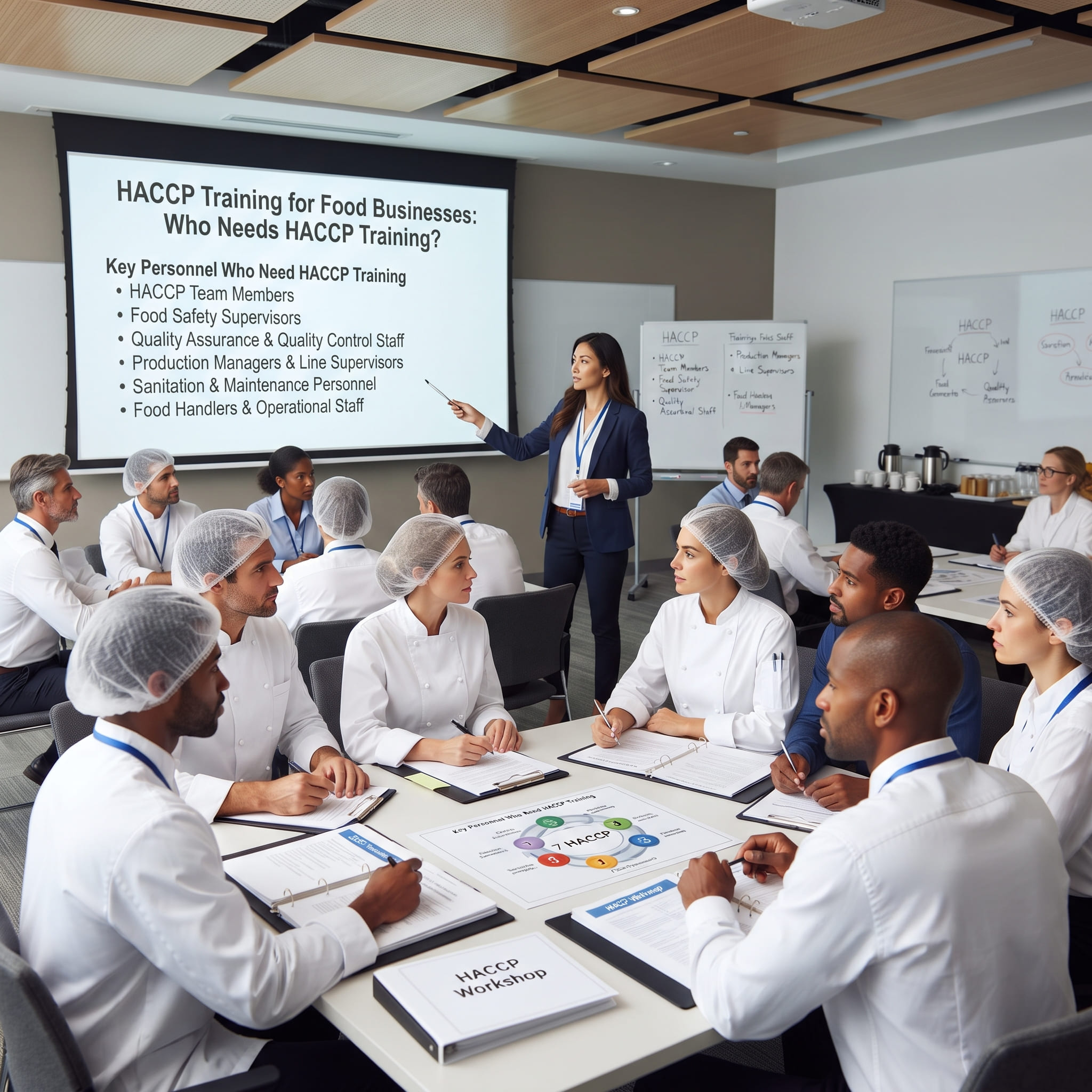
HACCP training for food businesses is an important part of maintaining effective food safety procedures. HACCP helps businesses identify food safety hazards, establish appropriate controls and monitor processes that are important for keeping food safe.
However, one common question is: Who actually needs HACCP training?
The answer depends on a person's role, responsibilities and involvement in the food business. A food handler who prepares meals every day may need a different level of knowledge from a manager responsible for maintaining the HACCP system.
For businesses in Ireland, understanding the purpose of HACCP training Ireland can help employers provide appropriate training to the people who need it.
This article explains who may need HACCP training, what different employees should understand and how HACCP certification and training certificates fit into a food business's food safety system.
What Is HACCP Training?
HACCP stands for Hazard Analysis and Critical Control Points.
HACCP is a systematic approach to identifying, evaluating and controlling food safety hazards.
HACCP training teaches people how the principles of HACCP are applied to food safety.
Depending on the course and the learner's responsibilities, training may cover:
- Food safety hazards
- Hazard analysis
- Critical Control Points
- Critical limits
- Monitoring
- Corrective actions
- Verification
- Documentation
- Record keeping
The Food Safety Authority of Ireland (FSAI) describes HACCP as a systematic approach to identifying and controlling food safety hazards.
Why Do Food Businesses Need HACCP Training?
A HACCP system is only effective if the people responsible for implementing it understand what they are supposed to do.
For example, a HACCP plan might require employees to:
- Check temperatures
- Monitor a CCP
- Complete records
- Follow cleaning procedures
- Prevent cross-contamination
- Report problems
- Take corrective action
If employees do not understand these responsibilities, written procedures may not be followed correctly.
Training helps turn the HACCP plan from a document into something that is actually used in everyday operations.
Who Needs HACCP Training?
There is no single answer that applies identically to every food business.
The level and type of training should reflect the person's responsibilities.
People who may need HACCP training include:
- Food handlers
- Chefs and kitchen staff
- Supervisors
- Restaurant managers
- Café and takeaway staff
- Food business owners
- HACCP team members
- Quality or food safety personnel
- People responsible for maintaining HACCP procedures
Let's look at these roles in more detail.
1. Food Handlers
Food handlers are among the most important people to consider.
A food handler may:
- Prepare food
- Cook food
- Handle ingredients
- Store food
- Serve customers
- Clean food-contact equipment
Because their actions can directly affect food safety, they need appropriate food safety knowledge.
A food handler may need to understand:
- Personal hygiene
- Hand washing
- Cross-contamination
- Safe food storage
- Temperature controls
- Cleaning
- Allergen procedures
- Workplace HACCP procedures
The exact training required depends on the role and the food business.
2. Chefs and Kitchen Staff
Chefs often have additional responsibilities because they control or supervise many food preparation processes.
They may need to understand:
- Cooking controls
- Cooling procedures
- Food storage
- Preparation procedures
- Cross-contamination prevention
- Allergen management
- Temperature monitoring
- Corrective actions
A chef may also be responsible for ensuring that other kitchen employees follow the business's procedures.
More detailed HACCP training may therefore be appropriate depending on the chef's responsibilities.
3. Supervisors
Supervisors can have an important role in implementing HACCP procedures.
They may be responsible for checking whether staff are:
- Following hygiene procedures
- Completing monitoring checks
- Recording results
- Storing food appropriately
- Following allergen controls
- Taking corrective action when required
Because supervisors may oversee other employees, they often need a broader understanding of the HACCP system.
4. Restaurant Managers
Restaurant managers may be responsible for a wide range of food safety activities.
Their responsibilities could include:
- Maintaining food safety procedures
- Reviewing records
- Managing staff training
- Monitoring corrective actions
- Checking equipment
- Reviewing suppliers
- Supporting HACCP verification
A manager may therefore benefit from more detailed HACCP training Ireland than an employee who has limited responsibilities.
5. Café and Takeaway Staff
Cafés and takeaways may operate with smaller teams, meaning individual employees can have several responsibilities.
Staff may:
- Receive deliveries
- Prepare sandwiches
- Cook food
- Store ingredients
- Handle allergens
- Clean equipment
- Serve customers
Employees should understand the food safety procedures relevant to the tasks they perform.
For example, an employee responsible for checking refrigerator temperatures needs to know how and when the check should be completed and what to do if the result is unacceptable.
6. Food Business Owners
Food business owners should understand their responsibilities for food safety, even when they are not personally preparing food.
Owners may be responsible for:
- Providing appropriate training
- Establishing food safety procedures
- Ensuring resources are available
- Maintaining suitable facilities
- Reviewing HACCP arrangements
- Ensuring competent people are responsible for food safety
A basic understanding of HACCP can help owners make informed decisions about their food safety management system.
7. HACCP Team Members
Some businesses have designated HACCP teams.
Members of the team may be responsible for:
- Conducting hazard analysis
- Identifying CCPs
- Establishing critical limits
- Developing monitoring procedures
- Establishing corrective actions
- Reviewing HACCP records
- Verifying the system
- Updating the HACCP plan
These responsibilities require an appropriate level of knowledge.
The FSAI states that people responsible for developing and maintaining HACCP-based procedures need adequate training in applying HACCP principles.
8. Quality and Food Safety Personnel
Larger food businesses may employ people specifically responsible for quality or food safety.
Their responsibilities can include:
- HACCP verification
- Internal audits
- Record review
- Supplier controls
- Food safety investigations
- Training
- Procedure development
These employees may require more advanced HACCP knowledge than general food handlers.
Does Every Employee Need the Same HACCP Training?
No.
This is an important distinction.
A food business should consider what each employee actually does.
For example:
Food Handler
May need knowledge of:
- Hygiene
- Cross-contamination
- Storage
- Food handling
- Relevant monitoring procedures
Supervisor
May additionally need knowledge of:
- Monitoring
- Corrective actions
- Record review
- Supervising staff
HACCP Team Member
May need more detailed knowledge of:
- Hazard analysis
- CCP determination
- Critical limits
- Verification
- HACCP documentation
Training should therefore be appropriate to the person's responsibilities.
HACCP Training vs Food Hygiene Training
HACCP training and food hygiene training are closely related but are not necessarily the same.
Food hygiene training generally focuses on practical practices for handling food safely.
This can include:
- Personal hygiene
- Cleaning
- Cross-contamination
- Food storage
- Safe food handling
HACCP training focuses on the systematic management of food safety hazards.
It can include:
- Hazard analysis
- CCPs
- Critical limits
- Monitoring
- Corrective actions
- Verification
- Documentation
A food business may require employees to understand both areas.
HACCP Level 1 and Level 2 Training
You may see HACCP Level 1 and HACCP Level 2 courses advertised in Ireland.
The exact meaning and content of these levels can vary between training providers.
A basic course may introduce learners to:
- Food safety hazards
- HACCP principles
- Hygiene
- Basic controls
A more detailed course may cover:
- Hazard analysis
- CCPs
- Critical limits
- Monitoring
- Corrective actions
- Verification
- Documentation
If an employer specifically requires a HACCP Level 2 certificate, it is important to check that the selected course meets the employer's expectations.
HACCP Certificate Ireland
A HACCP certificate Ireland course can provide evidence that an individual has completed a particular training programme.
You may see courses described as:
- HACCP training Ireland
- HACCP course Ireland
- HACCP certification Ireland
- HACCP certificate Ireland
- HACCP certification course
- HACCP training certificate
- HACCP Level 2 training
- HACCP food safety training
Before enrolling, check:
- Course content
- Course level
- Assessment method
- Certificate provided
- Intended audience
- Employer requirements
The title alone does not necessarily tell you whether a course is suitable for your role.
Does a HACCP Certificate Make Someone Responsible for HACCP?
Not necessarily.
Completing a HACCP certification course does not automatically mean that someone should be responsible for designing or managing an entire HACCP system.
A training certificate demonstrates completion of a particular course.
Responsibility within a food business depends on:
- The person's role
- Their experience
- Their knowledge
- Their training
- The complexity of the food operation
- The responsibilities assigned by the business
A business should ensure that people responsible for HACCP procedures are competent to perform those responsibilities.
Online HACCP Training
Online HACCP training can be a convenient option for food workers in Ireland.
An online HACCP course Ireland programme may cover:
- HACCP principles
- Food safety hazards
- Hazard analysis
- Critical Control Points
- Monitoring
- Corrective actions
- Verification
- Documentation
Online learning can be useful for employees who need flexibility around their working schedules.
However, completing an online course does not replace workplace-specific instruction.
Employees still need to understand the actual procedures used by their employer.
Workplace-Specific HACCP Training
A general HACCP course provides knowledge of HACCP principles.
However, employees also need to understand how those principles apply to their workplace.
For example, a restaurant employee may need to know:
- Where temperature records are kept
- Who monitors CCPs
- How cleaning is recorded
- What the allergen procedure is
- What happens when a critical limit is exceeded
- Who should be informed about food safety problems
This information comes from the business's own HACCP system.
When Should HACCP Training Be Updated?
Training should not necessarily be treated as a one-time event.
Additional or refresher training may be appropriate when:
- An employee changes roles
- New equipment is introduced
- New products are added
- Food processes change
- HACCP procedures are updated
- Monitoring responsibilities change
- A recurring food safety problem is identified
The business should consider whether employees remain competent to perform their assigned responsibilities.
Training Records
Food businesses should also maintain appropriate records of employee training.
A training record might include:
- Employee name
- Course completed
- Training date
- Training provider
- Course level
- Certificate information where relevant
Training records can help management monitor who has completed relevant training.
They can also make it easier to identify when additional training may be required.
Choosing the Right HACCP Course
If you are looking for HACCP training Ireland, don't choose a course solely because it contains the word "HACCP."
Consider:
Course Content
Does it cover the principles relevant to your role?
Level
Is it designed for food handlers, supervisors or HACCP team members?
Assessment
Is there an assessment or examination?
Certificate
What certificate is provided after completion?
Delivery Method
Is the course online, classroom-based or blended?
Employer Requirements
Does it meet the requirements of your workplace?
These factors can help you choose appropriate training.
Final Thoughts
HACCP training for food businesses is not necessarily a one-size-fits-all requirement.
Different employees have different responsibilities, so their training should reflect the work they perform.
Food handlers may need to understand practical food safety controls, while supervisors and managers may require additional knowledge of monitoring and corrective actions. People responsible for developing and maintaining HACCP procedures need an appropriate level of HACCP knowledge and training.
For businesses in Ireland, suitable HACCP training Ireland can help employees understand their responsibilities and contribute to an effective food safety management system.
If you are looking for a HACCP course Ireland, HACCP certificate Ireland, HACCP certification course, HACCP Level 2 training, HACCP training certificate or online HACCP training, check the course content and intended audience before enrolling.
Most importantly, a HACCP certificate should not be viewed as the end of food safety training. Employees need to understand how the knowledge from their course applies to their actual workplace.
When the right people receive appropriate training, understand their responsibilities and follow the business's HACCP procedures, food businesses are better positioned to identify hazards, control food safety risks and maintain safer food handling practices.