



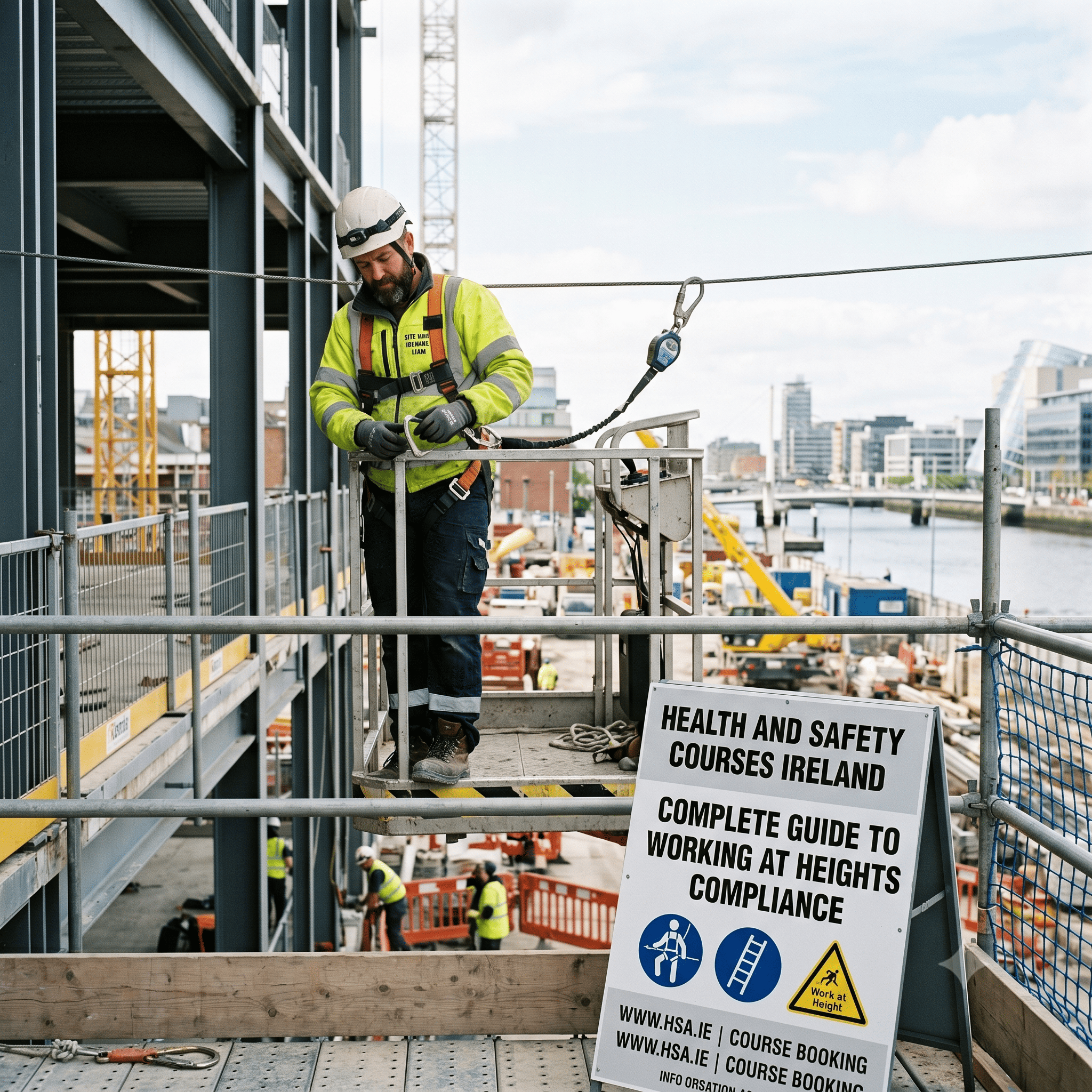
Health and Safety Courses Ireland play a crucial role in ensuring safe working environments across industries such as construction, maintenance, warehousing, telecommunications, and facilities management. Among the most important areas covered by these courses is working at heights compliance, which focuses on preventing falls and ensuring workers follow legal safety standards when operating above ground level.
Working at height is one of the highest-risk activities in the workplace. A single mistake can lead to serious injury or fatality, which is why Irish law places strong emphasis on proper training, risk management, and employer responsibility. This guide explains everything you need to know about working at heights compliance in Ireland, including legal requirements, training content, certification, and best practices.
What Is Working at Heights Compliance?
Working at heights compliance refers to meeting all legal, safety, and training requirements required to perform tasks above ground level safely and lawfully.
It involves:
- Proper training and certification
- Risk assessments before work begins
- Safe use of ladders, scaffolding, and platforms
- Use of appropriate personal protective equipment (PPE)
- Emergency planning and rescue procedures
In Ireland, compliance is not optional. Employers must ensure workers are competent and trained before carrying out any work at height.
Why Working at Heights Is So Important
Falls from height remain one of the leading causes of workplace injuries and fatalities. Because of this, working at heights training in Ireland is a key part of workplace safety systems.
It is essential because it:
1. Prevents Serious Injuries
Proper training reduces the likelihood of falls from ladders, roofs, or scaffolding.
2. Improves Hazard Awareness
Workers learn to identify risks before starting any task.
3. Ensures Legal Compliance
Employers must comply with Irish safety legislation, including training requirements.
4. Builds a Safety Culture
Trained workers are more likely to follow safe systems of work consistently.
Legal Framework in Ireland
Working at heights compliance in Ireland is governed by several key pieces of legislation:
Safety, Health and Welfare at Work Act 2005
This is the main law covering workplace safety. It requires employers to:
- Provide safe working environments
- Ensure employees are trained and competent
- Identify and control workplace risks
- Implement safe systems of work
General Application Regulations (Work at Height Regulations)
These regulations specifically require employers to:
- Avoid working at height where possible
- Use suitable equipment
- Provide adequate training
- Carry out risk assessments
- Ensure proper supervision
Construction Regulations 2013
In construction environments, additional duties include:
- Appointing competent personnel
- Coordinating safety on-site
- Ensuring contractor compliance
- Managing high-risk activities
Together, these laws make working at heights compliance in Ireland a legal requirement for employers and workers.
What Working at Heights Training Covers
A high-quality health and safety course in Ireland focusing on working at heights includes essential theoretical and practical safety knowledge.
Hazard Identification
Workers learn to identify risks such as:
- Unprotected edges
- Fragile surfaces
- Slippery conditions
- Falling objects
- Poor weather conditions
Risk Assessment
Training teaches workers how to:
- Evaluate job sites
- Identify hazards before work begins
- Apply control measures
- Choose safe methods of work
Ladder Safety
Ladders are one of the most common tools used at height. Training includes:
- Proper ladder setup
- Inspection before use
- Safe climbing techniques
- Avoiding overreach
- Maintaining stability
Scaffolding Safety
Workers learn:
- Safe access and exit routes
- Guardrail and toe board systems
- Stability checks
- Working platform safety
Mobile Elevated Work Platforms (MEWPs)
Training covers:
- Safe operation procedures
- Harness use requirements
- Emergency lowering systems
- Environmental considerations
Personal Protective Equipment (PPE)
Proper PPE use includes:
- Safety harnesses
- Lanyards and anchor points
- Fall arrest systems
- Helmets and protective footwear
Emergency Procedures
Workers are trained in:
- Rescue planning
- Incident reporting
- First aid awareness
- Evacuation procedures
Working at Heights Certificate in Ireland
A working at heights certificate online is proof that a worker has completed training and understands how to perform tasks safely at height.
It typically includes:
- Learner name
- Course title
- Completion date
- Validity period
- Training provider details
While the law does not always require a specific certificate, employers use certification as evidence of competence and compliance.
Online Training and Compliance
Many providers now offer working at heights online training in Ireland, making compliance easier and more accessible.
Benefits of Online Training
- Flexible learning at any time
- Faster completion and certification
- Lower training costs
- Easy access from any location
- Suitable for refresher training
Online training is widely used for theoretical knowledge, while some employers may still require practical assessment for high-risk roles.
Employer Responsibilities for Compliance
Employers in Ireland must ensure:
- Workers are properly trained
- Risk assessments are completed
- Equipment is safe and regularly inspected
- Safe systems of work are implemented
- Employees are supervised when necessary
Failure to meet these responsibilities can result in serious legal penalties and workplace accidents.
Common Compliance Failures
Despite strict regulations, many workplaces fail to comply due to:
- Lack of training or outdated certification
- Poor risk assessment practices
- Unsafe ladder or scaffold use
- Inadequate PPE
- Insufficient supervision
- Time pressure leading to unsafe shortcuts
These failures are exactly what Irish safety laws aim to prevent.
How to Maintain Compliance
To stay compliant with working at heights regulations in Ireland, employers should:
Provide Regular Training
Ensure all employees complete health and safety courses online in Ireland or in-person training.
Conduct Risk Assessments
Assess every task involving height before work begins.
Use Proper Equipment
Ensure ladders, scaffolds, and PPE are suitable and maintained.
Monitor and Supervise Work
Ensure safe systems are followed at all times.
Refresh Training Regularly
Update training every few years to maintain knowledge and compliance.
Benefits of Working at Heights Compliance
Maintaining compliance provides major benefits:
Improved Safety
Reduces accidents and saves lives.
Legal Protection
Demonstrates compliance with Irish law.
Better Productivity
Safe workers are more efficient and confident.
Reduced Costs
Fewer accidents mean lower insurance and downtime costs.
Strong Safety Culture
Encourages responsible behavior across the workplace.
Choosing the Right Training Provider
When selecting health and safety courses Ireland, look for:
- Accreditation and recognition
- Compliance with Irish regulations
- Strong course content
- Positive reviews and reputation
- Employer acceptance
A reliable provider ensures your working at heights certificate online is valid and widely recognized.
Final Thoughts
Health and Safety Courses Ireland: Complete Guide to Working at Heights Compliance highlights the importance of proper training, legal awareness, and safe working practices. Working at height is one of the most dangerous workplace activities, but with the right training and systems in place, risks can be significantly reduced.
Compliance is not just about meeting legal requirements—it is about protecting lives, preventing accidents, and ensuring every worker returns home safely.
Whether through classroom learning or working at heights online training in Ireland, proper certification ensures workers understand hazards, use equipment correctly, and follow safe procedures.
Ultimately, working at heights compliance is a critical part of workplace safety that benefits employees, employers, and the entire industry.