



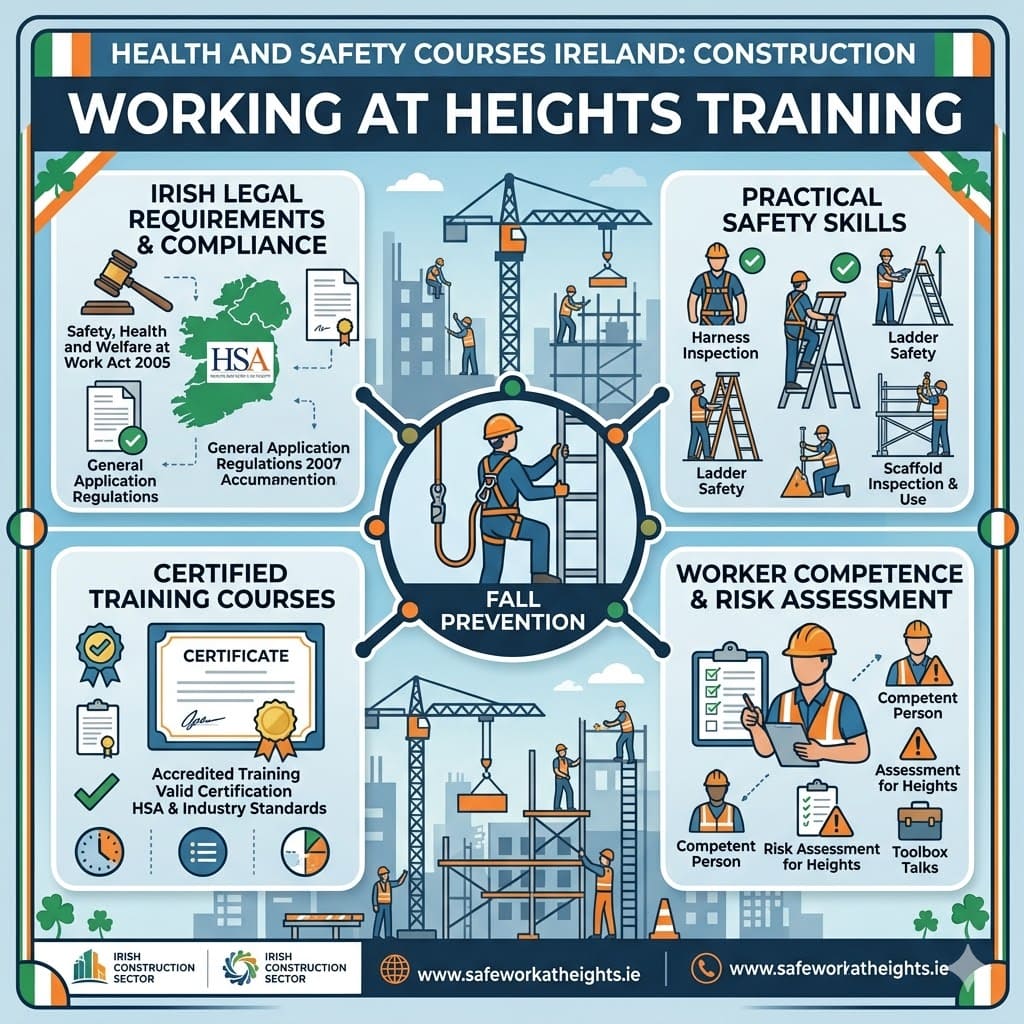
Health and Safety Courses Ireland for Construction are essential for ensuring that workers operate safely in one of the most high-risk industries. Construction sites involve constant movement, heavy machinery, temporary structures, and elevated work areas—all of which create serious safety risks if not properly managed. Among the most critical training areas is working at heights, which remains one of the leading causes of workplace injuries and fatalities in the construction sector.
Because of these risks, Irish law requires employers to ensure workers are trained, competent, and aware of hazards before performing any task at height. This is why working at heights training in Ireland is a core part of construction safety programmes and a mandatory requirement on most sites.
This guide explains why working at heights training is so important in construction, what it includes, and how it supports safety, compliance, and productivity across Irish building sites.
Why Working at Heights Is Critical in Construction
Construction environments regularly require workers to operate above ground level. This includes tasks such as:
- Roofing and roof repairs
- Scaffold assembly and use
- Steel structure installation
- Window fitting and façade work
- Painting and exterior finishing
- Working on ladders or mobile platforms
Each of these activities carries a high risk of falls, which can result in serious injury or death.
Because of this, working at heights training in Ireland is considered a fundamental requirement for anyone entering or working within the construction industry.
The Importance of Health and Safety Courses in Construction
Construction sites are constantly changing environments. New hazards appear daily, and workers must be able to adapt quickly.
Health and safety courses online in Ireland and classroom-based training help construction workers:
- Identify workplace hazards
- Understand safe systems of work
- Use equipment correctly
- Follow legal requirements
- Reduce accident risks
Working at heights is one of the most important modules because it addresses one of the most dangerous aspects of construction work.
Legal Requirements in Ireland
Construction employers must comply with strict legislation, including:
Safety, Health and Welfare at Work Act 2005
This law requires employers to:
- Ensure worker safety
- Provide adequate training
- Maintain safe working environments
- Prevent workplace risks where possible
General Application Regulations (Work at Height)
These regulations require:
- Risk assessment before work begins
- Safe use of equipment
- Proper training and supervision
- Avoidance of unnecessary height work
Construction Regulations 2013
These require:
- Competent site personnel
- Coordinated safety management
- Safe work planning
- Control of high-risk activities
Together, these laws make working at heights compliance in Ireland a legal obligation for all construction employers.
What Working at Heights Training Covers
A high-quality health and safety course in Ireland for construction focuses on practical and theoretical safety skills.
Hazard Identification
Workers learn to recognise risks such as:
- Unprotected edges
- Fragile roof surfaces
- Open scaffolding platforms
- Uneven or unstable ground
- Weather-related hazards
Understanding hazards is the first step in preventing accidents.
Risk Assessment and Planning
Before starting work, construction workers must be able to:
- Assess the site environment
- Identify potential dangers
- Evaluate risk levels
- Implement control measures
- Plan safe access routes
Good planning significantly reduces the likelihood of incidents.
Ladder Safety
Ladders are widely used on construction sites but are a major source of injuries.
Training includes:
- Correct ladder selection
- Safe positioning and setup
- Inspection before use
- Maintaining three points of contact
- Avoiding overreach
Even simple mistakes can lead to serious falls.
Scaffolding Safety
Scaffolding is essential in construction but must be used correctly.
Workers are trained in:
- Safe access and exit
- Platform stability checks
- Guardrail and toe board systems
- Identifying defects or unsafe structures
Although scaffolding is typically erected by specialists, all users must understand safe practices.
Mobile Elevated Work Platforms (MEWPs)
Many construction projects use MEWPs such as scissor lifts and cherry pickers.
Training covers:
- Safe operation procedures
- Harness requirements
- Emergency lowering systems
- Load limitations
- Environmental safety checks
Personal Protective Equipment (PPE)
PPE is a critical part of working at heights training in Ireland.
Workers learn to use:
- Safety harnesses
- Lanyards and anchor points
- Fall arrest systems
- Hard hats
- Safety boots
Proper use of PPE significantly reduces injury severity.
Fall Prevention Techniques
Preventing falls is the main objective of all safety training.
Workers are taught to:
- Maintain stable positioning
- Avoid unsafe shortcuts
- Keep work areas tidy
- Use proper access equipment
- Follow safe movement techniques
Emergency Procedures
Even with strong safety measures, emergencies can occur.
Training includes:
- Rescue planning
- Emergency communication
- Incident reporting
- Basic first aid awareness
- Evacuation procedures
Fast response is critical in reducing harm.
Online Training in Construction Safety
Many providers now offer working at heights online training in Ireland, which is widely used in construction.
Advantages of Online Training
- Flexible learning schedules
- Faster completion times
- Reduced training costs
- Easy access from any location
- Ideal for refresher training
Online training is particularly useful for theory-based knowledge, while some roles may still require practical assessments on-site.
Benefits for Construction Companies
Investing in health and safety courses Ireland for construction provides major benefits.
Reduced Accidents
Proper training significantly reduces fall-related incidents.
Improved Productivity
Workers operate more confidently and efficiently.
Legal Compliance
Companies can demonstrate adherence to Irish safety laws.
Lower Costs
Fewer accidents mean reduced downtime and insurance claims.
Stronger Safety Culture
Trained teams are more aware of risks and responsibilities.
Benefits for Workers
Workers also gain significant advantages:
- Increased job opportunities
- Improved site access eligibility
- Greater safety awareness
- Higher confidence in tasks
- Career development opportunities
A valid working at heights certificate online is often required for employment in construction roles.
Common Safety Mistakes in Construction
Training helps prevent common errors such as:
- Using unsafe ladders
- Ignoring weather conditions
- Failing to inspect equipment
- Working without proper PPE
- Rushing tasks under pressure
These mistakes are major contributors to workplace accidents.
Choosing the Right Training Provider
When selecting health and safety courses online in Ireland, construction companies should ensure:
- Accreditation and recognition
- Compliance with Irish regulations
- Industry-relevant content
- Employer acceptance
- Strong provider reputation
A reliable provider ensures training is practical and valid on-site.
Final Thoughts
Health and Safety Courses Ireland for Construction: Focus on Working at Heights highlights the critical importance of proper training in one of the most dangerous aspects of construction work. Working at height requires skill, awareness, and strict adherence to safety procedures to prevent serious accidents.
Through structured working at heights training in Ireland, workers gain essential knowledge in hazard identification, risk assessment, equipment use, and emergency response. Whether delivered online or in person, this training plays a vital role in reducing workplace injuries and ensuring legal compliance.
Ultimately, investing in proper training is not just about meeting regulations—it is about protecting lives, improving job performance, and building safer construction sites across Ireland.