



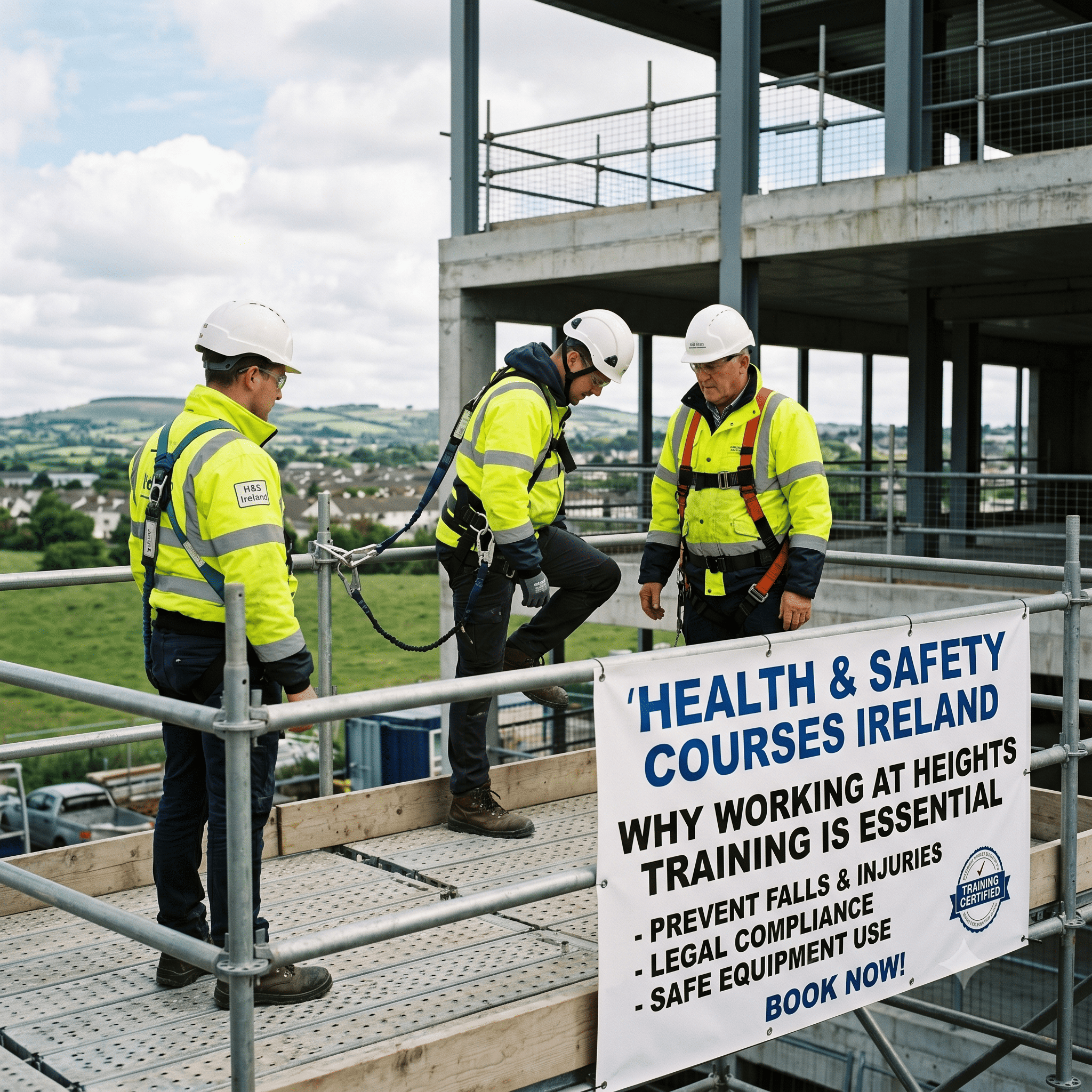
Health and safety in the workplace is not just a legal requirement in Ireland—it is a fundamental responsibility for every employer and employee. Among the many areas covered by health and safety courses in Ireland, one of the most critical is working at heights training. This type of training plays a vital role in preventing serious injuries and fatalities in industries where employees regularly work above ground level.
From construction sites to warehouses, maintenance work to utilities, working at height is a daily reality for thousands of workers across Ireland. Without proper training, even a minor mistake can lead to severe consequences. This is why working at heights training is considered an essential part of modern workplace safety systems.
Understanding Health and Safety Courses in Ireland
Health and safety courses in Ireland are designed to educate workers and employers on how to identify, assess, and control workplace risks. These courses cover a wide range of topics, including:
- Workplace hazard identification
- Risk assessment procedures
- Fire safety awareness
- Manual handling techniques
- Emergency response training
- Personal protective equipment (PPE) usage
- Working at heights safety
Among these, working at heights is one of the most high-risk activities, requiring specialized training and certification.
Why Working at Heights Is So Dangerous
Working at height refers to any task where a person could fall and suffer injury. This includes working on ladders, scaffolding, rooftops, elevated platforms, or even mezzanine floors.
The danger comes from several factors:
- Loss of balance or slipping
- Improper use of ladders or equipment
- Weak or unstable working surfaces
- Poor weather conditions such as wind or rain
- Lack of fall protection systems
- Human error due to fatigue or rushing
Falls from height are consistently among the leading causes of workplace fatalities in construction and maintenance sectors. This makes proper training not optional, but essential.
Legal Requirements in Ireland
Irish workplace safety law places strict obligations on employers. Under the Safety, Health and Welfare at Work Act 2005, employers must ensure that all employees are properly trained and protected from workplace hazards.
In addition, the General Application Regulations (Work at Height Regulations) require employers to:
- Avoid working at height where possible
- Use proper equipment and safety systems
- Provide adequate training and supervision
- Carry out risk assessments before work begins
Completing a working at heights certificate in Ireland helps employers demonstrate compliance with these legal requirements. It also ensures workers understand how to perform tasks safely and responsibly.
Why Working at Heights Training Is Essential
Working at heights training is not just a regulatory requirement—it is a practical necessity that saves lives. Here’s why it is so important:
1. Prevents Serious Injuries and Fatalities
The primary purpose of this training is to reduce the risk of falls. Workers learn how to recognize hazards and take preventive measures before accidents occur.
2. Improves Risk Awareness
Many accidents happen because workers underestimate danger. Training helps employees understand real-world risks and how quickly situations can become unsafe.
3. Ensures Correct Use of Equipment
Ladders, scaffolding, harnesses, and fall arrest systems must be used correctly. Training ensures workers know how to inspect, fit, and use equipment properly.
4. Supports Legal Compliance
Employers who provide proper health and safety courses in Ireland reduce the risk of legal penalties, fines, and liability claims.
5. Builds a Safety Culture
When workers are trained, safety becomes part of everyday work practice rather than an afterthought.
Key Topics Covered in Working at Heights Training
A comprehensive working at heights training course in Ireland typically includes both theoretical and practical elements.
Hazard Identification
Workers learn to identify dangers such as:
- Unprotected edges
- Weak surfaces
- Unsafe access points
- Overhead obstructions
Risk Assessment
Before starting any task, workers are trained to evaluate:
- Task complexity
- Environmental conditions
- Equipment suitability
- Emergency escape routes
Safe Use of Ladders and Access Equipment
Ladders are a major cause of workplace accidents. Training covers:
- Proper ladder angle and placement
- Inspection before use
- Safe climbing techniques
- Avoiding overreach
Scaffolding and Platforms
Workers learn how to:
- Access scaffolding safely
- Check stability and structure
- Use guardrails and toe boards
- Work safely on elevated platforms
Personal Protective Equipment (PPE)
Training includes:
- Harness fitting and inspection
- Use of anchor points
- Fall arrest systems
- Helmet and safety footwear requirements
Emergency Procedures
In case of an incident, workers are trained in:
- Rescue planning
- First aid awareness
- Incident reporting
- Evacuation procedures
Online Working at Heights Training in Ireland
With the rise of digital learning, many providers now offer health and safety courses online in Ireland, including working at heights training.
Online training offers several advantages:
Flexibility
Workers can complete training at their own pace, making it ideal for busy schedules.
Accessibility
Training can be accessed from anywhere, whether at home or on-site.
Cost Efficiency
Online courses often reduce travel and classroom costs.
Fast Certification
Many programs provide a working at heights certificate online, which can be used for employment or compliance purposes immediately after completion.
However, in some cases, employers may still require practical assessments depending on job risk level.
Employer Responsibilities
Employers in Ireland have a legal duty to ensure workplace safety. This includes:
- Providing appropriate training
- Conducting regular risk assessments
- Supplying safe equipment
- Supervising high-risk work
- Maintaining safety records
Failing to meet these responsibilities can result in serious legal consequences and workplace incidents.
Investing in health and safety courses in Ireland is one of the most effective ways employers can meet these obligations.
Common Mistakes in Working at Heights
Despite training, accidents still happen due to common mistakes such as:
- Not checking equipment before use
- Ignoring weather conditions
- Using incorrect ladder positioning
- Overloading scaffolding
- Rushing tasks under pressure
- Skipping safety procedures
Ongoing training and refreshers help reduce these risks significantly.
Choosing the Right Training Provider
When selecting a working at heights training course in Ireland, consider:
- Accreditation and certification standards
- Course content relevance to Irish regulations
- Online vs in-person learning options
- Employer recognition of certification
- Reviews and reputation
A high-quality provider will ensure the training is practical, clear, and aligned with workplace safety laws.
Conclusion
Health and safety courses in Ireland, especially working at heights training, are essential for protecting workers and ensuring compliance with national regulations. Whether delivered in-person or through online training programs, this type of education significantly reduces workplace accidents and improves overall safety standards.
Working at height is inherently risky, but with the right knowledge, equipment, and procedures, those risks can be controlled. Employers who invest in proper training not only meet legal requirements but also protect their workforce, reduce downtime, and build a stronger safety culture.
Ultimately, working at heights training is not just a requirement—it is a life-saving necessity in today’s high-risk working environments.