



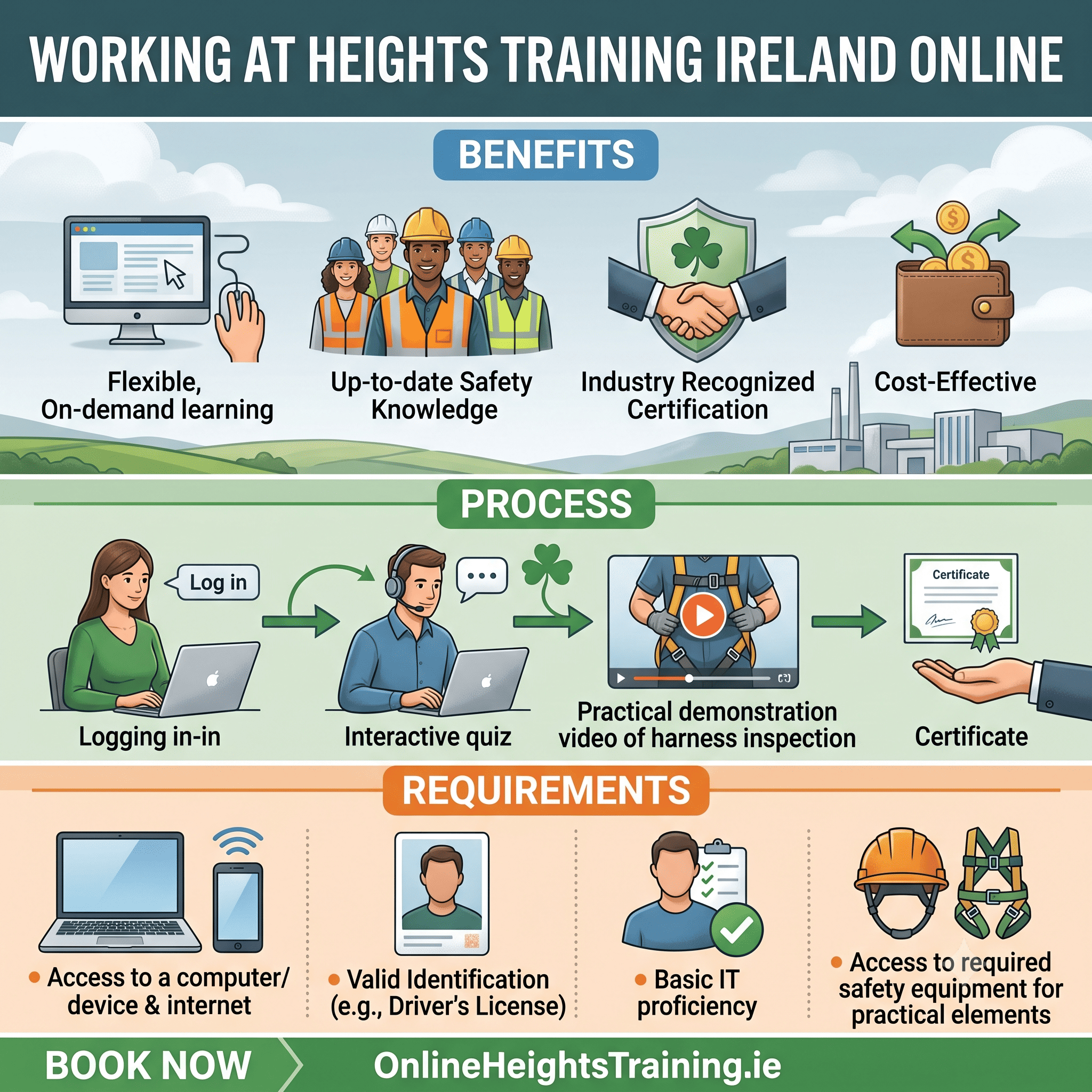
Workplace safety is an essential part of every successful business. Across Ireland, employees in construction, warehousing, manufacturing, facilities management, telecommunications, maintenance, and many other industries regularly perform tasks that involve working at height. While these tasks are often part of everyday operations, they also present significant risks if appropriate safety procedures are not followed.
Fortunately, learning how to work safely has never been more accessible. Health and Safety Online Courses Ireland provide flexible and convenient training that helps employees understand the hazards associated with working at height while supporting employers in meeting their workplace safety responsibilities. Online learning allows workers to study at their own pace, making it easier to fit training around busy schedules without compromising the quality of learning.
This guide explains how working at heights training works, why it is important, the benefits of online learning, and how employers and employees can work together to create safer workplaces across Ireland.
What Is Working at Heights?
Working at height refers to any task where a person could fall from one level to another and suffer injury.
Many people think only of construction workers when they hear the term, but working at height applies to a wide variety of occupations.
Examples include:
- Working on roofs
- Using ladders
- Working from scaffolding
- Operating mobile elevated work platforms (MEWPs)
- Installing electrical systems
- Property maintenance
- Warehouse stock picking
- Solar panel installation
- Telecommunications work
- Window cleaning
Even a fall from a relatively low height can result in serious injuries, making safe working practices essential in every workplace.
Why Working at Heights Training Matters
Falls from height remain one of the most common causes of workplace accidents.
These incidents can lead to:
- Broken bones
- Head injuries
- Spinal injuries
- Long-term disability
- Lost working days
- Increased business costs
- Delayed projects
- Fatal accidents
Many of these incidents are preventable through proper planning, suitable equipment, effective supervision, and quality working at heights training in Ireland.
Training helps workers understand the risks before beginning elevated tasks and provides practical knowledge that supports safer decision-making.
Understanding Irish Workplace Safety Responsibilities
Employers in Ireland have legal duties under the Safety, Health and Welfare at Work Act 2005.
Their responsibilities include:
- Providing a safe workplace
- Identifying workplace hazards
- Carrying out suitable risk assessments
- Maintaining safe systems of work
- Providing appropriate work equipment
- Delivering suitable training
- Ensuring employees are competent
Employees also play an important role by:
- Following workplace procedures
- Attending required training
- Using equipment correctly
- Wearing personal protective equipment (PPE)
- Reporting hazards
- Cooperating with workplace safety measures
Safety is a shared responsibility between employers and workers.
Why Choose Health and Safety Online Courses?
Online learning has transformed workplace training by making safety education more accessible.
Health and safety online courses in Ireland offer several advantages over traditional classroom-based learning.
Flexible Learning
Employees can complete training:
- At home
- In the workplace
- During evenings
- At weekends
- Around existing work commitments
This flexibility helps businesses minimise disruption while allowing employees to learn at a comfortable pace.
Easy Access
Online courses are available on:
- Desktop computers
- Laptops
- Tablets
- Smartphones
As long as there is an internet connection, learners can access their course from almost anywhere.
Consistent Training
Every learner receives the same structured course content.
This consistency helps organisations maintain high safety standards across different departments and work locations.
Cost-Effective Training
Online learning often reduces:
- Travel expenses
- Venue hire
- Instructor fees
- Employee downtime
Businesses can train multiple employees efficiently without significantly affecting productivity.
What Is Covered During Working at Heights Training?
Professional working at heights online training in Ireland covers the essential knowledge employees need before carrying out elevated work.
Understanding Working at Height
The course explains:
- What working at height means
- Why falls occur
- Common workplace risks
- Accident prevention principles
Understanding these concepts provides the foundation for safe working practices.
Hazard Identification
Workers learn how to identify hazards such as:
- Open edges
- Fragile roof surfaces
- Falling objects
- Slippery platforms
- Poor lighting
- Unsafe access routes
- Weather-related risks
Recognising hazards before beginning work significantly reduces the likelihood of accidents.
Risk Assessment
Employees learn how to:
- Inspect work environments
- Identify hazards
- Assess risks
- Select suitable control measures
- Plan work safely
Risk assessment is one of the most effective tools for preventing workplace injuries.
Ladder Safety
Training explains:
- Selecting suitable ladders
- Equipment inspection
- Safe positioning
- Proper climbing techniques
- Maintaining three points of contact
- Avoiding overreaching
Many workplace falls involve ladders, making this an important area of study.
Scaffolding Awareness
Learners receive instruction on:
- Safe access procedures
- Platform inspections
- Guardrail systems
- Identifying unsafe conditions
- Reporting defects
Scaffolding awareness is particularly valuable within construction and maintenance industries.
Personal Protective Equipment (PPE)
The course covers:
- Safety harnesses
- Lanyards
- Anchor points
- Safety helmets
- Protective footwear
- Fall arrest systems
Workers also learn how to inspect PPE before every use.
Emergency Procedures
Training explains how employees should:
- Report incidents
- Respond during emergencies
- Follow workplace emergency procedures
- Support rescue planning
Preparation improves confidence if an unexpected situation occurs.
How Online Certification Works
Most working at heights online training follows a straightforward process.
Register
Learners create an account with an approved training provider and gain access to the course.
Complete the Lessons
Training is divided into manageable modules that learners complete at their own pace.
Finish the Assessment
At the end of the course, learners complete an assessment to demonstrate their understanding of the material.
Receive the Certificate
Successful participants receive a Working at Heights Certificate Online, providing evidence that they have completed recognised safety awareness training.
Benefits for Employees
Completing working at heights training in Ireland offers many professional advantages.
Employees benefit through:
- Increased confidence
- Better hazard recognition
- Improved safety awareness
- Enhanced workplace knowledge
- Professional development
- Greater understanding of workplace responsibilities
The knowledge gained helps employees perform their duties more safely and responsibly.
Benefits for Employers
Investing in health and safety online courses in Ireland provides organisations with significant advantages.
Improved Legal Compliance
Training helps employers demonstrate that they are taking reasonable steps to educate employees about workplace hazards and safe working practices.
Reduced Workplace Accidents
Workers who understand workplace risks are more likely to follow safe procedures and identify hazards before incidents occur.
Easier Training Administration
Online learning platforms simplify:
- Employee enrolment
- Progress tracking
- Certificate storage
- Refresher scheduling
This makes ongoing workforce training easier to manage.
Lower Operational Costs
Businesses often save money by reducing:
- Travel costs
- Accommodation expenses
- Classroom hire
- Lost productivity
Stronger Safety Culture
Regular safety training encourages employees to:
- Report hazards
- Follow workplace procedures
- Support colleagues
- Take responsibility for safety
A positive safety culture benefits everyone within the organisation.
Choosing the Right Online Course
When selecting health and safety online courses in Ireland, consider providers that offer:
- Up-to-date course content
- Training aligned with Irish workplace safety legislation
- Practical workplace examples
- User-friendly online platforms
- Recognised certification
- Ongoing learner support
Quality training should prepare employees to apply safety principles in real workplace situations.
Maintaining Workplace Safety Beyond Training
Training is only one part of an effective workplace safety programme.
Employers should also:
- Review risk assessments regularly
- Inspect work equipment
- Monitor workplace conditions
- Encourage hazard reporting
- Provide refresher training
- Promote continuous improvement
Ongoing commitment to safety helps reduce risks and maintain high workplace standards.
Final Thoughts
Health and Safety Online Courses Ireland: Working at Heights Made Simple demonstrates how online learning has made workplace safety education more accessible than ever before. Flexible online courses allow employees to gain essential knowledge in hazard identification, risk assessment, ladder safety, scaffolding awareness, personal protective equipment, and emergency procedures while learning at a pace that suits their schedule.
For employers, investing in working at heights training in Ireland supports compliance with Irish workplace safety legislation, strengthens workforce competence, reduces workplace accidents, and simplifies employee training management. For employees, completing health and safety online courses in Ireland improves confidence, enhances professional skills, and promotes safer working practices in every environment where work at height is carried out.
By combining quality online training with effective workplace planning, suitable equipment, regular risk assessments, and ongoing supervision, organisations can create safer workplaces and help ensure every employee returns home safely at the end of the working day.