



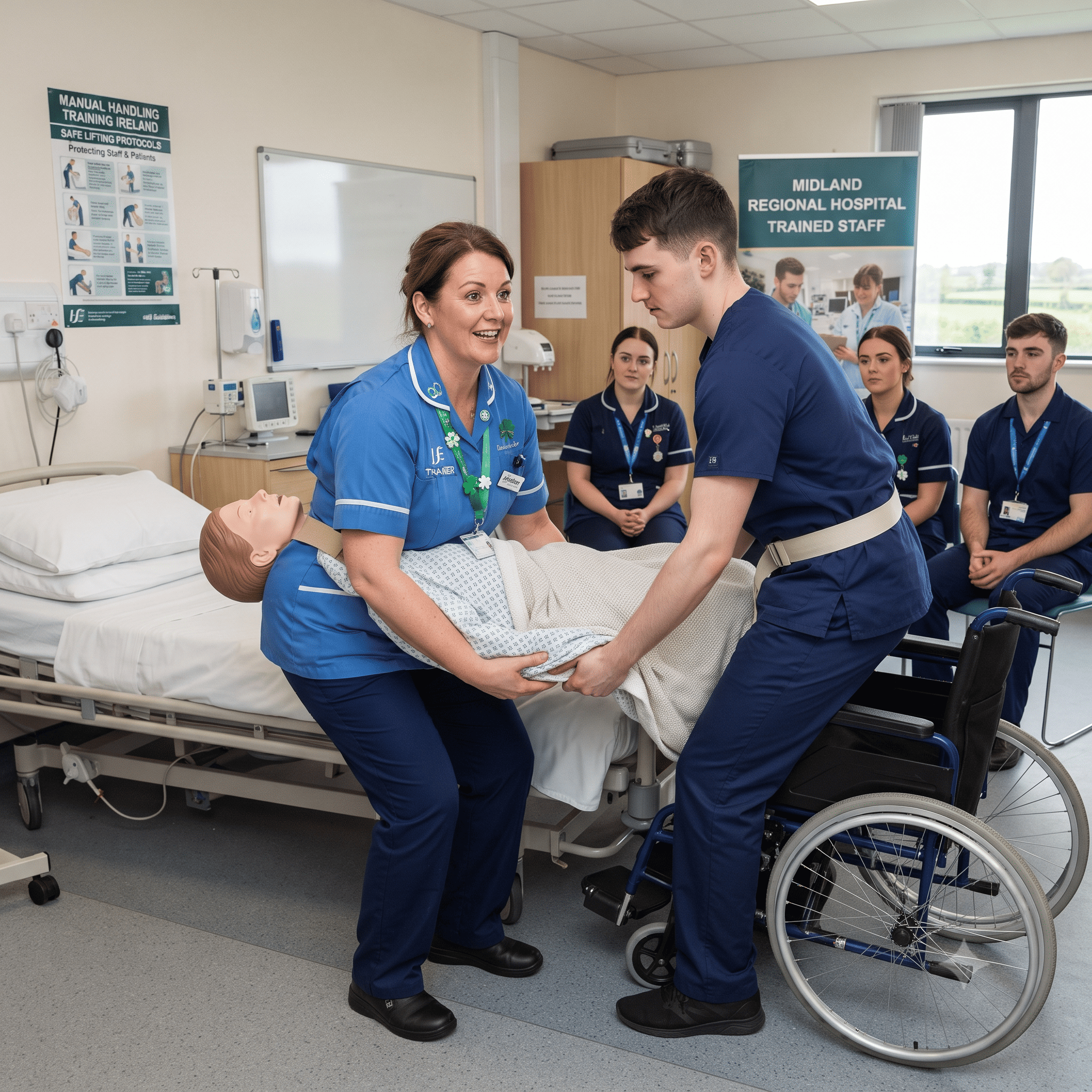
Healthcare professionals play a vital role in caring for patients, but many of their daily responsibilities also involve physically demanding manual handling tasks. Assisting patients, repositioning individuals in beds, moving medical equipment, transporting supplies, and handling wheelchairs all require proper techniques to minimise the risk of injury.
Healthcare workers experience some of the highest rates of musculoskeletal injuries, particularly those affecting the back, shoulders, neck, and joints. These injuries not only impact the wellbeing of staff but can also affect patient care, increase absenteeism, and place additional pressure on healthcare services.
A professional Manual Handling Training Ireland programme gives healthcare workers the knowledge and practical skills needed to carry out manual handling tasks safely and confidently. Through a recognised Manual Handling Course Ireland, staff learn how to assess risks, use correct body mechanics, work safely with colleagues, and make informed decisions before performing physical tasks. Completing a Manual Handling Certificate Ireland demonstrates a commitment to maintaining high standards of workplace safety and patient care.
In this article, we explore why manual handling training is essential in healthcare and how it helps protect both staff and patients across Ireland.
Why Manual Handling Is So Important in Healthcare
Unlike many other industries, healthcare workers often assist people rather than simply moving objects. Patients may have limited mobility, be unable to support their own weight, or require specialised assistance when moving.
Common manual handling tasks include:
- Assisting patients in and out of bed
- Helping patients stand or walk
- Moving wheelchairs
- Transferring patients between beds and chairs
- Repositioning patients to improve comfort
- Transporting medical equipment
- Moving oxygen cylinders and supplies
- Handling laundry and waste
Each of these tasks presents unique challenges and requires careful planning to reduce the risk of injury.
Understanding the Risks
Manual handling injuries in healthcare often develop gradually through repeated lifting and awkward movements.
Common injuries include:
- Lower back pain
- Shoulder strains
- Neck injuries
- Wrist injuries
- Knee pain
- Muscle strains
- Long-term musculoskeletal disorders
Healthcare professionals frequently perform repetitive manual handling throughout long shifts, making proper technique essential.
Without suitable training, even routine patient handling tasks can place significant strain on the body.
Protecting Healthcare Workers
One of the primary objectives of Manual Handling Training Ireland is protecting employees from preventable injuries.
Training helps healthcare workers:
- Understand body mechanics
- Apply safe lifting techniques
- Reduce unnecessary physical effort
- Identify manual handling hazards
- Know when assistance is required
- Use equipment safely
Healthy employees are better able to provide consistent, high-quality patient care.
Protecting Patients
Safe manual handling is equally important for patient wellbeing.
Incorrect handling can result in:
- Falls
- Skin injuries
- Discomfort
- Anxiety
- Loss of dignity
- Delayed recovery
Healthcare staff who use proper techniques can move patients more comfortably while reducing the likelihood of accidents.
Patients often feel more confident when staff demonstrate safe and professional handling methods.
Learning Safe Patient Handling Techniques
A quality Manual Handling Course Ireland teaches healthcare workers how to move patients safely while minimising physical strain.
Training covers principles such as:
- Assessing patient mobility
- Maintaining correct posture
- Using leg muscles rather than the back
- Keeping movements smooth and controlled
- Communicating with patients before movement
- Coordinating with colleagues during assisted transfers
The emphasis is always on safety for both the patient and the healthcare worker.
The Importance of Risk Assessment
Every patient handling task should begin with a risk assessment.
Healthcare workers are encouraged to consider:
- Can the patient assist with the movement?
- Does the patient have any mobility limitations?
- Is specialist equipment required?
- Are additional staff needed?
- Is the environment safe?
- Are there obstacles nearby?
Taking a few moments to assess these factors helps prevent accidents and injuries.
Using Mechanical Aids
Modern healthcare environments provide equipment designed to reduce manual lifting.
Common examples include:
- Patient hoists
- Transfer boards
- Slide sheets
- Standing aids
- Wheelchairs
- Adjustable hospital beds
A professional Manual Handling Training Ireland programme explains when and how these aids should be used.
Using appropriate equipment not only protects healthcare workers but also improves patient comfort and dignity.
Encouraging Teamwork
Many patient handling tasks require two or more healthcare professionals.
Effective teamwork involves:
- Agreeing on the procedure beforehand
- Assigning responsibilities
- Communicating clearly
- Moving together
- Monitoring patient comfort throughout the transfer
Good communication significantly reduces the risk of injury.
Maintaining Good Body Mechanics
Proper body mechanics are fundamental to safe manual handling.
Healthcare workers learn to:
- Keep a neutral spine
- Bend at the knees
- Maintain a stable base of support
- Hold loads close to the body where appropriate
- Avoid twisting
- Move smoothly and steadily
These techniques help reduce physical stress during patient care.
Preventing Fatigue During Long Shifts
Healthcare professionals often work long hours in physically demanding environments.
Fatigue can lead to:
- Poor posture
- Reduced concentration
- Slower reactions
- Increased injury risk
Training encourages staff to:
- Plan movements carefully
- Use equipment whenever possible
- Ask for assistance
- Avoid unnecessary physical effort
- Follow safe procedures consistently
Managing fatigue contributes to safer working conditions.
Supporting Infection Prevention
Manual handling procedures should also support infection prevention measures.
Healthcare workers learn to:
- Clean equipment appropriately
- Follow hygiene procedures
- Wear suitable personal protective equipment where required
- Minimise unnecessary patient contact during transfers
Combining manual handling principles with infection control supports overall patient safety.
Supporting Legal Compliance
Healthcare employers have responsibilities under Irish health and safety legislation to protect employees from workplace hazards, including manual handling risks.
Providing recognised Manual Handling Training Ireland demonstrates a commitment to these responsibilities while helping organisations maintain safe working practices.
A Manual Handling Certificate Ireland also provides evidence that employees have completed suitable training.
Benefits for Healthcare Organisations
Investing in manual handling training benefits healthcare providers in many ways.
Advantages include:
- Fewer workplace injuries
- Lower absenteeism
- Improved patient care
- Greater employee confidence
- Better teamwork
- Reduced compensation claims
- Stronger compliance with health and safety requirements
- Enhanced workplace morale
Safe healthcare environments benefit everyone involved.
Online Manual Handling Training for Healthcare Workers
Many healthcare professionals choose online learning because it provides flexibility around busy work schedules.
Benefits include:
- Learn from home or work
- Study at your own pace
- Access training on multiple devices
- Reduce time away from patient care
- Complete training efficiently
- Receive certification quickly after successful completion
Online courses make high-quality training more accessible for healthcare teams across Ireland.
The Value of a Manual Handling Certificate Ireland
After successfully completing training, participants receive a Manual Handling Certificate Ireland.
The certificate confirms an understanding of:
- Safe manual handling principles
- Risk assessment
- Correct lifting techniques
- Hazard awareness
- Safe patient handling procedures
- Workplace safety responsibilities
Many healthcare employers require certification as part of employee induction or ongoing professional development.
Creating a Culture of Safety in Healthcare
Manual handling training is most effective when it forms part of a wider culture of workplace safety.
Healthcare organisations that prioritise regular training encourage employees to:
- Follow best practices consistently.
- Report hazards promptly.
- Use mechanical aids whenever appropriate.
- Communicate effectively with colleagues.
- Put patient and staff safety first.
A positive safety culture helps reduce injuries while improving the overall quality of care.
Conclusion
Manual handling is an essential part of healthcare, but it also presents significant risks for both staff and patients when safe techniques are not followed. From assisting patients with limited mobility to moving medical equipment, every manual handling task requires careful planning, effective communication, and the correct use of body mechanics.
A professional Manual Handling Training Ireland programme equips healthcare workers with the practical skills needed to perform these tasks safely and confidently. Through a recognised Manual Handling Course Ireland, participants learn how to assess risks, use appropriate equipment, protect their own health, and provide safe, respectful care for patients.
Earning a Manual Handling Certificate Ireland demonstrates a commitment to workplace safety, professional standards, and continuous improvement. By investing in quality manual handling training, healthcare organisations create safer environments, protect their employees, enhance patient care, and build a stronger culture of safety across Ireland.