



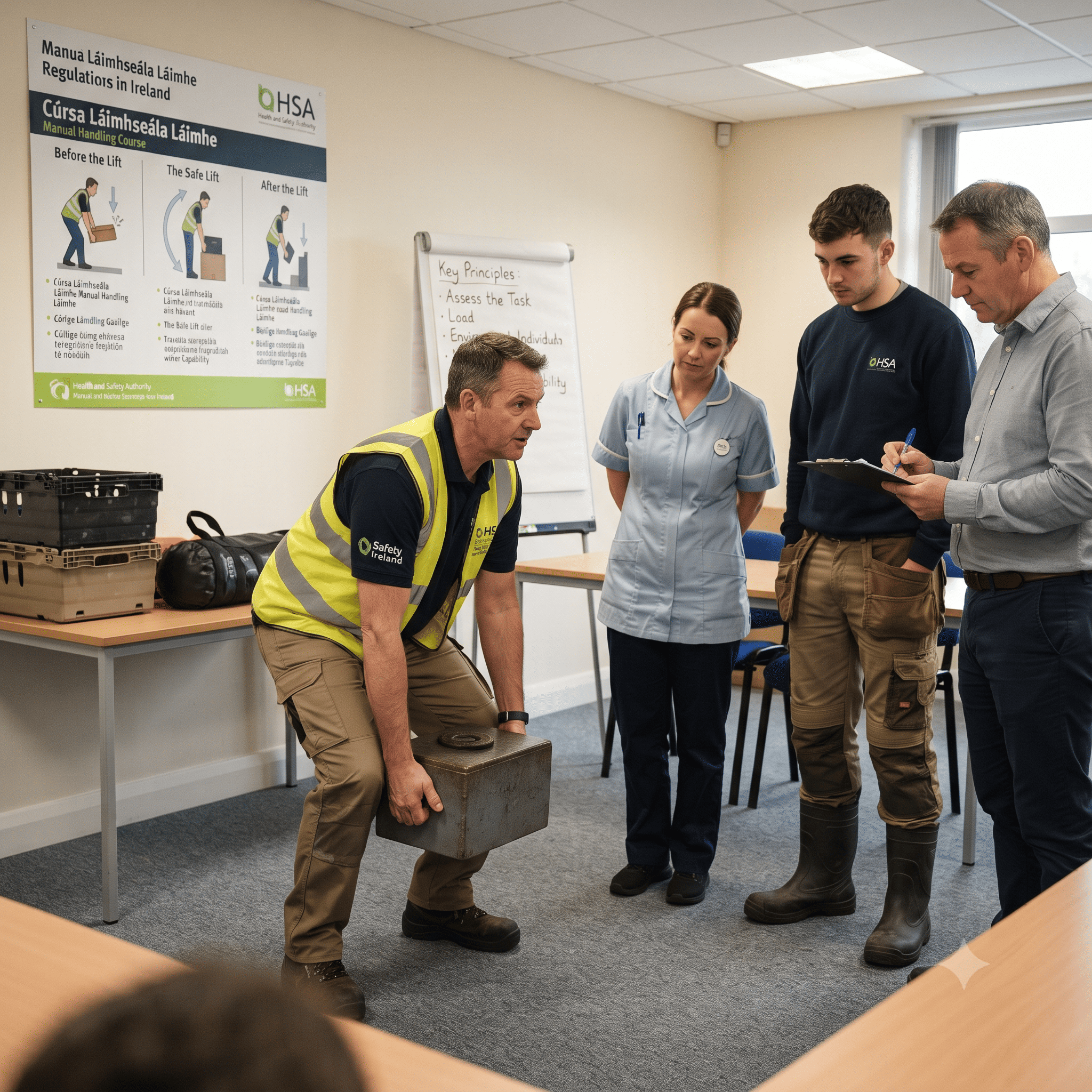
Workplace injuries can have serious consequences for both employees and employers. They can lead to pain, reduced productivity, time away from work, increased costs, and long-term health problems. Among the most common workplace injuries in Ireland are those caused by poor manual handling practices. Lifting, carrying, pushing, pulling, or moving loads incorrectly can place unnecessary strain on the body, increasing the risk of musculoskeletal disorders and other preventable injuries.
A professional Manual Handling Course Ireland equips employees with the knowledge and practical skills needed to perform manual handling tasks safely. By teaching correct lifting techniques, risk assessment, and safe working practices, the course helps reduce accidents while creating a stronger culture of workplace safety.
Whether you work in healthcare, construction, retail, warehousing, hospitality, logistics, manufacturing, or an office environment, understanding proper manual handling techniques is essential. This article explains how Manual Handling Training Ireland helps prevent workplace injuries and why earning a Manual Handling Certificate Ireland benefits both employees and employers.
Understanding Manual Handling
Manual handling refers to any activity that requires physical effort to lift, lower, carry, push, pull, hold, or move a load.
Examples include:
- Lifting boxes or equipment
- Carrying stock
- Moving furniture
- Loading or unloading deliveries
- Pushing trolleys
- Pulling pallet trucks
- Repositioning supplies
- Handling tools or materials
Although these tasks are part of daily work in many industries, they can become hazardous when performed incorrectly.
Why Manual Handling Injuries Occur
Many workplace injuries are not caused by major accidents. Instead, they develop gradually through repeated exposure to poor lifting techniques and unsafe working habits.
Common causes include:
- Lifting with a rounded back
- Twisting while carrying a load
- Handling objects that are too heavy
- Repetitive manual handling
- Poor posture
- Rushing tasks
- Failing to assess hazards
- Ignoring signs of fatigue
Without proper training, employees often rely on habits rather than safe techniques, increasing their risk of injury over time.
The Importance of Professional Training
A structured Manual Handling Training Ireland programme teaches employees how to approach manual handling tasks safely and efficiently.
Rather than relying on trial and error, participants learn:
- Safe lifting techniques
- Body mechanics
- Hazard recognition
- Risk assessment
- Safe movement of loads
- Proper use of mechanical aids
These practical skills reduce the likelihood of injuries while improving confidence and consistency in the workplace.
Learning Correct Lifting Techniques
One of the main objectives of a Manual Handling Course Ireland is teaching employees how to lift safely.
Participants learn how to:
- Stand with a stable base
- Bend at the knees rather than the waist
- Keep the back in a neutral position
- Hold loads close to the body
- Lift using the strength of the legs
- Avoid sudden or jerking movements
- Turn using the feet instead of twisting the spine
These techniques minimise pressure on the back and joints, helping prevent both immediate and long-term injuries.
Preventing Back Injuries
Back injuries remain one of the leading causes of workplace absenteeism in Ireland.
Poor lifting places excessive stress on the spine, muscles, and supporting ligaments. Even lifting a relatively light object incorrectly can result in strains or long-term discomfort.
Through Manual Handling Ireland training, employees learn how proper posture and controlled movement protect the lower back.
Simple adjustments in lifting technique can dramatically reduce injury risk.
Recognising Workplace Hazards
Safe manual handling begins before lifting starts.
Employees learn how to identify hazards such as:
- Wet or slippery floors
- Uneven surfaces
- Poor lighting
- Cluttered walkways
- Unstable loads
- Restricted working spaces
Recognising these hazards allows workers to reduce risks before they become accidents.
Developing this awareness is one of the greatest benefits of professional training.
Understanding Risk Assessment
Before lifting any object, employees should perform a quick risk assessment.
Questions include:
- How heavy is the load?
- Is it awkward or unstable?
- Can it be divided into smaller loads?
- Is help required?
- Is lifting equipment available?
- Is the route free from obstacles?
Taking a few seconds to assess these factors often prevents injuries that could otherwise occur.
A quality Manual Handling Course Ireland encourages employees to make this assessment part of every manual handling task.
Improving Body Mechanics
Employees are introduced to basic body mechanics and how movement affects the musculoskeletal system.
Training explains:
- How muscles work together
- Why posture matters
- How balance improves stability
- Why keeping loads close reduces strain
- How repetitive movements contribute to fatigue
Understanding these principles helps employees make safer choices throughout the working day.
Encouraging Better Planning
Many workplace injuries occur because employees begin lifting without thinking ahead.
Training encourages workers to plan:
- Where the load is going
- The safest route
- Potential obstacles
- Available assistance
- Suitable lifting equipment
Planning reduces unnecessary movement and improves efficiency while lowering injury risks.
Safe Use of Mechanical Aids
Manual handling does not always mean lifting manually.
Employees learn when to use equipment such as:
- Pallet trucks
- Trolleys
- Hoists
- Lift tables
- Adjustable platforms
- Mechanical lifting devices
Knowing when and how to use these aids significantly reduces physical strain while improving productivity.
Preventing Repetitive Strain Injuries
Not all manual handling injuries happen instantly.
Repeated lifting, carrying, pushing, and pulling can gradually damage muscles, tendons, and joints.
A professional Manual Handling Training Ireland course teaches employees how to:
- Alternate tasks where possible
- Maintain good posture
- Take appropriate breaks
- Reduce repetitive strain
- Use safer lifting methods consistently
These habits help protect employees over the long term.
Building Employee Confidence
Employees who understand safe manual handling techniques are more confident in their daily work.
Training gives them confidence to:
- Handle unfamiliar tasks safely
- Recognise when assistance is required
- Use equipment correctly
- Make informed decisions
- Follow safe procedures consistently
Confidence reduces hesitation while encouraging safer working practices.
Supporting Employers
Manual handling training benefits employers as much as employees.
Well-trained staff help organisations by:
- Reducing workplace accidents
- Lowering absenteeism
- Improving productivity
- Reducing compensation claims
- Supporting health and safety compliance
- Creating a positive workplace culture
Investing in training often leads to long-term financial and operational benefits.
Supporting Compliance in Ireland
Irish employers have legal responsibilities to protect employees from workplace risks, including hazards associated with manual handling.
Providing suitable Manual Handling Training Ireland demonstrates a commitment to health and safety while helping organisations meet their obligations.
Completing a recognised Manual Handling Certificate Ireland also provides documented evidence that employees have received appropriate instruction, which can be valuable during workplace inspections or internal safety audits.
Benefits Across Different Industries
Manual handling training is valuable in almost every workplace.
Employees in the following sectors benefit significantly:
Healthcare
Healthcare workers regularly assist patients, move equipment, and reposition individuals safely.
Construction
Construction workers frequently lift heavy tools, building materials, and machinery.
Warehousing and Logistics
Warehouse staff handle stock throughout the day, making proper lifting techniques essential.
Retail
Retail employees move deliveries, stack shelves, and transport stock.
Hospitality
Hospitality workers lift supplies, furniture, and equipment while working in busy environments.
Manufacturing
Factory employees perform repetitive handling tasks that require good technique to reduce long-term strain.
Regardless of the industry, safe manual handling improves employee wellbeing and workplace efficiency.
Earning Your Manual Handling Certificate Ireland
Upon successful completion of training, participants receive a Manual Handling Certificate Ireland.
The certificate demonstrates that the employee understands:
- Safe lifting techniques
- Risk assessment principles
- Workplace hazard awareness
- Proper body mechanics
- Safe manual handling procedures
Many employers require this certification before employees begin roles involving regular manual handling.
Conclusion
Manual handling injuries remain one of the most common causes of workplace accidents across Ireland, but many of these injuries are entirely preventable. With the right knowledge, practical skills, and safe working habits, employees can significantly reduce the risk of strains, sprains, back injuries, and long-term musculoskeletal disorders.
A professional Manual Handling Course Ireland provides employees with the confidence to assess risks, apply correct lifting techniques, and carry out physical tasks safely in a wide range of working environments. Through comprehensive Manual Handling Training Ireland, workers develop the practical skills needed to protect both themselves and their colleagues.
Earning a recognised Manual Handling Certificate Ireland is more than simply meeting an employer's requirement—it demonstrates a commitment to workplace safety, professional development, and responsible working practices. By investing in quality manual handling training, employees improve their own wellbeing while helping create safer, healthier, and more productive workplaces across Ireland.