



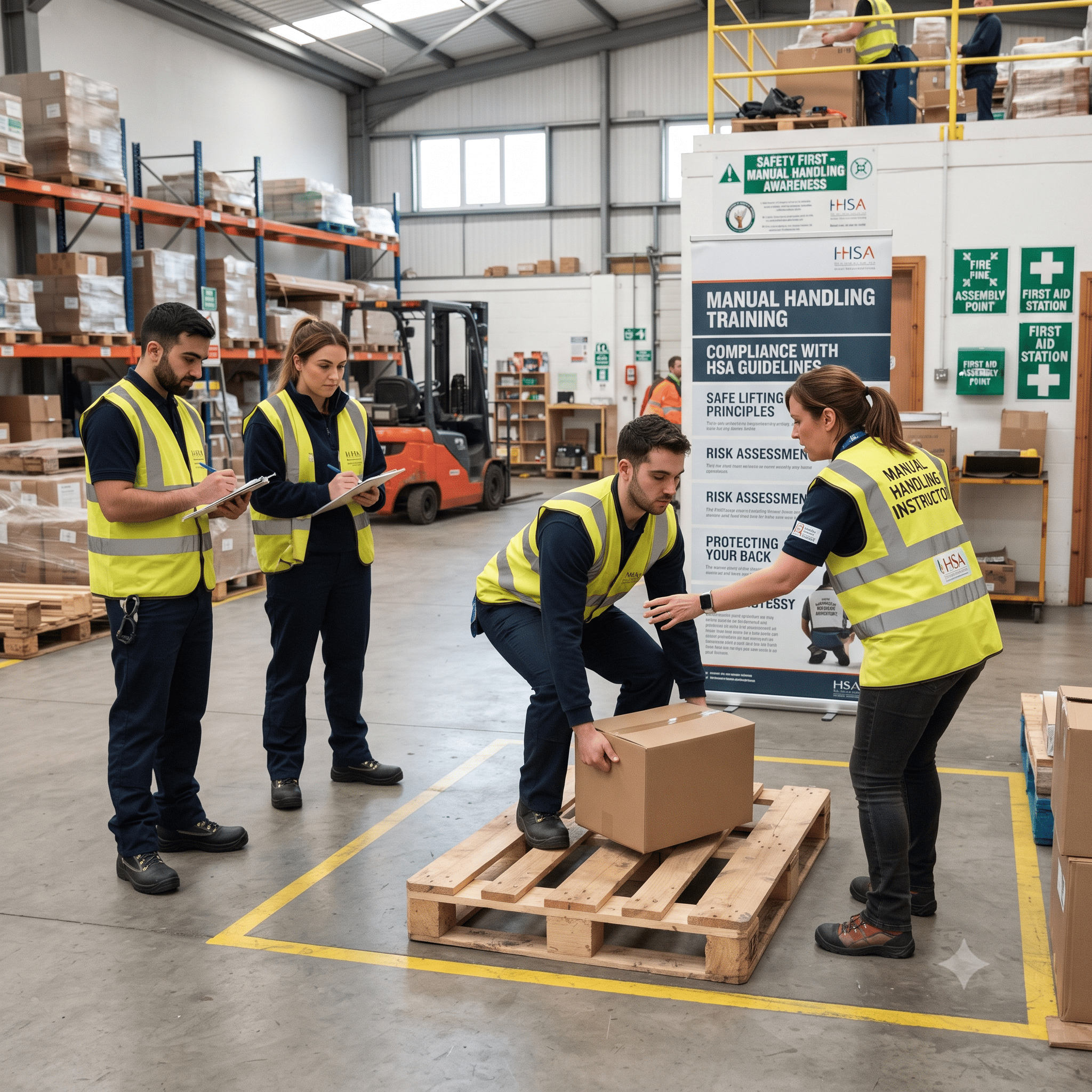
Creating a safe workplace is one of the most important responsibilities of every employer in Ireland. Whether operating a construction company, warehouse, healthcare facility, retail business, manufacturing plant, office, or hospitality venue, organisations have a duty to protect employees from preventable workplace injuries.
One of the most common causes of workplace injuries is poor manual handling. Employees regularly lift, carry, push, pull, lower, and move loads as part of their daily duties. Without proper training and safe working practices, these routine tasks can result in back injuries, muscle strains, joint problems, and long-term musculoskeletal disorders.
A professional Manual Handling Training Ireland programme helps both employers and employees understand how to carry out manual handling tasks safely. Through a recognised Manual Handling Course Ireland, workers learn how to assess risks, identify hazards, use correct lifting techniques, and reduce unnecessary physical strain. Completing a Manual Handling Certificate Ireland demonstrates that an employee has received structured training in safe manual handling practices.
This guide explains how manual handling training supports health and safety compliance in Ireland while helping organisations build safer, healthier, and more productive workplaces.
Why Health and Safety Compliance Matters
Health and safety is about creating working environments where employees can perform their duties without unnecessary risk.
Good health and safety practices help organisations:
- Prevent workplace injuries.
- Reduce accidents.
- Improve employee wellbeing.
- Increase productivity.
- Lower absenteeism.
- Build employee confidence.
Manual handling forms an important part of these overall workplace safety efforts.
Understanding Manual Handling
Manual handling refers to any activity requiring physical effort to:
- Lift
- Carry
- Push
- Pull
- Hold
- Lower
- Move
- Support a load
These tasks occur across almost every industry in Ireland.
Examples include:
- Carrying stock
- Moving furniture
- Handling deliveries
- Lifting equipment
- Repositioning patients
- Transporting building materials
Although these activities may seem routine, they can become hazardous without proper planning and technique.
Workplace Injuries Caused by Poor Manual Handling
Unsafe manual handling practices can lead to injuries such as:
- Lower back pain
- Muscle strains
- Shoulder injuries
- Neck pain
- Knee problems
- Wrist injuries
- Long-term musculoskeletal disorders
Many of these injuries develop gradually through repeated poor lifting habits rather than a single accident.
Fortunately, they are often preventable through appropriate training.
The Role of Manual Handling Training
A quality Manual Handling Training Ireland programme equips employees with practical knowledge they can use every day.
Training typically covers:
- Safe lifting techniques
- Correct posture
- Risk assessment
- Hazard awareness
- Body mechanics
- Safe use of mechanical aids
- Planning manual handling tasks
These skills help employees make safer decisions before beginning physical work.
Supporting Risk Assessments
Risk assessment is one of the most important aspects of manual handling.
Employees learn to consider:
- The weight of the load.
- Its size and shape.
- The route.
- Potential hazards.
- Whether assistance is needed.
- Whether lifting equipment is available.
Taking these factors into account before lifting greatly reduces injury risks.
Encouraging Safe Working Habits
Training helps replace unsafe habits with safer alternatives.
Employees become more likely to:
- Plan every lift.
- Lift using their legs.
- Keep loads close to their body.
- Avoid twisting.
- Ask for assistance.
- Use lifting equipment.
These habits contribute to long-term workplace safety.
Improving Hazard Awareness
Employees cannot avoid hazards they fail to recognise.
Manual handling training teaches workers to identify common risks such as:
- Slippery floors
- Uneven surfaces
- Narrow walkways
- Poor lighting
- Unstable loads
- Cluttered storage areas
- Moving vehicles
Recognising hazards early helps prevent accidents before they occur.
Supporting Safer Use of Mechanical Aids
Many workplaces provide equipment designed to reduce manual lifting.
Examples include:
- Pallet trucks
- Hoists
- Trolleys
- Lift tables
- Conveyor systems
- Adjustable lifting equipment
Training helps employees understand when and how these aids should be used safely.
Mechanical assistance often reduces both injury risks and physical fatigue.
Creating Consistent Workplace Standards
One advantage of providing structured training is consistency.
When all employees complete the same Manual Handling Course Ireland, they develop a shared understanding of:
- Safe lifting techniques
- Workplace procedures
- Risk assessment methods
- Safe behaviour expectations
Consistency makes it easier for teams to work safely together.
Benefits Across Every Industry
Manual handling training supports health and safety compliance in many sectors.
Healthcare
Staff safely assist patients while protecting themselves from injury.
Construction
Workers safely move tools, materials, and equipment.
Warehousing
Employees reduce risks while loading, unloading, and picking stock.
Retail
Staff handle deliveries and replenish shelves more safely.
Manufacturing
Workers reduce repetitive strain during production tasks.
Hospitality
Employees safely move furniture, supplies, and equipment.
Every industry benefits from improved manual handling practices.
Reducing Workplace Absences
Manual handling injuries often result in:
- Sick leave
- Reduced productivity
- Temporary staff requirements
- Increased costs
Training reduces these problems by preventing injuries before they occur.
Healthier employees contribute to more reliable business operations.
Supporting Employee Confidence
Employees who understand safe manual handling procedures often feel more confident carrying out physical tasks.
Training helps workers know:
- How to approach lifting safely.
- When to request assistance.
- How to assess risks.
- How to protect themselves.
Confidence encourages employees to follow safe working practices consistently.
Demonstrating Commitment to Safety
Providing Manual Handling Training Ireland sends a clear message that employee wellbeing is a priority.
Employees appreciate organisations that invest in:
- Professional development
- Injury prevention
- Safe working environments
- Ongoing workplace education
A strong safety culture benefits both employees and employers.
The Importance of Refresher Training
Manual handling skills should be reviewed periodically.
Refresher training helps employees:
- Reinforce correct lifting techniques.
- Stay familiar with workplace procedures.
- Adapt to new equipment.
- Maintain good safety habits.
Regular learning supports continuous improvement in workplace safety.
Online Manual Handling Training
Many organisations choose online learning because it offers flexibility without disrupting business operations.
Benefits include:
- Learn at your own pace.
- Study from any location.
- Access lessons on multiple devices.
- Train new employees quickly.
- Maintain consistent learning across multiple sites.
- Receive certificates after successful completion.
Online training makes health and safety education more accessible.
The Value of a Manual Handling Certificate Ireland
After completing training, participants receive a Manual Handling Certificate Ireland.
The certificate demonstrates an understanding of:
- Safe lifting techniques
- Risk assessment
- Hazard awareness
- Workplace safety principles
- Manual handling best practices
Many employers request certification for roles involving regular manual handling.
Creating a Strong Safety Culture
Health and safety compliance is not achieved through policies alone.
Successful organisations encourage employees to:
- Report hazards.
- Follow safe procedures.
- Use mechanical aids.
- Plan manual handling tasks carefully.
- Support colleagues.
- Continue learning.
When safety becomes part of everyday workplace culture, compliance naturally improves.
Benefits for Employers
Investing in manual handling training provides measurable advantages.
These include:
- Fewer workplace injuries
- Reduced absenteeism
- Improved productivity
- Better employee morale
- Lower compensation costs
- Stronger health and safety performance
- More consistent workplace procedures
Training is an investment that benefits the entire organisation.
Conclusion
Manual handling plays an important role in workplaces across Ireland, and when tasks are performed incorrectly, they can lead to preventable injuries that affect employees, productivity, and overall business performance. Supporting health and safety compliance means more than introducing workplace policies—it requires providing employees with the knowledge and practical skills needed to carry out their duties safely every day.
A professional Manual Handling Training Ireland programme helps workers identify hazards, assess risks, apply safe lifting techniques, and use mechanical aids effectively. Through a recognised Manual Handling Course Ireland, employees gain the confidence to perform manual handling tasks responsibly while contributing to safer workplaces. Completing a Manual Handling Certificate Ireland demonstrates a commitment to workplace safety, professional development, and continuous learning.
For employers, investing in manual handling training supports a proactive approach to health and safety by reducing injuries, lowering absenteeism, improving productivity, and promoting a strong safety culture. By making manual handling education an ongoing priority, organisations across Ireland can create healthier working environments, protect their employees, and support long-term health and safety compliance.