



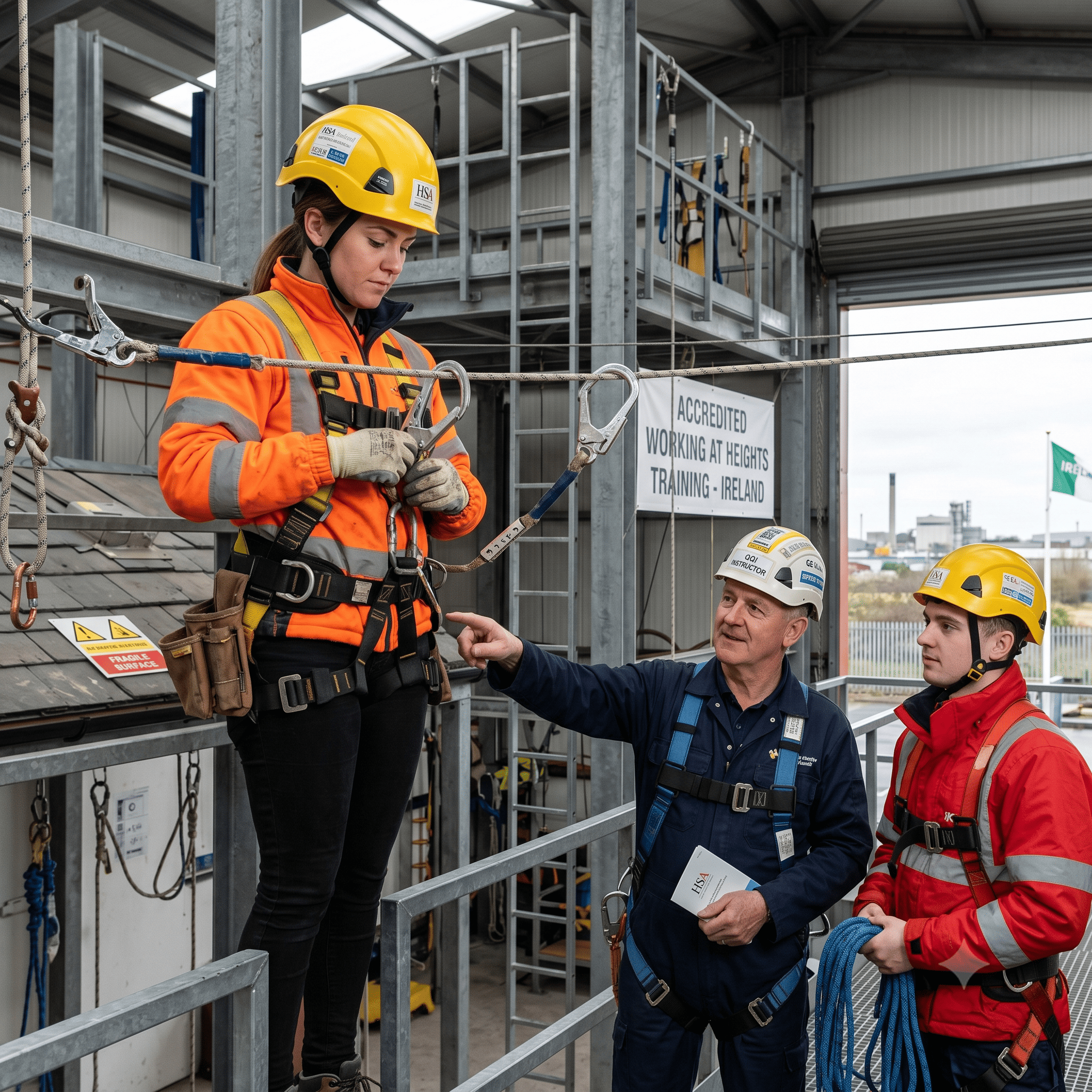
Choosing the right Working at Heights Training Course in Ireland is an important decision for both workers and employers. This type of training is not just about getting a certificate—it is about ensuring real safety in high-risk environments such as construction sites, warehouses, roofing work, maintenance, and industrial operations.
Because working at height is one of the leading causes of serious workplace injuries and fatalities, selecting a high-quality course can make a significant difference in preventing accidents and ensuring legal compliance. With many providers now offering health and safety courses online in Ireland, it is important to know what to look for before enrolling.
This guide explains how to choose the best working at heights training course, what features matter most, and how to ensure your certification is valid and valuable in the workplace.
Why Working at Heights Training Matters
Working at height refers to any job where a person could fall and suffer injury. This includes tasks on ladders, scaffolding, rooftops, elevated platforms, or fragile surfaces.
Proper training is essential because it helps workers:
- Identify hazards before starting work
- Use equipment safely and correctly
- Follow safe systems of work
- Prevent falls and serious injuries
- Respond effectively in emergencies
Under Irish law, employers must ensure workers are trained and competent for high-risk tasks, making working at heights training in Ireland a legal and practical requirement.
Step 1: Check Accreditation and Certification Validity
The most important factor when choosing a course is accreditation.
A good working at heights certificate online should:
- Be recognized by employers in Ireland
- Align with Irish health and safety regulations
- Be issued by a reputable training provider
- Include clear certification details (name, date, validity)
Without proper accreditation, a certificate may not be accepted on construction sites or by employers.
Always verify that the course meets industry standards before enrolling.
Step 2: Ensure the Course Meets Irish Legal Requirements
In Ireland, workplace safety is governed by:
- Safety, Health and Welfare at Work Act 2005
- General Application Regulations (Work at Height Regulations)
- Construction safety guidelines
The best health and safety courses online Ireland will clearly align with these regulations.
A compliant course should cover:
- Risk assessment procedures
- Safe use of ladders and scaffolding
- Fall prevention systems
- PPE requirements
- Emergency procedures
If a course does not mention legal compliance, it may not be suitable for professional use.
Step 3: Review Course Content in Detail
A high-quality working at heights training course in Ireland should include both theory and practical safety knowledge.
Look for courses that cover:
Hazard Identification
Understanding risks such as:
- Unprotected edges
- Fragile surfaces
- Slippery conditions
- Weather-related hazards
Risk Assessment
Training should teach how to:
- Identify workplace hazards
- Evaluate risks before starting work
- Apply control measures
Ladder Safety
A critical topic that should include:
- Proper ladder setup
- Inspection before use
- Safe climbing techniques
- Avoiding overreach
Scaffolding and Platforms
Good courses should explain:
- Safe access and exit
- Stability checks
- Guardrails and safety systems
- Mobile elevated work platforms (MEWPs)
PPE and Fall Protection
Training must include:
- Safety harness use
- Lanyards and anchor points
- Fall arrest systems
- Helmet and protective footwear
Emergency Procedures
Workers should learn:
- Rescue planning
- Incident reporting
- First aid awareness
- Evacuation procedures
If any of these topics are missing, the course may be incomplete.
Step 4: Decide Between Online and Classroom Training
Today, many providers offer working at heights online training in Ireland, but classroom training is still available.
Online Training Benefits
- Flexible learning schedule
- Faster completion
- Lower cost
- Accessible anywhere
- Ideal for refresher training
Classroom Training Benefits
- Hands-on experience
- Direct instructor feedback
- Practical equipment demonstrations
The best choice depends on your job role. Many employers use a blended approach combining both methods.
Step 5: Check Course Duration and Flexibility
A good training course should fit your schedule.
When choosing a provider, check:
- How long the course takes
- Whether it can be paused and resumed
- Whether it is self-paced
- Whether certification is issued quickly
For busy industries like construction, flexibility is a major advantage.
Step 6: Look at Certification Validity Period
Most working at heights certificates in Ireland are valid for a limited time, usually:
- 3 to 5 years
After this period, refresher training is required to maintain compliance and safety awareness.
Make sure the provider clearly states the certificate validity period before enrolling.
Step 7: Check Employer Recognition
Even if a course is valid, it must also be accepted by employers.
Before choosing a course, check:
- Industry acceptance
- Recognition in construction and safety sectors
- Feedback from other professionals
- Whether companies in Ireland commonly accept it
A certificate is only useful if employers trust it.
Step 8: Compare Pricing and Value
While cost is important, it should not be the only factor.
Cheaper courses may:
- Lack detailed content
- Have weak accreditation
- Be less recognized by employers
Instead, focus on value:
- Quality of training
- Certification recognition
- Course support
- Learning experience
Investing in a high-quality health and safety course online in Ireland is more beneficial long term.
Step 9: Check Learning Format and Materials
Good online courses should include:
- Video lessons
- Interactive quizzes
- Real-life examples
- Visual demonstrations
- Clear explanations
For working at heights training, visual content is especially important because it helps explain correct safety procedures.
Step 10: Read Reviews and Reputation
Before enrolling, check:
- Online reviews
- Employer feedback
- Industry reputation
- Course ratings
A reputable provider is more likely to offer reliable certification and quality training.
Step 11: Look for Support and Guidance
A good training provider should offer:
- Customer support
- Technical assistance
- Help with certification issues
- Clear instructions
This is especially useful for online learners who may need help navigating the course.
Step 12: Ensure Practical Relevance
The best working at heights training courses in Ireland focus on real-world application, not just theory.
Training should prepare workers for:
- Construction site conditions
- Industrial environments
- Warehouse operations
- Maintenance tasks
If the course feels too theoretical, it may not be effective in real work situations.
Common Mistakes When Choosing a Course
Avoid these mistakes:
- Choosing based only on price
- Ignoring accreditation
- Not checking employer acceptance
- Skipping course content review
- Assuming all certificates are equal
These mistakes can lead to invalid certification or poor safety knowledge.
Why Choosing the Right Course Matters
Selecting the right training course is not just about certification—it directly impacts:
Workplace Safety
Proper training reduces accidents and saves lives.
Legal Compliance
Employers must ensure workers are trained under Irish law.
Job Opportunities
Certified workers are more employable in high-risk industries.
Confidence and Competence
Well-trained workers perform tasks more safely and efficiently.
Final Thoughts
Choosing the best Working at Heights Training Course in Ireland requires careful consideration of accreditation, content quality, legal compliance, and employer recognition. With many health and safety courses online in Ireland available, it is important to select a provider that delivers practical, reliable, and industry-approved training.
A good course will not only provide certification but also equip workers with the skills and confidence needed to work safely at height. Whether online or in-person, proper training is essential for reducing risks, meeting legal requirements, and creating a safer working environment.
Ultimately, the right choice protects lives, improves workplace safety, and supports long-term career success in high-risk industries.