



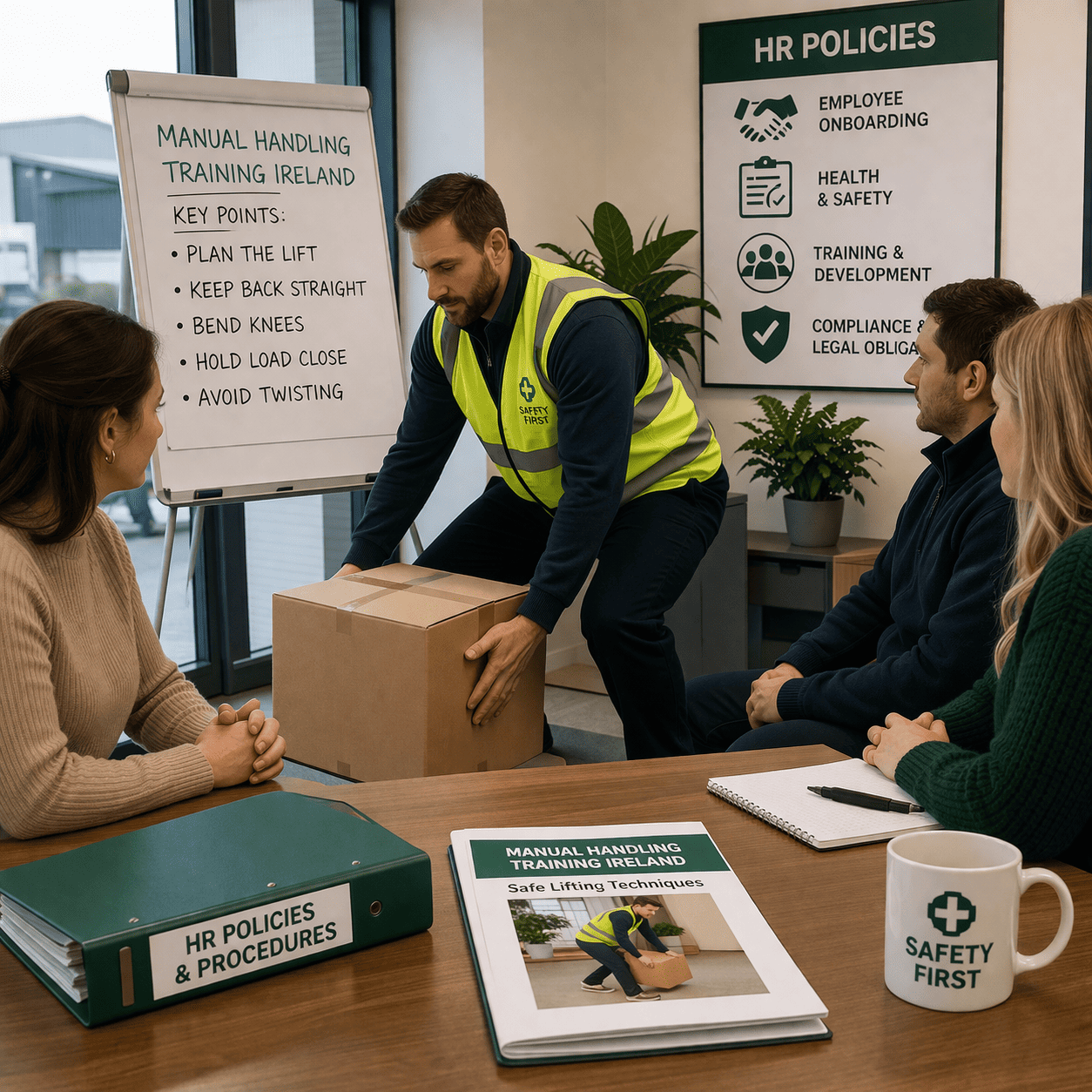
Workplace safety is no longer just a compliance requirement—it’s a core part of modern business strategy. For organizations across Ireland, integrating manual handling training Ireland into HR policies is one of the most effective ways to ensure long-term safety, consistency, and compliance.
Rather than treating training as a one-time task, forward-thinking businesses are embedding it into their HR frameworks. This ensures that every employee, from new hires to experienced staff, follows the same standards and practices.
In this article, we’ll explore how to successfully incorporate a manual handling course Ireland into HR policies and why it’s essential for sustainable business success.
Why HR Policies Matter for Workplace Safety
HR policies define how a business operates and how employees are expected to behave. When safety procedures are included in these policies, they become part of the company’s culture.
By integrating manual handling Ireland guidelines into HR policies, businesses can:
- Standardize safety practices
- Ensure consistent training
- Improve compliance with regulations
- Reduce workplace risks
Clear policies provide a foundation for effective safety management.
Making Manual Handling Training a Core Requirement
One of the first steps is to make manual handling training for staff Ireland a mandatory requirement for relevant roles.
This means:
- Including training as part of job descriptions
- Requiring completion of a manual handling course Ireland before starting certain tasks
- Ensuring all employees hold a valid manual handling certificate Ireland
When training is built into HR policies, it becomes a standard expectation rather than an optional extra.
Integrating Training into Recruitment and Onboarding
HR policies should ensure that manual handling training begins at the earliest stage of employment.
During onboarding:
- New hires should complete a manual handling course online or in-person training
- Certification should be obtained before performing physical tasks
- Safety procedures should be clearly explained
This approach helps employees develop safe habits from day one.
Defining Roles and Responsibilities
A strong HR policy clearly outlines who is responsible for safety.
Employers
- Provide access to a manual handling course Ireland
- Maintain safe working conditions
- Keep training records up to date
Employees
- Complete required training
- Follow safe manual handling practices
- Report hazards or concerns
Defining responsibilities ensures accountability across the organization.
Standardizing Training Across Departments
In many businesses, different departments may have different approaches to safety.
By integrating manual handling training Ireland into HR policies, companies can ensure that all departments follow the same standards.
This consistency reduces confusion and helps maintain compliance across the organization.
Using Online Training for Efficiency
A manual handling course online is an effective way to implement training within HR policies.
Online training allows businesses to:
- Deliver consistent content to all employees
- Track completion rates بسهولة
- Provide flexible learning options
- Scale training across multiple locations
This makes it easier to enforce manual handling Ireland requirements.
Tracking Certification and Compliance
HR policies should include clear procedures for tracking employee training.
This involves:
- Maintaining records of each manual handling cert
- Monitoring expiration dates
- Scheduling refresher courses
- Ensuring all employees remain compliant
A valid manual handling certificate Ireland is essential for demonstrating compliance during inspections or audits.
Scheduling Regular Refresher Training
Manual handling training should not be a one-time activity.
HR policies should require employees to complete refresher training at regular intervals.
This ensures that:
- Skills remain up to date
- Employees stay aware of risks
- Safety standards are maintained
A manual handling course Ireland can be easily repeated through online platforms.
Linking Training to Performance Management
Integrating training into performance management systems can reinforce its importance.
For example:
- Completing manual handling training Ireland can be part of performance reviews
- Employees can be evaluated on their adherence to safety practices
- Managers can be held accountable for team compliance
This approach encourages employees to take training seriously.
Supporting a Culture of Safety
HR policies play a key role in shaping workplace culture.
By emphasizing manual handling training for staff Ireland, businesses can create a culture where safety is a shared responsibility.
This leads to:
- Increased awareness
- Better communication
- Reduced risk-taking behavior
A strong safety culture benefits both employees and employers.
Addressing Industry-Specific Needs
Different industries have different manual handling requirements.
HR policies should reflect these differences by tailoring training to specific roles.
For example:
- Retail staff may focus on stock handling
- Healthcare workers may require patient handling techniques
- Construction workers may deal with heavy materials
Customizing manual handling training Ireland ensures relevance and effectiveness.
Reducing Workplace Injuries
One of the main goals of integrating training into HR policies is to reduce injuries.
Proper training helps employees:
- Use correct lifting techniques
- Identify potential hazards
- Avoid unnecessary strain
A manual handling certificate Ireland ensures that employees are equipped with these essential skills.
Enhancing Legal Compliance
Employers in Ireland must comply with health and safety regulations.
Including manual handling Ireland requirements in HR policies helps ensure that:
- Training is consistently provided
- Records are maintained
- Legal obligations are met
This reduces the risk of fines, penalties, and legal issues.
Improving Employee Confidence and Productivity
Employees who receive proper training feel more confident in their roles.
A manual handling course Ireland provides the knowledge needed to perform tasks safely and efficiently.
This leads to:
- Higher productivity
- Better job satisfaction
- Reduced stress
Confident employees contribute to a more successful workplace.
Overcoming Common Challenges
Resistance to Change
Some employees may see training as unnecessary. Clear communication and strong policies can help overcome this.
Inconsistent Implementation
Without clear guidelines, training may not be applied uniformly. HR policies ensure consistency.
Lack of Monitoring
Failing to track training can lead to non-compliance. A structured system helps maintain records.
Practical Steps for Implementation
To successfully integrate training into HR policies, businesses should:
- Identify roles that require manual handling
- Select a reliable manual handling course Ireland
- Update HR policies to include training requirements
- Provide access to a manual handling course online
- Track certification and compliance
- Schedule regular refresher training
These steps create a structured and effective approach.
Long-Term Business Benefits
Integrating manual handling training Ireland into HR policies offers long-term advantages:
- Safer work environments
- Lower injury-related costs
- Improved compliance
- Stronger employee engagement
- Enhanced business reputation
These benefits contribute to sustainable growth.
The Future of Workplace Safety
As workplaces continue to evolve, safety practices must adapt.
Integrating training into HR policies ensures that manual handling Ireland remains a priority, even as businesses grow and change.
With the increasing availability of manual handling course online options, implementing and maintaining training has never been easier.
Conclusion
Integrating manual handling training Ireland into HR policies is a strategic decision that benefits both employees and businesses. By making training a core requirement, standardizing practices, and using modern solutions like a manual handling course online, companies can ensure consistent safety across all levels of the organization.
A well-structured manual handling course Ireland not only helps meet legal requirements but also improves productivity, reduces risks, and builds a strong safety culture. With a valid manual handling certificate Ireland, businesses can demonstrate their commitment to workplace safety and long-term success.
Ultimately, embedding manual handling training into HR policies is not just about compliance—it’s about creating a safer, more efficient, and more resilient organization.