



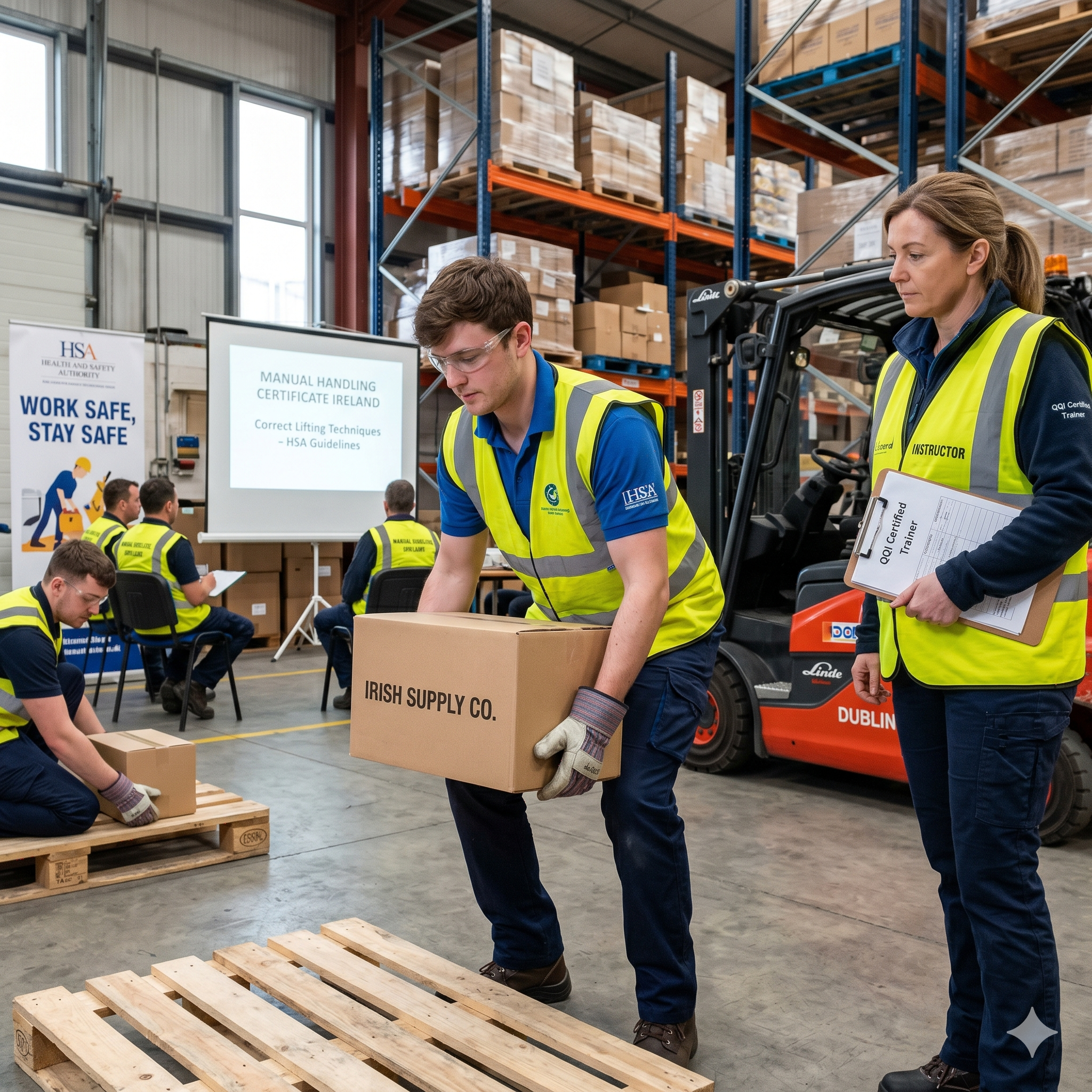
Starting and managing a business in Ireland comes with many responsibilities, and one of the most important is ensuring workplace safety. For employers whose teams perform physical tasks, understanding manual handling requirements is essential.
A manual handling certificate Ireland is a key part of this process. It confirms that employees have completed a recognized manual handling course Ireland and are trained to carry out tasks safely. Implementing proper manual handling Ireland practices not only protects your workforce but also ensures compliance with health and safety regulations.
This guide is designed to help new employers understand the importance of manual handling training Ireland, how to implement it effectively, and how it benefits your business.
What Is Manual Handling?
Manual handling refers to any activity that involves lifting, carrying, pushing, pulling, or moving loads by hand or bodily force.
Common examples include:
- Lifting boxes in a warehouse
- Moving equipment in an office
- Handling stock in retail
- Assisting patients in healthcare
Because these tasks are so common, proper manual handling Ireland training is essential for preventing injuries.
Why Manual Handling Certification Matters
A manual handling certificate Ireland is more than just a piece of paper—it is proof that an employee has been trained in safe handling techniques.
For employers, this certification is important because it:
- Demonstrates compliance with safety regulations
- Reduces the risk of workplace injuries
- Shows commitment to employee well-being
For employees, it provides confidence and the skills needed to perform tasks safely.
Legal Responsibilities of Employers
In Ireland, employers have a duty to ensure the safety, health, and welfare of their employees.
This includes:
- Identifying risks associated with manual handling
- Providing appropriate training
- Implementing safe systems of work
Providing a manual handling course Ireland and ensuring employees hold a valid manual handling certificate Ireland is a key part of meeting these obligations.
When Do Employees Need Training?
Not every role requires manual handling training, but many do.
Employees should complete manual handling training Ireland if their job involves:
- Lifting or carrying loads
- Repetitive physical tasks
- Handling heavy or awkward items
Even roles with occasional manual handling tasks can benefit from training.
Choosing the Right Manual Handling Course Ireland
Selecting the right training program is crucial.
Employers should look for a manual handling course Ireland that:
- Covers all essential safety principles
- Includes practical examples
- Provides recognized certification
- Is suitable for their industry
Choosing the right course ensures that employees gain relevant and useful skills.
Online vs In-Person Training
New employers often wonder whether to choose in-person or online training.
Online Training
- Flexible and convenient
- Cost-effective
- Easy to manage for multiple employees
In-Person Training
- Hands-on experience
- Direct interaction with instructors
- Ideal for high-risk environments
Both options can lead to a valid manual handling certificate Ireland, depending on your business needs.
Key Topics Covered in Training
A comprehensive manual handling course Ireland typically includes:
- Principles of safe lifting
- Risk assessment techniques
- Hazard identification
- Proper use of equipment
- Injury prevention strategies
These topics ensure employees are well-prepared for their roles.
Implementing Training in Your Business
Introducing manual handling Ireland training into your workplace requires planning.
Employers should:
- Identify which employees need training
- Select a suitable training provider
- Schedule training sessions
- Keep records of certification
A structured approach ensures that all employees receive the necessary training.
Keeping Records and Documentation
Maintaining accurate records is essential for compliance.
Employers should keep documentation of:
- Completed manual handling certificate Ireland
- Training dates
- Renewal schedules
These records are important during inspections or audits.
How Often Should Training Be Renewed?
Manual handling training is not a one-time requirement.
Employees should refresh their manual handling certificate Ireland regularly, typically every 2–3 years.
Refresher manual handling training Ireland ensures that skills remain up to date and effective.
Reducing Workplace Injuries
One of the main benefits of manual handling Ireland training is the reduction of workplace injuries.
Common injuries such as back pain and muscle strains can be minimized when employees use proper techniques.
Fewer injuries lead to:
- Lower absenteeism
- Reduced costs
- Improved productivity
Creating a Safety Culture
Training is an important step toward building a strong safety culture.
When employees understand and apply manual handling Ireland practices, safety becomes part of everyday work.
This encourages:
- Consistent safe behavior
- Awareness of risks
- Responsibility among employees
A positive safety culture benefits the entire organization.
Supporting Employee Confidence
Employees who complete a manual handling course Ireland feel more confident in their abilities.
Confidence leads to:
- Better performance
- Reduced stress
- Improved morale
A confident workforce is more productive and engaged.
Using Equipment Effectively
Many workplaces provide equipment to assist with manual handling tasks.
Training ensures that employees know how to use tools such as:
- Trolleys
- Pallet trucks
- Lifting aids
Using equipment correctly reduces physical strain and improves safety.
Adapting Training to Your Industry
Different industries have different manual handling risks.
Employers should choose a manual handling course Ireland that is relevant to their specific sector.
For example:
- Healthcare training may focus on patient handling
- Warehousing training may emphasize lifting and carrying goods
Tailored training ensures maximum effectiveness.
Cost vs Long-Term Value
While training involves an initial cost, it provides long-term value.
Investing in manual handling training Ireland helps:
- Prevent costly injuries
- Improve efficiency
- Ensure compliance
The benefits far outweigh the investment.
Common Mistakes New Employers Should Avoid
New employers sometimes make mistakes when implementing training.
These include:
- Delaying training
- Choosing low-quality courses
- Failing to keep records
- Not providing refresher training
Avoiding these mistakes ensures a successful training program.
Continuous Improvement
Workplace safety is an ongoing process.
Employers should regularly review their manual handling Ireland practices and update training as needed.
A manual handling course online can make it easier to provide ongoing training and keep employees up to date.
Conclusion
A manual handling certificate Ireland is an essential part of workplace safety for new employers. By providing a structured manual handling course Ireland, businesses can ensure that employees are trained to perform tasks safely and efficiently.
Effective manual handling Ireland practices reduce risks, improve productivity, and support compliance with legal requirements.
For new employers, investing in manual handling training Ireland is not just about meeting obligations—it’s about building a safe, professional, and successful workplace from the very beginning.