



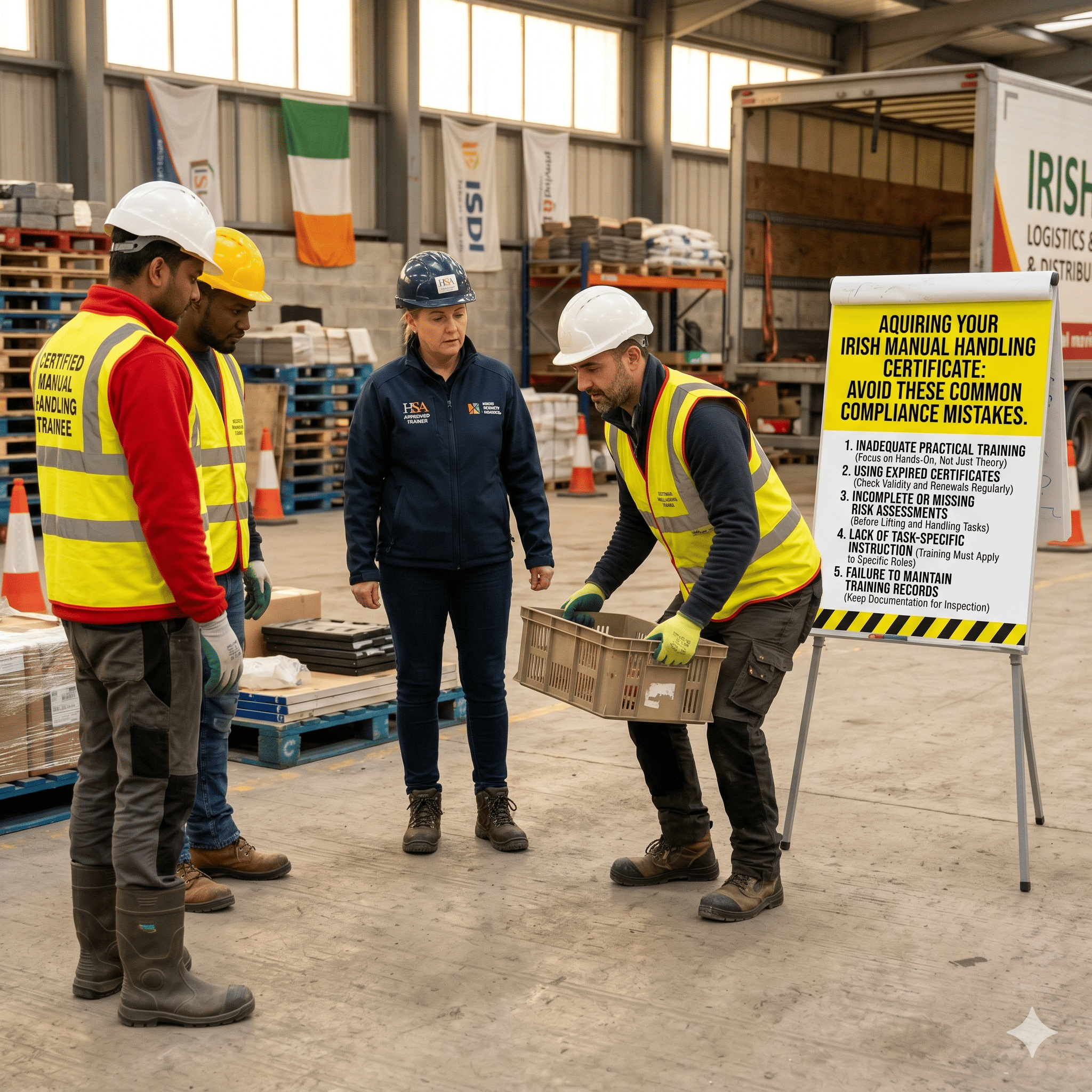
Workplace safety is an essential responsibility for businesses across Ireland, especially in industries where employees regularly lift, carry, move, or transport materials. Manual handling tasks are part of daily operations in sectors such as warehousing, healthcare, construction, retail, manufacturing, and hospitality. While many employers understand the importance of training, compliance mistakes still happen frequently.
In many cases, businesses focus only on obtaining a manual handling certificate Ireland without paying enough attention to the quality of training, ongoing safety practices, or employee understanding. Compliance should not simply be about paperwork or completing a course once. Effective manual handling Ireland safety requires continuous awareness, proper training, and consistent workplace habits.
A professional manual handling course Ireland combined with strong internal safety procedures helps businesses avoid common mistakes that can lead to injuries, operational problems, and reduced workplace standards. Proper manual handling training Ireland protects employees while also helping employers maintain safer and more efficient working environments.
This guide explains the most common compliance mistakes businesses make and how to avoid them effectively.
Treating Certification as a One-Time Requirement
One of the most common mistakes businesses make is viewing manual handling training as something that only needs to happen once.
While obtaining a manual handling certificate Ireland is important, employee knowledge and habits can change over time. Workers may gradually forget proper techniques or begin taking unsafe shortcuts during busy periods.
Compliance should involve:
- Ongoing safety awareness
- Regular refresher training
- Reinforcement of safe workplace behavior
A strong manual handling course Ireland provides the foundation, but continuous learning helps maintain long-term workplace safety.
Choosing Training Based Only on Price
Some businesses select training providers purely because they offer the lowest cost.
Low-cost training may sometimes:
- Lack practical instruction
- Use outdated materials
- Provide overly generic content
- Focus only on quick certification completion
Poor-quality training can leave employees without the practical understanding needed to work safely.
Effective manual handling training Ireland should prioritize quality, relevance, and employee engagement rather than simply the cheapest option available.
Failing to Train New Employees Early
New employees are often at greater risk of injury because they are unfamiliar with workplace procedures and physical demands.
A common compliance mistake is delaying training until after employees have already started handling physical tasks.
Businesses should ensure that new workers complete a manual handling course Ireland as early as possible during onboarding.
Early training helps employees:
- Build safe habits immediately
- Understand workplace expectations
- Reduce the likelihood of unsafe behavior
Starting safely from day one is one of the best ways to prevent future problems.
Ignoring Industry-Specific Risks
Different industries involve different types of manual handling tasks.
For example:
- Healthcare workers may assist patients
- Retail employees move deliveries and stock
- Warehouse staff handle pallets and equipment
- Construction teams transport heavy materials
A generic approach to manual handling Ireland training may not fully address the risks employees face in their actual roles.
Businesses should choose training that reflects their specific working environment and operational needs.
Assuming Experienced Employees Do Not Need Refresher Training
Some employers believe experienced staff no longer need additional safety training because they have been performing the same tasks for years.
However, experienced employees can still develop unsafe habits over time.
Refresher manual handling training Ireland helps workers:
- Reinforce proper lifting techniques
- Correct unsafe routines
- Stay aware of changing workplace conditions
Maintaining a current manual handling certificate Ireland supports both professionalism and long-term safety awareness.
Poor Record Management
Keeping incomplete or disorganized training records is another common compliance issue.
Businesses should maintain accurate records of:
- Completed training dates
- Employee certifications
- Refresher training schedules
Proper documentation helps businesses stay organized and demonstrate commitment to workplace safety standards.
Digital systems and online training platforms often make record management much easier.
Focusing Only on Certification Instead of Real Safety
Some workplaces prioritize obtaining certificates without ensuring employees actually apply safe practices during daily tasks.
True compliance means employees consistently:
- Use correct lifting techniques
- Assess risks before lifting
- Avoid unnecessary strain
- Use equipment properly
A manual handling certificate Ireland should represent genuine understanding, not just course completion.
The goal of training is safer behavior, not simply administrative compliance.
Failing to Reinforce Safe Workplace Habits
Even well-trained employees may stop following safe procedures if workplace culture does not support them.
Businesses sometimes make the mistake of:
- Prioritizing speed over safety
- Ignoring unsafe shortcuts
- Failing to correct poor lifting behavior
Employers should reinforce safety regularly by encouraging proper technique and leading by example.
Strong workplace culture is essential for maintaining effective manual handling Ireland standards.
Overlooking Workplace Environment Risks
Manual handling safety is affected not only by employee behavior but also by workplace conditions.
Common environmental risks include:
- Cluttered walkways
- Poor lighting
- Slippery floors
- Inadequate storage systems
Businesses should regularly review workspaces to ensure employees can move and lift safely.
A safer environment supports safer manual handling practices.
Not Providing Proper Equipment
Employees should never be expected to rely entirely on physical strength when safer options are available.
Some businesses fail to provide or encourage the use of:
- Trolleys
- Hoists
- Pallet trucks
- Adjustable lifting equipment
A professional manual handling course Ireland teaches employees when mechanical aids should be used to reduce physical strain.
Providing suitable equipment is an important part of maintaining strong compliance standards.
Encouraging Employees to Rush
Busy workplaces sometimes unintentionally create unsafe conditions by pressuring employees to work too quickly.
Rushing increases the likelihood of:
- Poor lifting posture
- Careless carrying techniques
- Reduced awareness of surroundings
Employers should encourage employees to focus on safe movement rather than unnecessary speed.
Safe workplaces are generally more productive and stable in the long term.
Ignoring Employee Feedback
Employees often identify workplace risks before management notices them.
A common compliance mistake is failing to encourage open communication about safety concerns.
Workers should feel comfortable reporting:
- Unsafe lifting tasks
- Damaged equipment
- Repetitive strain issues
- Environmental hazards
Listening to employee feedback helps businesses identify problems early and improve workplace safety continuously.
Not Updating Safety Procedures
Workplaces evolve over time.
Businesses may introduce:
- New equipment
- Different workflows
- Increased workloads
- New storage systems
Failing to review and update safety procedures alongside these changes can create compliance gaps.
Regular evaluation helps businesses keep manual handling Ireland practices effective and relevant.
Benefits of Strong Compliance Practices
Businesses that avoid common compliance mistakes often experience significant long-term benefits.
These include:
- Reduced injury rates
- Improved employee morale
- Lower absenteeism
- Better productivity
- Stronger workplace organization
Employees also feel more confident and supported when safety standards are clear and consistently applied.
Creating a Long-Term Safety Culture
True compliance goes beyond policies and certificates.
Strong safety culture involves:
- Continuous training
- Clear communication
- Consistent leadership support
- Shared responsibility among teams
When employees see safety treated as an everyday priority, they are more likely to maintain safe behavior naturally.
Conclusion
Avoiding common compliance mistakes is essential for building safer workplaces across Ireland. While obtaining a manual handling certificate Ireland is an important step, genuine workplace safety depends on much more than certification alone.
A professional manual handling course Ireland should provide practical knowledge that employees apply consistently during daily work. Effective manual handling training Ireland helps businesses reduce injuries, improve awareness, and create safer long-term workplace habits.
By treating manual handling Ireland compliance as an ongoing process rather than a one-time task, employers can protect their workforce, strengthen workplace culture, and support more productive and efficient business operations.