



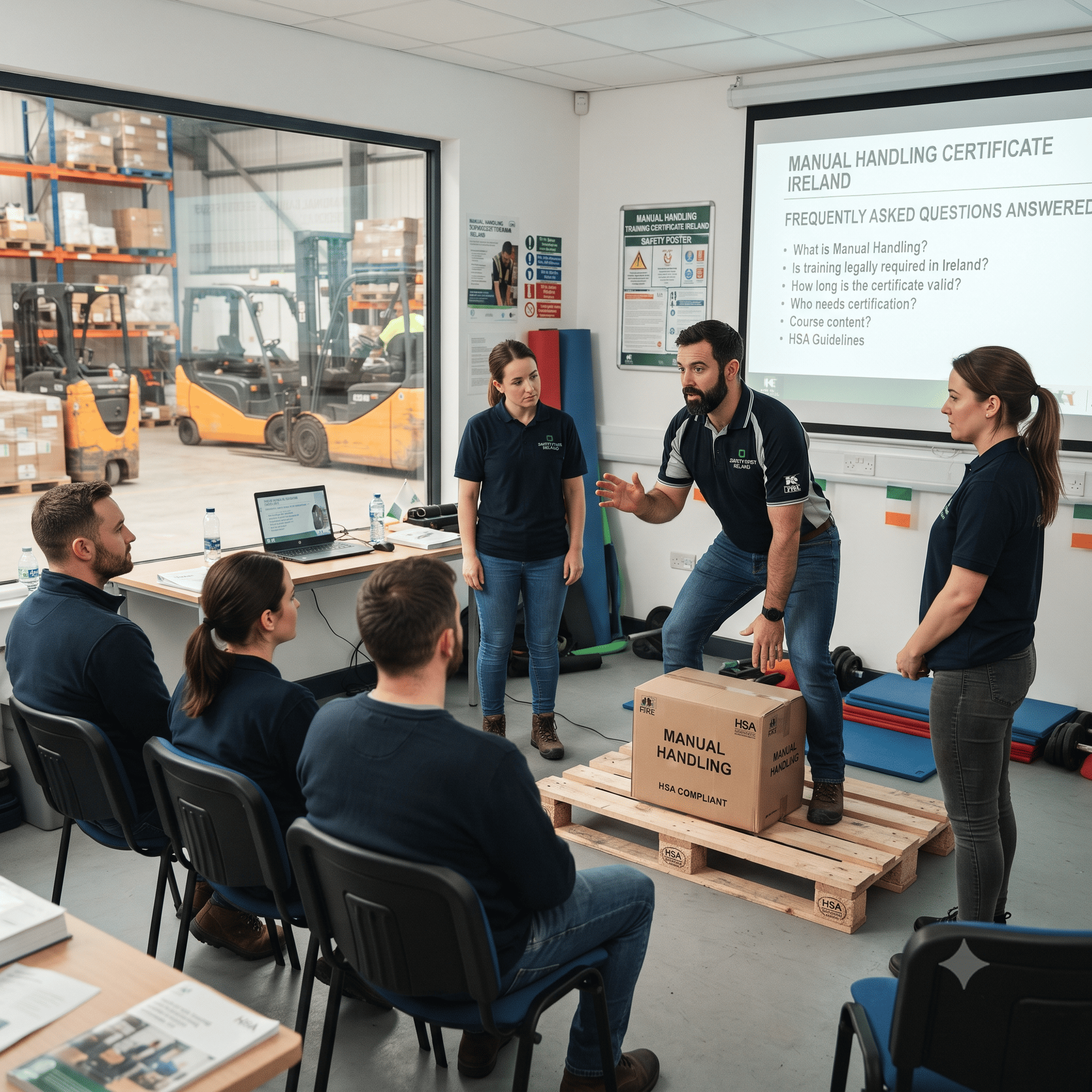
A Manual Handling Certificate Ireland is one of the most commonly requested workplace safety qualifications across a wide range of industries. Whether you are starting a new job, changing careers, renewing an existing certificate, or simply looking to improve your workplace safety knowledge, it's natural to have questions about manual handling training.
Many employees wonder whether they need a certificate, how long it lasts, whether they can complete the training online, or which industries require manual handling education. Employers also want to ensure their staff receive appropriate training that supports safer workplaces and helps reduce workplace injuries.
A professional Manual Handling Training Ireland programme provides practical knowledge that employees can apply every day. Through a recognised Manual Handling Course Ireland, participants learn safe lifting techniques, risk assessment, hazard awareness, body mechanics, and safe working practices. Upon successful completion, learners receive a Manual Handling Certificate Ireland, demonstrating their understanding of essential manual handling principles.
This guide answers some of the most frequently asked questions about manual handling certificates in Ireland.
1. What Is a Manual Handling Certificate Ireland?
A Manual Handling Certificate Ireland confirms that an individual has successfully completed recognised manual handling training.
The certificate demonstrates an understanding of:
- Safe lifting techniques
- Risk assessment
- Hazard awareness
- Correct body mechanics
- Safe workplace procedures
Many employers request this certificate before employees begin work involving regular manual handling tasks.
2. What Is Manual Handling?
Manual handling refers to any activity involving physical effort to:
- Lift
- Lower
- Carry
- Push
- Pull
- Hold
- Move
- Support a load
Examples include moving boxes, carrying equipment, unloading deliveries, repositioning furniture, handling stock, or transporting materials.
3. Who Needs Manual Handling Training?
Manual handling training benefits employees in almost every industry.
Common sectors include:
- Healthcare
- Construction
- Warehousing
- Retail
- Manufacturing
- Hospitality
- Logistics
- Education
- Facilities management
- Office environments
Any employee who performs manual handling tasks can benefit from appropriate training.
4. Can I Complete a Manual Handling Course Online?
Yes.
Many employees now choose online Manual Handling Training Ireland because it offers flexibility and convenience.
Online learning allows participants to:
- Learn from home.
- Study at their own pace.
- Access lessons from multiple devices.
- Complete training around work schedules.
Online courses have become increasingly popular for both employees and employers.
5. What Does a Manual Handling Course Cover?
A quality Manual Handling Course Ireland typically includes:
- Manual handling principles
- Safe lifting techniques
- Correct posture
- Risk assessment
- Hazard identification
- Safe use of mechanical aids
- Workplace safety responsibilities
The aim is to reduce injuries while improving confidence and safe working practices.
6. How Long Does the Course Take?
Course length varies depending on the training provider and learning format.
Online courses allow participants to progress at their own pace, making it easier to fit learning around work and personal commitments.
Many learners complete the course in a single session, while others choose to spread their learning over a longer period.
7. How Long Does a Manual Handling Certificate Last?
There is no single legal expiry period that applies to every workplace.
However, many employers choose to renew manual handling training approximately every three years to keep employees' knowledge current and reinforce safe working practices.
Some organisations may recommend more frequent refresher training depending on workplace risks.
8. Why Is Refresher Training Important?
Manual handling is a practical skill that should be reinforced regularly.
Refresher training helps employees:
- Maintain correct lifting techniques.
- Stay familiar with workplace procedures.
- Improve hazard awareness.
- Adapt to changes in equipment or work environments.
Regular training supports safer workplaces over the long term.
9. Is Manual Handling Only About Lifting?
No.
Manual handling includes many different activities such as:
- Carrying
- Pushing
- Pulling
- Holding
- Lowering
- Supporting
- Transporting objects
Any task involving physical effort may involve manual handling risks.
10. What Are the Most Common Manual Handling Injuries?
Poor manual handling can result in:
- Lower back pain
- Shoulder injuries
- Neck pain
- Muscle strains
- Knee injuries
- Wrist strains
- Long-term musculoskeletal disorders
Many of these injuries develop gradually through repeated poor lifting habits.
11. What Are Mechanical Aids?
Mechanical aids help reduce physical effort during manual handling tasks.
Examples include:
- Trolleys
- Pallet trucks
- Hoists
- Lift tables
- Conveyors
- Adjustable lifting equipment
Employees should understand when these aids should be used and how they contribute to safer working practices.
12. What Is a Manual Handling Risk Assessment?
A manual handling risk assessment involves evaluating a task before lifting begins.
Employees consider:
- The weight of the load.
- The size and shape.
- The route.
- Workplace hazards.
- Whether assistance is needed.
- Whether lifting equipment is available.
Risk assessment helps prevent injuries before they occur.
13. What Industries Use Manual Handling Most?
Manual handling is common across many sectors.
Examples include:
- Healthcare
- Construction
- Warehousing
- Manufacturing
- Retail
- Hospitality
- Agriculture
- Logistics
- Cleaning services
- Education
Almost every workplace involves some form of manual handling.
14. Why Is Correct Lifting Technique So Important?
Using correct lifting techniques helps reduce pressure on the:
- Back
- Shoulders
- Neck
- Knees
- Muscles
- Joints
Safe lifting protects employees from both immediate and long-term injuries.
15. Can Office Workers Benefit from Manual Handling Training?
Absolutely.
Office employees often perform manual handling tasks such as:
- Moving furniture
- Carrying archive boxes
- Lifting computer equipment
- Receiving deliveries
- Rearranging meeting rooms
Safe lifting techniques are valuable in every workplace.
16. What Are the Benefits for Employers?
Employers who invest in Manual Handling Training Ireland often experience:
- Fewer workplace injuries
- Reduced absenteeism
- Improved productivity
- Better employee confidence
- Lower compensation costs
- Stronger workplace safety culture
Training benefits both employees and businesses.
17. Can Employers Provide Online Training?
Yes.
Many organisations now choose online learning because it offers:
- Flexible scheduling
- Consistent learning
- Minimal disruption
- Easy staff onboarding
- Fast certification
Online learning is suitable for businesses of all sizes.
18. How Does Manual Handling Training Improve Workplace Safety?
Training encourages employees to:
- Plan every lift.
- Assess risks.
- Identify hazards.
- Use mechanical aids.
- Apply correct lifting techniques.
- Report unsafe conditions.
These behaviours reduce workplace injuries and improve overall safety.
19. How Do I Choose the Right Manual Handling Course?
When selecting a Manual Handling Course Ireland, look for:
- Comprehensive course content.
- Practical demonstrations.
- Flexible online access.
- Easy-to-understand lessons.
- Mobile-friendly learning.
- Reliable customer support.
- Prompt certificate delivery.
Choosing a reputable provider ensures a better learning experience.
20. Why Should I Get a Manual Handling Certificate Ireland?
A Manual Handling Certificate Ireland demonstrates that you understand safe manual handling principles and have completed recognised workplace safety training.
Certification can help you:
- Improve workplace safety.
- Increase confidence.
- Support career development.
- Meet employer requirements.
- Reduce injury risks.
- Demonstrate professionalism.
Whether you are beginning a new role or renewing your existing training, a manual handling certificate is a valuable investment in your future.
Final Tips for Staying Safe
Completing a manual handling course is only the first step. Safe habits should become part of your everyday work.
Remember to:
- Plan every lift.
- Assess the load before moving it.
- Use your legs when lifting.
- Keep loads close to your body.
- Avoid twisting while carrying.
- Use mechanical aids whenever possible.
- Ask for assistance with heavy or awkward items.
- Report hazards to your employer.
- Refresh your training regularly.
Developing these habits helps reduce injuries and creates safer workplaces for everyone.
Conclusion
A Manual Handling Certificate Ireland is more than simply a workplace requirement—it provides practical knowledge that helps employees perform manual handling tasks safely and confidently. Whether you work in healthcare, construction, warehousing, retail, manufacturing, hospitality, logistics, or an office environment, understanding correct lifting techniques, hazard awareness, and risk assessment plays an important role in preventing workplace injuries.
A professional Manual Handling Training Ireland programme equips learners with the skills needed to identify hazards, use safe body mechanics, assess manual handling risks, and apply safer working practices every day. Completing a recognised Manual Handling Course Ireland and earning your certificate demonstrates a commitment to workplace safety, professional development, and continuous learning.
For employers, investing in manual handling training helps reduce injuries, lower absenteeism, improve productivity, and strengthen workplace safety culture. For employees, it provides confidence, valuable practical skills, and knowledge that supports long-term health and career development. By understanding the answers to these frequently asked questions, individuals and organisations across Ireland can make informed decisions about manual handling training and continue building safer workplaces for everyone.