



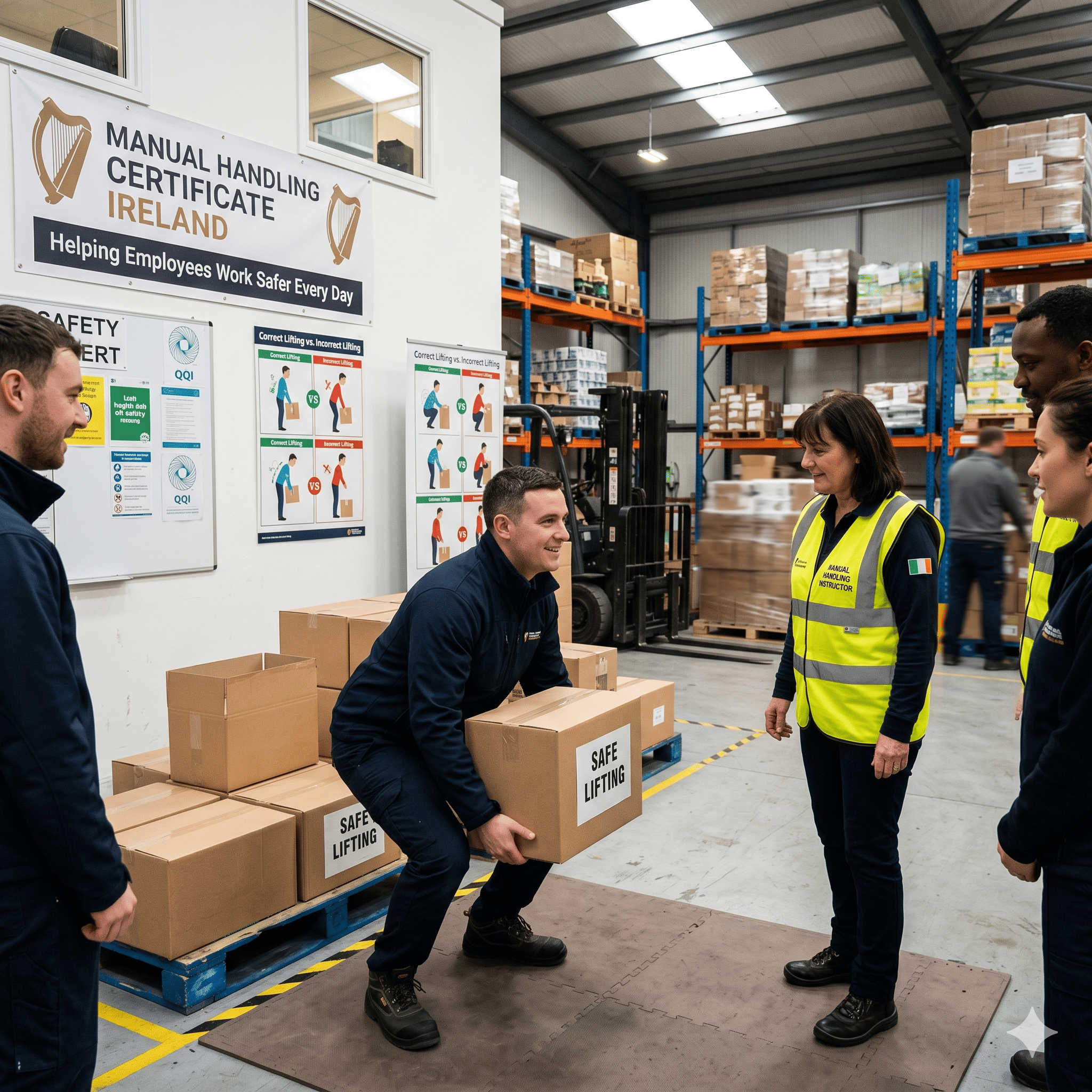
Workplace safety is one of the most important factors influencing employee well-being, productivity, and long-term business success. Across Ireland, thousands of employees perform manual handling tasks every day as part of their normal duties. Whether working in warehousing, healthcare, retail, construction, manufacturing, logistics, or hospitality, workers regularly lift, carry, push, pull, and move loads throughout their shifts.
While these tasks may appear routine, they can present significant risks when performed incorrectly. Manual handling injuries remain one of the most common causes of workplace accidents, often leading to back pain, muscle strain, joint injuries, lost working days, and reduced productivity. Many of these injuries are preventable through proper training and awareness.
This is where a manual handling certificate Ireland plays a valuable role. By completing a professional manual handling course Ireland, employees gain practical knowledge that helps them perform physical tasks safely and confidently. Effective manual handling training Ireland equips workers with the skills needed to identify risks, use correct lifting techniques, and develop safer workplace habits that can be applied every day.
This article explores how obtaining a manual handling certificate Ireland helps employees work safer, supports workplace safety culture, and contributes to healthier and more productive working environments.
Understanding Manual Handling in the Workplace
Manual handling refers to any activity that involves moving or supporting a load by physical effort.
Examples include:
- Lifting boxes
- Carrying materials
- Pushing carts
- Pulling equipment
- Moving stock
- Repositioning objects
These activities occur in almost every industry.
While manual handling tasks may seem straightforward, poor techniques can place excessive strain on the body and increase the likelihood of injury.
Strong manual handling Ireland practices help employees understand how to perform these tasks safely while reducing unnecessary physical stress.
Why Manual Handling Injuries Are So Common
Many workplace injuries develop because employees perform routine tasks incorrectly over long periods.
Common causes include:
- Poor lifting posture
- Twisting while carrying loads
- Repetitive movements
- Carrying excessive weight
- Rushing tasks
- Ignoring workplace hazards
Unlike sudden accidents, manual handling injuries often build gradually.
Employees may not immediately notice the damage being caused until discomfort or pain becomes a serious issue.
A professional manual handling course Ireland helps workers recognize these risks before injuries occur.
The Purpose of a Manual Handling Certificate
A manual handling certificate Ireland demonstrates that an employee has successfully completed training in safe manual handling procedures.
The training typically covers:
- Correct lifting techniques
- Risk assessment
- Workplace awareness
- Safe carrying methods
- Injury prevention strategies
Certification provides employees with a solid understanding of how to perform physical tasks responsibly and safely.
For employers, it helps establish consistent safety standards across the workforce.
Building Safe Habits from the Beginning
One of the greatest benefits of manual handling training Ireland is its ability to build positive habits early.
Employees learn to:
- Assess tasks before lifting
- Use proper posture
- Plan movement routes
- Avoid unnecessary strain
- Follow workplace safety procedures
These habits become part of daily routines and significantly reduce the likelihood of injuries.
Strong habits established early often remain with employees throughout their careers.
Teaching Proper Lifting Techniques
Correct lifting techniques are a key component of any professional manual handling course Ireland.
Employees learn how to:
- Position their feet properly
- Bend their knees
- Keep the back straight
- Use leg strength during lifts
- Keep loads close to the body
These techniques help reduce pressure on the spine and surrounding muscles.
When used consistently, proper lifting methods improve both safety and efficiency.
Improving Workplace Awareness
Safety is not only about how employees lift. It is also about how they observe and respond to their surroundings.
Employees are encouraged to identify:
- Slippery surfaces
- Cluttered walkways
- Poor lighting
- Limited movement space
- Unstable loads
A professional manual handling Ireland training program helps workers become more aware of environmental hazards.
Improved awareness helps prevent accidents before they occur.
Encouraging Better Risk Assessment
Risk assessment is an important part of safe manual handling.
Before beginning a task, employees should consider:
- The weight of the load
- The distance it will be moved
- Potential obstacles
- Whether assistance is needed
- The safest handling method
This simple assessment process often takes only a few moments but can prevent many workplace injuries.
Strong manual handling training Ireland teaches employees to make risk assessment a normal part of their daily work routine.
Supporting Employee Confidence
Employees who understand safe handling techniques often feel more confident in their roles.
Confidence allows workers to:
- Approach tasks calmly
- Make informed decisions
- Recognize personal limitations
- Request assistance when necessary
Workers who feel uncertain may be more likely to make mistakes or take unnecessary risks.
A valid manual handling certificate Ireland provides employees with the knowledge needed to handle physical tasks with greater confidence.
Reducing Physical Strain
Poor manual handling practices place excessive strain on the body.
Over time, this can lead to:
- Back pain
- Muscle fatigue
- Joint discomfort
- Reduced mobility
By applying the techniques learned during a manual handling course Ireland, employees can reduce physical stress and protect their long-term health.
Safer movement often results in greater comfort and improved performance throughout the workday.
Preventing Unsafe Shortcuts
Busy work environments sometimes encourage employees to prioritize speed over safety.
Examples of unsafe shortcuts include:
- Carrying loads that are too heavy
- Ignoring lifting equipment
- Skipping risk assessments
- Using poor posture
While these actions may seem efficient in the moment, they significantly increase injury risks.
Professional manual handling Ireland training reinforces the importance of following safe procedures consistently.
Encouraging Proper Equipment Use
Many workplaces provide tools designed to reduce physical effort.
Examples include:
- Trolleys
- Hoists
- Pallet trucks
- Adjustable lifting aids
Employees should understand when and how to use this equipment correctly.
A quality manual handling course Ireland helps workers appreciate the value of using available resources rather than relying solely on physical strength.
Improving Teamwork and Communication
Workplace safety often depends on effective communication.
Employees should feel comfortable discussing:
- Heavy lifting tasks
- Potential hazards
- Equipment concerns
- Assistance requirements
Good communication improves coordination and helps prevent accidents.
Strong manual handling training Ireland promotes teamwork and shared responsibility for workplace safety.
Why Refresher Training Is Important
Safety knowledge can fade over time if it is not reinforced.
Employees may gradually:
- Develop poor habits
- Ignore procedures
- Become less aware of hazards
Regular refresher training helps workers revisit key principles and maintain high safety standards.
Maintaining an up-to-date manual handling certificate Ireland demonstrates ongoing commitment to workplace safety.
The Role of Employers
Employers play an important role in supporting safe manual handling practices.
Businesses can encourage safety by:
- Providing quality training
- Maintaining safe work environments
- Encouraging open communication
- Reinforcing safe behavior
When employers prioritize safety, employees are more likely to adopt and maintain safe working habits.
Benefits for Businesses
Investing in professional manual handling training Ireland offers significant business advantages.
These include:
- Reduced workplace injuries
- Lower absenteeism
- Improved productivity
- Better employee morale
- Stronger safety culture
Healthier employees are generally more engaged, confident, and productive.
Creating Safer Workplaces Every Day
Workplace safety is not achieved through a single training session. It is built through daily actions, awareness, and consistent application of safe practices.
A manual handling certificate Ireland helps employees develop the skills and habits needed to work safely every day. By understanding risks, using proper techniques, and maintaining awareness, workers contribute to safer and more efficient workplaces.
Conclusion
A manual handling certificate Ireland is much more than a qualification. It is a practical tool that helps employees protect themselves and their colleagues during everyday workplace activities.
Through professional manual handling training Ireland, workers learn how to lift safely, assess risks, improve awareness, and develop habits that reduce injury risks. A quality manual handling course Ireland provides valuable knowledge that supports long-term health, workplace safety, and operational efficiency.
By investing in strong manual handling Ireland training programs, businesses can create safer work environments, improve employee confidence, and support a culture where safety becomes part of everyday success.