



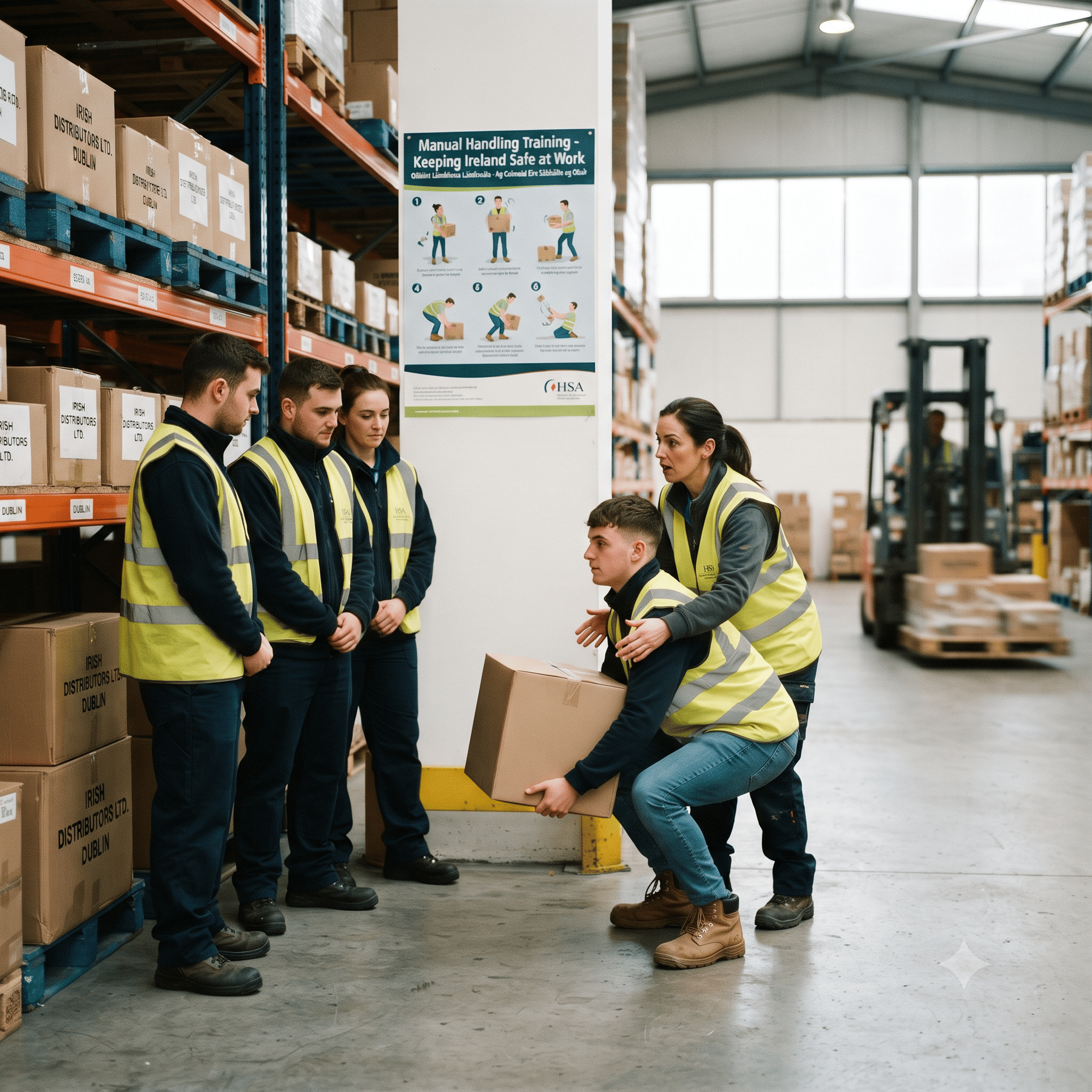
Manual handling is a routine part of many jobs across Ireland. From lifting stock in retail stores and moving equipment on construction sites to handling deliveries in warehouses and assisting patients in healthcare settings, employees regularly perform physical tasks that require safe lifting techniques and good workplace awareness.
Because manual handling injuries remain one of the leading causes of workplace accidents, many employers now require staff to complete Manual Handling Training Ireland before beginning work. Successfully completing a recognised Manual Handling Course Ireland provides employees with the practical knowledge needed to handle loads safely and demonstrates their commitment to workplace safety through a Manual Handling Certificate Ireland.
But is a manual handling certificate actually required for your job?
The answer depends on your role, your employer, and the manual handling tasks you perform. In this guide, we'll explain who typically needs certification, why employers request it, and how it benefits both employees and businesses.
What Is a Manual Handling Certificate?
A Manual Handling Certificate Ireland is awarded after successfully completing a recognised manual handling training course.
The certificate confirms that the participant understands essential manual handling principles, including:
- Safe lifting techniques
- Risk assessment
- Hazard identification
- Safe movement of loads
- Proper body mechanics
- Workplace safety responsibilities
For employers, the certificate provides evidence that employees have received appropriate training before carrying out manual handling tasks.
What Is Manual Handling?
Manual handling refers to any activity that requires physical effort to move or support a load.
Examples include:
- Lifting boxes
- Carrying tools
- Pushing trolleys
- Pulling equipment
- Moving stock
- Loading deliveries
- Repositioning furniture
- Handling materials
Although these activities seem routine, poor technique can place significant strain on the body and increase the risk of injury.
Is a Manual Handling Certificate Legally Required?
Irish health and safety legislation places responsibilities on employers to protect employees from workplace risks, including hazards associated with manual handling.
While the law focuses on ensuring employees receive appropriate instruction and training for the work they perform, many employers choose to require a Manual Handling Certificate Ireland as evidence that staff have completed suitable training.
If your role involves regular manual handling, your employer may ask you to complete a recognised Manual Handling Course Ireland before starting work or as part of your induction process.
Which Jobs Commonly Require a Manual Handling Certificate?
Manual handling training is valuable across almost every industry.
Common roles include:
Construction Workers
Construction employees regularly lift building materials, tools, and equipment.
Safe manual handling helps reduce injuries while improving site safety.
Warehouse Operatives
Warehouse workers frequently:
- Move stock
- Load deliveries
- Stack pallets
- Handle heavy packages
Proper lifting techniques are essential for preventing back injuries.
Retail Employees
Retail staff often:
- Unpack deliveries
- Restock shelves
- Move promotional displays
- Carry stock between storage areas
Manual handling training helps reduce the physical strain associated with these tasks.
Healthcare Workers
Healthcare professionals frequently assist patients and move medical equipment.
Correct handling techniques help protect both staff and patients from injury.
Manufacturing Employees
Factory workers perform repetitive lifting throughout the working day.
Good manual handling practices reduce fatigue while lowering the risk of musculoskeletal disorders.
Hospitality Staff
Hotel and hospitality employees regularly move furniture, supplies, luggage, and equipment.
Training promotes safer working practices in busy environments.
Office Workers
Although office roles are generally less physical, employees may still move archive boxes, office furniture, computer equipment, or deliveries.
Understanding safe lifting techniques remains beneficial.
Why Do Employers Ask for Certification?
Employers request manual handling certification for several important reasons.
Protecting Employees
The primary goal is reducing workplace injuries.
Training helps employees understand:
- Safe lifting techniques
- Correct posture
- Risk assessment
- Hazard awareness
This knowledge protects employees throughout their working lives.
Supporting Workplace Safety
Well-trained employees contribute to a stronger safety culture.
They are more likely to:
- Follow procedures
- Report hazards
- Avoid unsafe lifting
- Encourage safe behaviour among colleagues
Safety becomes part of daily work rather than an afterthought.
Demonstrating Compliance
Providing recognised Manual Handling Training Ireland helps employers demonstrate that appropriate safety instruction has been delivered.
Training records and certificates also provide useful documentation during inspections and internal safety reviews.
What Will You Learn During Manual Handling Training?
A professional Manual Handling Course Ireland covers much more than simply lifting correctly.
Typical topics include:
Understanding Manual Handling Risks
Participants learn:
- Why injuries occur
- Common workplace hazards
- The effects of poor lifting
- How repetitive tasks affect the body
Safe Lifting Techniques
Employees learn how to:
- Stand with a balanced stance
- Bend the knees
- Keep the back neutral
- Hold loads close to the body
- Lift smoothly
- Avoid twisting
Practising these techniques helps develop safe habits.
Risk Assessment
Before lifting any object, employees learn to ask:
- Is the load too heavy?
- Is assistance required?
- Is the route clear?
- Can lifting equipment be used?
- Are there any hazards?
These simple checks prevent many workplace accidents.
Hazard Awareness
Training teaches employees to recognise:
- Slippery floors
- Uneven surfaces
- Poor lighting
- Restricted spaces
- Obstructed pathways
- Unstable loads
Recognising hazards before lifting reduces unnecessary risks.
Benefits of Having a Manual Handling Certificate
Holding a Manual Handling Certificate Ireland offers numerous advantages.
Benefits include:
- Demonstrates recognised workplace training
- Improves employee confidence
- Reduces injury risks
- Supports safer working practices
- Meets many employer requirements
- Enhances employability
- Contributes to legal compliance
Certification also shows a commitment to professional development and workplace safety.
Online Manual Handling Training
Many employees now complete their Manual Handling Training Ireland online.
Online learning offers several advantages:
- Learn from home or work
- Study at your own pace
- Complete training around work schedules
- Access materials on multiple devices
- Avoid travel time
- Receive certification quickly after successful completion
This flexibility makes online learning an excellent option for both employees and employers.
When Should You Renew Your Certificate?
Many employers recommend renewing manual handling training periodically to ensure employees remain familiar with current best practices and maintain safe lifting habits.
Refresher training is particularly beneficial if:
- Your job role changes.
- You begin handling different types of loads.
- New equipment is introduced.
- Workplace procedures are updated.
- It has been several years since your previous training.
Regular training helps reinforce safe techniques and keeps workplace safety at the forefront of employees' minds.
Choosing the Right Manual Handling Course
Not all training providers are the same.
When selecting a Manual Handling Course Ireland, look for one that offers:
- Clear, easy-to-understand instruction
- Practical demonstrations
- Flexible online learning options
- Comprehensive course content
- Recognised certification
- Responsive customer support
- Instant or fast certificate delivery after successful completion
Choosing a quality course ensures that employees receive practical knowledge they can confidently apply in the workplace.
Conclusion
A Manual Handling Certificate Ireland is an important qualification for employees whose roles involve lifting, carrying, pushing, pulling, or moving loads. While the exact requirements depend on the nature of the job and an employer's workplace policies, manual handling training has become a standard expectation across many industries in Ireland.
Completing a recognised Manual Handling Course Ireland provides employees with the knowledge to assess risks, use safe lifting techniques, identify workplace hazards, and protect themselves from avoidable injuries. For employers, it demonstrates a commitment to workplace safety, supports compliance with health and safety responsibilities, and helps build a stronger safety culture.
Whether you are starting a new role, changing careers, or updating your existing qualifications, investing in Manual Handling Training Ireland is a practical step towards safer working practices. Earning a recognised Manual Handling Certificate Ireland not only improves your confidence and skills but also shows employers that you are prepared to work safely, responsibly, and professionally in any workplace.