



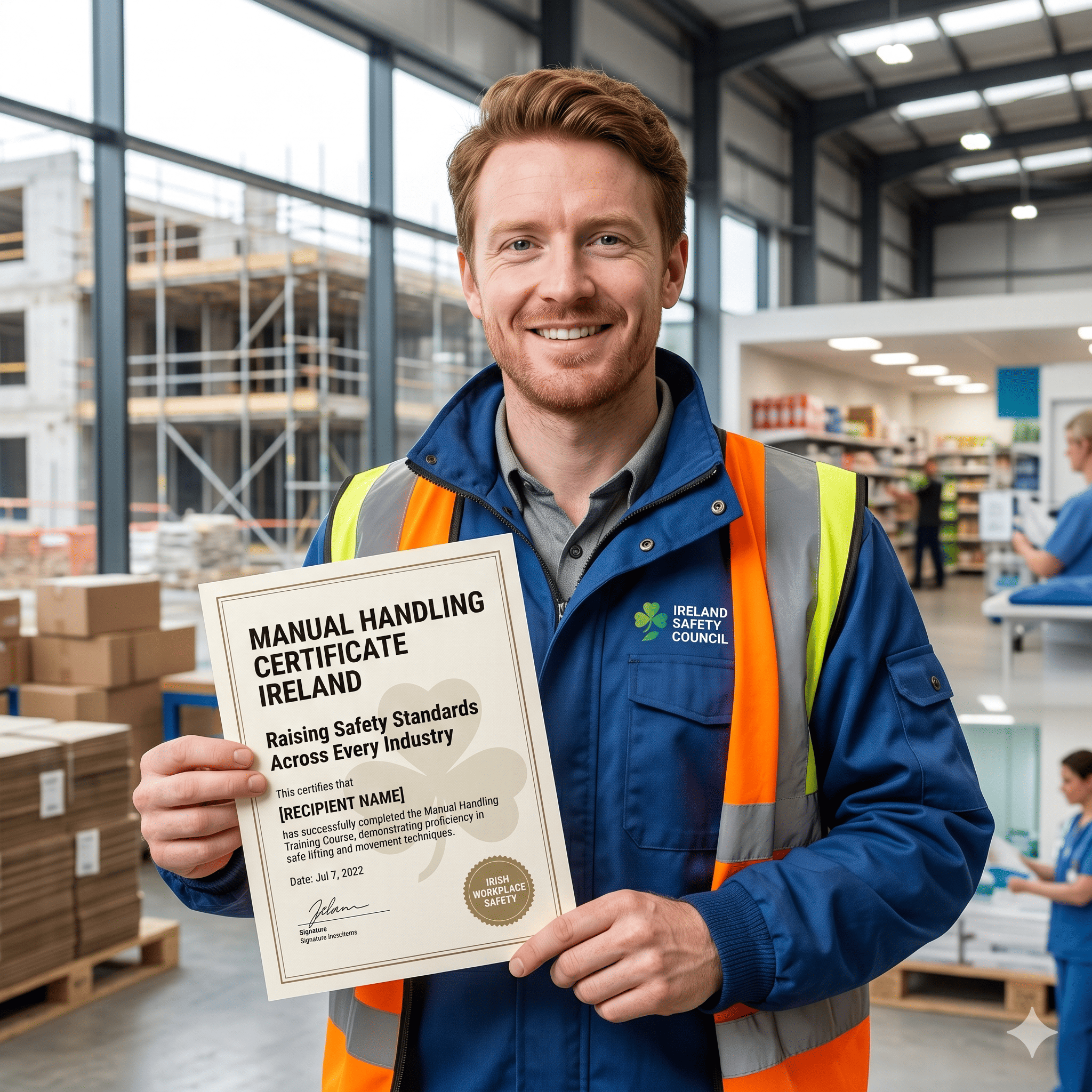
Workplace safety is a responsibility shared by employers and employees across every industry. Whether a person works in healthcare, warehousing, logistics, retail, manufacturing, hospitality, construction, or education, maintaining safe working practices is essential for preventing injuries and supporting long-term business success. While many organizations invest in equipment, policies, and safety procedures, employee training remains one of the most effective ways to improve workplace safety standards.
Among the most valuable forms of workplace safety education is manual handling training. Manual handling activities take place in nearly every work environment and involve tasks such as lifting, carrying, pushing, pulling, moving, or supporting loads. When these activities are performed incorrectly, employees can face a significant risk of injury. However, with proper training and awareness, many of these risks can be reduced or eliminated.
A professional manual handling certificate Ireland demonstrates that an employee has received appropriate instruction in safe manual handling practices. Through comprehensive manual handling training Ireland, workers learn how to identify hazards, assess risks, use correct lifting techniques, and perform physical tasks more safely. A quality manual handling course Ireland not only protects individual employees but also helps raise workplace safety standards across entire industries.
This article explores how a manual handling certificate Ireland contributes to safer workplaces and why it remains an important part of modern workforce development.
Why Workplace Safety Standards Matter
Safety standards provide the foundation for healthy and productive workplaces.
Strong safety standards help organizations:
- Reduce workplace injuries
- Improve employee well-being
- Increase productivity
- Minimize operational disruptions
- Support long-term business growth
When safety standards are consistently applied, employees can perform their duties with greater confidence and reduced risk.
Professional manual handling Ireland training supports these standards by giving workers practical skills that improve everyday safety.
Understanding Manual Handling
Manual handling refers to any activity that requires physical effort to move or support an object.
Examples include:
- Lifting boxes
- Carrying materials
- Moving equipment
- Pushing carts
- Pulling trolleys
- Repositioning stock
These tasks are common in workplaces of all sizes and across almost every industry.
Because manual handling activities occur so frequently, even small improvements in technique can have a significant impact on workplace safety.
The Purpose of a Manual Handling Certificate
A manual handling certificate Ireland demonstrates that an employee has completed training in safe manual handling practices.
Training typically covers:
- Safe lifting techniques
- Hazard awareness
- Risk assessment
- Injury prevention
- Safe movement principles
Certification provides evidence that employees understand the key concepts needed to perform manual handling tasks safely and responsibly.
Supporting Safety Across Multiple Industries
One of the strengths of a manual handling course Ireland is its broad applicability.
Safe manual handling principles can be applied in:
- Healthcare settings
- Warehouses
- Distribution centres
- Construction sites
- Retail stores
- Hospitality venues
- Manufacturing facilities
Although job responsibilities may differ, the need for safe handling techniques remains consistent.
Professional manual handling Ireland training helps employees adapt these principles to their specific working environments.
Reducing Workplace Injuries
Manual handling injuries remain among the most common workplace incidents.
Examples include:
- Back strains
- Shoulder injuries
- Muscle tears
- Joint pain
- Neck injuries
- Repetitive strain disorders
These injuries can affect both employee health and organizational performance.
A quality manual handling training Ireland program focuses on prevention by teaching employees how to perform tasks safely from the outset.
Improving Hazard Awareness
Hazard awareness is one of the most valuable skills employees can develop.
Workers should be able to identify risks such as:
- Heavy loads
- Unstable objects
- Poorly organized workspaces
- Slippery floors
- Restricted movement areas
Professional manual handling training Ireland encourages employees to assess their environment before beginning a task.
Improved awareness often leads to safer decision-making and fewer accidents.
Teaching Safe Lifting Techniques
Correct lifting technique plays a central role in injury prevention.
During a manual handling course Ireland, employees learn how to:
- Position themselves correctly
- Bend their knees
- Keep their backs aligned
- Use leg muscles effectively
- Maintain load control
These techniques reduce physical strain and improve handling efficiency.
Consistent use of proper lifting methods helps raise safety standards across the workplace.
Encouraging Better Risk Assessment
Before moving any load, employees should evaluate the task carefully.
Factors to consider include:
- Weight of the load
- Shape and size
- Travel distance
- Potential obstacles
- Need for assistance
A professional manual handling certificate Ireland helps workers develop the habit of assessing risks before taking action.
This simple practice often prevents injuries and improves workplace safety outcomes.
Promoting Safer Workplace Behaviors
Safety standards are strengthened when employees consistently follow safe practices.
Training encourages workers to:
- Plan tasks carefully
- Use proper techniques
- Follow procedures
- Report hazards
- Communicate effectively
Over time, these behaviors become part of the organization's safety culture.
Professional manual handling Ireland education helps establish these positive habits.
Supporting the Use of Mechanical Aids
Many workplaces provide equipment designed to reduce physical effort.
Examples include:
- Hoists
- Trolleys
- Pallet trucks
- Lift-assist devices
Employees who understand the benefits of these tools are more likely to use them appropriately.
A quality manual handling course Ireland teaches workers when and how mechanical aids should be used to improve safety.
Strengthening Employee Confidence
Employees who receive proper training often feel more confident when performing physical tasks.
Training helps workers:
- Understand workplace risks
- Apply safe techniques
- Make informed decisions
- Respond appropriately to challenges
Confidence contributes to safer behavior and improved workplace performance.
A valid manual handling certificate Ireland demonstrates this knowledge and preparedness.
Supporting Long-Term Employee Health
Many manual handling injuries develop gradually through repeated strain.
Without proper training, employees may experience:
- Chronic back pain
- Joint issues
- Reduced mobility
- Long-term discomfort
Professional manual handling training Ireland helps workers protect their long-term physical health by encouraging safer movement patterns and better working habits.
Building a Positive Safety Culture
A strong safety culture develops when employees actively participate in maintaining workplace safety.
Workers who complete manual handling Ireland training are often more likely to:
- Report hazards
- Follow procedures
- Support colleagues
- Promote safe behaviors
As these actions become more common, overall workplace safety standards improve.
Enhancing Productivity Through Safety
Safe workplaces are often more productive workplaces.
Employees who avoid injuries are more likely to:
- Maintain consistent attendance
- Perform tasks efficiently
- Remain engaged in their work
Organizations benefit from reduced disruptions and greater operational stability.
A professional manual handling course Ireland helps support these outcomes by reducing preventable risks.
The Importance of Ongoing Training
Safety knowledge should be reinforced regularly.
Refresher training helps employees:
- Maintain awareness
- Update their skills
- Correct unsafe habits
- Adapt to workplace changes
Keeping a current manual handling certificate Ireland supports continuous improvement and helps maintain high safety standards over time.
Benefits for Employees
Employees who complete manual handling certification often gain:
- Greater safety awareness
- Reduced injury risks
- Improved confidence
- Better workplace knowledge
- Stronger professional skills
These benefits support both career development and personal well-being.
Benefits for Employers
Organizations that invest in manual handling education frequently experience:
- Lower injury rates
- Reduced absenteeism
- Improved productivity
- Better employee engagement
- Stronger safety performance
These advantages contribute to sustainable business success.
Preparing Workforces for the Future
As industries continue to evolve, workplace safety will remain a priority.
Employees equipped with practical safety knowledge are better prepared to:
- Adapt to change
- Use new equipment safely
- Meet workplace expectations
- Support organizational growth
A professional manual handling certificate Ireland helps ensure workers have the skills needed to contribute to safer workplaces now and in the future.
Conclusion
A manual handling certificate Ireland plays an important role in raising safety standards across every industry. By providing employees with practical knowledge, hazard awareness, risk assessment skills, and safe handling techniques, certification helps reduce workplace injuries and support healthier working environments.
Through comprehensive manual handling training Ireland, employees learn how to perform physical tasks safely and responsibly. A quality manual handling course Ireland strengthens workplace safety culture, improves employee confidence, and contributes to long-term organizational success.
As businesses continue to prioritize employee well-being and operational excellence, investing in manual handling Ireland training remains one of the most effective ways to build safer, stronger, and more resilient workforces.