



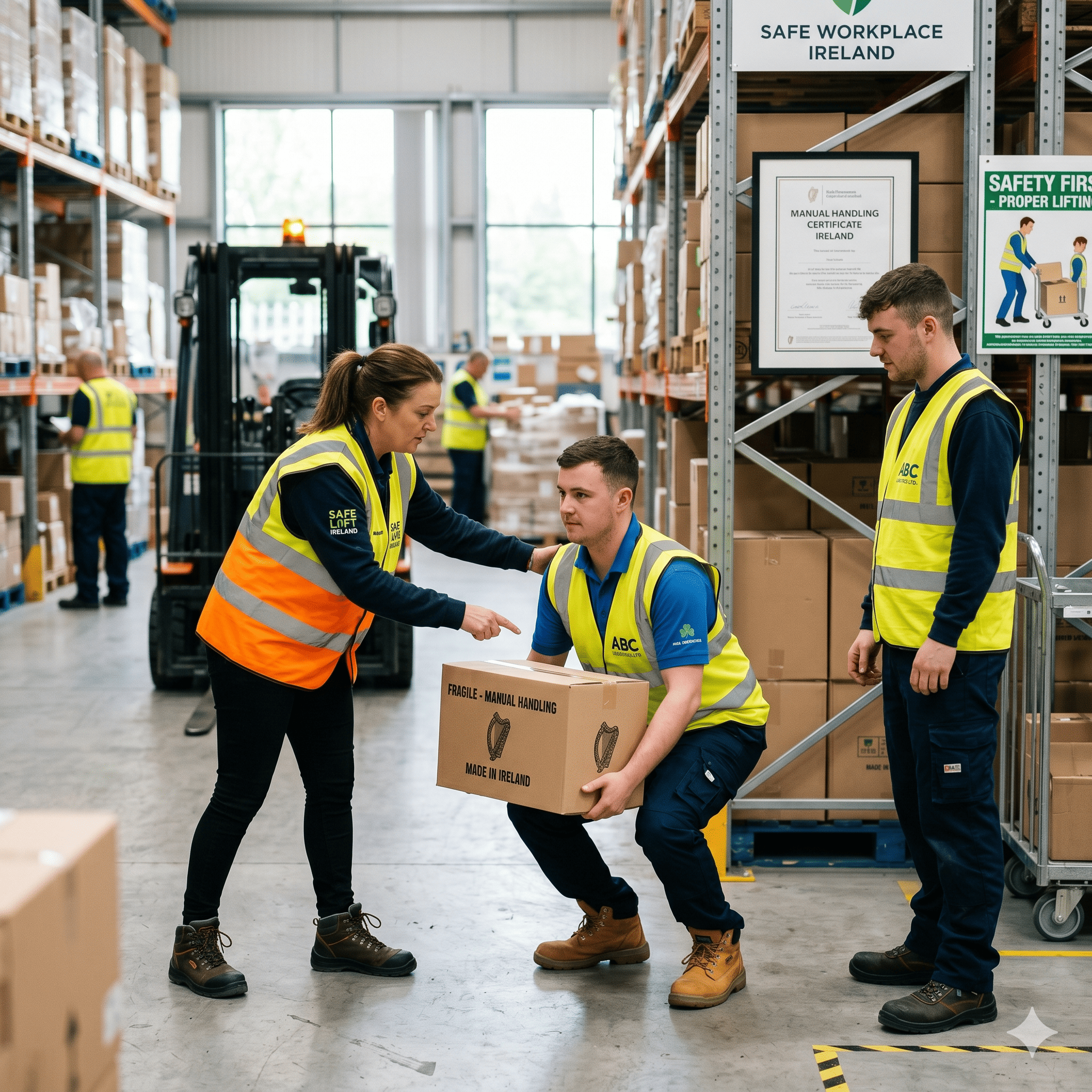
Workplace safety is a core responsibility for employers across all industries in Ireland. Among the most important aspects of health and safety is ensuring that employees can safely perform manual handling tasks. From lifting and carrying to pushing and pulling, these everyday activities can pose serious risks if not managed correctly.
This is where a manual handling certificate Ireland becomes essential. For employers, it’s more than just a document—it represents compliance, risk management, and a commitment to employee well-being. Combined with effective manual handling Ireland training, certification ensures that staff are equipped with the skills needed to work safely and efficiently.
In this article, we explore what a manual handling certificate Ireland means for employers and why it should be a priority in every workplace.
Understanding Manual Handling Certification
A manual handling certificate Ireland is proof that an employee has successfully completed a recognized manual handling course Ireland.
This training provides workers with the knowledge and practical skills required to perform manual handling tasks safely. It typically covers:
- Safe lifting and carrying techniques
- Risk assessment
- Injury prevention
- Use of equipment
For employers, certification confirms that employees have received structured manual handling training Ireland aligned with safety standards.
Meeting Legal Responsibilities
Employers in Ireland have a legal duty to ensure the safety, health, and welfare of their employees.
Providing manual handling Ireland training is a key part of fulfilling this obligation. A valid manual handling certificate Ireland demonstrates that employees have been properly trained to handle tasks safely.
This is particularly important during inspections or audits, where employers may need to show evidence of compliance.
Reducing Workplace Injuries
Manual handling injuries are among the most common workplace incidents, often resulting in:
- Back injuries
- Muscle strain
- Joint problems
- Repetitive strain conditions
By ensuring employees complete a manual handling course Ireland, employers can significantly reduce the risk of these injuries.
A workforce with a valid manual handling certificate Ireland is better equipped to perform tasks safely, leading to fewer accidents and improved overall safety.
Protecting the Business from Liability
Workplace injuries can lead to legal claims, compensation costs, and reputational damage.
Having employees trained through manual handling Ireland programs helps protect businesses by demonstrating that reasonable steps were taken to prevent accidents.
A manual handling certificate Ireland provides documented evidence that training has been completed, which can be crucial in legal situations.
Supporting Insurance Requirements
Insurance providers expect businesses to manage risks effectively.
Providing manual handling training Ireland and maintaining records of manual handling certificate Ireland completion can:
- Reduce insurance premiums
- Strengthen claims defense
- Improve overall risk profile
Employers who prioritize training are often viewed as lower risk by insurers.
Improving Workplace Efficiency
Proper training doesn’t just improve safety—it also enhances efficiency.
Employees who complete a manual handling course Ireland learn how to move loads more effectively, reducing wasted effort and time.
This leads to:
- Faster task completion
- Less fatigue
- Improved productivity
A well-trained workforce contributes to smoother operations.
Enhancing Employee Confidence
Employees who hold a manual handling certificate Ireland feel more confident in their ability to perform tasks safely.
Confidence reduces hesitation and errors, allowing workers to focus on their responsibilities.
This results in better performance and a more positive work environment.
Strengthening Workplace Culture
A commitment to manual handling Ireland training helps build a strong safety culture.
When employers prioritize certification, they send a clear message that employee well-being matters.
This encourages:
- Responsibility for safety
- Teamwork
- Consistent adherence to best practices
A positive culture benefits both employees and the organization.
Ensuring Consistency Across Teams
Inconsistent practices can lead to confusion and increased risk.
By requiring all employees to complete the same manual handling course Ireland, employers can standardize procedures and ensure consistency.
A valid manual handling certificate Ireland across the workforce ensures that everyone follows the same safety guidelines.
Supporting Onboarding and Training Programs
Manual handling training should be part of every onboarding process.
New employees should complete a manual handling course Ireland before performing tasks that involve physical effort.
A manual handling certificate Ireland confirms that they are ready to work safely from the start.
Keeping Training Up to Date
Manual handling practices and workplace conditions can change over time.
Employers should ensure that employees renew their manual handling certificate Ireland regularly, typically every 2–3 years.
Refresher manual handling Ireland training helps maintain compliance and reinforces safe habits.
Adapting to Different Industries
Manual handling requirements vary depending on the industry.
For example:
- Construction involves heavy materials
- Healthcare includes patient handling
- Retail requires stock movement
A tailored manual handling course Ireland ensures that training is relevant to specific roles and environments.
Leveraging Online Training Options
A manual handling course online provides a flexible and cost-effective solution for employers.
Online training allows businesses to:
- Train employees at their own pace
- Reduce scheduling conflicts
- Track certification easily
This makes it easier to ensure that all staff obtain a manual handling certificate Ireland.
Preparing for Audits and Inspections
Regulatory inspections often require proof of training.
Employers must be able to provide records showing that employees have completed manual handling Ireland training.
A valid manual handling certificate Ireland ensures that businesses are prepared for audits and can demonstrate compliance.
Reducing Absenteeism and Turnover
Workplace injuries can lead to absenteeism and high staff turnover.
By investing in manual handling training Ireland, employers can create a safer environment that reduces injury-related absences.
This leads to a more stable and reliable workforce.
Long-Term Financial Benefits
While training requires an initial investment, the long-term benefits outweigh the costs.
Employers can expect:
- Lower injury-related expenses
- Reduced insurance premiums
- Increased productivity
- Improved employee retention
A manual handling certificate Ireland is a small investment with significant returns.
Conclusion
For employers, a manual handling certificate Ireland is far more than a simple qualification—it is a critical component of workplace safety, compliance, and business success. By ensuring employees complete a recognized manual handling course Ireland, businesses can reduce risks, improve efficiency, and protect their workforce.
Investing in manual handling Ireland training demonstrates a commitment to safety, strengthens compliance, and supports long-term growth.
Ultimately, prioritizing manual handling certificate Ireland requirements is not just about meeting legal obligations—it’s about building a safer, more productive, and more resilient workplace.