



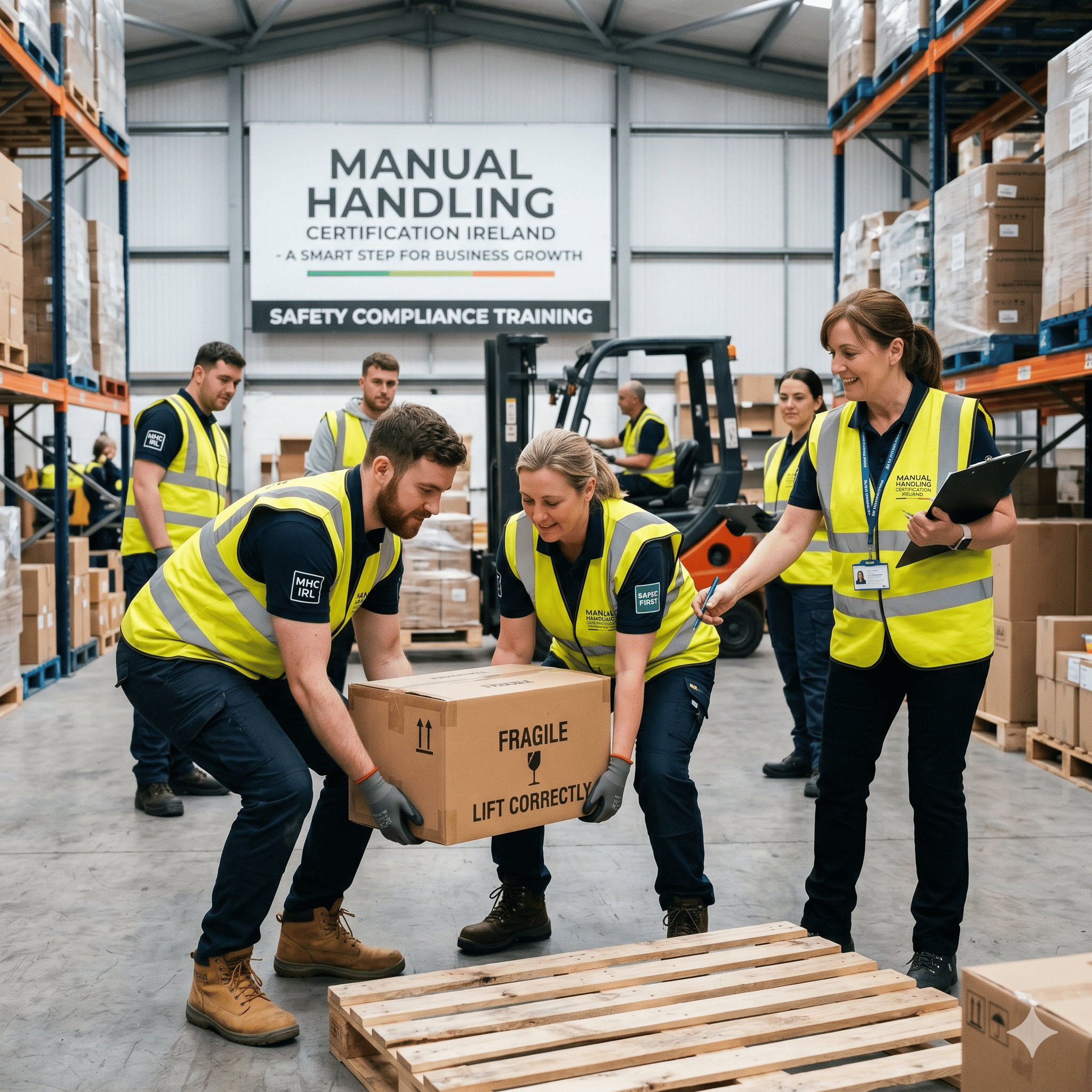
In today’s competitive and highly regulated work environment, Manual Handling Certification Ireland is no longer just a compliance requirement—it is a strategic investment in business growth. Companies across industries are recognising that proper manual handling training not only protects employees but also improves productivity, reduces costs, and strengthens overall operational efficiency.
Whether you run a construction company, warehouse, healthcare facility, or retail business, manual handling is part of daily operations. Ensuring your workforce is properly trained through a manual handling course Ireland can significantly impact your long-term success.
What is Manual Handling Certification in Ireland?
Manual handling refers to any activity that involves lifting, carrying, pushing, pulling, or moving objects by hand or bodily force. In Ireland, these tasks are governed by the Safety, Health and Welfare at Work (General Application) Regulations 2007, which require employers to assess risks and provide appropriate training.
A manual handling certificate Ireland confirms that employees have been trained in safe techniques, risk awareness, and injury prevention. This certification is typically required in industries such as:
- Construction
- Logistics and warehousing
- Healthcare and nursing
- Retail and hospitality
- Manufacturing
Without proper training, employees are at risk of serious injuries, particularly musculoskeletal disorders.
Why Manual Handling Training is Essential for Businesses
1. Reducing Workplace Injuries
One of the biggest reasons businesses invest in manual handling training Ireland is to reduce workplace injuries. Manual handling incidents account for a significant portion of workplace accidents.
Studies show that manual handling is responsible for nearly 30% of all workplace injuries in Ireland.
These injuries include:
- Back pain and spinal issues
- Muscle strains and sprains
- Shoulder and neck injuries
- Long-term physical disabilities
By providing employees with a manual handling certificate, businesses can drastically reduce these risks.
2. Legal Compliance and Risk Management
Irish law requires employers to:
- Avoid manual handling where possible
- Assess risks associated with manual tasks
- Provide proper training to employees
Failure to comply can result in fines, legal claims, and reputational damage.
Investing in a manual handling course online Ireland or in-person training ensures your business stays compliant while protecting both employees and management from liability.
3. Boosting Productivity and Efficiency
Injured employees lead to absenteeism, reduced productivity, and operational delays. Even minor injuries can have a ripple effect across your organisation.
When employees complete a manual handling certification Ireland, they:
- Work more efficiently
- Use proper lifting techniques
- Reduce fatigue and strain
- Maintain consistent performance
A well-trained workforce is not only safer but also more productive.
4. Lowering Business Costs
Workplace injuries are expensive. They result in:
- Compensation claims
- Medical expenses
- Insurance premium increases
- Lost working hours
By implementing manual handling training Ireland, businesses can significantly reduce these costs.
In fact, preventing injuries is far more cost-effective than dealing with their consequences.
5. Improving Employee Morale and Retention
Employees want to feel safe at work. Providing manual handling certification demonstrates that you value their wellbeing.
This leads to:
- Higher job satisfaction
- Increased employee loyalty
- Lower staff turnover
- Better workplace culture
When employees feel protected, they are more engaged and motivated.
How Manual Handling Certification Supports Business Growth
Many companies view training as an expense, but in reality, it is an investment.
Stronger Reputation
Businesses that prioritise safety build trust with clients, partners, and employees. A company known for high safety standards is more attractive in competitive markets.
Competitive Advantage
Having a fully trained workforce gives your business an edge, especially when bidding for contracts where safety compliance is essential.
Workforce Flexibility
A manual handling certificate Ireland provides employees with transferable skills, allowing them to adapt to different roles within the company.
Reduced Downtime
Fewer injuries mean fewer disruptions, ensuring smoother operations and consistent service delivery.
Key Components of a Manual Handling Course Ireland
A quality manual handling course Ireland typically includes:
Risk Assessment Training
Employees learn how to identify hazards and assess risks associated with manual tasks.
Proper Lifting Techniques
Training focuses on correct posture, lifting methods, and load handling.
Injury Prevention Strategies
Courses teach how to avoid strain and long-term damage.
Practical Demonstrations
Hands-on practice ensures employees understand and apply techniques effectively.
Certification Assessment
Participants must demonstrate their knowledge to receive a recognised manual handling certificate Ireland.
Online vs In-Person Manual Handling Courses
Businesses in Ireland can choose between:
Manual Handling Course Online Ireland
- Flexible and convenient
- Cost-effective
- Ideal for remote teams
In-Person Training
- Hands-on experience
- Immediate feedback from instructors
- Better for high-risk industries
Both options can lead to a valid manual handling certification Ireland, as long as they meet regulatory standards.
Who Needs Manual Handling Certification?
Manual handling training is essential for:
- Warehouse workers
- Construction workers
- Healthcare professionals
- Delivery drivers
- Retail staff
- Office workers handling equipment
In reality, almost every business can benefit from manual handling training Ireland, as manual tasks exist in nearly all workplaces.
Choosing the Right Manual Handling Training Provider
When selecting a provider for manual handling certification Ireland, consider:
- Accreditation and compliance with Irish regulations
- Qualified instructors (often QQI Level 6 certified)
- Course content and practical training
- Flexibility (online vs in-person)
- Reputation and reviews
Choosing the right provider ensures your certification is recognised and valuable.
Future Trends in Manual Handling Training Ireland
As workplaces evolve, so does training. Key trends include:
- Increased use of online learning platforms
- Virtual reality (VR) training simulations
- Greater focus on ergonomics
- Integration with broader health and safety programs
Businesses that adopt modern manual handling courses Ireland will stay ahead of regulatory and operational changes.
Conclusion
Manual Handling Certification Ireland is more than a legal requirement—it is a powerful tool for business growth. By investing in proper training, companies can reduce injuries, improve productivity, lower costs, and build a stronger reputation.
In a landscape where safety and efficiency go hand in hand, a manual handling certificate Ireland is not just about compliance—it is about creating a smarter, safer, and more successful business.
If you want to scale your operations while protecting your workforce, implementing manual handling training Ireland is one of the smartest steps you can take.