



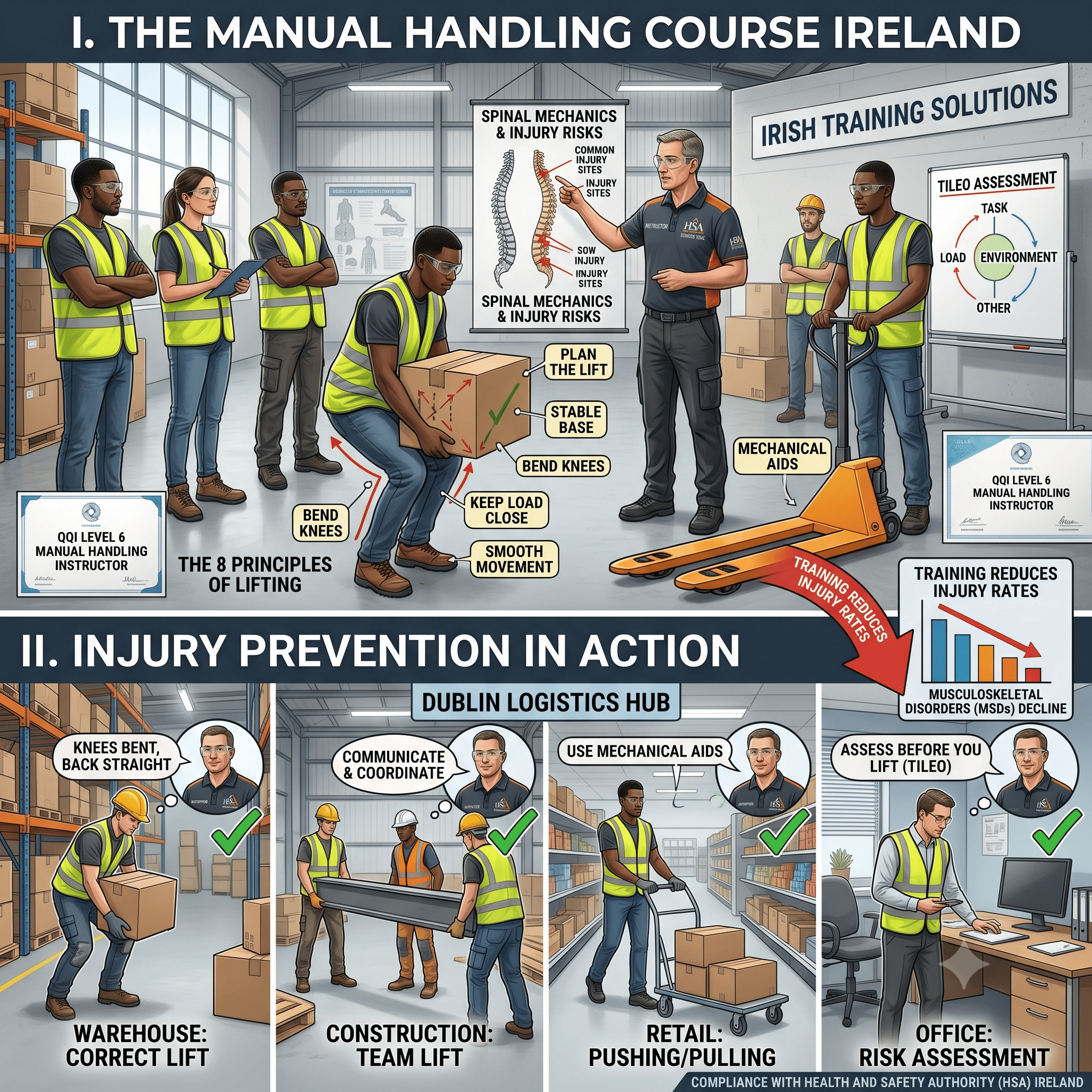
Workplace safety is often associated with major initiatives, advanced equipment, and detailed compliance programs. While these elements certainly play an important role, many of the most effective safety improvements come from simple actions that employees can apply every day. Small changes in behavior, awareness, and workplace organization can significantly reduce injury risks and create a safer environment for everyone.
Manual handling remains one of the most common workplace activities across Ireland. Employees in industries such as healthcare, warehousing, retail, manufacturing, construction, logistics, hospitality, and education regularly move, lift, carry, push, and pull loads as part of their daily responsibilities. Because these activities are so familiar, the risks involved can sometimes be underestimated.
The good news is that many manual handling injuries are preventable. Through proper awareness, practical training, and the consistent application of basic safety principles, businesses can protect employees while improving efficiency and productivity. A professional manual handling course Ireland teaches workers how to recognize hazards and apply safe handling techniques. Comprehensive manual handling training Ireland helps transform these lessons into everyday habits, while a manual handling certificate Ireland demonstrates a commitment to workplace safety and professional development.
This article explores simple safety measures that deliver lasting results and explains why effective manual handling Ireland practices remain essential for modern workplaces.
Why Simple Safety Measures Matter
Many workplace injuries occur during routine activities rather than unusual events.
Employees may become injured while:
- Lifting a box
- Moving equipment
- Carrying supplies
- Reaching for materials
- Pushing a trolley
These tasks often seem harmless because they are performed every day. However, repeated exposure to poor handling techniques can lead to both sudden injuries and long-term physical problems.
Simple safety measures help reduce these risks by encouraging employees to make safer decisions consistently.
Understanding Manual Handling Risks
Manual handling involves any task that requires physical effort to move or support a load.
Examples include:
- Lifting
- Lowering
- Carrying
- Pulling
- Pushing
- Holding
While these actions appear straightforward, they place demands on muscles, joints, ligaments, and the spine.
Professional manual handling Ireland training helps employees understand how everyday movements can affect their health and safety.
Think Before You Lift
One of the simplest yet most effective safety measures is taking a moment to assess a task before beginning.
Employees should consider:
- How heavy the load is
- Whether assistance is needed
- The distance it must be moved
- Potential obstacles along the route
This brief assessment can prevent many common workplace injuries.
A professional manual handling course Ireland teaches employees that safe lifting begins with planning rather than physical effort.
Use Proper Lifting Techniques
Correct lifting technique remains one of the most important aspects of manual handling safety.
Employees should:
- Position their feet securely
- Bend their knees
- Keep their back aligned
- Lift smoothly
- Avoid sudden movements
These simple actions help reduce strain on the body and improve load control.
Through manual handling training Ireland, workers learn how proper technique protects both their immediate and long-term health.
Keep Loads Close to the Body
Holding a load away from the body increases pressure on the spine and muscles.
Whenever possible, employees should:
- Keep items close to their torso
- Maintain balance
- Avoid reaching unnecessarily
This simple adjustment can significantly reduce physical strain.
Professional manual handling Ireland training reinforces this principle because it is easy to apply and highly effective.
Avoid Twisting While Carrying
Twisting the body while holding a load is a common cause of injury.
Instead of twisting, employees should:
- Turn with their feet
- Move their entire body
- Maintain stable posture
This small change helps protect the back and reduces the risk of muscle strains.
Keep Work Areas Organized
Good housekeeping is one of the simplest ways to improve workplace safety.
Employees should ensure:
- Walkways remain clear
- Equipment is stored properly
- Materials are organized
- Hazards are removed promptly
An organized workplace supports safer movement and reduces accident risks.
Many lessons covered in a manual handling course Ireland relate directly to workplace organization and hazard reduction.
Use Mechanical Aids When Available
Many workplaces provide tools designed to reduce physical effort.
Examples include:
- Trolleys
- Hoists
- Pallet trucks
- Lift-assist equipment
Employees sometimes avoid these tools because they believe manual handling will be faster.
However, using available equipment often improves both safety and efficiency.
Professional manual handling training Ireland encourages workers to use mechanical aids whenever appropriate.
Communicate Clearly
Communication plays an important role in workplace safety.
Employees should feel comfortable:
- Asking for help
- Reporting hazards
- Clarifying instructions
- Discussing concerns
Strong communication helps prevent misunderstandings and promotes safer working practices.
A positive safety culture relies on open communication at every level of the organization.
Recognize Personal Limitations
Employees should never feel pressured to handle loads beyond their capabilities.
Understanding personal limitations helps prevent injuries caused by:
- Overexertion
- Fatigue
- Poor judgment
Professional manual handling Ireland training teaches workers that seeking assistance is a responsible safety decision rather than a sign of weakness.
Reduce Repetitive Strain
Not all injuries occur from a single incident.
Many physical problems develop gradually through repeated movements.
Examples include:
- Frequent lifting
- Continuous reaching
- Repetitive carrying
Simple measures such as varying tasks, using equipment, and maintaining proper posture can help reduce repetitive strain.
Maintain Good Posture
Posture affects how physical forces are distributed throughout the body.
Poor posture can increase stress on:
- The spine
- Shoulders
- Neck
- Knees
Employees who maintain proper body alignment during manual handling tasks are less likely to experience discomfort and injury.
A quality manual handling course Ireland emphasizes posture as a key component of workplace safety.
Stay Aware of Surroundings
Situational awareness helps employees identify hazards before they become problems.
Workers should remain alert to:
- Moving vehicles
- Slippery surfaces
- Other employees
- Changes in the environment
Awareness allows employees to adapt their actions and avoid unnecessary risks.
Take Fatigue Seriously
Fatigue can affect both physical performance and decision-making.
Tired employees may:
- Lift incorrectly
- Miss hazards
- Lose concentration
- Take shortcuts
Simple measures such as taking breaks, staying hydrated, and managing workloads effectively can help reduce fatigue-related risks.
Professional manual handling training Ireland often highlights the connection between fatigue and workplace safety.
Encourage Safe Habits Every Day
The most effective safety measures are often the ones applied consistently.
Examples include:
- Assessing loads before lifting
- Using proper techniques
- Reporting hazards
- Keeping workspaces tidy
When these actions become habits, workplace safety improves naturally.
Supporting Long-Term Employee Health
Simple safety measures not only prevent immediate injuries but also protect long-term health.
Employees who consistently apply safe manual handling practices are less likely to experience:
- Chronic back pain
- Joint issues
- Repetitive strain injuries
- Reduced mobility
A valid manual handling certificate Ireland reflects an understanding of how daily actions contribute to long-term well-being.
Building a Strong Safety Culture
Safety culture is created through everyday behavior rather than occasional initiatives.
Organizations that encourage simple safety practices often develop workplaces where employees:
- Value safety
- Follow procedures
- Support colleagues
- Take responsibility for risk reduction
Professional manual handling Ireland training helps establish this culture by providing employees with practical tools they can use immediately.
Benefits for Employees
Employees who apply simple safety measures often experience:
- Reduced injury risks
- Improved confidence
- Better physical health
- Greater workplace awareness
- Increased job satisfaction
These benefits contribute to a healthier and more positive working experience.
Benefits for Employers
Businesses that promote effective manual handling practices frequently benefit from:
- Lower accident rates
- Reduced absenteeism
- Improved productivity
- Stronger employee engagement
- Better operational performance
Small safety improvements can produce significant long-term results.
Conclusion
Workplace safety does not always require complex solutions. In many cases, simple actions such as planning tasks carefully, using proper lifting techniques, maintaining good posture, keeping work areas organized, and communicating effectively can make a substantial difference.
A professional manual handling course Ireland helps employees understand these principles and apply them consistently. Through comprehensive manual handling training Ireland, workers develop habits that reduce injury risks and support long-term health. A manual handling certificate Ireland demonstrates a commitment to workplace safety and reinforces the importance of responsible manual handling practices.
By focusing on simple safety measures and making them part of everyday routines, businesses across Ireland can create safer workplaces, protect their employees, and achieve lasting improvements in both safety and productivity.