



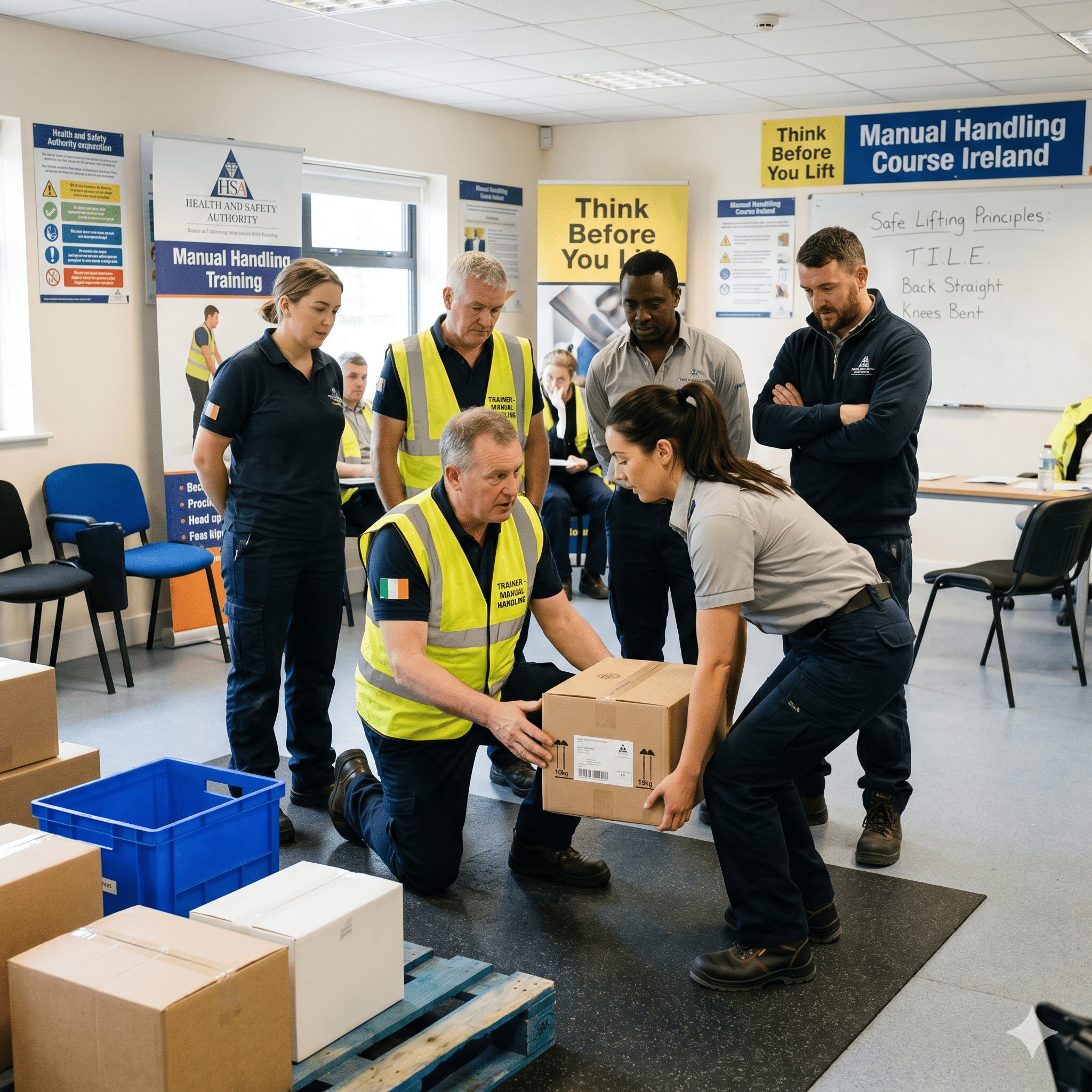
Manual handling is an essential part of many roles across Ireland, from warehouses and construction sites to healthcare facilities and offices. While these tasks are often routine, performing them incorrectly can lead to serious injuries, lost productivity, and long-term health problems.
That’s why completing a manual handling course Ireland is so important. Through structured manual handling Ireland training, employees gain the practical skills and knowledge needed to carry out tasks safely and efficiently. A valid manual handling certificate Ireland not only proves compliance but also shows that a worker is trained to meet modern safety standards.
In this guide, we break down what employees can realistically expect to learn during a manual handling course Ireland, and why these skills are crucial in today’s workplace.
Understanding Manual Handling Ireland Basics
The course begins with a clear introduction to manual handling Ireland and what it involves in real work environments.
Employees learn that manual handling includes:
- Lifting and lowering objects
- Carrying loads
- Pushing and pulling
- Moving or supporting items
This foundational knowledge helps employees recognize that manual handling is more than just lifting—it’s a wide range of everyday physical tasks that must be approached safely.
Recognizing Workplace Risks
A major focus of manual handling training Ireland is understanding the risks involved.
Employees are taught how improper handling can lead to injuries such as:
- Back injuries
- Muscle strains
- Joint damage
- Repetitive strain injuries
Learning about these risks builds awareness and encourages safer behavior in the workplace.
The Principles of Safe Manual Handling
A high-quality manual handling course Ireland teaches key safety principles that guide all manual handling tasks.
These include:
- Planning before lifting
- Keeping loads close to the body
- Avoiding twisting movements
- Using smooth, controlled actions
These principles form the foundation of safe manual handling Ireland practices.
Proper Lifting Techniques
One of the most important practical skills employees will learn is how to lift correctly.
Training focuses on techniques such as:
- Positioning the feet for balance
- Bending the knees instead of the back
- Keeping the spine in a neutral position
- Lifting with the legs, not the back
Mastering these techniques significantly reduces the risk of injury.
Assessing Loads Before Handling
Employees are trained to evaluate loads before attempting to move them.
A manual handling course Ireland teaches workers to consider:
- Weight
- Size and shape
- Stability
- Ease of grip
This assessment helps employees decide whether they can handle the load safely or need assistance.
Maintaining Good Posture
Posture plays a critical role in preventing injuries.
Employees learn how to maintain proper posture during manual handling tasks, including:
- Keeping the back straight
- Aligning the body correctly
- Avoiding awkward positions
Good posture is a key part of effective manual handling Ireland training.
Safe Carrying Techniques
Carrying loads safely requires careful attention.
Employees are taught to:
- Keep loads balanced
- Maintain clear visibility
- Avoid overreaching
- Move steadily without rushing
These techniques reduce strain and improve safety.
Pushing and Pulling Safely
Manual handling also involves pushing and pulling, which can be risky if done incorrectly.
A manual handling course Ireland teaches employees to:
- Use body weight rather than force
- Keep movements controlled
- Maintain proper posture
- Avoid sudden or jerky actions
This helps prevent strain injuries.
Using Equipment Effectively
Employees learn about tools and equipment designed to reduce manual handling risks.
Training includes guidance on using:
- Trolleys
- Pallet trucks
- Lifting aids
- Mechanical devices
Knowing when and how to use equipment is a vital part of manual handling Ireland practices.
Understanding Personal Limits
Recognizing physical limits is essential for safety.
Employees are encouraged to:
- Avoid lifting overly heavy loads
- Ask for help when needed
- Use mechanical aids whenever possible
A manual handling certificate Ireland confirms that employees understand these boundaries.
Hazard Awareness in the Workplace
Employees are trained to identify hazards that could increase the risk of injury.
These include:
- Slippery floors
- Poor lighting
- Obstructions
- Uneven surfaces
Hazard awareness helps employees avoid dangerous situations.
Communication and Team Handling
Some tasks require more than one person.
A manual handling course Ireland teaches employees how to communicate effectively during team lifts, including:
- Planning movements in advance
- Coordinating actions
- Using clear signals
Good communication reduces the risk of accidents.
Injury Prevention Strategies
Preventing injuries is a central goal of manual handling training Ireland.
Employees learn strategies such as:
- Warming up before physical work
- Taking regular breaks
- Using correct techniques consistently
- Reporting discomfort early
These habits support long-term health.
Adapting Skills to Different Roles
Manual handling tasks vary depending on the job.
A manual handling course Ireland helps employees adapt their skills to their specific role, whether they are:
- Moving stock in a warehouse
- Assisting patients in healthcare
- Handling deliveries in retail
This ensures that training is practical and relevant.
Legal Awareness and Responsibilities
Employees also learn about their responsibilities when it comes to workplace safety.
Training covers:
- The importance of following procedures
- The role of training in compliance
- Why holding a valid manual handling certificate Ireland matters
Understanding these responsibilities encourages accountability.
Learning Through Online Training
Many employees now complete their training through a manual handling course online, which offers flexibility and convenience.
Online courses typically include:
- Interactive lessons
- Video demonstrations
- Quizzes and assessments
This format allows employees to learn at their own pace while still gaining essential skills.
Building Confidence in the Workplace
By the end of the course, employees feel more confident in their ability to perform manual handling tasks safely.
Confidence leads to:
- Better performance
- Fewer mistakes
- Reduced stress
This is one of the key benefits of completing manual handling training Ireland.
The Importance of Certification
After completing training, employees receive a manual handling certificate Ireland.
This certification:
- Demonstrates competence
- Supports workplace compliance
- Enhances career opportunities
It is a valuable qualification across many industries.
Conclusion
A manual handling course Ireland provides employees with essential skills that go far beyond basic lifting. From understanding risks and assessing loads to using equipment and preventing injuries, manual handling Ireland training equips workers with the tools they need to stay safe and efficient.
A valid manual handling certificate Ireland is more than just a requirement—it’s proof that employees are trained, capable, and ready to meet workplace demands.
By investing in manual handling training Ireland, businesses not only protect their workforce but also improve productivity, reduce risks, and create a safer working environment for everyone.