



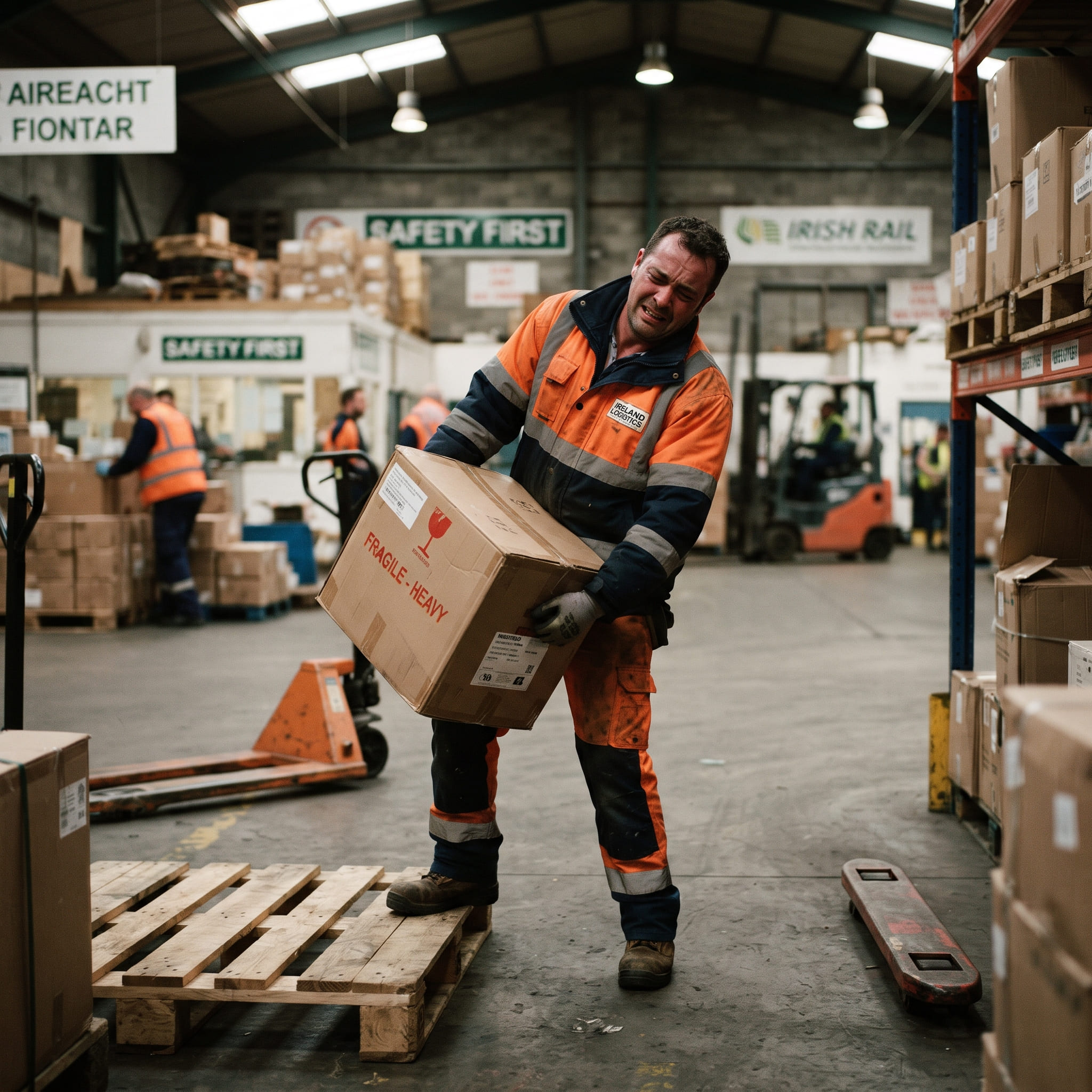
Manual handling is part of everyday work for thousands of employees across Ireland. Workers in warehouses, construction, healthcare, manufacturing, retail, logistics, hospitality and many other industries regularly lift, carry, push, pull and move loads.
When employees are alert and well prepared, they can assess tasks, identify hazards and apply appropriate safe working practices. However, fatigue can change the way people perform physical tasks.
A tired employee may be more likely to lose concentration, rush a task, overlook an obstacle or struggle to maintain control of a load. Physical fatigue can also make repetitive lifting, carrying, pushing and pulling more demanding.
This is why fatigue should be considered when managing manual handling risks.
Professional Manual Handling Training Ireland can help employees understand the importance of planning, safe lifting, risk assessment and recognising when a task is becoming difficult. A suitable Manual Handling Course Ireland can also help workers understand how factors such as repetition, workload and workplace conditions can affect manual handling safety.
In this article, we examine how fatigue can increase the risk of workplace injuries and what employers and employees can do to reduce these risks.
What Is Workplace Fatigue?
Fatigue is more than simply feeling slightly tired.
Work-related fatigue can affect a person's ability to maintain attention and perform tasks consistently.
Fatigue may result from factors such as:
- Long working hours.
- Repetitive tasks.
- Physically demanding work.
- Insufficient rest.
- Shift work.
- Poor working conditions.
- High workloads.
- Prolonged concentration.
Fatigue can affect both physical and mental performance.
For employees involved in manual handling, this can become particularly important because physical tasks often require coordination, concentration and control.
Why Fatigue Matters During Manual Handling
Manual handling requires employees to make decisions before and during physical movement.
A worker may need to determine:
- How heavy a load is.
- How it should be lifted.
- Whether assistance is needed.
- Which route to take.
- Where the load should be placed.
When fatigue affects concentration, employees may be more likely to overlook one of these factors.
A small mistake may turn an otherwise manageable task into a more difficult situation.
Fatigue Can Reduce Concentration
Concentration is essential when moving loads.
An employee carrying a large object needs to remain aware of:
- The route.
- Other workers.
- Obstacles.
- Changes in flooring.
- Doorways.
- Equipment.
Fatigue can make it harder to maintain attention.
An employee may fail to notice a box on the floor or another person entering the route.
Maintaining a clear and organised workplace can help reduce these environmental risks, but employee alertness remains important.
Fatigue Can Affect Physical Performance
Manual handling requires physical coordination.
When employees become tired, they may find it more difficult to maintain the same level of control and consistency.
For example, an employee may:
- Struggle to maintain a stable position.
- Have difficulty controlling a load.
- Use less effective body positioning.
- Move more slowly.
- Become less coordinated.
This does not mean fatigue automatically causes an injury, but it can contribute to a situation where a manual handling task becomes harder to perform safely.
Repetitive Manual Handling and Fatigue
Repetitive work can be particularly demanding.
A single lift may be relatively easy, but repeating the same movement hundreds of times can create significant physical demands.
Examples include:
- Moving boxes.
- Loading shelves.
- Packing products.
- Unloading deliveries.
- Handling equipment.
- Repositioning materials.
Employers should consider not only the weight of individual loads but also how frequently employees handle them.
Fatigue and Poor Posture
As employees become tired, maintaining consistent working positions may become more difficult.
Workers may begin to:
- Bend unnecessarily.
- Reach further than necessary.
- Twist while moving loads.
- Work in awkward positions.
These movements can increase the physical demands of a task.
Good workplace design can help reduce the need for awkward postures, but employees should also remain aware of their positioning throughout the task.
Fatigue Can Lead to Rushing
Interestingly, tired employees may sometimes rush because they want to finish a task.
For example, an employee near the end of a long shift may try to move several boxes quickly rather than taking time to plan each movement.
Rushing can result in:
- Poor planning.
- Reduced control.
- Missed hazards.
- Incorrect use of equipment.
- Unsafe shortcuts.
Taking a controlled approach is important even when employees are tired or under time pressure.
Fatigue Can Affect Risk Assessment
Before moving a load, employees should assess the situation.
However, fatigue may make workers less likely to stop and think.
They may assume:
"I've moved this before, so I'll just do it."
This can become problematic if the load, route or workplace conditions have changed.
Employees should continue to assess each task rather than relying entirely on previous experience.
Recognising the Signs of Fatigue
Employees should learn to recognise signs that fatigue may be affecting their work.
Possible signs include:
- Difficulty concentrating.
- Feeling unusually tired.
- Reduced coordination.
- Slower reactions.
- Irritability.
- Difficulty maintaining attention.
- Increased mistakes.
- Feeling physically exhausted.
If fatigue is affecting safe performance, the situation should be communicated to an appropriate supervisor or manager.
Plan Manual Handling Tasks
Good planning becomes particularly important when employees are tired.
Before moving a load, consider:
What am I moving?
How heavy or awkward is it?
Where does it need to go?
Is the route clear?
Can I use mechanical equipment?
Do I need assistance?
Where will the load be placed?
Planning helps reduce the need to make decisions while carrying the load.
Use Mechanical Handling Equipment
Mechanical aids can reduce physical demands.
Depending on the workplace, examples may include:
- Trolleys.
- Pallet trucks.
- Hoists.
- Lift tables.
- Conveyors.
- Carts.
When suitable equipment is available, employees should use it according to workplace procedures.
Mechanical aids can be particularly useful for repetitive or physically demanding tasks.
Reduce Unnecessary Carrying
Workplace layout can influence fatigue.
If employees have to carry materials long distances repeatedly, the total physical demands can increase.
Employers can consider whether frequently used materials can be stored closer to their point of use.
Reducing unnecessary walking and carrying can improve efficiency while reducing physical demands.
Improve Workplace Layout
A well-organised workplace can make manual handling easier.
Employers can review:
- Storage heights.
- Walkway widths.
- Equipment positioning.
- Lighting.
- Flooring.
- Delivery areas.
- Workstation design.
Good workplace layout can reduce unnecessary bending, reaching, carrying and twisting.
Team Handling When Appropriate
Some loads may be easier to manage with more than one person.
Team handling can help employees manage large or awkward loads when individual handling would be unsuitable.
Before beginning, workers should agree on:
- Who will lead.
- Where everyone will stand.
- Which route will be used.
- When to lift.
- When to move.
- When to stop.
Good communication is essential.
Take Appropriate Breaks
Rest and recovery can be important when work involves prolonged physical activity.
Employers should organise work appropriately and consider the demands of the task.
Employees should use designated breaks appropriately rather than treating breaks as unnecessary interruptions.
The purpose is to support safe and sustainable work throughout the working day.
Employers Should Assess Work Organisation
Fatigue is not only an individual responsibility.
Employers should consider whether work organisation contributes to excessive fatigue.
Factors may include:
- Working hours.
- Shift patterns.
- Workload.
- Repetition.
- Staffing levels.
- Physical demands.
- Opportunities for rest.
Where fatigue is regularly affecting employees, employers should investigate the underlying causes.
Manual Handling Training Ireland
Professional Manual Handling Training Ireland can help employees understand how fatigue interacts with manual handling risks.
Training can cover:
- Load assessment.
- Risk assessment.
- Safe lifting.
- Carrying.
- Pushing and pulling.
- Team handling.
- Body positioning.
- Mechanical aids.
- Hazard awareness.
Training can also reinforce the importance of stopping and reassessing a task when conditions change.
Manual Handling Course Ireland
A suitable Manual Handling Course Ireland can help employees develop safer habits.
Rather than focusing only on lifting technique, employees should understand the wider task.
They should consider:
- The load.
- The environment.
- The individual.
- The equipment.
- The frequency of handling.
This broader approach can help workers recognise when a task may be becoming unnecessarily demanding.
Manual Handling Certificate Ireland
Employees who complete appropriate training may receive a Manual Handling Certificate Ireland.
A certificate provides evidence of completed training and can form part of an employer's training records.
However, having completed a course does not eliminate the effects of fatigue.
Employees must continue to apply their knowledge and communicate when fatigue or workload begins to affect their ability to work safely.
Fatigue and New Employees
New employees can also experience fatigue, particularly when adapting to a physically demanding job.
They may be learning:
- New procedures.
- New equipment.
- New workplace layouts.
- New manual handling tasks.
Employers should provide suitable instruction and supervision while employees become familiar with the work.
New workers should also be encouraged to ask questions when they are unsure about a task.
Experienced Workers Can Also Become Fatigued
Experience does not make an employee immune to fatigue.
Experienced workers may be very familiar with their tasks, but that familiarity can sometimes lead to shortcuts.
Workers should continue to:
- Assess loads.
- Use available equipment.
- Follow procedures.
- Ask for assistance.
- Report hazards.
Experience should support safer working practices rather than replace them.
Common Fatigue-Related Manual Handling Mistakes
Employees should avoid:
- Rushing to finish a task.
- Skipping risk assessment.
- Ignoring difficult loads.
- Avoiding mechanical aids.
- Working through excessive fatigue.
- Taking unnecessary shortcuts.
- Carrying loads that block visibility.
- Continuing a task after losing control of a load.
Recognising these behaviours can help workplaces address risks before an incident occurs.
Creating a Strong Safety Culture
A strong workplace safety culture encourages employees to speak up when they are tired or when a task becomes difficult.
Employees should not feel pressured to continue unsafe handling simply because a task needs to be completed quickly.
Managers and supervisors can support this culture by taking fatigue concerns seriously and reviewing work practices where necessary.
Conclusion
Fatigue can influence workplace safety in several ways. It may affect concentration, coordination, physical performance and decision-making, making some manual handling tasks more difficult to perform consistently.
This is particularly important in jobs involving repetitive lifting, carrying, pushing and pulling.
Preventing fatigue-related manual handling risks requires more than telling employees to "be careful." Employers should consider workload, work organisation, workplace layout, mechanical equipment and appropriate training.
Employees should plan before moving loads, use suitable handling equipment, ask for assistance and communicate when fatigue is affecting their ability to work safely.
Professional Manual Handling Training Ireland can help employees understand the importance of risk assessment and safe handling practices. A suitable Manual Handling Course Ireland can provide practical knowledge about lifting, carrying, pushing, pulling, team handling and mechanical aids.
A Manual Handling Certificate Ireland provides evidence of completed training, but safe manual handling is an ongoing responsibility.
By recognising fatigue as an important workplace consideration and combining effective training with good work organisation, employers can help create safer and more sustainable working environments for employees across Ireland.