



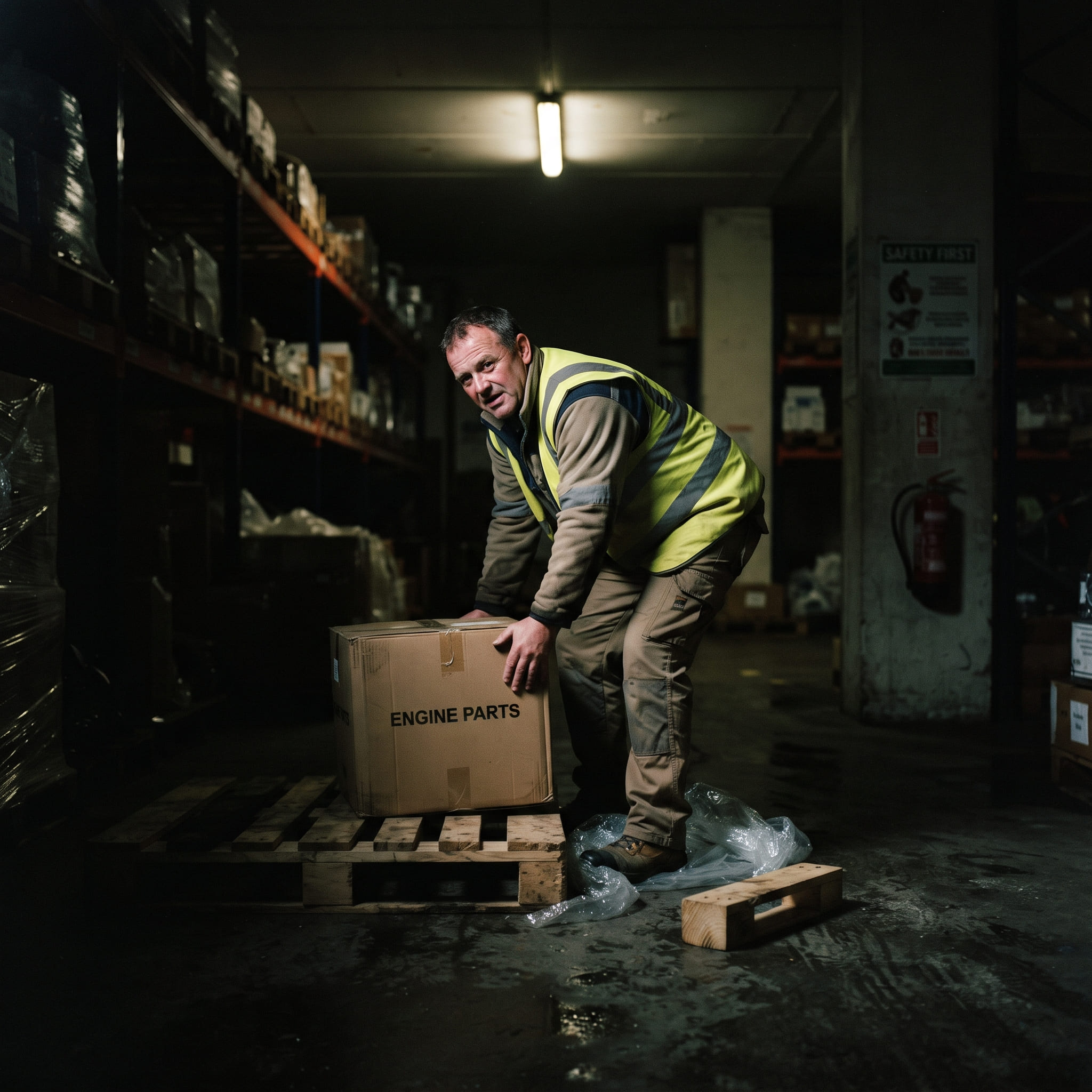
Manual handling safety is often associated with the weight of a load, lifting technique and the use of appropriate equipment. However, the working environment can also have a major influence on how safely employees lift, carry, push and pull objects.
One environmental factor that is sometimes overlooked is lighting.
Employees need sufficient visibility to identify the load, understand its position, see where they are walking and recognise hazards along the route. When lighting is poor, even a relatively straightforward manual handling task can become more difficult.
A worker carrying a box through a poorly lit storage area may not see an obstacle on the floor. An employee retrieving stock from a dark shelf may struggle to see the position of the package. Someone moving equipment through a corridor with inadequate lighting may have difficulty judging corners, steps or other people.
For this reason, effective Manual Handling Ireland practices should consider lighting as part of the overall workplace environment.
Professional Manual Handling Training Ireland helps employees understand that safe handling involves more than simply knowing how to lift. A suitable Manual Handling Course Ireland can teach workers to assess the load, route and surrounding environment before beginning a task.
Why Lighting Matters During Manual Handling
Good visibility allows employees to identify hazards before and during a manual handling task.
Poor lighting can make it harder to see:
- Boxes and packages.
- Floor-level obstacles.
- Steps and changes in floor level.
- Wet areas.
- Cables.
- Shelving.
- Other employees.
- Vehicle routes.
- The destination where a load needs to be placed.
When visibility is reduced, employees may be more likely to encounter hazards unexpectedly.
Poor Lighting Can Affect Route Planning
Before carrying a load, employees should know where they are going.
A clear route should be identified before the load is lifted.
If an area is poorly lit, it may be difficult to see the complete route.
For example, a worker may see that the first few metres are clear but fail to notice an object further ahead.
This is particularly important when carrying large packages that already restrict visibility.
Visibility When Carrying Large Loads
Large boxes and containers can block an employee's view.
If lighting is also poor, the problem can become worse.
The employee may have difficulty seeing:
- Where their feet are going.
- Obstacles.
- Other people.
- Changes in floor level.
If a load prevents adequate visibility, employees should consider whether it can be divided, moved using suitable equipment or handled by more than one person.
Poor Lighting and Floor Hazards
Floor-level hazards can be difficult to identify in poorly illuminated areas.
These could include:
- Loose packaging.
- Cables.
- Debris.
- Uneven flooring.
- Spills.
- Small objects.
A worker carrying a load may not be able to react quickly if these hazards are discovered at the last moment.
Good housekeeping and appropriate lighting should therefore work together.
Changes in Floor Level
Steps, ramps and raised thresholds can become particularly difficult to identify when lighting is inadequate.
This is important because employees may be carrying loads that affect their ability to see the floor.
A change in floor level that is obvious under good lighting may be much less visible in a dark storage area.
Lighting in Warehouses
Warehouses often involve frequent manual handling.
Employees may move boxes between:
- Storage locations.
- Picking areas.
- Packing stations.
- Loading bays.
- Delivery vehicles.
Lighting should allow workers to see both the load and the route.
Poor visibility can also make it more difficult to identify other workplace hazards, including moving equipment and vehicles.
Storage Areas and Shelving
Employees may need to retrieve packages from shelves at different heights.
Adequate lighting helps them see:
- Package labels.
- Shelf positions.
- Damaged packaging.
- Objects behind the front package.
- The space where the load needs to be placed.
If an employee cannot clearly see the load, they may have difficulty assessing its condition before attempting to move it.
Low-Level Storage
Boxes stored close to the floor can be difficult to see in poorly lit areas.
Employees may have to bend or reach into a dark storage space to retrieve them.
Lighting should provide sufficient visibility for workers to identify the load and surrounding area before handling it.
High-Level Storage
Lighting is also important when retrieving items from higher shelves.
An employee may have difficulty identifying the exact position of a package or seeing whether another object is positioned behind it.
High-level handling should be planned carefully, particularly when loads are heavy or awkward.
Poor Lighting Can Encourage Poor Posture
Visibility can influence how employees position themselves.
For example, if an employee cannot clearly see a load at floor level, they may bend, reach or reposition themselves unnecessarily while trying to identify it.
Similarly, an employee may adopt an awkward position to get a better view.
Good lighting allows employees to see the task more clearly before beginning the movement.
Lighting and Manual Handling Routes
A manual handling route should be assessed from beginning to end.
Employees should consider:
Is the entire route adequately illuminated?
Can I see obstacles?
Can I identify changes in floor level?
Can other workers see me?
Can I see where the load needs to be placed?
These questions can help identify environmental problems before a task begins.
Lighting Around Loading Bays
Loading bays can involve frequent movement of goods and employees.
Lighting should allow workers to see:
- Vehicle entrances.
- Pallets.
- Packages.
- Floor surfaces.
- Other workers.
- Handling equipment.
Particular attention may be required when workers move between indoor and outdoor areas where lighting conditions can change significantly.
Outdoor Manual Handling
Outdoor lighting conditions can change depending on weather, time of day and location.
Workers may encounter reduced visibility during:
- Early mornings.
- Evenings.
- Winter conditions.
- Heavy rain.
- Fog.
Employers should assess whether lighting is adequate for the tasks being performed.
Construction Sites
Construction environments can contain multiple manual handling hazards.
Materials may need to be moved around temporary structures, uneven surfaces and partially completed areas.
Poor lighting can make it more difficult to identify these hazards.
Workers should follow site-specific safety procedures and use appropriate lighting arrangements where required.
Retail Environments
Retail employees often handle stock in storage rooms, back-of-house areas and shop floors.
Stock rooms can become crowded, making visibility particularly important.
Employees should be able to see:
- Shelves.
- Boxes.
- Walkways.
- Floor hazards.
- Other employees.
Good lighting can support safer movement of stock.
Healthcare and Care Environments
Healthcare workers may move equipment, supplies and other loads through corridors, rooms and storage areas.
Lighting is particularly important where employees need to move loads through busy or restricted spaces.
Routes should be adequately illuminated and kept clear.
Office Manual Handling
Even offices can involve manual handling.
Employees may move:
- Printer paper.
- Archive boxes.
- Office furniture.
- Equipment.
- Supplies.
Storage rooms and archive areas can sometimes be less frequently used and poorly illuminated.
Employees should not assume that a small office load is automatically safe to move in poor visibility.
Do Not Use Your Phone as a Light While Carrying
If lighting is insufficient, employees should not attempt to compensate by carrying a load while simultaneously using a phone or another object as a light source.
This can reduce their ability to maintain control of the load.
Instead, the lighting problem should be addressed through appropriate workplace procedures.
Report Poor Lighting
Employees should report lighting problems through the appropriate workplace process.
Examples include:
- Failed light fittings.
- Flickering lights.
- Dark corners.
- Poorly illuminated stairs.
- Insufficient lighting in storage areas.
- Lighting blocked by equipment or stock.
Reporting these problems allows employers to address the underlying hazard.
Employers Should Assess Lighting
Employers should consider lighting as part of workplace risk assessment.
The objective is not simply to make an area appear bright. Lighting should provide suitable visibility for the work being performed.
Areas where manual handling occurs frequently may require particular attention.
Keep Lighting Clear
Lighting can become less effective if fittings are obstructed or dirty.
Workplace maintenance should ensure that lighting remains suitable for the environment.
Storage should also be organised so that employees do not unnecessarily block lighting with boxes, shelving or other materials.
Combine Lighting With Good Housekeeping
Good lighting alone does not remove manual handling hazards.
For example, a well-lit walkway can still be unsafe if it is covered with packaging.
Similarly, a clear walkway can still present a problem if employees cannot see it properly.
Effective workplace safety combines:
- Adequate lighting.
- Good housekeeping.
- Clear routes.
- Appropriate storage.
- Safe handling practices.
- Suitable equipment.
Manual Handling Training Ireland
Professional Manual Handling Training Ireland helps employees understand that the environment is an important part of a manual handling task.
Training can help workers recognise factors such as:
- Poor lighting.
- Uneven floors.
- Obstacles.
- Restricted spaces.
- Wet surfaces.
- Poor storage.
This encourages employees to assess the entire task before lifting or carrying.
Manual Handling Course Ireland
A suitable Manual Handling Course Ireland should give employees practical principles that can be applied to everyday work.
Before moving a load, employees can ask:
Load
Is it heavy, awkward or unstable?
Route
Is the route clear?
Lighting
Can I see the load and the route properly?
Environment
Are there floor hazards or obstacles?
Equipment
Would a handling aid make the task safer?
Assistance
Do I need another person?
This simple approach can help workers recognise hazards before they begin.
Manual Handling Certificate Ireland
Employees who complete appropriate training may receive a Manual Handling Certificate Ireland as evidence that relevant training has been completed.
However, training and certification do not remove environmental hazards.
If an employee identifies inadequate lighting, the problem should be reported and addressed through the appropriate workplace procedures.
What Employers Can Do
Employers can reduce risks associated with poor lighting by:
- Maintaining light fittings.
- Replacing faulty lights promptly.
- Ensuring storage areas are adequately illuminated.
- Keeping walkways clear.
- Reviewing lighting around stairs and loading areas.
- Ensuring outdoor work areas are suitably illuminated where necessary.
- Including visibility in workplace risk assessments.
- Encouraging employees to report lighting problems.
These measures can help employees identify hazards before they become incidents.
A Simple Lighting Safety Checklist
Before handling a load, ask:
Can I clearly see the load?
Can I see where my feet will be placed?
Can I see the complete route?
Are there any dark areas or shadows hiding obstacles?
Can I see other people and equipment?
Can I clearly see where the load needs to be placed?
If the answer is no, the task should be reconsidered before proceeding.
Conclusion
Poor lighting can increase manual handling risks because employees depend on good visibility to assess loads, identify obstacles, maintain awareness of their surroundings and safely navigate the route.
A worker carrying a box through a poorly lit area may fail to see a step, cable, uneven surface or another person. Large or awkward loads can make the problem even more significant by restricting visibility.
Professional Manual Handling Training Ireland helps employees understand that safe manual handling involves more than lifting technique. The surrounding environment, including lighting, floor conditions, storage arrangements and the route, should also be considered.
A suitable Manual Handling Course Ireland can teach employees to assess these factors before lifting, carrying, pushing or pulling loads. A Manual Handling Certificate Ireland provides evidence that relevant training has been completed, but employees and employers must continue applying safe practices in real workplace situations.
By maintaining suitable lighting, keeping routes clear, reporting lighting problems and providing appropriate manual handling training, Irish employers can help employees identify hazards earlier and handle workplace loads more safely.