



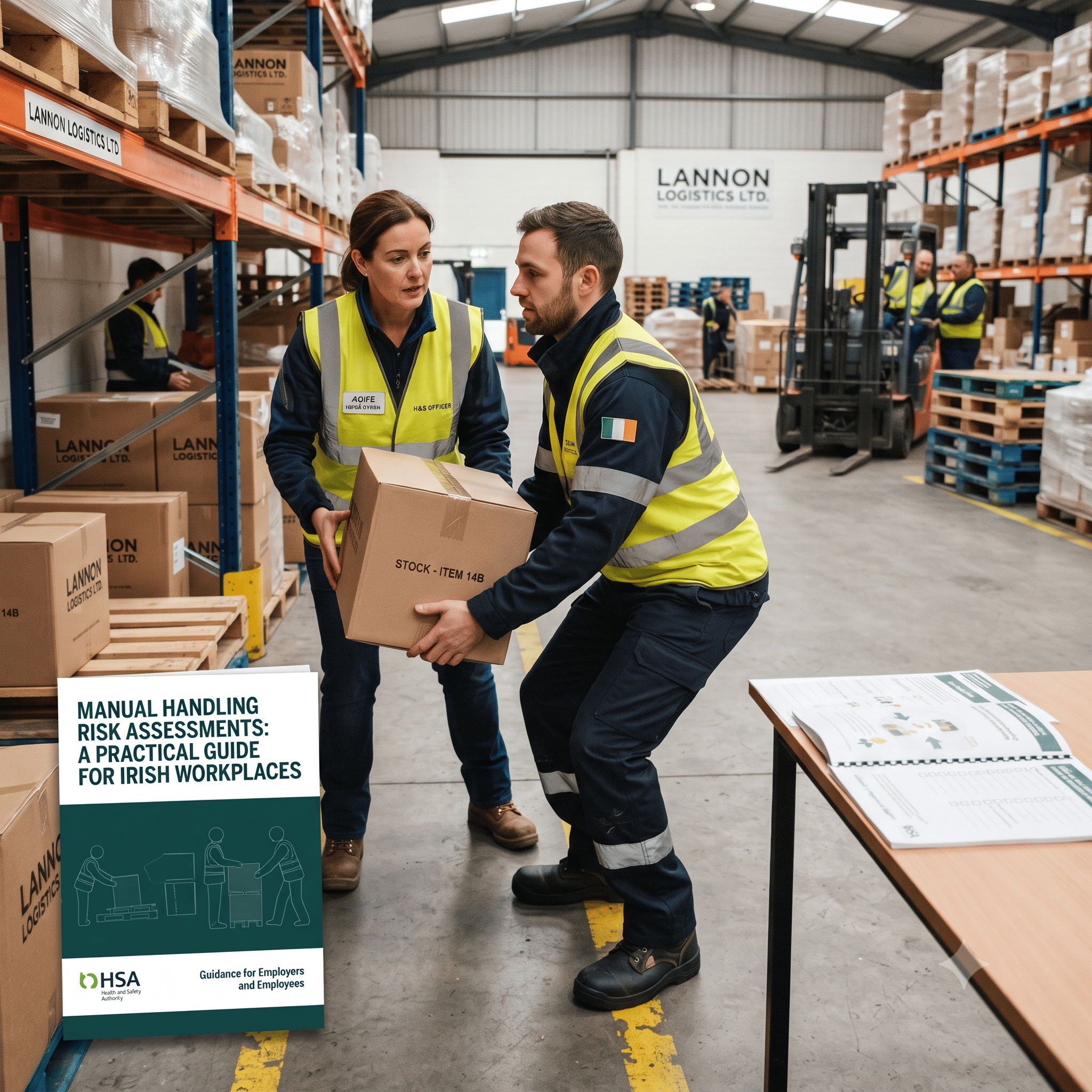
Manual handling is a routine part of working life across Ireland. Every day, employees lift, carry, push, pull, lower, hold, and move loads in workplaces ranging from hospitals and construction sites to warehouses, retail stores, manufacturing facilities, hotels, schools, and offices. While these activities may seem straightforward, they can lead to serious injuries if the risks are not properly assessed before work begins.
Back injuries, muscle strains, shoulder pain, and long-term musculoskeletal disorders remain some of the most common workplace injuries associated with manual handling. Many of these injuries are avoidable through better planning, safer lifting techniques, and effective risk assessments.
A professional Manual Handling Training Ireland programme teaches employees how to recognise hazards, assess risks, and carry out manual handling tasks safely. Through a recognised Manual Handling Course Ireland, participants learn practical methods for identifying potential dangers before lifting begins. Completing a Manual Handling Certificate Ireland demonstrates that employees understand these important workplace safety principles.
This guide explains what a manual handling risk assessment is, why it is important, and how Irish workplaces can use simple assessment techniques to reduce injuries and improve overall safety.
What Is a Manual Handling Risk Assessment?
A manual handling risk assessment is the process of identifying potential hazards before carrying out any task that involves lifting, carrying, pushing, pulling, lowering, or moving a load.
The purpose is to determine:
- What could cause injury?
- Who could be affected?
- How likely is an injury to occur?
- What measures can reduce the risk?
Rather than reacting after an accident happens, risk assessments help prevent incidents before they occur.
Why Risk Assessments Matter
Many workplace injuries occur because employees begin lifting without properly assessing the situation.
A simple assessment can identify problems such as:
- Loads that are too heavy
- Awkward shapes
- Poor storage locations
- Slippery surfaces
- Restricted access
- Inadequate lighting
- Obstructions in walkways
Recognising these hazards early allows employees to take appropriate precautions.
Common Manual Handling Hazards
Manual handling risks exist in almost every workplace.
Typical hazards include:
- Heavy loads
- Bulky or awkward objects
- Unstable loads
- Repetitive lifting
- Twisting while carrying
- Poor posture
- Long carrying distances
- Limited working space
- Uneven flooring
- Wet or slippery surfaces
These risks often combine, increasing the likelihood of injury.
Understanding the Four Key Elements of Risk Assessment
A useful way to assess manual handling tasks is to consider four main factors:
1. The Task
Ask questions such as:
- How often is the task performed?
- Does it involve repetitive lifting?
- Is twisting required?
- Does the task require reaching or bending?
- Does it involve carrying loads over long distances?
The more physically demanding the task, the greater the need for careful planning.
2. The Load
Every load should be assessed before lifting.
Consider:
- Weight
- Size
- Shape
- Stability
- Ease of gripping
- Sharp edges
- Whether the contents may shift
Awkward loads often present greater risks than heavy loads alone.
3. The Individual
Different employees have different physical capabilities.
Factors may include:
- Experience
- Training
- Physical fitness
- Height
- Strength
- Existing injuries
- Pregnancy where applicable
A task suitable for one employee may not be appropriate for another.
4. The Environment
The workplace itself can significantly influence manual handling safety.
Look for:
- Slippery floors
- Poor lighting
- Uneven surfaces
- Narrow corridors
- Obstacles
- Extreme temperatures
- Vehicle movements
- Limited storage space
Improving the working environment often reduces risks immediately.
Step 1: Identify the Manual Handling Task
The first stage of any assessment is identifying exactly what employees are doing.
Examples include:
- Loading delivery vehicles
- Carrying stock
- Moving patients
- Lifting building materials
- Handling office equipment
- Repositioning furniture
Clearly defining the task makes it easier to identify potential hazards.
Step 2: Identify Potential Hazards
Next, consider everything that could cause harm.
Examples include:
- Excessive weight
- Poor posture
- Awkward lifting positions
- Limited visibility
- Poor housekeeping
- Moving machinery
- Time pressure
Employees should be encouraged to report hazards whenever they identify them.
Step 3: Evaluate the Risk
Not every hazard presents the same level of risk.
Consider:
- How likely is injury?
- How severe could the injury be?
- How often is the task performed?
- How many employees perform it?
Prioritising higher-risk tasks helps organisations focus on areas requiring immediate attention.
Step 4: Introduce Control Measures
After identifying the risks, appropriate control measures should be introduced.
Examples include:
- Redesigning the task
- Using mechanical lifting equipment
- Reducing load weights
- Improving storage layouts
- Rotating employees between tasks
- Providing additional staff for team lifting
- Improving lighting
- Removing trip hazards
The goal is always to eliminate or reduce unnecessary risk wherever possible.
Step 5: Train Employees
Even well-designed procedures are ineffective if employees do not understand them.
A recognised Manual Handling Course Ireland provides practical instruction on:
- Safe lifting techniques
- Risk assessment
- Hazard awareness
- Body mechanics
- Safe use of lifting aids
Training ensures employees can apply risk assessment principles consistently in their daily work.
The Role of Safe Lifting Techniques
Risk assessment and lifting technique work together.
Employees should always:
- Stand with a stable base.
- Bend at the knees.
- Keep the back neutral.
- Hold loads close to the body.
- Avoid twisting.
- Lift smoothly.
Correct lifting techniques reduce physical strain while improving control.
Using Mechanical Aids
Many risks can be reduced by replacing manual lifting with mechanical assistance.
Examples include:
- Pallet trucks
- Hoists
- Trolleys
- Lift tables
- Conveyors
- Adjustable lifting devices
Employees should receive training on when and how to use this equipment safely.
Reviewing Risk Assessments
Risk assessments should not remain unchanged indefinitely.
They should be reviewed whenever:
- New equipment is introduced.
- Work procedures change.
- A workplace injury occurs.
- The workplace layout changes.
- New employees begin work.
- New hazards are identified.
Regular reviews help ensure assessments remain relevant.
Employee Involvement
Employees often have the best understanding of the manual handling challenges they face.
Encouraging workers to contribute to risk assessments helps organisations:
- Identify hidden hazards.
- Improve procedures.
- Develop practical solutions.
- Strengthen workplace safety culture.
Open communication benefits everyone.
Benefits for Employers
Effective manual handling risk assessments help employers:
- Reduce workplace injuries.
- Lower absenteeism.
- Improve productivity.
- Reduce compensation claims.
- Support legal compliance.
- Improve employee confidence.
- Build a stronger safety culture.
Prevention is always more effective than dealing with workplace injuries after they occur.
The Importance of a Manual Handling Certificate Ireland
Completing Manual Handling Training Ireland leads to a recognised Manual Handling Certificate Ireland.
The certificate confirms that employees understand:
- Risk assessment
- Safe lifting techniques
- Hazard identification
- Workplace safety
- Manual handling best practices
Many employers require certification before staff undertake manual handling duties.
Creating Safer Irish Workplaces
Risk assessment should become part of every manual handling task rather than an occasional exercise.
Employees should be encouraged to:
- Pause before lifting.
- Assess the load.
- Check the route.
- Identify hazards.
- Use mechanical aids where available.
- Ask for assistance when necessary.
These simple habits significantly reduce workplace injuries.
Conclusion
Manual handling risk assessments are one of the most effective tools for preventing workplace injuries across Ireland. By taking the time to assess the task, evaluate the load, consider the individual performing the work, and examine the surrounding environment, employers and employees can identify hazards before accidents occur.
A professional Manual Handling Training Ireland programme equips workers with the practical knowledge needed to carry out these assessments confidently and consistently. Through a recognised Manual Handling Course Ireland, employees learn how to identify risks, apply safe lifting techniques, use mechanical aids appropriately, and make informed decisions before beginning any manual handling task.
Earning a Manual Handling Certificate Ireland demonstrates a commitment to workplace safety and professional standards. When combined with regular risk assessments and a proactive safety culture, manual handling training helps organisations reduce injuries, lower absenteeism, improve productivity, and create healthier, safer workplaces throughout Ireland.