



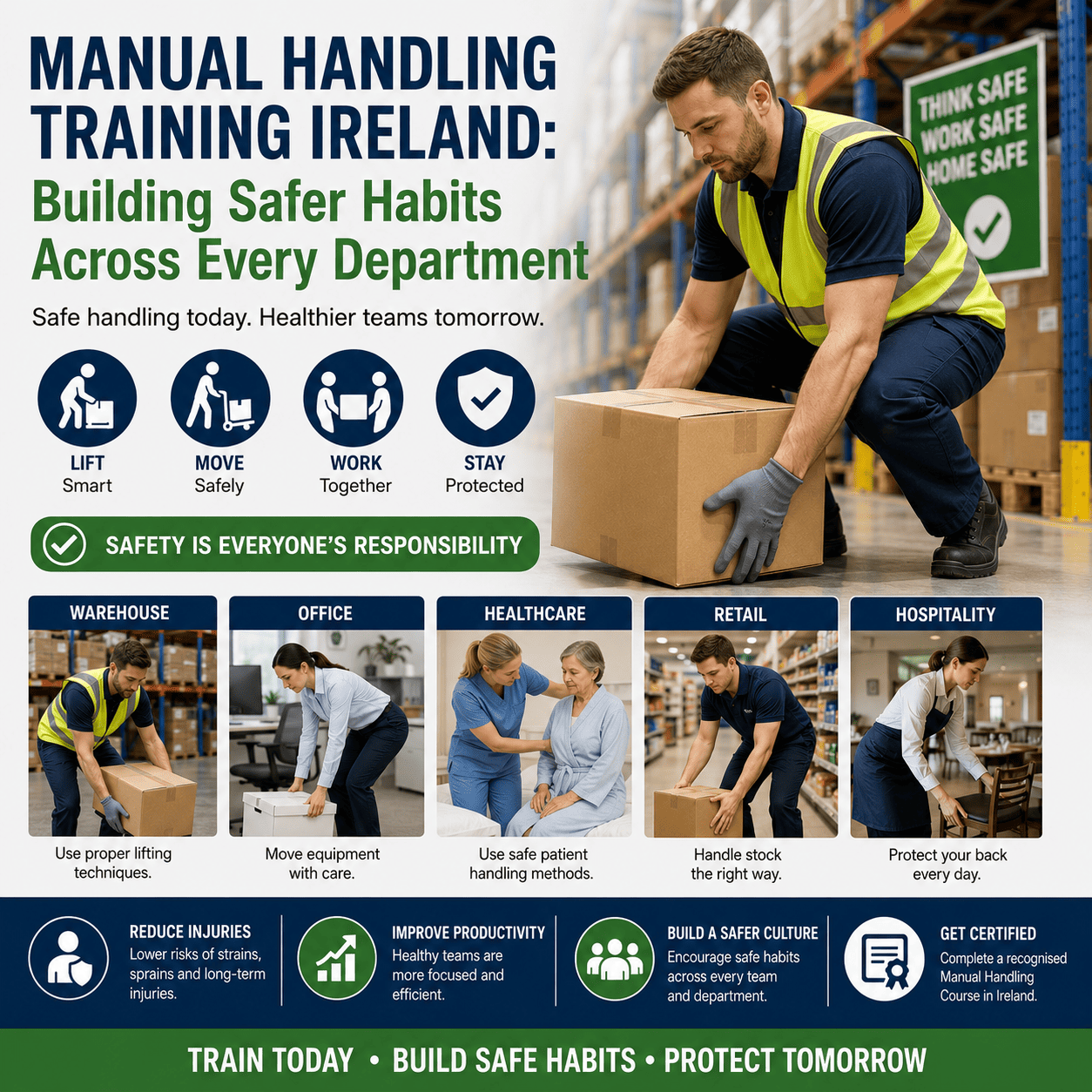
Workplace safety is no longer viewed as a responsibility limited to warehouses, factories, or construction sites. Modern businesses understand that every department plays a role in maintaining a safe working environment. Whether employees work in logistics, healthcare, retail, hospitality, offices, or production areas, manual handling tasks are often part of daily operations.
Employees may carry stock, move office equipment, transport supplies, handle deliveries, or assist with physical tasks throughout the day. While these activities may appear routine, poor handling techniques can lead to injuries that affect productivity, employee well-being, and long-term workplace performance.
This is why effective manual handling training Ireland has become essential across all departments within modern organizations. A professional manual handling course Ireland helps employees develop safe working habits that reduce physical strain and improve workplace awareness. A valid manual handling certificate Ireland demonstrates that workers understand proper lifting techniques, risk assessment, and safe handling procedures.
However, real workplace safety comes from building consistent habits that employees apply every day, not simply completing training once. This article explores how businesses can create safer workplaces by encouraging strong manual handling Ireland practices across every department.
Why Manual Handling Affects Every Department
Many businesses mistakenly believe manual handling only applies to physically demanding industries. In reality, almost every department performs some type of handling task.
Examples include:
- Office staff moving files or equipment
- Retail employees unloading stock
- Healthcare workers assisting patients
- Hospitality teams carrying supplies
- Warehouse staff handling deliveries
Even small repetitive movements can lead to strain if proper techniques are not used consistently.
This is why manual handling Ireland safety should be integrated throughout the entire organization rather than limited to one area.
Building a Safety-First Workplace Culture
Strong safety habits begin with workplace culture.
Employees are more likely to follow safe procedures when businesses consistently prioritize:
- Employee well-being
- Proper training
- Open communication
- Long-term injury prevention
A workplace that treats safety as part of daily operations creates stronger employee awareness and accountability.
Effective manual handling training Ireland helps reinforce this culture by teaching employees how their actions affect both personal safety and team performance.
Start Training Early
One of the most effective ways to build safer habits is to provide training early in the employment process.
New employees should complete a manual handling course Ireland before unsafe routines develop.
Early training helps workers:
- Understand workplace expectations
- Build confidence in physical tasks
- Learn correct techniques immediately
- Reduce injury risks from the start
Employees who begin with strong safety habits are more likely to maintain them long-term.
Encourage Employees to Think Before Lifting
One of the most important habits employees can develop is pausing briefly before performing manual handling tasks.
Workers should learn to assess:
- The size and weight of the load
- The safest route for movement
- Nearby hazards or obstacles
- Whether assistance is required
This simple habit encourages safer decision-making and helps reduce rushed or careless lifting.
A professional manual handling course Ireland teaches employees how to approach tasks with greater awareness and planning.
Reinforce Proper Lifting Techniques Daily
Safe lifting techniques should become part of normal workplace behavior across every department.
Employees should consistently:
- Bend the knees when lifting
- Keep the back straight
- Hold loads close to the body
- Avoid twisting movements
Using proper posture regularly helps reduce strain on muscles and joints while improving balance and control.
A valid manual handling certificate Ireland confirms that employees understand these core safety principles and how to apply them properly.
Prevent Unsafe Shortcuts
Busy work environments sometimes encourage employees to take shortcuts in order to save time.
Examples include:
- Carrying too much at once
- Ignoring lifting equipment
- Twisting while lifting
- Rushing tasks carelessly
These habits may seem harmless initially but often lead to injuries over time.
Businesses should encourage employees to prioritize safe movement over unnecessary speed.
Strong manual handling Ireland practices focus on long-term safety rather than temporary convenience.
Use Equipment to Reduce Physical Strain
Modern workplaces should encourage employees to use equipment that supports safer manual handling.
Examples include:
- Trolleys
- Hoists
- Adjustable lifting equipment
- Pallet trucks
Employees should understand that using equipment is part of smart workplace safety, not a sign of weakness.
A quality manual handling course Ireland teaches workers how to recognize when equipment is the safer option.
Keep Workspaces Organized
Cluttered environments increase the risk of trips, awkward lifting positions, and accidents.
Businesses should ensure:
- Walkways remain clear
- Heavy items are stored safely
- Work areas are properly lit
- Storage systems are organized
Clean and organized environments support safer manual handling habits and improve workplace efficiency overall.
Encourage Team Communication
Strong communication is essential for building safer habits across departments.
Employees should feel comfortable discussing:
- Unsafe tasks
- Physical discomfort
- Equipment issues
- Potential workplace hazards
Open communication helps businesses identify problems early and improve safety procedures continuously.
Workplaces with strong communication often maintain better manual handling Ireland standards over time.
Adapt Training to Different Departments
Different departments face different manual handling challenges.
For example:
- Office employees may move equipment or furniture
- Retail workers handle deliveries and shelving
- Healthcare staff assist with patient movement
- Warehouse teams manage heavy stock
Effective manual handling training Ireland should reflect the actual tasks employees perform in their specific roles.
Practical and relevant training improves engagement and long-term knowledge retention.
Make Safety Part of Daily Routines
The safest workplaces are those where safety becomes automatic.
Employees should develop routines such as:
- Assessing loads before lifting
- Planning movement paths
- Asking for help when necessary
- Using proper posture consistently
Daily repetition helps safe handling techniques become natural habits rather than occasional reminders.
Reinforce Safety Through Leadership
Managers and supervisors strongly influence workplace behavior.
Employees are more likely to apply safe manual handling Ireland practices when leadership:
- Demonstrates proper techniques
- Encourages safe decision-making
- Corrects unsafe behavior quickly
- Supports employees who prioritize safety
Leadership involvement helps create consistency across all departments.
Provide Refresher Training Regularly
Even experienced employees can gradually return to unsafe habits if safety procedures are not reinforced regularly.
Refresher manual handling training Ireland helps employees:
- Revisit correct lifting methods
- Stay aware of workplace hazards
- Correct unsafe routines
Maintaining a current manual handling certificate Ireland also supports ongoing accountability and professional workplace standards.
Online refresher training has become increasingly popular because it offers flexibility while maintaining strong safety awareness.
Support Employee Well-Being
Modern businesses increasingly recognize the connection between workplace safety and employee well-being.
Strong manual handling Ireland practices help reduce:
- Back pain
- Muscle strain
- Fatigue
- Repetitive stress injuries
Employees who feel physically supported are often more confident, motivated, and productive in their roles.
Benefits of Building Safer Habits Across Departments
Businesses that prioritize manual handling safety across every department often experience significant long-term benefits.
These include:
- Fewer workplace injuries
- Reduced absenteeism
- Better teamwork
- Improved productivity
- Stronger workplace morale
Employees also develop greater confidence and awareness during daily tasks.
Creating Long-Term Workplace Safety
Building safer habits is not a one-time process.
Successful businesses continuously:
- Reinforce safe behavior
- Review workplace risks
- Update safety procedures
- Encourage employee involvement
Long-term safety depends on consistency, communication, and ongoing education.
A professional manual handling course Ireland provides the foundation, but daily application creates lasting results.
Conclusion
Effective manual handling training Ireland helps businesses create safer workplaces by building practical habits across every department. While physical tasks vary between industries and roles, the need for safe lifting, movement, and workplace awareness remains universal.
A quality manual handling course Ireland teaches employees how to assess risks, use proper techniques, and reduce physical strain during everyday tasks. A valid manual handling certificate Ireland demonstrates commitment to workplace safety and professional standards.
By encouraging strong manual handling Ireland practices throughout the organization, businesses can reduce injuries, improve employee confidence, and create healthier, more productive workplaces where safety becomes part of everyday culture.