



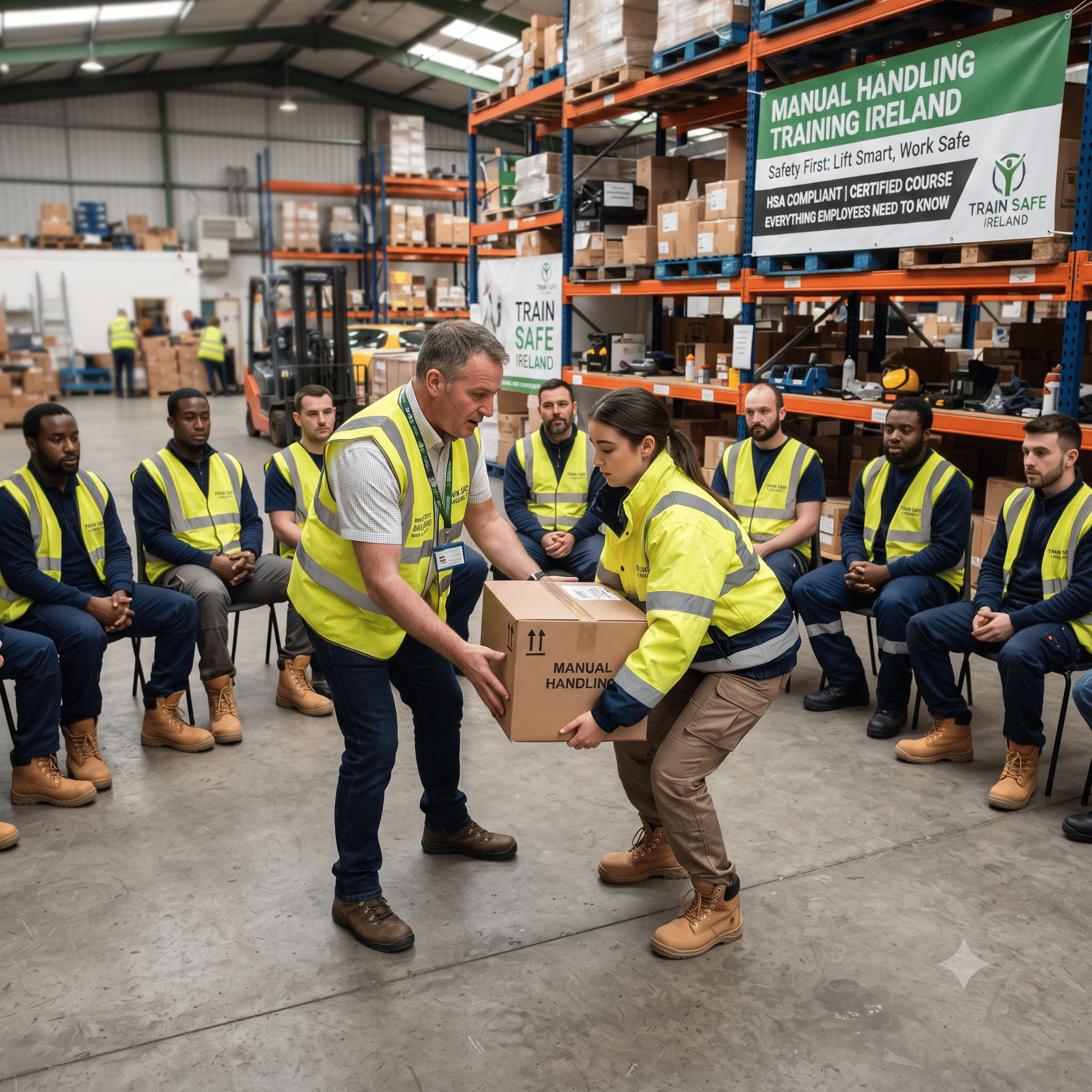
Manual handling is part of everyday work for thousands of employees across Ireland. Whether you work in construction, healthcare, retail, warehousing, manufacturing, hospitality, logistics, or an office environment, there is a good chance that your role involves lifting, carrying, pushing, pulling, or moving objects. While these tasks may seem straightforward, they can lead to serious injuries if performed incorrectly.
Proper Manual Handling Training Ireland helps employees develop safe working habits, reduce the risk of workplace injuries, and understand their responsibilities when handling loads. Completing a recognised Manual Handling Course Ireland equips workers with the practical knowledge needed to perform manual handling tasks safely while supporting employers in maintaining a safe working environment.
In this guide, we'll explain everything employees need to know before starting manual handling training, including what the course covers, who needs it, its benefits, and why obtaining a Manual Handling Certificate Ireland is an important step in workplace safety.
What Is Manual Handling?
Manual handling refers to any activity that requires a person to move or support a load using physical effort.
This includes tasks such as:
- Lifting boxes
- Carrying equipment
- Moving furniture
- Pushing trolleys
- Pulling carts
- Loading deliveries
- Unloading vehicles
- Repositioning materials
The "load" may be almost anything, including tools, stock, machinery, furniture, or even people in healthcare settings.
Because manual handling is such a common workplace activity, it also remains one of the leading causes of musculoskeletal injuries across Ireland.
Why Manual Handling Training Is Important
Many workplace injuries occur not because employees are careless but because they have never been shown the safest way to perform physical tasks.
Poor lifting techniques can cause:
- Lower back injuries
- Muscle strains
- Shoulder injuries
- Neck pain
- Knee problems
- Long-term musculoskeletal disorders
These injuries may develop suddenly after one incorrect lift or gradually after months or years of repetitive poor technique.
Professional Manual Handling Training Ireland teaches employees how to minimise these risks while carrying out everyday work.
Who Needs Manual Handling Training?
Almost every industry includes some form of manual handling.
Employees who commonly require training include:
- Warehouse workers
- Construction workers
- Retail staff
- Healthcare professionals
- Cleaners
- Maintenance staff
- Delivery drivers
- Factory workers
- Hospitality employees
- Office workers who move equipment or archive boxes
Even employees who only occasionally lift objects can benefit from understanding safe handling techniques.
What Does a Manual Handling Course Cover?
A quality Manual Handling Course Ireland combines health and safety knowledge with practical guidance that employees can apply immediately.
Typical course topics include:
Understanding Manual Handling Risks
Employees learn:
- Why injuries happen
- Common workplace hazards
- The importance of planning lifts
- How repetitive tasks affect the body
Understanding the causes of injuries helps employees make safer decisions every day.
Correct Lifting Techniques
One of the most valuable parts of the course is learning proper lifting methods.
Employees are taught how to:
- Position their feet correctly
- Bend their knees instead of their back
- Maintain a neutral spine
- Keep loads close to the body
- Lift smoothly without jerking
- Avoid twisting while carrying
These simple techniques significantly reduce strain on the body.
Risk Assessment
Before lifting anything, employees should assess the situation.
They learn to consider:
- How heavy is the load?
- Is it awkward to hold?
- Can the load be split?
- Is assistance required?
- Are lifting aids available?
- Is the route clear?
Making this quick assessment becomes an important workplace habit.
Safe Working Practices
Training also explains how workplace organisation affects manual handling.
Topics include:
- Good housekeeping
- Clear walkways
- Proper storage
- Team lifting
- Safe movement around the workplace
Safety is about much more than lifting correctly.
Why Practical Learning Matters
Reading about manual handling is helpful, but practical learning allows employees to understand how the techniques apply to real workplace situations.
Practical instruction helps workers:
- Build confidence
- Develop muscle memory
- Understand body mechanics
- Recognise unsafe habits
- Improve decision-making
This practical approach is one reason why professional Manual Handling Ireland training is so effective.
Common Manual Handling Mistakes
Many injuries result from habits that employees may not even realise are unsafe.
Common mistakes include:
- Lifting with a rounded back
- Twisting while carrying
- Holding loads away from the body
- Attempting to lift objects that are too heavy
- Rushing manual handling tasks
- Ignoring obstacles
- Failing to ask for assistance
Training helps employees recognise and replace these habits with safer techniques.
The Importance of Good Posture
Maintaining good posture during manual handling protects muscles, joints, and the spine.
Employees learn to:
- Keep their back in a neutral position
- Use their leg muscles
- Maintain balance
- Keep movements controlled
- Avoid sudden twisting
Good posture reduces fatigue while lowering the risk of long-term injuries.
Using Mechanical Aids
Not every load should be lifted manually.
Many workplaces provide equipment designed to reduce physical effort, including:
- Pallet trucks
- Trolleys
- Hoists
- Lift-assist equipment
- Adjustable workstations
A professional Manual Handling Course Ireland teaches employees when mechanical aids should be used and why they improve workplace safety.
Building Employee Confidence
One of the biggest benefits of manual handling training is increased confidence.
Employees know:
- How to approach unfamiliar lifting tasks
- When assistance is needed
- How to identify hazards
- Which techniques reduce injury risk
Confidence allows employees to work more efficiently without compromising safety.
Supporting Employers
Manual handling training benefits organisations just as much as employees.
Well-trained staff help employers by:
- Reducing workplace injuries
- Lowering absenteeism
- Improving productivity
- Supporting legal compliance
- Creating a stronger safety culture
When everyone understands safe manual handling principles, workplaces operate more efficiently.
Legal Responsibilities in Ireland
Employers have a duty under Irish health and safety legislation to protect employees from workplace hazards, including risks associated with manual handling.
This includes:
- Assessing manual handling tasks
- Reducing unnecessary lifting
- Providing suitable equipment
- Delivering appropriate employee training
Employees also have responsibilities. They should follow safe procedures, use equipment correctly, and report hazards when identified.
Completing Manual Handling Training Ireland helps both employers and employees meet these responsibilities.
Earning Your Manual Handling Certificate Ireland
After successfully completing training, participants receive a Manual Handling Certificate Ireland.
This certificate demonstrates that the employee understands:
- Safe lifting principles
- Risk assessment
- Correct handling techniques
- Workplace safety responsibilities
Many employers request this certificate before employees begin roles involving regular manual handling.
It also provides reassurance that workers have received recognised training that supports safer working practices.
Benefits of Online Manual Handling Training
Many employees now choose online training because it offers greater flexibility.
Advantages include:
- Learn at your own pace
- Study from home or work
- Access training on multiple devices
- Avoid travel costs
- Complete the course when convenient
- Receive certification quickly after successful completion
Online learning allows employees to fit training around work schedules without compromising the quality of instruction.
Tips Before Starting Your Manual Handling Course
To get the most from your training:
- Set aside uninterrupted study time.
- Take notes on key safety principles.
- Think about how the techniques apply to your own job.
- Review any practical demonstrations carefully.
- Ask questions if anything is unclear.
- Apply what you learn every day at work.
The goal is not simply to pass the course but to build safe habits that protect you throughout your career.
Conclusion
Manual handling is an essential part of many jobs across Ireland, but it also presents one of the greatest risks for workplace injuries when tasks are performed incorrectly. Understanding safe lifting techniques, recognising hazards, and carrying out simple risk assessments can make a significant difference to both employee wellbeing and workplace safety.
A professional Manual Handling Training Ireland programme provides the knowledge and practical skills needed to perform everyday manual handling tasks safely and confidently. Through a comprehensive Manual Handling Course Ireland, employees learn how to reduce physical strain, prevent injuries, and contribute to a safer working environment.
Completing a recognised Manual Handling Certificate Ireland is more than just meeting a workplace requirement. It demonstrates a commitment to safety, professionalism, and continuous learning. Whether you're starting a new job, changing careers, or renewing your certification, investing in quality manual handling training is an investment in your health, your confidence, and your future workplace success.