



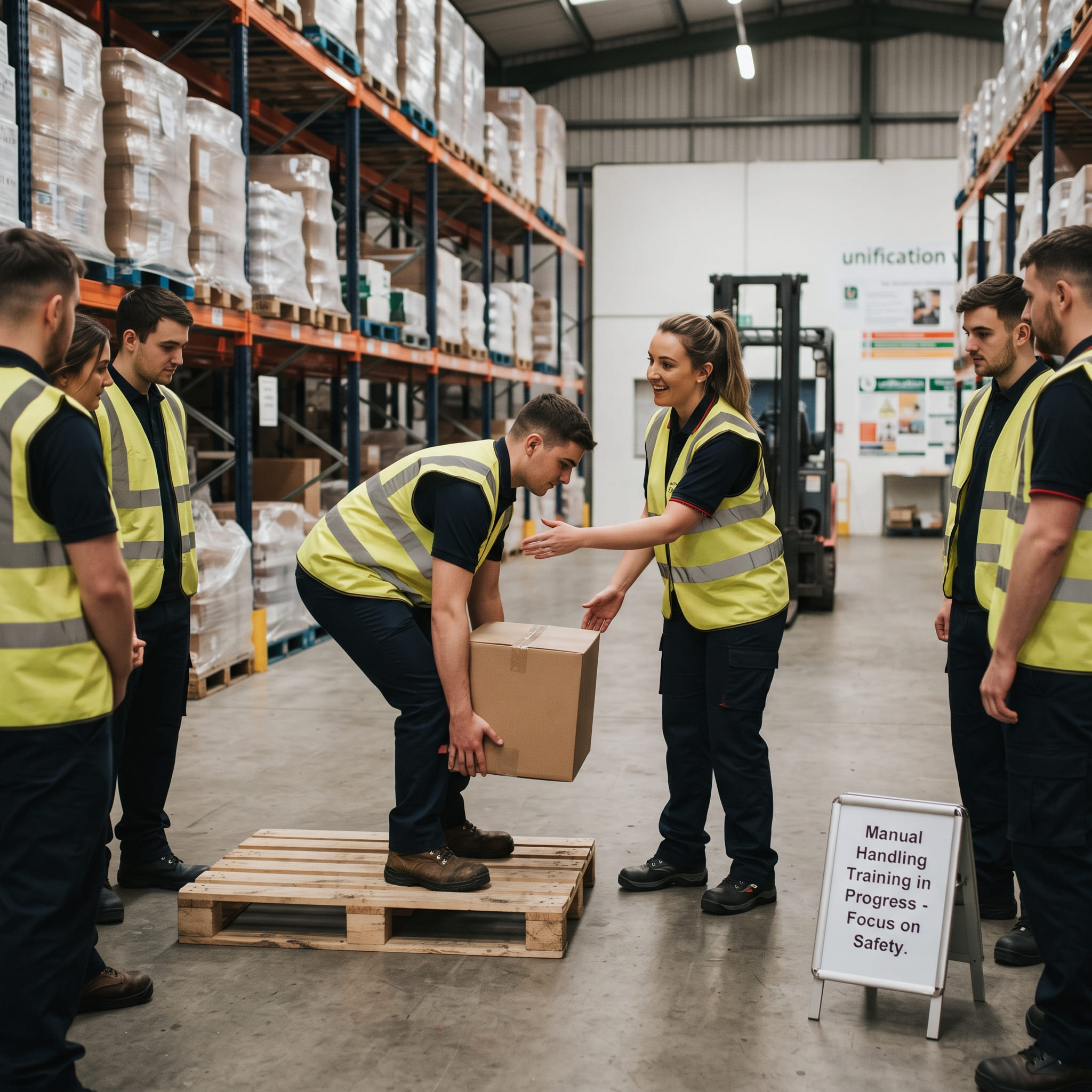
Workplace deliveries are an important part of daily operations for businesses across Ireland. Retail stores receive stock, warehouses receive pallets and packages, construction companies receive materials, healthcare facilities receive supplies, and offices receive equipment and other goods.
Although receiving a delivery may appear to be a straightforward process, it can involve a wide range of manual handling activities.
Employees may need to unload boxes, move packages from vehicles, push trolleys, carry materials through doorways, stack goods and place items into storage. When deliveries are large, awkward, heavy or poorly organised, these tasks can create additional physical demands.
Professional Manual Handling Training Ireland can help employees understand how to approach these activities safely. A suitable Manual Handling Course Ireland can teach workers how to assess loads, plan routes, use appropriate equipment and recognise when assistance is required.
However, safe deliveries involve more than lifting technique. Employers should also consider delivery areas, vehicle access, storage arrangements, equipment, workplace layout and how deliveries are organised.
This article explains how businesses can improve manual handling safety during workplace deliveries.
Why Deliveries Can Create Manual Handling Risks
Delivery operations often involve several handling tasks in a short period.
For example, employees may need to:
- Receive a delivery.
- Open packaging.
- Remove individual items.
- Carry materials.
- Move goods using equipment.
- Store the items.
- Dispose of packaging.
Each stage can introduce different risks.
A delivery may also arrive at a time when employees are busy with other responsibilities, increasing the temptation to rush.
Planning the process in advance can help reduce unnecessary handling risks.
Plan Deliveries Before They Arrive
Good delivery safety starts before the vehicle arrives.
Employers can consider:
- What materials are expected?
- How heavy are they?
- How many items will arrive?
- Where will they be stored?
- What equipment is needed?
- How many employees are required?
- Is there a clear route to storage?
Knowing what is coming allows the workplace to be prepared.
This is particularly important for large or unusually heavy deliveries.
Assess the Loads
Employees should assess loads before attempting to move them.
Consider:
- Weight.
- Size.
- Shape.
- Stability.
- Packaging.
- Grip.
- Visibility.
A large cardboard box may be relatively light but difficult to control.
A smaller package may be much heavier than expected.
Where the weight or contents are uncertain, employees should obtain appropriate information before handling the load.
Do Not Assume Every Delivery Can Be Handled Manually
One common mistake is automatically assuming that employees should unload everything by hand.
Depending on the type of delivery, mechanical equipment may be more appropriate.
Examples include:
- Pallet trucks.
- Trolleys.
- Hoists.
- Lift tables.
- Forklift equipment operated by authorised personnel.
- Conveyors.
The appropriate equipment depends on the workplace and the characteristics of the delivery.
Prepare the Delivery Area
The delivery area should be ready before unloading begins.
Check that:
- Walkways are clear.
- Floors are suitable.
- Lighting is adequate.
- Storage space is available.
- Handling equipment is accessible.
- Other activities will not interfere.
Clutter around a delivery area can create additional hazards.
Employees carrying loads may have limited visibility, making clear routes particularly important.
Check the Route to Storage
The route from the delivery area to storage should be considered before moving goods.
Look for:
- Steps.
- Slopes.
- Narrow doorways.
- Uneven surfaces.
- Wet floors.
- Boxes.
- Equipment.
- Other workers.
If the route is unsuitable, it should be addressed before the handling task begins where possible.
Reduce Carrying Distances
Long carrying distances can increase physical demands, especially when employees move many items during a single delivery.
Businesses should consider whether the delivery point can be located closer to the final storage area.
Where this is not possible, suitable trolleys or other handling equipment may reduce the need for manual carrying.
Reducing unnecessary movement can improve both safety and efficiency.
Use Trolleys Correctly
Trolleys can be useful for moving deliveries, but they should be appropriate for the load.
Before use, employees should check:
- Wheels.
- Handles.
- Load capacity.
- Stability.
- General condition.
Loads should be positioned securely.
Employees should also ensure that the trolley route is clear before starting.
Be Careful With Pallets
Palletised deliveries can involve large quantities of material.
Employees should not attempt to manually move a pallet unless suitable equipment and procedures are available.
Pallet trucks and other mechanical equipment should be used according to workplace procedures.
Where powered equipment is involved, only appropriately trained and authorised employees should operate it.
Consider Awkward Loads
Some deliveries contain large or irregularly shaped items.
Examples include:
- Furniture.
- Equipment.
- Long materials.
- Large containers.
- Machinery components.
These objects may require team handling or mechanical assistance.
Before moving an awkward load, consider whether one person can safely control it.
If visibility is restricted, the route should be checked carefully.
Team Handling During Deliveries
Some deliveries may require two or more employees.
Team handling can help when a load is too large or awkward for one person.
Before moving the load, employees should agree on:
- Who will lead.
- Where everyone will stand.
- Which route will be taken.
- When to lift.
- When to move.
- When to stop.
Clear communication helps ensure everyone moves together.
Avoid Rushing
Delivery periods can sometimes be busy.
Employees may feel pressure to unload quickly so that the vehicle can leave or normal operations can continue.
However, rushing can increase the likelihood of:
- Poor lifting technique.
- Missed hazards.
- Dropped loads.
- Trips.
- Uncontrolled movements.
The goal should be efficient handling without sacrificing safe working practices.
Plan Where Deliveries Will Be Stored
The handling task does not end when goods are unloaded.
Employees should know where each delivery is going before they start moving it.
Temporary storage can sometimes result in unnecessary double handling.
For example, if boxes are placed in one area because the final storage location is not ready, they may need to be moved again later.
Planning storage in advance can reduce this unnecessary work.
Avoid Blocking Walkways
Deliveries should not be left in locations that obstruct:
- Fire exits.
- Access routes.
- Workstations.
- Doors.
- Equipment.
- Emergency access.
A box left in a walkway may create a trip hazard and make future manual handling tasks more difficult.
Good housekeeping should be maintained throughout the delivery process.
Consider Packaging
Packaging can affect manual handling.
Boxes with damaged packaging may be unstable.
Loose or poorly secured contents may shift during movement.
Employees should inspect packages before handling them and follow workplace procedures for damaged or unsafe deliveries.
If a load cannot be safely controlled, employees should not simply attempt to move it regardless.
Repetitive Unloading Tasks
Large deliveries may require employees to handle hundreds of individual items.
Even if each item is relatively light, repetition can create significant physical demands.
Employers should consider:
- How long unloading takes.
- How frequently deliveries occur.
- How many employees are involved.
- Whether mechanical equipment can be used.
- Whether tasks can be rotated.
- Whether the process can be redesigned.
Fatigue During Deliveries
Fatigue can become a concern during prolonged unloading activities.
Employees may become less attentive or physically tired as the task continues.
This can affect:
- Concentration.
- Coordination.
- Control.
- Decision-making.
Work should therefore be organised appropriately, particularly when deliveries involve prolonged physical activity.
Communication Between Suppliers and Employees
Businesses can sometimes improve delivery safety by communicating requirements to suppliers.
For example, suppliers may be able to provide information about:
- Load weights.
- Pallet sizes.
- Delivery quantities.
- Special handling requirements.
Knowing these details before the delivery arrives can help businesses prepare appropriate equipment and staffing.
Manual Handling Risk Assessment
Delivery activities should be considered as part of workplace manual handling risk assessment.
Employers should examine:
The Load
How heavy, large or awkward is it?
The Task
What lifting, carrying, pushing or pulling is required?
The Environment
Are delivery routes and storage areas suitable?
The Individual
Do employees have appropriate training and ability?
The Equipment
Can mechanical assistance reduce manual handling?
The Frequency
How often do these delivery tasks occur?
Considering these factors helps employers identify where improvements may be needed.
Manual Handling Training Ireland
Professional Manual Handling Training Ireland can help employees understand the risks associated with workplace deliveries.
Training can cover:
- Load assessment.
- Risk assessment.
- Safe lifting.
- Carrying.
- Pushing and pulling.
- Team handling.
- Mechanical aids.
- Hazard awareness.
Employees can apply these principles when unloading deliveries and moving goods through the workplace.
Manual Handling Course Ireland
A suitable Manual Handling Course Ireland can help employees understand that safe delivery handling involves more than lifting a box correctly.
Workers should consider the complete process from unloading through to final storage.
They should ask:
Can this load be moved mechanically?
Is the route clear?
Do I need assistance?
Is the storage area ready?
Can unnecessary carrying be avoided?
These questions encourage better planning.
Manual Handling Certificate Ireland
Employees who successfully complete appropriate training may receive a Manual Handling Certificate Ireland.
A certificate provides evidence that relevant training has been completed.
Employers may maintain appropriate training records as part of their workplace safety arrangements.
However, training should always be combined with appropriate workplace controls.
A certificate does not make an unsuitable delivery process safe by itself.
What Employers Can Do
Employers can improve delivery safety by:
- Planning deliveries.
- Assessing expected loads.
- Providing suitable handling equipment.
- Keeping delivery areas clear.
- Improving storage arrangements.
- Reducing carrying distances.
- Providing appropriate training.
- Reviewing repetitive unloading tasks.
- Encouraging employees to report problems.
Employers should also regularly review whether existing delivery procedures remain suitable as the business changes.
What Employees Can Do
Employees also have an important role.
Workers should:
- Inspect loads before moving them.
- Plan their route.
- Use available equipment.
- Keep walkways clear.
- Ask for assistance.
- Avoid rushing.
- Follow workplace procedures.
- Report damaged equipment or unsafe loads.
Good communication between employees and management can help identify problems before they result in an incident.
Common Delivery Handling Mistakes
Businesses should watch for common problems such as:
- Unloading without planning.
- Carrying loads that block visibility.
- Moving heavy items without assistance.
- Leaving boxes in walkways.
- Using unsuitable trolleys.
- Overloading handling equipment.
- Ignoring damaged packaging.
- Rushing to complete deliveries.
- Storing goods temporarily and moving them again later.
Addressing these issues can improve both safety and operational efficiency.
Conclusion
Workplace deliveries can create a variety of manual handling challenges. Employees may need to unload vehicles, lift boxes, push trolleys, carry materials and move goods into storage, sometimes repeatedly throughout the working day.
Safe delivery handling starts with planning.
Employers should assess expected loads, prepare delivery areas, provide suitable equipment, maintain clear routes and organise storage before deliveries arrive.
Employees should assess each load, plan their movements, use mechanical aids where appropriate and ask for assistance when a load is too large, heavy or awkward to handle alone.
Professional Manual Handling Training Ireland can help employees develop the knowledge needed to manage these tasks safely. A suitable Manual Handling Course Ireland can cover lifting, carrying, pushing, pulling, risk assessment, team handling and the use of mechanical aids.
A Manual Handling Certificate Ireland provides evidence of completed training, but training is only one part of an effective safety system.
By combining appropriate training with good delivery planning, suitable equipment, clear workplace routes and effective risk assessment, Irish businesses can reduce unnecessary manual handling risks while making their delivery operations safer and more efficient.