



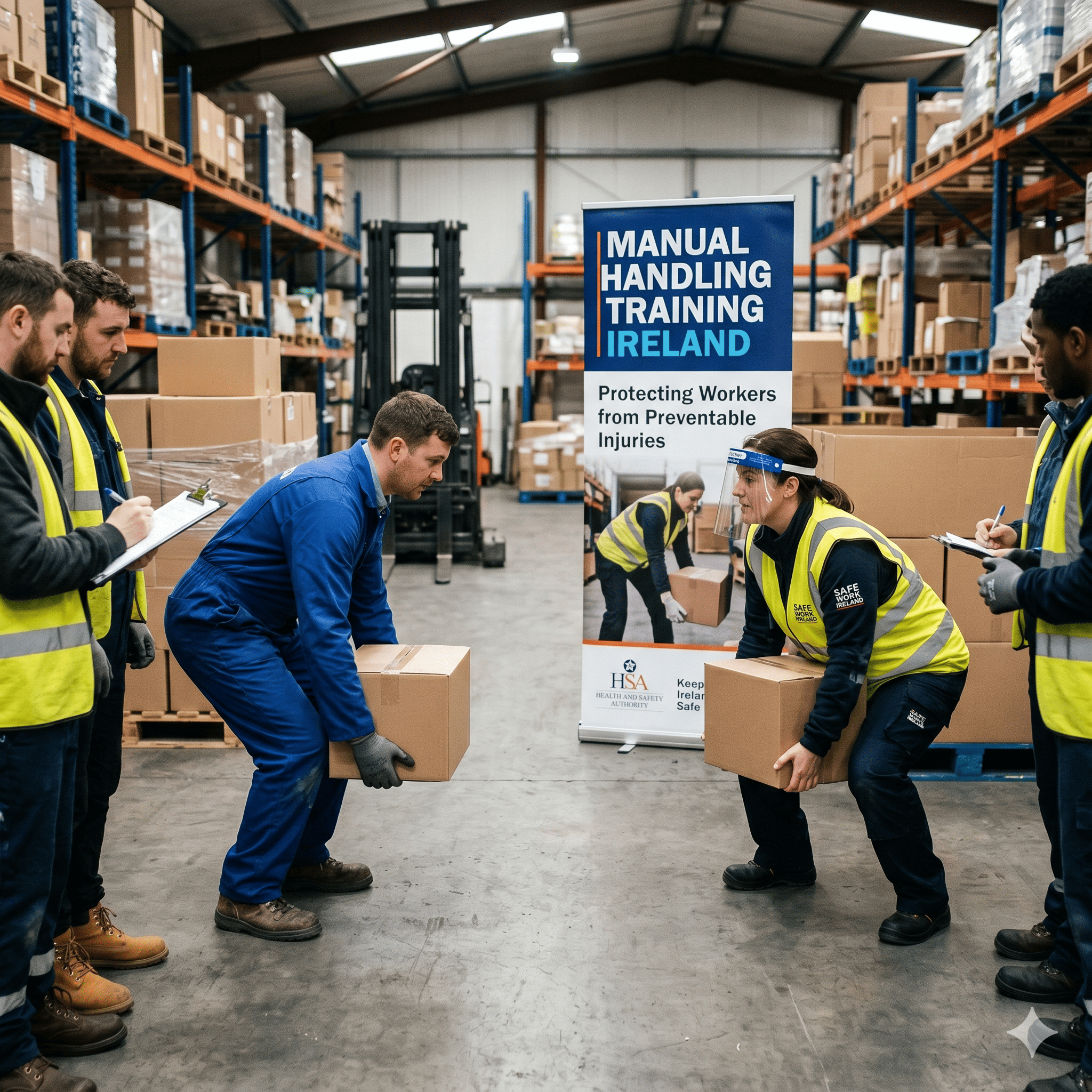
Workplace injuries remain a significant concern for businesses across Ireland, particularly in industries where physical tasks form part of daily operations. While many workplace accidents result from unexpected events, a large percentage of injuries associated with manual handling are entirely preventable. Through proper education, awareness, and safe working practices, employers can significantly reduce risks while helping employees stay healthy, productive, and confident in their roles.
Manual handling activities occur in almost every sector. Warehouses move stock throughout the day, healthcare professionals assist patients, retail employees handle deliveries, and construction workers transport materials and equipment. Even office-based employees may occasionally perform manual handling tasks such as moving supplies or lifting equipment. Despite their routine nature, these activities can lead to injuries when proper techniques are not followed.
Professional manual handling training Ireland provides employees with the knowledge and practical skills needed to perform physical tasks safely. A comprehensive manual handling course Ireland helps workers understand risks, apply safe handling techniques, and develop habits that reduce injury potential. A manual handling certificate Ireland demonstrates a commitment to workplace safety and provides evidence that employees have received appropriate training.
This article explores how manual handling Ireland training helps protect workers from preventable injuries and why it remains one of the most valuable investments organizations can make in employee safety.
Understanding Preventable Workplace Injuries
Preventable injuries are injuries that can often be avoided through proper preparation, awareness, and safe working practices.
In manual handling environments, common preventable injuries include:
- Lower back strains
- Shoulder injuries
- Neck pain
- Muscle tears
- Joint problems
- Repetitive strain injuries
Many of these injuries do not occur because tasks are unusually difficult. Instead, they often result from poor technique, insufficient planning, or a lack of awareness.
Professional manual handling training Ireland focuses on addressing these causes before injuries occur.
Why Manual Handling Injuries Are So Common
Manual handling is one of the most frequently performed workplace activities.
Employees regularly:
- Lift products
- Carry equipment
- Move stock
- Push carts
- Pull trolleys
- Reposition materials
Because these tasks are performed repeatedly, even small mistakes can accumulate over time and contribute to injury.
A quality manual handling course Ireland helps workers recognize and eliminate these risks.
The Impact of Workplace Injuries
Manual handling injuries affect more than just the individual employee.
Consequences may include:
- Lost workdays
- Reduced productivity
- Increased workloads for colleagues
- Lower employee morale
- Additional business costs
In severe cases, injuries can affect an employee's quality of life long after the workplace incident has occurred.
Strong manual handling Ireland practices help minimize these outcomes through prevention.
Building Awareness of Workplace Risks
One of the first goals of manual handling training Ireland is to improve hazard awareness.
Employees learn how to identify risks such as:
- Heavy loads
- Awkward objects
- Slippery surfaces
- Cluttered workspaces
- Poor lifting conditions
Awareness is often the first step toward injury prevention.
Workers who recognize hazards early are better equipped to take appropriate precautions.
Teaching Safe Lifting Techniques
Improper lifting remains one of the leading causes of workplace injuries.
During a professional manual handling course Ireland, employees learn how to:
- Position themselves correctly
- Bend their knees when lifting
- Maintain a neutral spine
- Use leg muscles effectively
- Lift smoothly and steadily
These techniques help reduce stress on the body while improving control over the load.
Encouraging Proper Load Assessment
A common mistake is attempting to move a load without first evaluating it.
Employees should assess:
- Weight
- Shape
- Size
- Stability
- Available grip points
This assessment helps workers determine whether assistance or equipment may be required.
Professional manual handling Ireland training teaches employees to make load assessment a routine part of every task.
Preventing Injuries Caused by Twisting
Twisting while lifting or carrying a load places significant strain on the spine.
Employees are taught to:
- Move their feet instead of twisting
- Turn their whole body
- Maintain stable posture
These simple adjustments can greatly reduce the likelihood of back injuries.
A quality manual handling course Ireland reinforces safe movement patterns through practical instruction.
Reducing the Risks of Repetitive Strain
Not all injuries occur suddenly.
Many employees perform similar movements repeatedly throughout the day.
Examples include:
- Lifting stock
- Moving packages
- Loading materials
- Handling equipment
Over time, repetitive movements can contribute to chronic pain and musculoskeletal disorders.
Professional manual handling training Ireland teaches strategies that reduce strain and promote healthier movement habits.
Understanding Personal Limitations
Employees sometimes feel pressure to complete tasks independently, even when assistance is needed.
This can lead to injuries caused by:
- Excessive weight
- Fatigue
- Overexertion
Training helps workers recognize their physical limitations and understand when to request support.
A manual handling certificate Ireland demonstrates an awareness of these important safety principles.
Using Mechanical Aids Effectively
Many workplaces provide equipment specifically designed to reduce physical effort.
Examples include:
- Trolleys
- Hoists
- Pallet trucks
- Lift-assist devices
Employees who receive proper training are more likely to use these tools correctly and consistently.
A professional manual handling Ireland program teaches workers how mechanical aids contribute to safer workplaces.
Improving Workplace Planning
Planning is often overlooked during routine tasks.
Before moving a load, employees should consider:
- The travel route
- Potential obstacles
- Floor conditions
- Available space
Good planning helps prevent accidents and allows tasks to be completed more efficiently.
Professional manual handling training Ireland encourages workers to think ahead before beginning physical activities.
Maintaining Focus During Busy Periods
Fast-paced environments can increase the risk of manual handling injuries.
Employees may:
- Rush tasks
- Skip safety checks
- Ignore warning signs
Training emphasizes the importance of maintaining safe practices even during busy periods.
Consistent attention to safety helps reduce preventable injuries regardless of workload pressures.
Promoting Better Communication
Communication plays an important role in injury prevention.
Employees should feel comfortable:
- Requesting assistance
- Reporting hazards
- Discussing concerns
- Coordinating team lifts
A professional manual handling course Ireland reinforces the value of open communication in maintaining workplace safety.
Supporting Long-Term Physical Health
Safe manual handling practices benefit employees beyond the workplace.
By reducing physical strain, workers can help protect themselves from:
- Chronic pain
- Mobility issues
- Long-term musculoskeletal conditions
Professional manual handling Ireland training encourages habits that support lifelong physical well-being.
Creating a Strong Safety Culture
Organizations that prioritize manual handling education often develop stronger safety cultures.
Employees become more likely to:
- Follow procedures
- Report hazards
- Support colleagues
- Practice safe behaviors consistently
A positive safety culture reduces injury risks and contributes to healthier workplaces.
Benefits for Employees
Employees who complete manual handling training Ireland often gain:
- Improved confidence
- Better safety awareness
- Reduced injury risk
- Greater physical comfort
- Enhanced workplace satisfaction
These benefits support both personal health and professional performance.
Benefits for Employers
Organizations that invest in manual handling education frequently experience:
- Fewer workplace injuries
- Reduced absenteeism
- Improved productivity
- Better employee engagement
- Lower operational disruption
Prevention is often far less costly than managing the consequences of workplace injuries.
The Importance of Ongoing Training
Workplace safety requires continuous attention.
Refresher training helps employees:
- Reinforce key skills
- Correct unsafe habits
- Maintain awareness
- Adapt to workplace changes
Maintaining a current manual handling certificate Ireland supports long-term safety and continuous improvement.
Conclusion
Many workplace injuries associated with manual handling are entirely preventable when employees receive proper training and develop safe working habits. Through improved awareness, effective risk assessment, correct lifting techniques, and better decision-making, workers can significantly reduce their chances of injury.
A professional manual handling course Ireland equips employees with practical skills that protect both their immediate safety and long-term health. Comprehensive manual handling training Ireland helps workers identify hazards, use proper techniques, and maintain safer working practices every day. A manual handling certificate Ireland demonstrates this knowledge and supports a culture of workplace responsibility.
By investing in effective manual handling Ireland training, businesses can protect workers from preventable injuries while creating safer, healthier, and more productive workplaces for the future.