



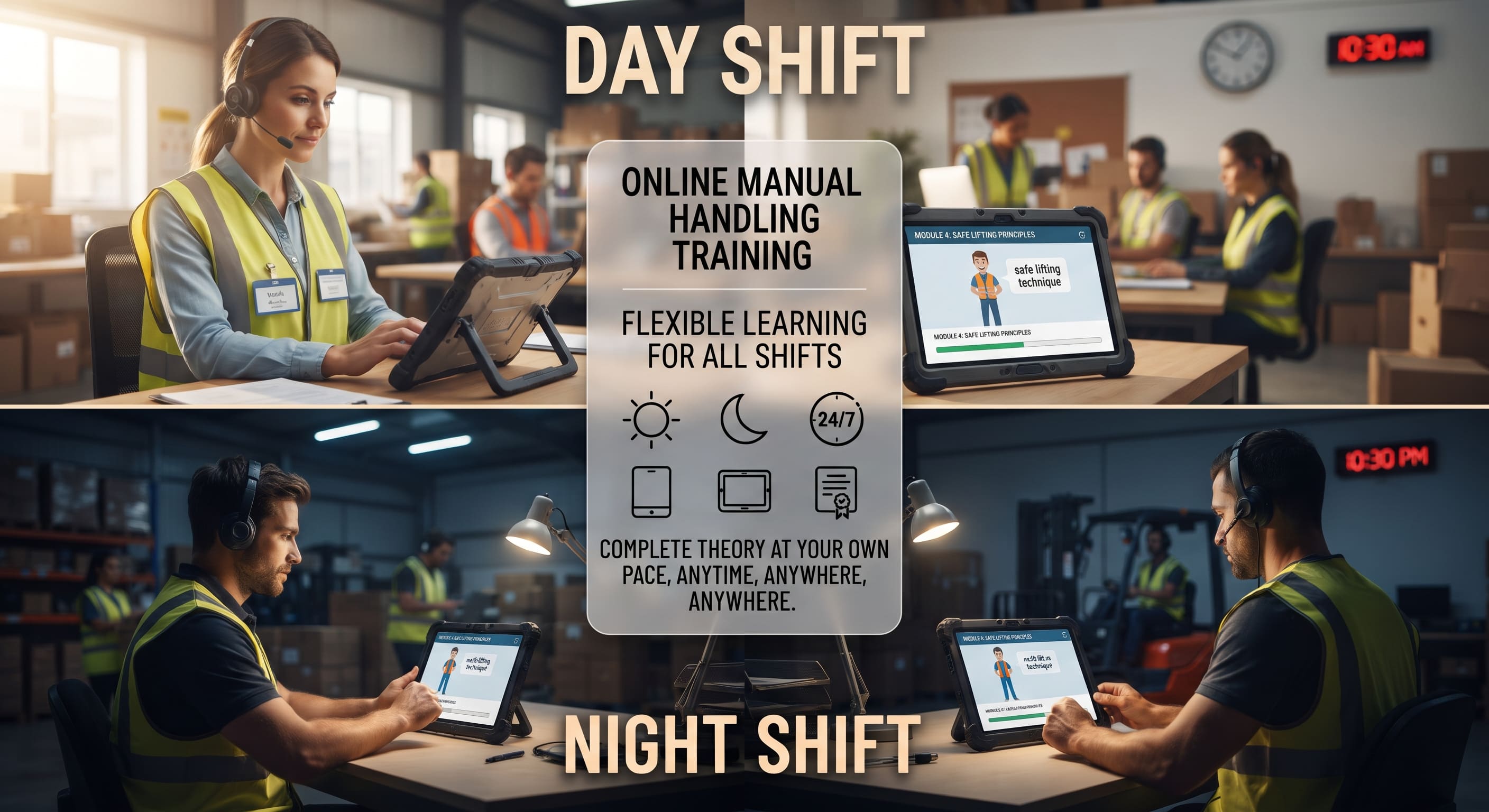
Many businesses in Ireland operate beyond traditional office hours. Warehouses, distribution centres, hospitals, hotels, manufacturing facilities, supermarkets and food production companies often employ workers across morning, afternoon, evening and night shifts. Although these arrangements help businesses maintain continuous operations, they can create challenges when organising workplace training.
Manual handling is a common activity across these industries. Employees may lift boxes, move equipment, replenish shelves, transport supplies or handle materials throughout their shifts. Without appropriate training and effective risk controls, these tasks can contribute to back pain, muscle strains and other musculoskeletal injuries.
Online Manual Handling Training Ireland can offer businesses a flexible way to provide training opportunities to employees working different schedules. Instead of requiring every worker to attend the same classroom session, online learning can allow employees to access course materials at suitable times, subject to their employer's arrangements.
However, online training should form part of a broader workplace safety strategy that includes suitable risk assessments, task-specific instruction and appropriate handling equipment.
Why Different Work Shifts Create Training Challenges
Organising training becomes more complicated when employees work different schedules. A company operating around the clock may have limited periods when all workers are available simultaneously.
For example, a warehouse may employ one team during the day, another in the evening and a smaller team overnight. Requiring everyone to attend a single training session could leave some shifts without adequate staffing or require employees to attend outside their normal working hours.
Common challenges include:
-
Limited overlap between shift teams.
-
Difficulty arranging classroom sessions for night workers.
-
Maintaining adequate staffing during training.
-
Coordinating temporary and permanent employees.
-
Managing changing rotas and overtime.
-
Ensuring new employees receive suitable instruction promptly.
These challenges can make training administration time-consuming for supervisors and managers.
An online approach may reduce scheduling difficulties by allowing employees to complete suitable course material at different times. Employers can also monitor participation and identify workers who still need to complete their training.
How Online Manual Handling Training Supports Shift Workers
1. Flexible Access to Learning Materials
One of the main advantages of online training is that course materials can often be accessed outside traditional classroom schedules.
Employees working early mornings, late evenings or overnight shifts may find it difficult to attend sessions organised during standard business hours. Online learning can provide greater flexibility by allowing workers to study at an agreed time that fits their working arrangements.
For example, a hotel employing housekeeping staff across several shifts could organise online training so that employees access the course at suitable times rather than requiring the entire department to attend one session.
Employers should ensure that employees have adequate time and access to the necessary equipment to complete training. Where training is required for work, arrangements should comply with applicable working-time and employment requirements.
2. Consistent Training Across Different Teams
When employees attend separate classroom sessions, the information delivered may vary depending on the trainer, session length or questions raised by participants.
Online courses can help provide a consistent foundation by presenting the same core learning materials to employees across different shifts.
This can be particularly useful for businesses with several departments or locations. Employees can study the same general principles covering load assessment, common handling hazards and safer movement techniques.
Nevertheless, consistency should not mean ignoring differences between jobs. Warehouse workers, kitchen staff and healthcare employees may encounter very different hazards. Employers should supplement general online learning with instruction relevant to their workplace activities.
3. Easier Coordination for Managers
Managing training across several shifts requires accurate records and clear communication.
An online training platform may help managers monitor course progress, completion status and available evidence of participation. These features can make it easier to identify employees who still need training.
For example, a distribution centre manager could review a training register to identify outstanding requirements among day, evening and night teams.
This information can support workforce planning and help supervisors organise follow-up activities without relying exclusively on paper records or informal reminders.
Employers should ensure that training records are accurate, securely maintained and accessible only to authorised personnel.
Industries That Can Benefit from Flexible Training
Online manual handling learning may be useful across many sectors where employees work different shifts.
Warehousing and Distribution
Warehouse employees may handle packages, pallets, stock containers and delivery materials throughout the day and night. Online training can provide foundational knowledge about manual handling risks, while workplace instruction can cover the safe use of trolleys, sack trucks and other handling aids.
Healthcare and Care Services
Hospitals and care facilities may operate continuously, with employees working rotating schedules. General manual handling education can help staff recognise common risks, but patient handling often requires additional role-specific instruction and appropriate practical training.
An online course should not be assumed to replace specialist training required for patient movement or other higher-risk activities.
Hospitality and Hotels
Hotels frequently employ housekeeping, kitchen, maintenance and stores teams across different shifts. Employees may move laundry, cleaning supplies, food containers and equipment.
Flexible training arrangements can help managers coordinate learning across departments while providing additional instruction for the specific handling tasks employees perform.
Retail and Supermarkets
Retail businesses may receive deliveries early in the morning, replenish shelves during the day and complete stock movements after closing.
Online learning can help employees access general training around their schedules, while supervisors address workplace-specific issues such as handling bulky products, moving stock safely and using suitable equipment.
Manufacturing and Food Production
Manufacturing facilities often operate multiple shifts to maintain production schedules. Employees may repeatedly handle raw materials, containers, components and finished products.
Online training can support a consistent foundation in risk awareness, but it should be combined with instruction on machinery, production layouts and the handling methods used in the facility.
What Should an Online Manual Handling Course Cover?
When selecting a Manual Handling Course Ireland, employers should examine whether the content is suitable for the work employees actually perform.
A relevant course may cover the following areas:
Understanding manual handling risks: Employees learn to recognise activities that involve lifting, carrying, pushing, pulling or moving objects and understand why some tasks present greater risks than others.
Assessing loads: Workers learn to consider the weight, size, shape, stability and grip requirements of an object before attempting to move it.
Safer handling principles: Training introduces suitable techniques for positioning the body, maintaining balance, avoiding unnecessary twisting and keeping loads close where practical.
Recognising environmental hazards: Employees learn to identify slippery floors, restricted walkways, poor lighting and unsuitable storage arrangements.
Using handling aids: Course materials can explain why appropriate equipment may reduce the need for manual lifting and carrying.
Reporting hazards: Workers should understand when to report damaged packaging, unstable loads, unsuitable equipment or tasks they cannot perform safely.
Employers should check the course format, learning objectives and assessment arrangements before selecting a provider. They should also determine whether additional workplace-specific or practical instruction is necessary.
Combining Online Learning with Workplace Instruction
Although online training offers flexibility, it cannot address every aspect of manual handling safety by itself.
Employees may need practical demonstrations or supervised instruction to understand how to perform particular tasks using the equipment available at their workplace.
For example, a warehouse employee may complete an online course but still require instruction on securing loads to a trolley or moving materials through a narrow aisle.
Employers should therefore combine suitable online learning with relevant workplace procedures, demonstrations and supervision where needed.
Risk assessments should determine the appropriate combination of training and other control measures. If a task can be made safer by using mechanical assistance, reducing the load or changing the storage arrangement, those improvements should be considered rather than relying on training alone.
How Employers Can Organise Training Across Multiple Shifts
A structured approach can make training easier to manage.
Step 1: Identify Training Needs
Review the manual handling tasks performed by each department and shift. Consider whether employees carry out different activities or encounter different hazards.
Step 2: Establish a Training Schedule
Set reasonable completion arrangements that account for shift patterns, workloads and employee availability. Provide suitable time and resources for workers to complete the training.
Step 3: Communicate Expectations Clearly
Inform employees about the training requirements, how to access the course and whom to contact if they experience technical difficulties.
Step 4: Monitor Completion
Use an appropriate register or learning platform to check progress across all shifts. Follow up with employees who have not completed the required learning.
Step 5: Provide Additional Instruction
Arrange workplace-specific guidance or practical assessment where the identified risks and tasks require it.
Step 6: Review Effectiveness
Use workplace observations, employee feedback and incident records to evaluate whether the training is helping employees recognise and manage relevant hazards.
This process can help businesses maintain oversight while accommodating the practical demands of shift-based operations.
Certificates, Records and Employer Responsibilities
A Manual Handling Certificate Ireland may provide evidence that an employee has completed a particular training course. Employers should retain appropriate records and confirm that the course is relevant to the employee's duties.
However, possessing a certificate does not automatically demonstrate that an employee can safely perform every manual handling task. Training completion should be considered alongside workplace risk assessments, practical instruction and supervision.
Irish employers must take appropriate steps to protect employees' safety and health, including addressing manual handling risks. They should seek to avoid hazardous manual handling where reasonably practicable and assess and reduce the risks associated with activities that cannot be avoided.
Training records should be maintained accurately, with suitable arrangements for monitoring employees who work temporary, seasonal, evening or night shifts.
Employers should also review training needs when job responsibilities change, new equipment is introduced or workplace risk assessments identify additional requirements.
Conclusion
Online manual handling training can help Irish businesses coordinate learning across morning, evening, night and rotating shifts. Its flexibility can make training more accessible, support consistent foundational learning and simplify the monitoring of course completion.
However, effective manual handling safety requires more than completing an online course. Employers should assess workplace hazards, select relevant training, provide additional instruction where necessary and ensure that suitable handling equipment and safe procedures are available.
By combining flexible online learning with appropriate workplace controls and ongoing supervision, businesses can support employees across different shifts and maintain a more consistent approach to manual handling safety.
For organisations considering Manual Handling Training Ireland, the priority should be to ensure that every employee receives training appropriate to their role, regardless of when they work.