



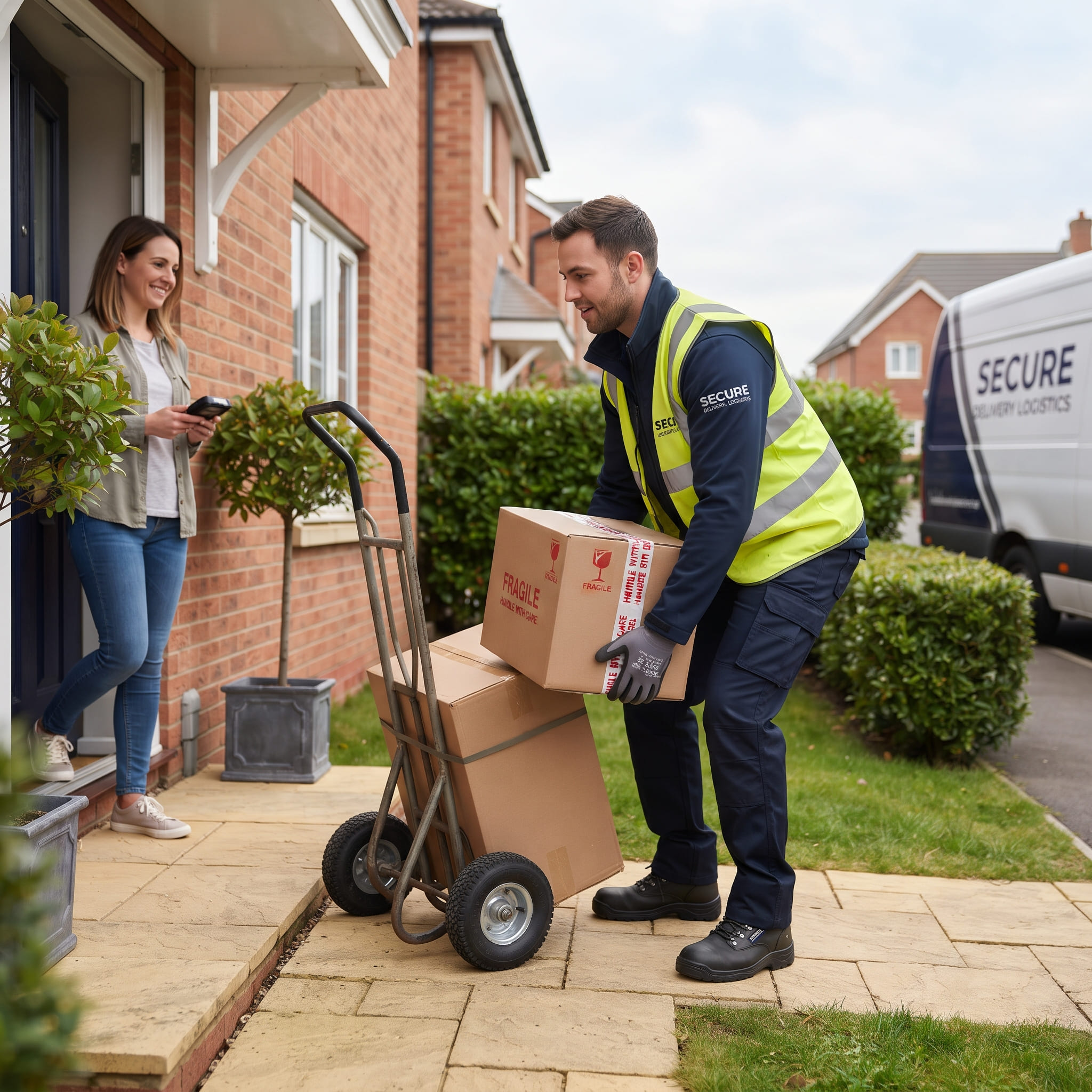
Delivering goods to customer premises is a routine activity for many businesses across Ireland. Delivery drivers, warehouse employees, couriers, retail suppliers, and tradespeople may need to move packages, equipment, furniture, food supplies, and other materials from vehicles to homes, offices, shops, or commercial facilities.
Although deliveries may appear straightforward, each location can present different manual handling challenges. Workers may encounter narrow entrances, steep steps, uneven driveways, slippery paths, restricted corridors, or limited space for unloading. Heavy or awkward packages can become particularly difficult to manage when the delivery route has not been assessed in advance.
Poor handling practices can contribute to back strain, muscle injuries, slips, falls, and dropped loads. These incidents can affect employees, customers, and other people nearby.
Effective Manual Handling Training Ireland helps workers recognise common hazards and understand safer ways to lift, carry, push, and pull loads. However, training should be supported by suitable equipment, proper delivery planning, safe vehicle loading, and procedures for dealing with difficult delivery locations.
1. Assess the Load Before Unloading the Vehicle
Before removing goods from a van or truck, employees should assess the load and determine how it can be handled safely.
Packages may vary considerably in weight, size, shape, and stability. A compact box may be heavy, while a large package may be awkward to grip or difficult to carry through a doorway.
Workers should consider whether the item has secure handholds, whether its contents might shift, and whether its weight can be managed safely. Packaging labels and handling instructions should be checked where available.
Employees should not assume that a package is safe to lift simply because it is small or looks lightweight. If its weight is uncertain or the load is difficult to control, they should seek assistance or use appropriate handling equipment.
Where a delivery contains several packages, workers should consider whether it is safer to move them individually or use a suitable trolley. Carrying too many items at once can affect balance, grip, and visibility.
2. Plan a Safe Route to the Customer's Premises
Delivery routes do not always provide the same conditions as a warehouse or distribution centre. A customer may have a sloping driveway, uneven paving, narrow steps, a crowded entrance, or a long distance between the vehicle and the delivery point.
Before carrying goods, workers should check the route and identify potential hazards.
Important considerations include:
-
Uneven, slippery, or damaged surfaces.
-
Steps, ramps, and changes in floor level.
-
Narrow doorways and restricted corridors.
-
Vehicles, bicycles, or other obstacles along the route.
-
Poor lighting or limited visibility.
-
Other people moving through the delivery area.
Where possible, workers should remove minor obstacles with the customer's permission or choose a safer route. If the normal access route is unsuitable, they should discuss alternative arrangements rather than attempting to carry a difficult load through an unsafe area.
Planning the route before lifting helps reduce sudden movements, unnecessary carrying, and the risk of losing balance.
3. Use Safe Lifting and Carrying Practices
Delivery workers may need to lift packages from vehicle floors, lower them onto the ground, or carry them into buildings. These movements can become demanding when the load is heavy, the available space is restricted, or the worker must reach around other packages.
Before lifting, employees should position themselves as close to the load as reasonably possible and establish a secure grip. They should maintain a stable stance and avoid twisting their torso while lifting or carrying.
Where possible, workers should keep the load close to their body and move smoothly rather than making sudden movements. When changing direction, repositioning their feet can help reduce awkward twisting.
The load should not obstruct their view of the route. If visibility is restricted, they should consider using a suitable handling aid or obtaining assistance.
There is no single lifting technique that makes every load safe. The appropriate method depends on the item's weight, dimensions, stability, the working environment, and the employee's capabilities. If the task cannot be performed safely, the load or method of delivery should be reconsidered.
4. Manage Steps, Stairs, and Changes in Floor Level
Stairs and changes in floor level can significantly increase the difficulty of delivering goods. Carrying a package while climbing or descending stairs may affect balance and reduce the ability to use handrails.
Large items can also obstruct visibility, while heavy packages may make it difficult to maintain control on each step.
Workers should assess the stairs before moving goods and check for loose surfaces, clutter, damaged steps, and inadequate lighting.
Where a package is too heavy or bulky to be carried safely on stairs, employees should not attempt to force the movement. Depending on the circumstances, a second person, suitable lifting equipment, an alternative access route, or a different delivery arrangement may be necessary.
Employees should avoid carrying loads that prevent them from seeing the steps clearly or maintaining secure footing.
Employers should provide clear procedures for difficult access situations and ensure workers understand when to stop and seek assistance.
5. Use Suitable Trolleys and Handling Equipment
Appropriate equipment can reduce the need to carry goods manually over long distances.
Depending on the delivery, useful equipment may include sack trucks, platform trolleys, wheeled containers, and purpose-designed lifting aids. The equipment selected should be suitable for the load, the route, and the conditions at the customer's premises.
For example, a trolley may be suitable for moving several boxes across a smooth warehouse floor but less appropriate for steep stairs or uneven outdoor surfaces.
Before using equipment, workers should check that it is in good condition and that the load can be secured safely. They should follow the manufacturer's instructions and never exceed the equipment's rated capacity.
Routes should be checked for slopes, kerbs, loose gravel, wet surfaces, and other obstacles that could affect control.
Employers should also consider whether delivery vehicles can be equipped with suitable aids, such as tail lifts, ramps, or loading devices, where appropriate.
6. Reduce Unnecessary Carrying Through Better Delivery Planning
Repeatedly carrying packages between a vehicle and a delivery point can increase physical demands, particularly when several items must be delivered to the same location.
Businesses can reduce unnecessary handling by planning deliveries more effectively and organising goods before departure.
Practical measures include:
-
Grouping packages by delivery destination.
-
Positioning frequently needed items for easier access.
-
Avoiding unnecessary movement of packages inside the vehicle.
-
Using suitable containers to transport several manageable items together.
-
Confirming delivery access arrangements in advance when possible.
-
Selecting vehicle parking locations that minimise carrying distance without creating other hazards.
Packages should be arranged inside the vehicle so that workers can access them without climbing over goods or repeatedly moving heavy items to reach smaller ones.
Vehicle loading should also account for load stability and the risk of packages shifting during transport. Securing goods appropriately helps reduce hazards during unloading.
Better planning can save time while reducing the number of unnecessary lifts and carries.
7. Consider Weather and Outdoor Conditions
Deliveries in Ireland may take place in rain, wind, cold conditions, or poor visibility. These environmental factors can make manual handling more difficult.
Rainwater can create slippery paths and vehicle floors, while strong winds may affect the control of large, lightweight items such as panels, empty containers, or packaging.
Cold weather can also affect hand dexterity, especially when employees handle packages repeatedly outdoors.
Workers should assess the conditions before unloading and use suitable footwear and protective clothing. Wet surfaces should be approached carefully, and alternative routes should be considered when access is unsafe.
If weather conditions make a delivery unsafe, workers should follow company procedures and contact their supervisor to discuss suitable arrangements.
Employees should not feel pressured to carry a load across a hazardous surface simply to complete a delivery quickly.
8. Handle Bulky and Awkward Packages Carefully
Some goods are difficult to move because of their dimensions rather than their weight. Furniture, appliances, long packages, office equipment, and large cartons may be difficult to grip or manoeuvre through narrow entrances.
Before moving such items, workers should check the dimensions of the load and the available space. They should identify any obstacles, sharp edges, or areas where fingers could become trapped.
If two or more people are required, they should agree on their positions, route, and method of communication before lifting. One person should coordinate the movement where appropriate, and everyone should know when to stop.
Team handling is not automatically the safest solution for every bulky item. If the load is too heavy, unstable, or difficult to control, suitable mechanical equipment or a revised delivery plan may be necessary.
Employees should never attempt to squeeze a bulky package through a narrow doorway by using excessive force or adopting an awkward posture.
9. Communicate With Customers and Colleagues
Clear communication helps prevent misunderstandings during deliveries.
Workers should explain when they need a clear route, additional assistance, or access to a suitable entrance. Customers may be able to move obstacles, open doors, secure pets, or identify a safer delivery location.
However, employees should not assume that a customer is able or qualified to assist with lifting. Any additional help must be appropriate for the task and should not introduce further risks.
Delivery teams should also communicate clearly when handling large items together. Agreed instructions help ensure that everyone moves at the same time and can stop safely if the load becomes difficult to control.
If a customer requests that goods be carried through an unsafe route or placed in an unsuitable location, workers should follow company procedures and discuss safer alternatives.
Good communication supports both customer service and workplace safety.
10. Provide Relevant Manual Handling Training
Delivery workers need training that reflects the practical demands of their jobs. Their work may involve handling packages in vehicles, carrying goods outdoors, navigating stairs, and working in unfamiliar environments.
A Manual Handling Course Ireland can help employees understand the risks associated with lifting, carrying, pushing, pulling, awkward loads, and restricted access. Training should also explain how to assess a task, plan a route, use suitable equipment, and recognise when assistance is needed.
Employers should reinforce training with clear delivery procedures and practical guidance for handling difficult situations.
A Manual Handling Certificate Ireland may provide a record of course completion, but it does not replace a task-specific risk assessment or guarantee that every delivery can be completed safely.
Workers should know how to report hazards, damaged equipment, near misses, and tasks that cannot be performed safely with the resources available.
11. What Employers Should Review in Delivery Operations
Employers should regularly review how goods are loaded, transported, unloaded, and delivered to customer premises.
A practical review should consider vehicle layout, package weights and dimensions, the availability of handling equipment, delivery routes, and the physical demands placed on workers throughout a shift.
Employers should also examine whether delivery schedules allow enough time for safe unloading and carrying. Unrealistic time targets can encourage rushing and unsafe shortcuts.
Incident reports and employee feedback can help identify recurring problems, such as difficult stairs, unsuitable trolleys, or repeated lifting from low vehicle floors.
Where problems are identified, businesses should prioritise measures that eliminate unnecessary handling or reduce physical demands. Training and supervision should support these controls rather than replace them.
Conclusion
Safe manual handling during deliveries requires careful planning because every customer premises can present different challenges. Heavy packages, awkward loads, stairs, slippery surfaces, restricted access, and poor vehicle organisation can all increase the risk of injury.
Delivery workers can reduce these risks by assessing loads before lifting, planning clear routes, using suitable handling equipment, communicating with colleagues and customers, and avoiding unsafe shortcuts. Employers should support these practices through effective risk assessments, realistic delivery schedules, well-maintained equipment, and relevant training.
Effective Manual Handling Training Ireland helps employees recognise hazards and make safer decisions during everyday delivery tasks. When training is combined with appropriate workplace controls and delivery planning, businesses can reduce unnecessary physical strain and improve safety for workers and customers alike.
The priority should always be to deliver goods using a method that is safe and manageable, rather than allowing time pressure or customer expectations to encourage avoidable risks.