



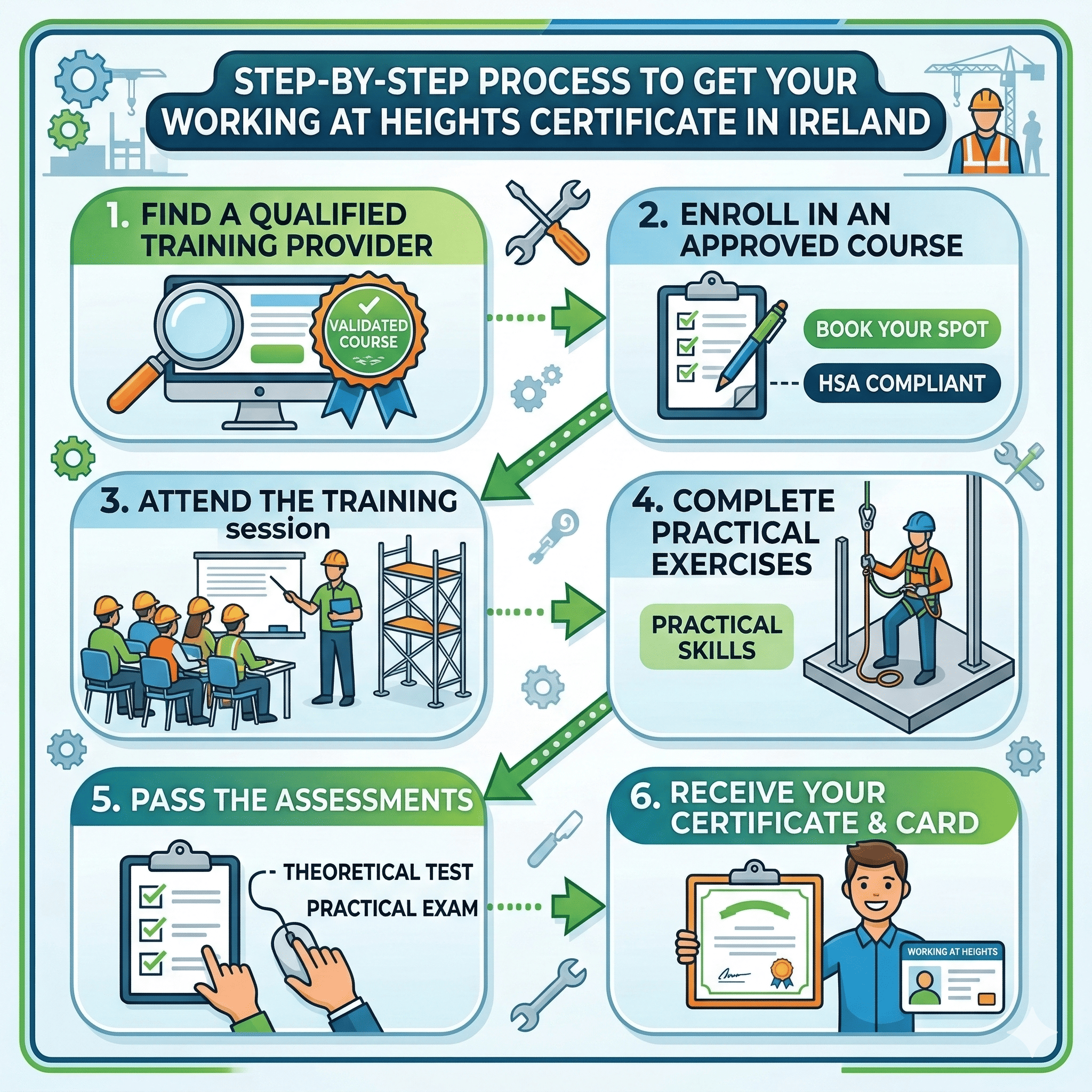
Working at heights is one of the most hazardous tasks in many industries, from construction and maintenance to warehousing and utilities. Falls from elevated areas are a leading cause of workplace injuries and fatalities in Ireland. For this reason, obtaining a working at heights certificate is essential for both employees and employers to ensure workplace safety and compliance.
This guide provides a comprehensive step-by-step process to obtain your working at heights certificate in Ireland, including the benefits of working at heights online training and how health and safety courses online can support your certification journey.
Why Working at Heights Training is Essential
Falls from height account for a significant portion of workplace accidents. According to the Health and Safety Authority (HSA) in Ireland, proper training can prevent these accidents, protecting workers’ lives and reducing costs associated with injuries.
Working at heights training equips employees with the knowledge and practical skills to:
-
Identify potential hazards
-
Use personal protective equipment (PPE) correctly
-
Operate ladders, scaffolding, and elevated platforms safely
-
Respond effectively in emergency situations
Obtaining a working at heights certificate demonstrates competence, ensures compliance with Irish workplace safety regulations, and enhances career opportunities.
Step 1: Choose an Accredited Training Provider
The first step in obtaining your working at heights certificate is selecting a reputable and accredited training provider. Accreditation ensures that the course content meets the standards set by the HSA or other recognized authorities in Ireland.
When choosing a provider, consider:
-
Accreditation and recognition: Ensure the course is officially recognized in Ireland.
-
Course format: Decide whether you prefer classroom-based, online, or hybrid training.
-
Reputation: Look for reviews or testimonials from previous students.
-
Cost and duration: Compare prices and course length to suit your schedule and budget.
Many providers now offer flexible working at heights online training, allowing you to complete the theoretical modules at your own pace.
Step 2: Enroll and Complete Online Training
Once you’ve selected a provider, the next step is enrollment. Working at heights online training has become increasingly popular for Irish workers due to its flexibility, accessibility, and cost-effectiveness.
During online training, you will learn:
-
Risk assessment and hazard identification
-
Safe use of ladders, scaffolds, and elevated platforms
-
Fall protection systems and emergency response
-
Legal requirements for working at heights in Ireland
Interactive modules, quizzes, and video demonstrations ensure that learners fully understand safety principles. Most online courses allow you to study at your own pace, making it ideal for remote workers or those with busy schedules.
Step 3: Participate in Practical Assessment
While online courses cover theoretical knowledge, hands-on practical skills are crucial for full competence. After completing the online training, most programs require a practical assessment to demonstrate your ability to apply safety measures in real-world scenarios.
During the practical assessment, you may be tested on:
-
Correct use of fall arrest systems
-
Ladder, scaffold, or elevated platform operation
-
PPE usage, including harnesses and lanyards
-
Emergency procedures and rescue techniques
Successfully completing the practical assessment ensures that you can work safely at heights in any workplace environment.
Step 4: Pass the Final Test
Most accredited programs require a final exam or assessment before issuing the working at heights certificate. This test typically evaluates your understanding of safety procedures, hazard identification, risk management, and equipment usage.
Tips for passing the final test:
-
Review all online modules and practical notes thoroughly
-
Take practice quizzes if available
-
Focus on key safety regulations and emergency procedures
-
Ask instructors for clarification on any unclear topics
Passing the final test is mandatory to receive your official certificate.
Step 5: Receive Your Working at Heights Certificate
Upon successfully completing the training, practical assessment, and final test, you will receive your working at heights certificate. This certification proves that you are competent to work safely at heights and is often required by employers in industries such as construction, maintenance, and utilities.
Many providers issue digital certificates, allowing you to store and share your qualification easily. Some may also provide physical copies for workplace display or record-keeping.
Benefits of Completing Online Working at Heights Training
Choosing working at heights online training offers multiple benefits:
Flexibility
Study at your own pace and complete modules when it suits you.
Accessibility
Available to workers across Ireland, including remote and rural areas.
Cost-effectiveness
Save on travel and venue fees compared to classroom-based training.
Immediate Certification
Digital certificates are often issued upon completion, allowing quicker proof of competence.
Integration with Other Health and Safety Courses
Many providers offer bundled courses, such as:
-
Fire safety awareness
-
Manual handling and ergonomics
-
First aid at work
-
Risk assessment and safety management
Completing multiple courses can improve overall workplace safety knowledge and career prospects.
Legal Importance of Working at Heights Certification
In Ireland, employers have a legal obligation to provide safe working conditions. According to the Safety, Health, and Welfare at Work Regulations, workers performing tasks at height must be trained and competent.
Failing to provide proper training can result in:
-
Legal penalties and fines
-
Increased insurance costs
-
Workplace accidents, injuries, or fatalities
A working at heights certificate demonstrates compliance with legal requirements and helps employers maintain a safe working environment.
Who Should Complete Working at Heights Training?
Working at heights training is essential for anyone performing elevated work, including:
-
Construction workers and site supervisors
-
Roofers and maintenance personnel
-
Window cleaners and painters
-
Warehouse staff using elevated platforms
-
Telecommunications and utility workers
Even employees who only occasionally work at height benefit from training to reduce the risk of accidents and meet legal obligations.
Tips for Maximizing Your Training Experience
To get the most out of your working at heights training, follow these tips:
-
Choose Accredited Providers: Ensure your course is recognized by Irish authorities.
-
Engage Fully: Take notes, watch videos carefully, and complete all modules.
-
Practice Skills: Apply your training in supervised practical scenarios.
-
Retain Your Certificate: Keep a digital and physical copy of your working at heights certificate.
-
Stay Updated: Periodically refresh your training to stay compliant with new safety regulations.
Combining Online Learning with Practical Training
While online modules are excellent for theory, practical skills are essential for real-world safety. Many providers offer hybrid programs that combine working at heights online training with on-site assessments to ensure you can apply your knowledge effectively.
This blended approach ensures Irish workers are fully competent, confident, and compliant with all health and safety regulations.
Conclusion
Obtaining a working at heights certificate in Ireland is a step-by-step process that ensures safety, compliance, and career advancement. By choosing an accredited provider, completing online modules, participating in practical assessments, and passing the final test, workers can gain the skills and certification required to work safely at elevated levels.
Online working at heights training provides flexibility, accessibility, and cost-effective learning for Irish workers while still maintaining high safety standards. Combined with other health and safety courses online, it offers comprehensive knowledge that can save lives, reduce workplace accidents, and improve overall productivity.
Investing in your safety today by completing working at heights training is not just a regulatory requirement—it’s a commitment to protecting yourself, your colleagues, and your workplace.