



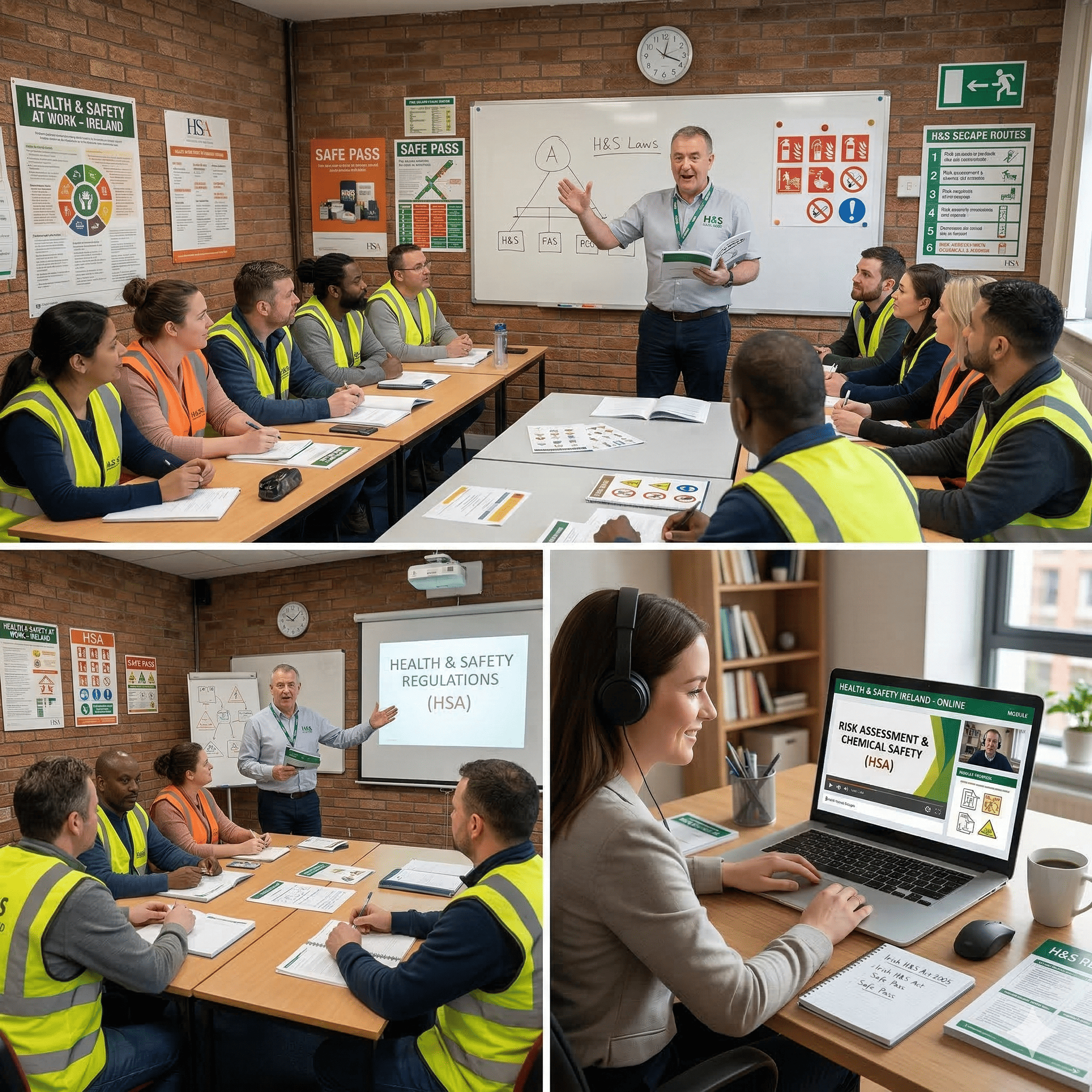
Workplace safety is a major priority for businesses across Ireland. Employers are responsible for ensuring their staff receive proper training to reduce risks and maintain compliance with national regulations. As a result, many organizations invest in health and safety courses Ireland to educate their workforce and create safer work environments.
Traditionally, safety training was delivered in a classroom setting. However, in recent years, health and safety courses online have become increasingly popular due to their flexibility and accessibility. Courses such as working at heights training and working at heights online training can now be completed remotely, allowing workers to gain a working at heights certificate without needing to attend in-person classes.
Understanding the differences between classroom and online training can help employers and employees choose the best option for their needs.
Understanding Health and Safety Training in Ireland
Health and safety training ensures workers are equipped with the knowledge and skills required to perform their tasks safely. In Ireland, employers must comply with workplace safety regulations that require proper training for employees working in potentially hazardous environments.
Common training topics include:
-
Working at heights safety
-
Manual handling
-
Fire safety awareness
-
First aid training
-
Risk assessment and safety management
Among these, working at heights training is particularly important because falls from height are one of the most common causes of workplace injuries.
Employees who complete this training receive a working at heights certificate, which confirms they have the knowledge and skills required to perform elevated tasks safely.
Classroom Health and Safety Courses
Classroom training has been the traditional approach to workplace safety education for many years.
These courses typically involve a professional instructor delivering lessons in a training center or workplace environment. Participants attend scheduled sessions where they learn safety procedures and complete practical exercises.
Advantages of Classroom Training
1. Face-to-Face Interaction
Classroom training allows direct interaction with instructors and other participants. Learners can ask questions in real time and receive immediate feedback.
2. Hands-On Learning
Many classroom courses include practical demonstrations and exercises, which are particularly useful for skills like ladder safety or equipment handling.
3. Structured Environment
Some learners benefit from a structured learning environment where they can focus entirely on training without distractions.
4. Immediate Support
Instructors can observe participants and provide guidance if they struggle with certain concepts or procedures.
Disadvantages of Classroom Training
Despite its benefits, classroom training also has some limitations:
-
Fixed schedules may conflict with work commitments
-
Travel to training centers can be time-consuming
-
Courses may be more expensive due to venue and instructor costs
-
Employees in rural areas may find it difficult to attend
Because of these challenges, many businesses in Ireland are turning to health and safety courses online.
Online Health and Safety Courses
Online learning has transformed the way safety training is delivered. Health and safety courses online allow workers to complete training modules using a computer, tablet, or smartphone.
Courses such as working at heights online training provide interactive learning materials, including videos, quizzes, and real-life safety scenarios.
Advantages of Online Training
1. Flexibility
Online training allows learners to study at their own pace and schedule. Employees can complete courses outside working hours or during quieter periods.
2. Accessibility
Workers across Ireland can access training without traveling to a physical location. This is especially beneficial for employees in remote areas.
3. Cost-Effectiveness
Online courses often cost less than classroom training because they eliminate travel, accommodation, and venue expenses.
4. Immediate Certification
Many online platforms issue a digital working at heights certificate immediately after successful completion of the course.
5. Consistent Training
Online platforms deliver standardized content, ensuring all employees receive the same level of instruction regardless of location.
Disadvantages of Online Training
Although online courses offer many advantages, they also have some limitations.
-
Limited face-to-face interaction with instructors
-
Requires self-discipline and motivation
-
Practical skills may require additional on-site assessment
However, many providers combine online theory with optional practical assessments, ensuring learners gain both knowledge and hands-on experience.
Comparing Classroom vs Online Health and Safety Courses
Both training methods have their advantages, and the best option often depends on the needs of the organization and employees.
Learning Experience
Classroom courses offer direct interaction and hands-on learning, while health and safety courses online provide flexibility and self-paced study.
Cost
Online training is generally more affordable because it eliminates travel and venue costs.
Accessibility
Classroom courses require physical attendance, whereas working at heights online training can be completed from anywhere in Ireland.
Time Efficiency
Online courses allow employees to learn when convenient, while classroom training follows a fixed schedule.
Certification
Both formats provide recognized certificates, including the working at heights certificate, as long as the course provider is accredited.
When Classroom Training is the Better Option
In some situations, classroom training may still be the preferred choice.
For example:
-
Jobs requiring extensive practical demonstrations
-
New employees who benefit from hands-on instruction
-
Training involving specialized equipment
-
Workers who prefer traditional learning environments
Classroom training also works well for group sessions where teams can practice safety procedures together.
When Online Training is the Better Option
Online training is ideal for many modern workplaces, especially when flexibility is important.
It is particularly useful for:
-
Busy professionals with limited time
-
Companies with multiple locations
-
Remote or rural employees
-
Workers renewing safety certifications
For example, working at heights online training allows workers to refresh their knowledge quickly while still receiving a recognized working at heights certificate.
Blended Learning: The Best of Both Worlds
Many companies in Ireland are now adopting a blended learning approach that combines classroom and online training.
In this model:
-
Employees complete theoretical modules through health and safety courses online
-
Practical skills are assessed during a short in-person session
This approach provides flexibility while ensuring workers gain practical experience.
Blended learning is particularly effective for working at heights training, where both theoretical knowledge and hands-on skills are essential.
Choosing the Right Training Provider
Whether choosing classroom or online courses, selecting the right provider is essential.
Consider the following factors:
-
Accreditation and recognition in Ireland
-
Comprehensive course content
-
Experienced instructors
-
Interactive learning materials
-
Clear certification process
A reputable provider will ensure that employees receive a valid working at heights certificate and other safety qualifications required for compliance.
Conclusion
Both classroom and online training play an important role in workplace safety in Ireland. Classroom training offers hands-on experience and direct interaction with instructors, while health and safety courses online provide flexibility, accessibility, and cost savings.
For many businesses, working at heights online training is an efficient way to ensure employees receive essential safety education and obtain a recognized working at heights certificate.
Ultimately, the best approach depends on the needs of the organization and its workforce. By investing in the right training methods, Irish employers can improve safety standards, reduce workplace accidents, and maintain compliance with national regulations.
Providing employees with proper health and safety courses Ireland is not only a legal requirement—it is also a crucial step toward creating safer and more productive workplaces.