



Manual handling is one of the most common workplace activities across Ireland. Every day, employees lift, carry, push, pull, and move loads in industries such as construction, healthcare, retail, warehousing, manufacturing, hospitality, and logistics. Although these tasks may appear routine, incorrect manual handling remains one of the leading causes of workplace injuries.
Back pain, muscle strains, shoulder injuries, and other musculoskeletal disorders often develop because employees unknowingly repeat unsafe lifting habits. Fortunately, most manual handling injuries are preventable with the right knowledge, proper planning, and safe techniques.
A professional Manual Handling Training Ireland programme teaches employees how to recognise unsafe practices, assess risks, and perform manual handling tasks correctly. Completing a recognised Manual Handling Course Ireland not only improves workplace safety but also helps employees earn a Manual Handling Certificate Ireland, demonstrating their understanding of safe manual handling principles.
In this guide, we'll examine the most common manual handling mistakes and explain how to avoid them.
Why Manual Handling Mistakes Matter
Even a small mistake during lifting can place significant strain on the body. While one incorrect lift may cause an immediate injury, repeated poor techniques can gradually lead to long-term musculoskeletal disorders.
Manual handling injuries often result in:
- Back pain
- Neck injuries
- Shoulder strains
- Muscle fatigue
- Joint problems
- Time away from work
- Reduced productivity
Understanding common mistakes is the first step towards preventing them.
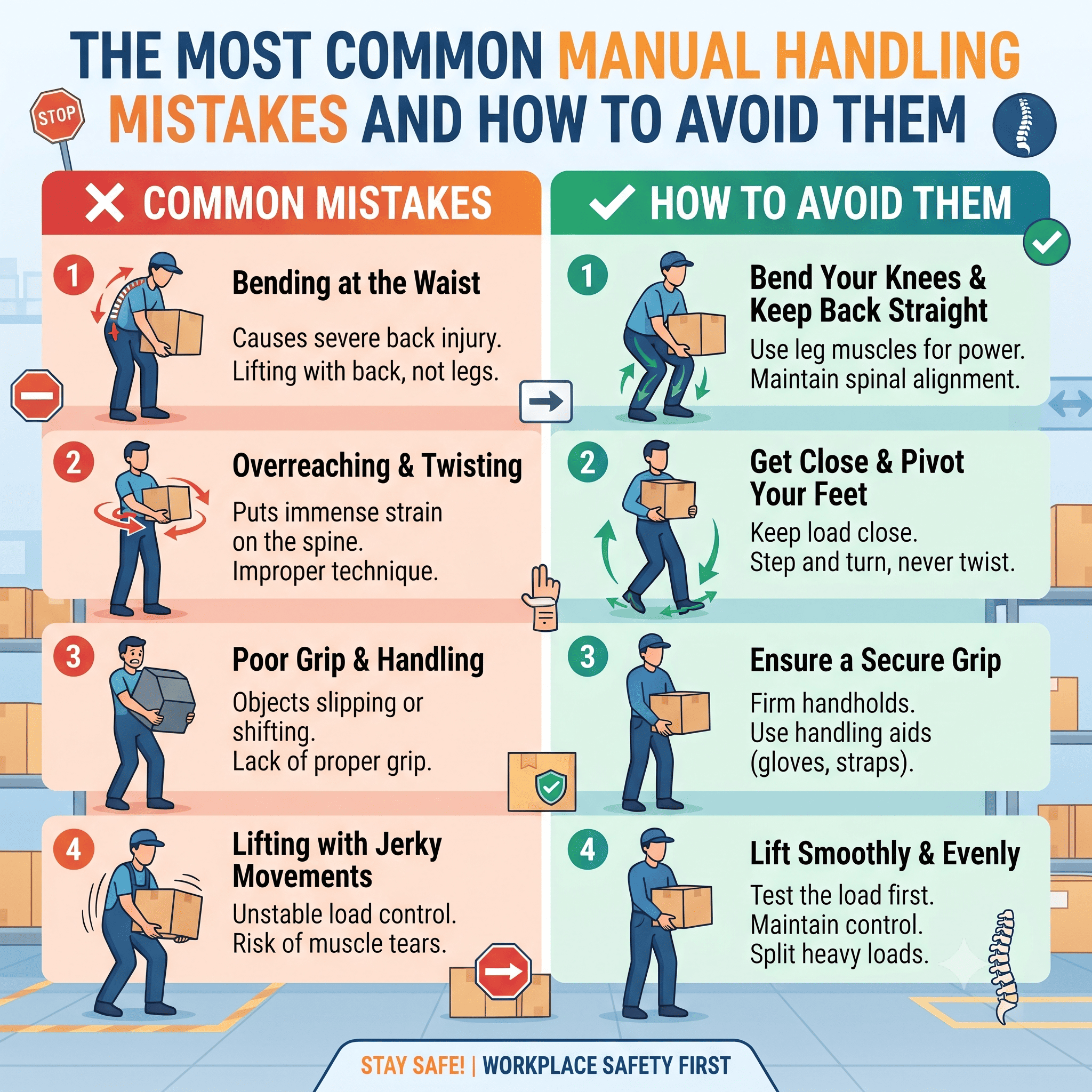
Mistake 1: Lifting with a Rounded Back
One of the most frequent manual handling mistakes is bending from the waist and lifting with a curved back.
This places excessive pressure on the spine and lower back, increasing the risk of strains and disc injuries.
How to Avoid It
Always:
- Bend your knees instead of your waist.
- Keep your back in a natural, neutral position.
- Use the strength of your legs to lift.
- Keep your head facing forward.
A Manual Handling Course Ireland teaches employees how correct posture protects the spine during lifting tasks.
Mistake 2: Twisting While Carrying a Load
Twisting your body while holding a load places uneven pressure on your back and joints.
Many workplace injuries occur because employees lift correctly but then twist to place the object elsewhere.
How to Avoid It
Instead of twisting:
- Turn your whole body.
- Move your feet in the direction you need to travel.
- Keep your shoulders and hips aligned.
- Make smooth, controlled movements.
Turning with your feet rather than your back significantly reduces injury risk.
Mistake 3: Carrying Loads Too Far from the Body
Holding a load away from your body increases leverage and forces your muscles to work much harder.
Even lightweight objects become more difficult to control when carried at arm's length.
How to Avoid It
Always:
- Hold loads close to your body.
- Keep elbows tucked in where possible.
- Maintain balance while walking.
Keeping the load close reduces pressure on your back and improves stability.
Mistake 4: Attempting to Lift Objects That Are Too Heavy
Many employees underestimate the weight of a load or overestimate their own strength.
Trying to lift something that is too heavy is a common cause of workplace injuries.
How to Avoid It
Before lifting:
- Test the weight.
- Break large loads into smaller ones where possible.
- Ask a colleague for assistance.
- Use mechanical lifting equipment when available.
Remember that asking for help is a sign of good judgement, not weakness.
Mistake 5: Skipping a Risk Assessment
Employees often begin lifting immediately without considering the risks involved.
This can lead to avoidable accidents caused by poor planning.
How to Avoid It
Take a few moments to ask:
- Is the load stable?
- Is the route clear?
- Are there obstacles?
- Is the object too bulky?
- Is lifting equipment available?
These simple questions help prevent many manual handling injuries.
Mistake 6: Poor Foot Position
Standing with feet too close together or off balance reduces stability during lifting.
Poor footing makes it harder to control the load and increases the chance of losing balance.
How to Avoid It
Maintain:
- A stable stance.
- Feet shoulder-width apart.
- One foot slightly ahead of the other where appropriate.
Good balance improves control throughout the lift.
Mistake 7: Rushing the Task
Busy workplaces sometimes encourage employees to rush.
However, hurried lifting often results in poor posture and reduced awareness.
How to Avoid It
Take your time.
Plan the lift.
Maintain proper technique even when working under pressure.
Safe lifting only takes a few extra seconds and can prevent weeks or months of recovery.
Mistake 8: Ignoring Mechanical Aids
Many workplaces provide equipment designed to reduce physical effort.
Employees sometimes ignore these aids because they believe lifting manually will be faster.
How to Avoid It
Whenever appropriate, use:
- Trolleys
- Pallet trucks
- Hoists
- Lift tables
- Adjustable lifting equipment
Mechanical aids reduce physical strain while improving efficiency.
Mistake 9: Poor Housekeeping
A cluttered workplace increases manual handling risks.
Employees carrying loads may not notice:
- Loose cables
- Boxes on the floor
- Slippery surfaces
- Uneven flooring
How to Avoid It
Maintain:
- Clean walkways
- Good lighting
- Organised storage areas
- Clear emergency exits
Good housekeeping contributes significantly to workplace safety.
Mistake 10: Ignoring Fatigue
Tired muscles become less effective at supporting the body.
Fatigue often leads to:
- Poor posture
- Reduced concentration
- Slower reactions
- Increased injury risk
How to Avoid It
Employees should:
- Take scheduled breaks.
- Alternate physically demanding tasks where possible.
- Stay hydrated.
- Report excessive workloads.
Managing fatigue helps maintain safe lifting techniques throughout the day.
Mistake 11: Failing to Communicate During Team Lifts
Some loads require two or more people.
Without communication, one person may lift before the other is ready.
How to Avoid It
Before lifting:
- Agree on a plan.
- Nominate one person to give instructions.
- Lift together.
- Move at the same pace.
- Communicate throughout the task.
Good teamwork improves both safety and efficiency.
Mistake 12: Relying on Experience Instead of Training
Experienced employees sometimes believe they no longer need training because they have performed manual handling tasks for years.
However, unsafe habits often develop gradually.
How to Avoid It
Regular Manual Handling Training Ireland helps experienced employees:
- Refresh their knowledge.
- Correct poor habits.
- Learn updated best practices.
- Reinforce safe working techniques.
Continuous learning benefits employees at every stage of their careers.
How Manual Handling Training Prevents These Mistakes
A professional Manual Handling Course Ireland provides employees with practical knowledge that helps eliminate unsafe behaviours.
Training focuses on:
- Correct lifting techniques
- Safe body mechanics
- Workplace hazard awareness
- Risk assessment
- Proper planning
- Safe use of lifting equipment
- Injury prevention
Employees gain the confidence to approach manual handling tasks safely rather than relying on assumptions or routine.
The Benefits of Developing Good Manual Handling Habits
When employees consistently apply safe manual handling techniques, organisations benefit from:
- Fewer workplace injuries
- Lower absenteeism
- Increased productivity
- Improved employee confidence
- Better teamwork
- Reduced compensation claims
- Stronger workplace safety culture
Safe habits developed through training continue to provide benefits long after the course has been completed.
Earning a Manual Handling Certificate Ireland
Completing recognised Manual Handling Training Ireland leads to a Manual Handling Certificate Ireland, confirming that employees understand:
- Safe lifting principles
- Risk assessment
- Hazard identification
- Proper manual handling techniques
- Workplace safety responsibilities
Many employers require certification before employees begin work involving regular manual handling tasks.
Conclusion
Most manual handling injuries are not caused by unusual accidents—they result from everyday mistakes that are repeated over time. Poor posture, rushing lifts, ignoring hazards, carrying loads incorrectly, and failing to plan tasks can all place unnecessary strain on the body and increase the likelihood of injury.
A professional Manual Handling Course Ireland gives employees the practical knowledge needed to recognise and avoid these common mistakes. Through comprehensive Manual Handling Training Ireland, workers learn safer lifting techniques, effective risk assessment, proper body mechanics, and the importance of planning every manual handling task before it begins.
Earning a recognised Manual Handling Certificate Ireland demonstrates a commitment to workplace safety and provides employees with the confidence to perform physical tasks correctly. By replacing unsafe habits with proven techniques, both employees and employers can create healthier, safer, and more productive workplaces across Ireland.