



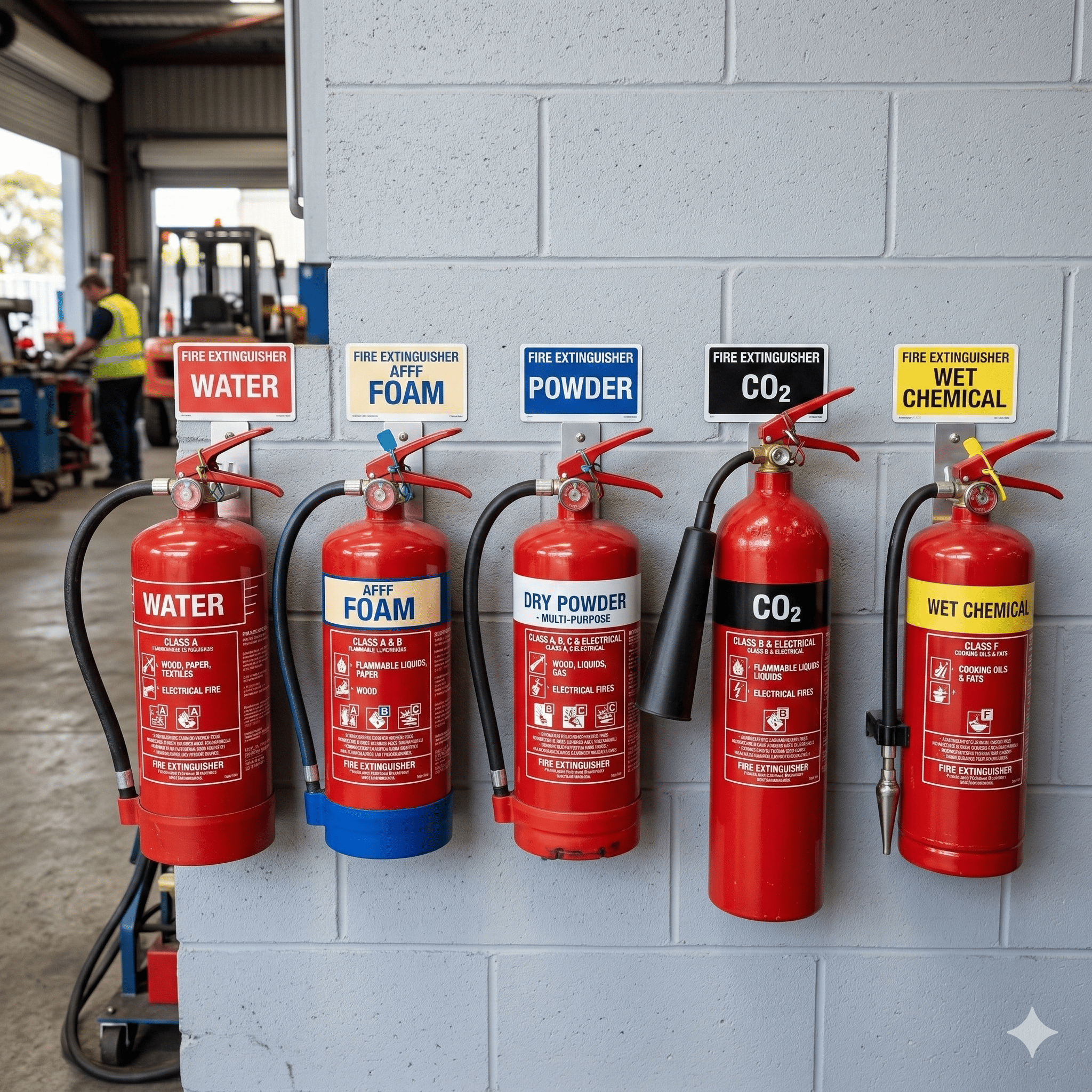
Understanding the types of fire extinguishers and their correct uses is a key part of effective fire safety training in Ireland. Using the wrong extinguisher on a fire can increase danger, cause injury, or make the situation worse. For this reason, extinguisher awareness is a core module in every recognised fire safety course in Ireland, including online fire safety training in Ireland.
Proper extinguisher knowledge supports workplace fire safety training in Ireland, strengthens emergency response, and helps organisations maintain valid fire safety certification in Ireland.
Guidance on safe use and employer responsibilities is supported by the Health and Safety Authority (HSA).
Understanding Fire Classes in Ireland
Before using an extinguisher, it is important to understand fire classifications:
-
Class A – Solid materials (wood, paper, textiles)
-
Class B – Flammable liquids (petrol, paint, solvents)
-
Class C – Flammable gases
-
Electrical Fires – Involving live electrical equipment
-
Class F – Cooking oils and fats (common in kitchens)
Correct extinguisher selection is reinforced during fire safety awareness training in Ireland and advanced fire warden training in Ireland.
1. Water Fire Extinguishers
Best for:
-
Class A fires (wood, paper, cardboard, textiles)
How they work:
Water extinguishers cool the fire, removing the heat element of the Fire Triangle.
Do NOT use on:
-
Electrical fires
-
Flammable liquid fires
Water extinguishers are common in offices and retail environments as part of standard workplace fire safety training in Ireland.
2. Foam Fire Extinguishers
Best for:
-
Class A fires
-
Class B fires (flammable liquids)
How they work:
Foam cools the fire and creates a barrier between fuel and oxygen, preventing re-ignition.
Foam extinguishers are widely used in commercial and industrial settings and are covered in most fire prevention training in Ireland programmes.
3. CO₂ (Carbon Dioxide) Fire Extinguishers
Best for:
-
Electrical fires
-
Class B fires
How they work:
CO₂ extinguishers displace oxygen, effectively suffocating the fire.
They leave no residue, making them ideal for offices, server rooms, and areas with electrical equipment. Proper instruction in their use is essential during health and safety fire training in Ireland.
4. Dry Powder Fire Extinguishers
Best for:
-
Class A, B, and C fires
-
Electrical fires
How they work:
Dry powder interrupts the chemical reaction of the fire.
While versatile, they can reduce visibility and cause respiratory irritation in enclosed spaces. Their use is often discussed in detail during fire marshal training in Ireland.
5. Wet Chemical Fire Extinguishers
Best for:
-
Class F fires (cooking oils and fats)
How they work:
Wet chemical extinguishers cool the fire and form a soapy layer over burning oils to prevent re-ignition.
These extinguishers are essential in commercial kitchens and hospitality environments and are included in specialised workplace fire safety training in Ireland.
The PASS Technique
All employees completing fire safety training in Ireland should understand the PASS technique:
-
Pull the pin
-
Aim at the base of the fire
-
Squeeze the handle
-
Sweep from side to side
However, extinguishers should only be used if:
-
The fire is small and contained
-
You are trained
-
You have a clear escape route
-
It is safe to do so
Safety always comes before property protection.
Inspection and Maintenance
Employers must ensure extinguishers are:
-
Correctly located
-
Clearly signed
-
Easily accessible
-
Inspected regularly
-
Serviced annually by competent professionals
Proper maintenance supports compliance and is reinforced during fire safety certification in Ireland programmes.
Conclusion
Understanding the types of fire extinguishers and their uses is essential for effective fire safety training in Ireland. Knowing which extinguisher to use — and when not to use one — can prevent a small incident from becoming a major emergency.
By integrating extinguisher awareness into structured workplace fire safety training in Ireland, along with ongoing fire prevention training in Ireland, organisations ensure employees are confident, informed, and prepared to respond safely in the event of a fire.